
The Quick Read: A DSCR second lien is a long-term junior loan that qualifies primarily on the rental property’s income covering the combined payments, while hard money is a short-term, asset-based bridge that lends against the property’s value and your exit plan, subject to lender guidelines.
- Pick the second lien when the rental is stable, leases are in place, and you want to keep your existing first loan.
- Pick hard money when the property needs work, cannot be rented yet, or needs a short bridge with a clear exit.
- Neither one depends on employment income, but both still review credit, assets, and the property.
- Both are business-purpose loans for investment property, and availability varies by lender, property, and experience.
Here is the honest answer on who each one is for. A DSCR second lien suits a landlord who already owns a financed, rent-ready property and wants cash without replacing the first loan. Hard money suits a landlord who is buying, repairing, or repositioning a property and has a defined way out of the loan. The first is a holding tool. The second is a bridge. Choosing between them mostly comes down to one question: can the property cover its payments with rent today?
What this loan actually costs to carry.
Hard money is sized against the project and priced by time. Enter the deal and see how much the program will lend, the cash required at closing, the carry while you hold it, and what is left at the exit.
Leverage tiers on the current program: 85% with fewer than 2, 90% with 2 or more, 93% with 5 or more completed projects — every tier capped at 75% of after-repair value. Loan amounts up to $5,000,000, larger by exception; terms of 6 to 18 months, interest-only, no prepayment penalty. The rehab portion funds in draws against completed work, not at closing.
Program parameters shown update from Lendmire’s centralized guideline source. Rate, points, and months are editable assumptions, not quoted terms.
Cost cap sets the loan · positive spread
Illustrative estimate only — not a quote, Loan Estimate, approval, or commitment to lend. Rate, points, and months are editable assumptions. Hard money is business-purpose financing for real estate investors, not a consumer mortgage. Leverage on the current program tops out at 93% of project cost for investors with a documented track record, capped at 75% of after-repair value, with rehab funding up to 100% of the documented budget released in draws; actual terms vary by lender, borrower experience, property, and exit. Lendmire is a mortgage broker, not a lender.
If it can, a second lien deserves a look. If it cannot, hard money is usually the tool that fits. Lendmire, a mortgage broker, arranges both kinds of financing through a wholesale network, so this comparison is meant to referee, not to sell.
Side-by-Side
The second-lien column reflects published industry norms, which vary by lender. The hard money column reflects typical parameters across the network. Both vary by lender, property, and experience, and nothing here is a commitment to lend.
| Factor | DSCR Second Lien | Hard Money |
|---|---|---|
| Review basis | Rent vs. combined payments | Collateral value and exit plan |
| Income documentation | Rent evidence, not pay stubs | Property, plan, and liquidity, not pay stubs |
| Lien position | Behind an existing first loan | Usually the first loan on the asset |
| Property condition | Rent-ready, leased or rentable | Rehab or transitional is fine |
| Property types | Investment rentals; long-term typical | 1-4 units; construction to 10 units |
| Entity vesting | Varies by lender | Often permitted; varies by lender |
| Term shape | Long-term structure | 6-18 months, interest-only |
| Reserves | Often similar to DSCR first liens | Liquidity and experience reviewed |
| Main risk | Combined coverage fails | Maturity before the exit is ready |
| Typical exit | Hold and pay down | Sale or refinance |
Key Terms Defined
First lien: the primary mortgage on a property, paid first if the property is sold or foreclosed.
Second lien: a junior mortgage recorded behind the first. The first loan stays in place.
DSCR (debt service coverage ratio): the property’s monthly rent divided by its monthly obligation. A result of 1.20 means rent covers the obligation with some room to spare.
PITIA: principal, interest, taxes, insurance, and any association dues, which together make up the monthly obligation in the DSCR math.
Hard money: short-term financing from private investors or non-bank companies, secured by real property.
Combined LTV: the first loan plus the second loan, divided by the property’s value.
After-repair value (ARV): what the property is expected to be worth once the planned work is finished.
How Each One Works Without W-2 Income
Both loans skip W-2s, but for different reasons. A DSCR loan looks at whether the property can carry the debt. Hard money looks at whether the collateral and the plan can repay it.
On a DSCR second lien, the lender compares rent to the payment obligation. Because the second sits behind a first, the test usually covers both payments together, and combined LTV must fit too. That means a property can pass on the first loan alone and still fail once the second is stacked on top.
Coverage thresholds vary by program. A separate select-lender path takes coverage below 1.00, with leverage and terms adjusted. Stronger ratios tend to open better leverage and pricing. Clearing the number also does not mean the property produces positive cash flow, since repairs, vacancy, management, utilities, and capital expenses sit outside the calculation.
Credit still counts. A 620 floor exists in parts of the network, most programs want around 660, and 700 or higher unlocks the strongest leverage tiers. Reserves vary by lender, leverage, loan size, and transaction type. They commonly run around six months of PITIA, and larger loans typically step up from there.
Hard money skips the rent test and underwrites the deal. Typical program parameters look like this:
- Fix-and-flip: up to 93% of project cost with five or more completed projects, up to 90% of project cost with two or more, and 85% of project cost with fewer than two. Every tier is capped at 75% of after-repair value.
- Bridge purchase without rehab: up to 80% of the purchase price on a non-owner-occupied property.
- Cash-out or rate-and-term refinance: up to 65% of value.
- Rehab funding: up to 100% of the rehab budget in draws against completed work. That is a rehab-budget figure, not a purchase LTV.
- Credit and size: a 620 minimum score, with added conditions below 660, and loan amounts up to $5,000,000, larger by exception. Every figure here varies by lender and program — guidelines, property type, leverage, and credit profile all apply.
The top leverage tier is reserved for experienced investors. First-time investors qualify at the lower tiers. Underwriting stays asset-based, meaning it focuses on the property, the plan, and the exit. Hard money lenders still review credit, and experience and liquidity matter.
What Business-Purpose Status Does and Doesn’t Do
DSCR loans are designed for non-owner-occupied investment properties. Because they are business-purpose investor loans, they are reviewed differently from a standard owner-occupied mortgage. Under CFPB Regulation Z § 1026.3, credit to acquire, improve, or maintain a non-owner-occupied rental is generally treated as business purpose. The special treatment falls away if the owner expects to occupy the property beyond a short stay.
Business purpose does not mean no review. Credit, assets, reserves, and the property itself all get a look. Spending cash-out proceeds on personal items can also blur the business-purpose line, so keep the use of funds clean.
When a DSCR Second Lien Is the Better Fit
A DSCR second lien is the better fit when the property already works and the first loan is worth keeping. Think of a landlord with a paid-down first loan on a stabilized duplex, leases in place, and combined coverage that clears roughly 1.2x. That landlord wants cash for the next down payment, reserves, or a rehab, and does not want a new long-term first loan.
The strengths are real. The first loan stays untouched. The structure is long-term, so there is no maturity cliff pushing you toward a forced refinance. Qualification runs on the property’s rent against the payments, not on pay stubs.
Compare that with the other long-term route. A standard DSCR cash-out refinance replaces the first loan and tops out around 75% LTV on a standard investment rental across most of the network, with about six months of seasoning, meaning the waiting period after you buy. If your existing first loan is better than anything you could get today, a second lien can protect it. Final terms depend on lender guidelines, property type, leverage, and the borrower’s complete credit picture.
Four gates decide whether a second lien works:
1. The first note must allow it. Read it for any covenant restricting additional liens. Federal law limits what a lender can do on certain junior-lien transfers, but FedLaws’ summary of the Garn-St Germain Act shows those exceptions cover only residential property with fewer than five units. Several are also tied to owner-occupied homes. For a rental, the first note controls in practice.
2. A junior lender has to be willing. The pool of lenders writing second liens on investment property is narrow, so availability often decides the question before pricing does.
3. Combined coverage must hold. Rent must cover both payments together.
4. Combined LTV must fit. The junior lender sets its own ceiling.
Watch two edge cases. Moving the property into an LLC before adding the second lien can itself count as a transfer, so retitle carefully. LLC borrowing is common but depends on the program, subject to lender program eligibility. A former residence converted to a rental may also carry owner-occupant terms on the first loan.
The second lien will not work on a property that cannot produce rent today. Vacant or unrentable properties generally do not fit a DSCR program. Manufactured homes, log homes, and barndominiums are not offered in the network.
When Hard Money Is the Better Fit
Hard money is the better fit when the property is not ready to carry itself. Corporate Finance Institute describes it as short-term financing from private investors or non-bank companies, secured by real property. That is a fair description. The lender cares about what the property is worth, what it will be worth, and how you plan to repay.
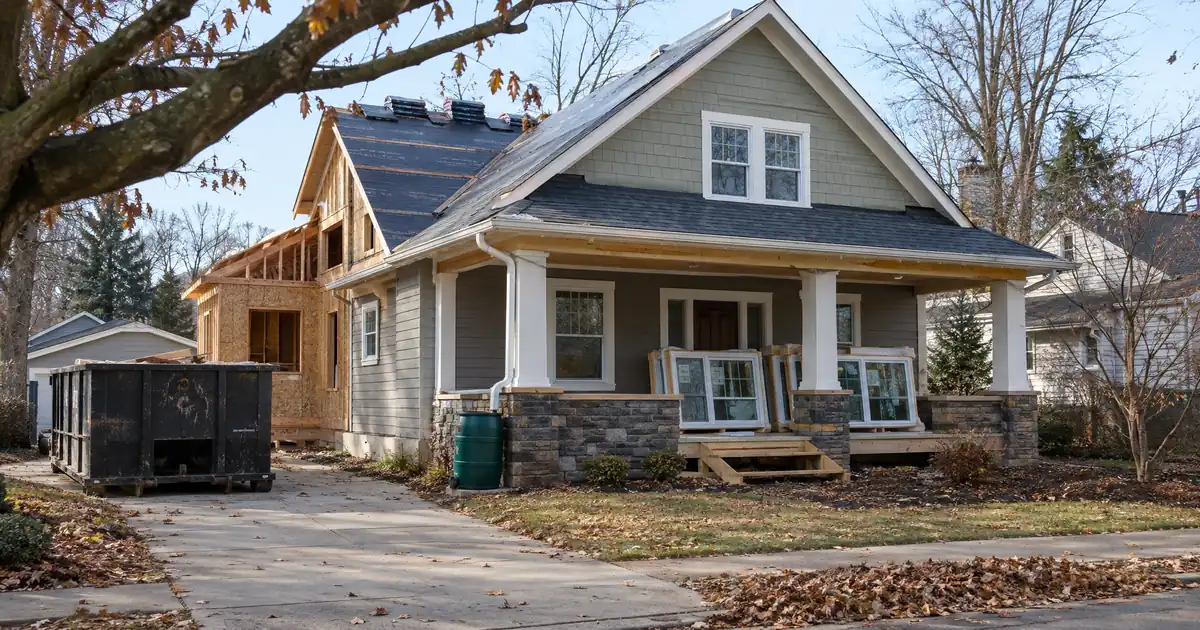
Picture a landlord with no W-2 who buys a dated fourplex that needs work before it can be leased. Rent cannot cover anything yet, so a DSCR test is meaningless. A hard money loan can fund the purchase and release rehab money in draws against completed work. Terms typically run 6 to 18 months, interest-only, with no prepayment penalty on the current program. A prepayment penalty is a fee for paying a loan off early.
A bridge also works when timing matters more than carrying cost, or when the borrower needs cash against a property whose rent history is thin. Hard money cash-out and rate-and-term refinances run up to 65% of value, which is lower than most long-term products. The tradeoff is clear. You get flexibility on property condition, and you accept a short runway.
That runway is the main risk. Hard money has a maturity date, and the exit has to be ready by then. Most investors exit by selling or refinancing. Many refinance out of hard money into long-term DSCR financing once the property is stabilized, and Lendmire arranges that path. If rents come in low or the market shifts, the exit gets harder, and a loan nearing maturity leaves little room to negotiate.
Hard money is also usually written as a first loan on the asset. Using it on a rental that already has a first mortgage generally means paying off that first loan or finding a private junior lender. Stacking short-term debt behind a long-term first carries sequencing risk: the short loan matures first, and your refinance has to be ready when it does.
For a lookup-style guide to how the long-term side fits together, see Lendmire’s complete DSCR loans guide.
Which Fits Your Situation
| Your situation | Better fit |
|---|---|
| Stabilized rental, first loan worth keeping | DSCR second lien |
| Needs rehab before it can be leased | Hard money |
| First loan restricts additional liens | Hard money or cash-out refinance |
| Rent fails the combined coverage test | Hard money, or reduce the ask |
| Plan to sell or refinance within a short window | Hard money |
| Long hold, steady rent, want cash for next deal | DSCR second lien |
If your first loan is a conventional or bank loan with a restrictive note, a second lien may be off the table regardless of coverage.
What Can Go Wrong on Each Side
Second lien risks.
- Combined coverage fails even when the first loan passes alone.
- The first note blocks the junior lien.
- The junior lender is unwilling to sit behind your first loan balance.
- A later refinance of the first loan requires the second to be paid off or subordinated, and the second lender is not obliged to agree to subordinate.
- Some programs may carry a prepayment penalty.
Hard money risks.
- The loan matures before the refinance or sale is ready.
- Rehab runs over budget or takes longer than planned.
- The after-repair value comes in below the plan, and leverage is capped against it.
- Short terms mean you pay closing costs again when you refinance into long-term debt.
Shared risks.
- Both loans put a lien on the property. Missed payments can lead to foreclosure.
- Both review credit and assets, so a thin file can stall either one.
What You Provide Instead of Pay Stubs
For a DSCR second lien, expect a lease or rent analysis, an appraisal, entity documents if the property is held in an LLC, proof of insurance, payoff and servicing details on the first lien, bank statements to show reserves, and a business-purpose attestation. The lender reviews your file on documented income under the applicable program, subject to lender guidelines.
For hard money, expect a purchase contract or current ownership documents, a scope of work and rehab budget, an exit plan, a record of completed projects if you are claiming a higher leverage tier, and proof of liquidity. Lighter paperwork on income does not mean lighter scrutiny of the deal.
The Verdict
Choose by property condition first, not by paperwork. If the rental is stable and a junior lender will sit behind your first loan, the second lien keeps your existing loan and gives you a long runway. If the property needs work or cannot yet cover its payments, hard money is the practical tool, as long as you have a credible exit.
Neither product is better in the abstract. A landlord with strong coverage and a good first loan will likely prefer the second lien. A landlord buying a fixer will likely prefer hard money. Many investors end up using both at different stages: hard money to buy and repair, then long-term DSCR financing to hold. Before you decide, sketch the exit and the combined coverage on paper for each option.
Frequently Asked Questions
Is a DSCR second lien a hard money loan?
No. A DSCR second lien is a long-term junior loan qualified on rent covering the combined payments. Hard money is short-term, asset-based financing secured by the property. The second lien sits behind your first loan, while hard money is usually the first loan itself and runs for a much shorter term.
Can I get either loan without employment income?
Yes, in the sense that neither is built on W-2s or personal debt-to-income. A DSCR second lien qualifies primarily on property-level rental income covering the payments, subject to lender guidelines. Hard money underwrites the collateral and the exit plan. Both still review credit, assets, and the property, so a clean file matters.
Will a second lien affect my first mortgage?
It leaves the first loan in place, but the first note may restrict additional liens, so read it first. A later refinance of the first loan also requires the second to be paid off or subordinated, and the second lender has to agree to subordinate. Plan for that before you borrow.
What if my coverage is below 1.00?
A 1.00 ratio is where many select programs start. Coverage below 1.00 is available through select lenders in the network, with leverage and terms adjusted. If the rent still falls short, a smaller second loan, a larger down payment on a purchase, or hard money for a property still being repositioned may fit better.
Can I refinance out of hard money later?
Yes, and many investors do. Once the property is stabilized and rent can cover the payment, a long-term DSCR loan can replace the short-term loan. The refinance has to clear credit, reserve, coverage, and property rules at that time, so start early rather than at maturity.
Next Step
If you are buying, rehabbing, or refinancing an investment property and want to see how the numbers work, Lendmire can help you compare hard money and DSCR second lien options based on the project, the exit plan, leverage, and your goals.
Rent-ready rentals and unfinished projects call for different tools, and the strongest investors match the loan to the property’s current condition rather than to a favorite product.
About Lendmire
Lendmire (NMLS# 2371349) is a mortgage brokerage built around DSCR investor lending, with programs available in 41 markets, including Washington, D.C. DSCR lenders commonly evaluate rental-income coverage instead of personal income paperwork — a practical fit for LLC-owned and multi-property investors. Terms vary by lender, property, leverage, and program. Scotsman Guide named Lendmire a Top Mortgage Workplace in both 2025 and 2026.
Get Started
Ready to find the right loan for you?
See your offer in seconds. No credit pull, no obligation.
Informational only. Not a Loan Estimate, approval, or commitment to lend. Program availability and eligibility are subject to lender guidelines, credit approval, property review, and underwriting.
References
2. FedLaws – Garn-St Germain Act
3. Corporate Finance Institute – Hard Money
This article is part of Lendmire’s hard money loan program — full qualification details, guidelines, and scenarios live on the program page.
Related reading: How to Get a DSCR Loan on a San Antonio Rental · Best DSCR Cash-Out Refinance Program With 1099 Income and No W-2 · Does a DSCR Cash-Out Refinance Make Sense to Pay Off a Second Mortgage?
Brandon Miller
Founder & CEO, Mortgage Loan Originator, Lendmire LLC
- Mortgage Loan Originator · NMLS# 1129696 · Verify on NMLS Consumer Access
- North Carolina Real Estate Broker · License# 343312 · Verify on NCREC
- North Carolina Insurance Producer · License# 19053198 · Property, Casualty, Life, Health · Verify on NAIC SBS
- Lendmire LLC · Firm NMLS# 2371349 · Verify firm licensure
Legal disclosures. Lendmire (NMLS# 2371349) is a state-licensed mortgage brokerage that arranges financing through wholesale lender relationships. Lendmire is not a direct lender, depository institution, or registered financial advisor. The discussion above is general informational content about real estate financing — it is not financial, legal, or tax advice, and readers should consult licensed professionals for guidance on their individual circumstances. Loan inquiries are subject to lender underwriting; this article does not represent a commitment to lend. Loan terms, rates, and qualification standards vary by borrower, property, and state, and are subject to change at any time. Equal Housing Opportunity. NMLS Consumer Access: nmlsconsumeraccess.org.