
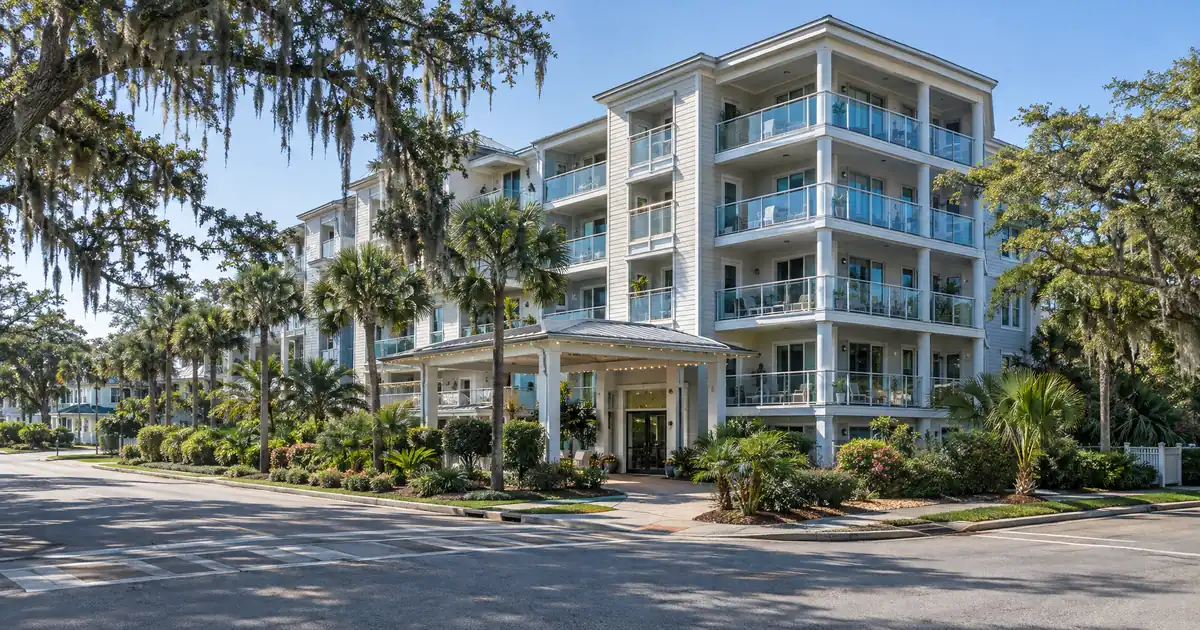
The Quick Read: The lender divides the unit’s rent used for lender review by its full monthly obligation, which on a condo includes HOA dues and insurance. Then it reviews the building itself, not just the unit. The rent test and the building review are separate gates, and a file has to clear both.
- Rent used for lender review comes from a lease, an appraiser’s rent schedule, or documented short-term rental history, depending on the program.
- The payment side includes principal, interest, taxes, insurance, and HOA dues.
- The condo questionnaire often decides whether a lender in the network will take the building at all.
- Clearing the ratio does not mean the unit cash flows. Repairs, vacancy, and management sit outside the calculation.
- Coastal insurance and rising dues hit the payment side, so a ratio that clears at contract can slip by the time the file is reviewed.
North Myrtle Beach is the worked example here. The mechanics apply to any coastal condo. Lendmire is a broker that arranges these loans through select lenders in its wholesale network. The brokerage sees where condo files stall, and the cause is rarely the borrower’s personal income. It is usually the HOA paperwork, the insurance quote, or a rent number the appraisal can’t support.
DSCR Calculator
Run the numbers in your market
Rate source: Freddie Mac 30-yr average via FRED® — Federal Reserve Bank of St. Louis · effective Oct 29, 2026
Prefilled with starting assumptions — enter your own rent or nightly figures, taxes, insurance, and HOA for a more accurate picture.
Program parameters update from Lendmire’s centralized guideline source. Taxes and insurance are editable estimates.
As of Oct 29, 2026 · General Freddie Mac market benchmark, not a Lendmire loan offer. Rent, nightly rate, occupancy, taxes, and insurance are editable estimates. Short-term rental figures are estimates only and vary significantly by season, property type, management approach, and local short-term-rental rules — confirm local regulations before relying on them. Qualifying income for short-term rentals varies by program — some use appraisal market rent, others use documented STR history or projections — and is confirmed in underwriting. Not a Loan Estimate, approval, or commitment to lend. Program availability and eligibility are subject to lender guidelines, credit approval, property review, and underwriting.
The complete DSCR loans guide covers the product in general.
Key Terms Defined
DSCR (debt service coverage ratio): The property’s rent used for lender review divided by its monthly housing obligation.
PITIA: Principal, interest, taxes, insurance, and association dues, which together make up the denominator on a condo.
Rent used for program review: The rent figure the lender is willing to count, which may differ from what the owner actually collects.
Warrantable condo: A building that passes the standard project review on litigation, delinquencies, owner mix, and similar items.
Non-warrantable condo: A building that fails one or more project tests and so goes to a narrower group of lenders.
Condo questionnaire: The form the HOA or its manager completes about the project’s finances, legal status, and rental rules.
Condotel: A building run with hotel-style services or a rental pool, which draws extra scrutiny.
What Does the Lender Actually Divide?
The lender divides monthly rent used for eligibility review by the full monthly obligation. A 1.00 ratio means rent equals the payment. Most programs in the network want 1.00 or better. Stronger ratios open better pricing and more leverage.
DSCR loans are designed for non-owner-occupied investment properties. Because they are business-purpose investor loans, they are reviewed differently from a standard owner-occupied mortgage. The loan is reviewed primarily on property-level rental income covering the payment, subject to lender guidelines. Credit, reserves, and property eligibility still apply.
On a condo, the denominator has more moving parts than on a house:
- Principal and interest on the loan.
- Property taxes.
- The unit owner’s own insurance policy (HO-6).
- HOA dues, which often fund the building’s master policy and reserves.
- Separate wind or flood coverage where the building or lender requires it.
Dues and insurance rise on their own schedules. The loan doesn’t control either one. That makes the condo’s payment side less stable than a house’s.
Here is how the ratio moves when one input changes at a time. The figures are modeled assumptions, not market data. They start from a unit that clears about 1.20x.
| Change (one at a time) | Modeled ratio | Read |
|---|---|---|
| Baseline | About 1.20x | Clears with cushion |
| Dues increase voted | About 1.12x | Still clears |
| Insurance renewal jumps | About 1.08x | Thin |
| Special assessment added to dues | About 1.03x | Near the floor |
| Rent softens at renewal | About 0.98x | Below 1.00 |
Stack two of these and the file changes. That is why a ratio built on last year’s dues sheet and last year’s insurance quote is unreliable. Get current numbers before the file goes in.
At 0.98x, the file is not necessarily dead. A separate select-lender path takes coverage below 1.00, with leverage and terms adjusted. Programs that start at 1.00 are a different product. Both are reviewed subject to lender guidelines, credit approval, and property review.
Where Does the Rent Number Come From?
The rent number comes from a lease, an appraiser’s rent schedule, or documented operating history, and the program decides which one counts. On a beach condo the choice matters more than almost anything else on the file, because the three sources can produce very different numbers.
| Income route | What it uses | Main weakness |
|---|---|---|
| Long-term lease or rent schedule | Signed lease or appraiser’s market rent | Understates seasonal beach income |
| Documented short-term history | Platform or manager statements | Needs a track record; seasonal swings |
| Short-term projection (purchase) | A market-data forecast | Lenders often haircut it |
Short-term rental collateral typically carries tighter leverage than a long-term rental. Programs also look for documented hosting history on refinances. Short-term rental rules can vary by city, county, HOA, and property type, so investors should confirm local rules before relying on projected rental income.
An appraisal vendor, Class Valuation, argues the long-term rent schedule form was not built for short-term rentals and can produce an artificially low ratio. That matches what the brokerage sees. A lender that falls back to long-term rent can fail a unit that a short-term-friendly program would pass. Lender selection is part of underwriting.
Picture an investor with an oceanfront one-bedroom that rents well by the week in summer. On a long-term lease basis the ratio lands under 1.00. On twelve months of documented platform income it clears. Same unit, same borrower, different program, different answer.
Which Appraisal Forms Does the File Use?
A single condo unit is typically appraised on the individual condominium unit report, Form 1073, with a Form 1007 rent schedule added for the rent used for the lender’s review. A two-to-four unit property uses the small residential income report, Form 1025. Fannie Mae’s learning center lists these form names and their purposes.
Those are agency form names. DSCR programs borrow the forms but set their own rules, and agency selling-guide terms do not govern a DSCR file. The appraisal sets value, which drives LTV. The rent schedule sets rent used for financing review. They answer two different questions, and a low value or a low rent figure can each sink a file on its own.
If the value comes in light, an appraisal reconsideration request with recent in-building sales is a normal step. Condos help here, because comparable sales in the same building are usually easy to find.
How Does the Building Get Reviewed?
The program reviews the building before it commits to the unit. The review runs on the condo questionnaire, and the HOA’s answers often decide whether a lender in the network will take the file.
The usual sequence looks like this:
1. Request the questionnaire and project documents early. Ask for them before the appraisal is ordered, and ideally before the offer is final.
2. Read the answers against the program. The form covers litigation, delinquent dues, reserves, investor concentration, and rental restrictions.
3. Classify the building. Warrantable, non-warrantable, or condotel. Each routes to a different group of lenders.
4. Check the insurance. The master policy has to be adequate, and flood status matters on the coast.
5. Run the ratio on current dues. Use the dues sheet in hand, not last year’s.
6. Order the appraisal and rent schedule. Value and rent used for eligibility review come in together.
7. Assemble the closing documents. That means the insurance binder, entity documents if the unit is vested in an LLC (subject to lender program eligibility), the appraisal, and the project package.
HOA questionnaire completeness is the quiet failure point. Managers return forms late, leave lines blank, or answer in a way that raises a question. An incomplete form stalls the file as surely as a bad answer does. When the HOA won’t respond, the file has no building review and cannot proceed. Nothing the borrower does on the income side fixes that.
DSCR vs. conventional financing
There are two common ways to finance an investment property, and they qualify you differently — here’s how investors weigh them.
Why investors choose it
- Qualifies on the property’s rental income — no personal tax returns, W-2s, or pay stubs needed to document income.
- No personal debt-to-income ceiling to clear, so existing mortgages and obligations don’t cap your borrowing the same way.
- Can be closed in an LLC, keeping the property inside a business entity.
- Built for scaling — not held to the limit on number of financed properties that conventional financing applies.
- Underwriting centers on the deal: generally qualifies when the rent covers the payment, a 1.00x coverage ratio being a common baseline (confirmed in underwriting).
- Designed specifically for investment property, including long-term and, where the program allows, short-term rentals.
Where it’s strong
- Often the lowest ongoing financing cost for a buyer who fully qualifies on personal income — a fit for a first property or a cost-first purchase.
Trade-offs for investors
- Requires full personal income documentation and must fit within a debt-to-income limit — salary, existing debts, and other mortgages all count.
- Typically held in your personal name rather than a business entity.
- Caps how many financed properties you can carry, which can become a ceiling as a portfolio grows.
- Evaluates you as a borrower as much as the property, which usually means more paperwork.
How investors usually choose: a first or single property often optimizes for the lowest financing cost; portfolio builders often optimize for leverage, vesting in an LLC, and scaling past conventional caps. The right answer depends on your goals, the property, and current guidelines — both paths run through select lenders in Lendmire’s wholesale network, with eligibility and terms confirmed in underwriting.
Warrantable, Non-Warrantable, and Condotel
Non-warrantable does not mean ineligible. It means the project fails a standard test and the file goes to a narrower set of lenders, usually with adjusted leverage and terms. Condotels are a separate lane with more scrutiny.
| Lane | Typical trigger | What changes |
|---|---|---|
| Warrantable | Passes standard project review | Widest lender pool |
| Non-warrantable | Litigation, heavy delinquencies, high investor share | Fewer lenders; adjusted leverage |
| Condotel | Hotel-style services or mandatory rental pool | Narrowest pool; some programs decline |
Some problems can be cured and some can’t. A delinquency count that is falling, or a lawsuit that settles, can change the answer. A mandatory rental pool or hotel-style operation is structural. It will not go away because the borrower wants it to.
Many oceanfront beach buildings sit closer to the resort end than the plain condo end. That is where files get surprised.
The Insurance and Flood Layer
Coastal condo insurance moves the denominator more than most investors expect. Three policies can stack: the association’s master policy (funded through dues), the unit owner’s HO-6, and separate flood or wind coverage.
A standard HO-6 policy typically excludes flood. The master policy does not cover it either, unless the association buys flood coverage. The federal flood program offers a Residential Condominium Building Association Policy, and per the OCC’s consumer guidance on the RCBAP, only the association can buy it. At least 75 percent of the building’s floor area must be residential. The building limit is the lesser of replacement cost or $250,000 times the number of units.
That cap is why master-policy adequacy shows up in condo review. A building with thin coverage raises questions the lender must answer before it takes the file. It also affects dues, because the association passes premium increases to owners.
Insurance quotes go stale. A quote pulled early and left in the file can look very different at review. Fresh binders before the file goes in, not after, is the habit that keeps these files clean.
Does Passing the Ratio Mean the Condo Cash Flows?
No. DSCR compares rent to the full monthly obligation and nothing else. Repairs, vacancy, management fees, utilities, furnishing, and capital reserves all sit outside the calculation.
A beach condo with a 1.10x ratio can still lose money in a slow season. A short-term unit with platform fees, cleaning turnover, and a management cut keeps less of its gross than the ratio suggests. The ratio tells you whether a lender can review the file. It does not tell you whether the investment pays.
Run your own operating numbers next to the lender’s. The honest comparison is the ratio the lender uses against the margin you actually keep.
What Program Terms Apply?
Program terms come from the network’s guidelines and vary by borrower, property, and loan scenario. Subject to lender guidelines, here is the typical range on an investment condo:
- Purchase leverage: typically 75% to 80% LTV on an investment-property purchase.
- Cash-out refinance: tops out around 75% LTV on standard rental collateral.
- Credit: a 620 floor exists in parts of the network; most programs want around 660; 700 and up unlocks the strongest leverage.
- Reserves: commonly about 6 months of PITIA, stepping up to about 9 months on loans above $1,500,000.
- Loan size: up to $3,000,000 on standard programs; smaller balances route through select lenders.
- Coverage: 1.00 is where many select programs start.
A larger down payment lowers the payment and can lift the ratio. It does not erase leverage caps, credit floors, reserve rules, or property eligibility. The strongest files clear both tests: enough equity and enough rental coverage.
Some property types are not offered in the network at all, including manufactured homes, log homes, and barndominiums. A standard condo unit is a different matter and is reviewed under the steps above.
What Does the Investor Decision Look Like?
The decision comes down to four checks, in this order.
First, get the building answered. Request the questionnaire before you spend on an appraisal. If the building fails, the rest is moot.
Second, pick the income route. Decide whether the unit will be underwritten on long-term rent or documented short-term income, and match the program to that choice.
Third, stress the payment side. Run the ratio with a dues increase and an insurance bump. If the file still clears, it has cushion. If it clears by a hair, it is a risk to size carefully.
Fourth, check the reserves and the credit tier. Reserves documentation is where clean files separate from messy ones. Seasoned statements and a clear source of funds avoid back-and-forth.
The stronger play for a thin-ratio condo is often a lower-leverage structure or a different building, though some investors accept the thin margin for the location. That is a genuine judgment call.
Frequently Asked Questions
Do HOA dues count in the DSCR calculation?
Yes. Dues sit in the denominator alongside principal, interest, taxes, and insurance. A dues increase lowers the ratio even if rent holds, so use the current dues sheet and ask about any pending special assessment.
Can I use Airbnb income on a condo?
Sometimes. It depends on the program, the documentation, and the building’s rental rules. Documented platform history is the strongest support. A projection is weaker on a purchase.
Does non-warrantable mean the condo can’t get a DSCR loan?
No. It means the building goes to a narrower group of lenders, typically with adjusted leverage and terms. Litigation and heavy delinquencies are the issues that most often stop a file.
What if the HOA won’t return the questionnaire?
The file stalls. The lender cannot review the project without it. Ask the manager directly, confirm what the form needs, and consider a different building if the HOA stays unresponsive.
Is a condo harder to finance than a house?
Usually, yes, because the building adds a second review and a payment side the borrower doesn’t control. The rent test is the same. The project review and insurance layer are extra.
Next Steps
If you are buying or refinancing a rental property and want to see how the numbers work, Lendmire can help you compare DSCR loan options based on the property income, credit profile, leverage, and investor goals. Call 828-256-2183 or request a quote.
On the Grand Strand, the building is the first real underwriting decision, and the ratio only matters once the HOA’s answers are in hand.
About Lendmire
Lendmire (NMLS# 2371349) is a mortgage brokerage focused on DSCR investor financing, helping arrange programs through wholesale and investor-lending channels in 41 markets, including Washington, D.C. DSCR loans are evaluated by the lender on property cash flow rather than personal income, subject to lender guidelines, supporting LLC closings and accommodating investors with four or more financed properties. Scotsman Guide Top Mortgage Workplace in both 2025 and 2026.
Get Started
Ready to find the right loan for you?
See your offer in seconds. No credit pull, no obligation.
Informational only. Not a Loan Estimate, approval, or commitment to lend. Program availability and eligibility are subject to lender guidelines, credit approval, property review, and underwriting.
References
1. Class Valuation – Appraisal Form 1007 and Short-Term Rentals
2. Fannie Mae Learning Center – Appraisers & Property Underwriting
3. OCC HelpWithMyBank – Residential Condominium Building Association Policy
This article is part of Lendmire’s DSCR loan program — full qualification details, guidelines, and scenarios live on the program page.
Related reading: How the DSCR Loan Process Works From Application to Closing · How a DSCR Loan Works on an Edgartown Rental · How a DSCR Loan Works for a Sandusky Seasonal Rental
Guides: DSCR Loans in North Myrtle Beach, SC · DSCR Loans in South Carolina
Brandon Miller
Founder & CEO, Mortgage Loan Originator, Lendmire LLC
- Mortgage Loan Originator · NMLS# 1129696 · Verify on NMLS Consumer Access
- North Carolina Real Estate Broker · License# 343312 · Verify on NCREC
- North Carolina Insurance Producer · License# 19053198 · Property, Casualty, Life, Health · Verify on NAIC SBS
- Lendmire LLC · Firm NMLS# 2371349 · Verify firm licensure
Required disclosures. Lendmire (NMLS# 2371349) operates as a licensed mortgage broker, not a direct lender or depository. The discussion in this article is general in nature and should not be relied upon as financial, legal, or tax advice — every investment scenario is unique and should be reviewed by a qualified professional. Any loan inquiry is subject to lender underwriting, and this article is not a commitment to lend or a guarantee of approval. Mortgage rates, loan terms, and program guidelines vary by borrower, property, and state, and may change without notice. Equal Housing Opportunity. Verify licensure at NMLS Consumer Access.