
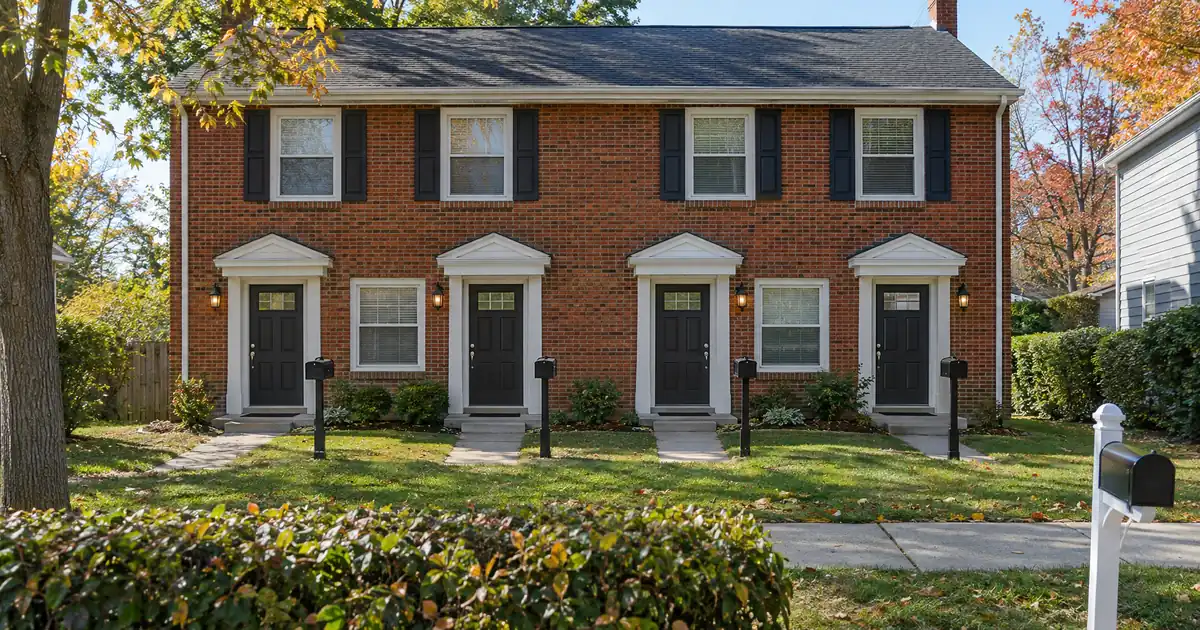
The Quick Read: Yes, a non-owner-occupied duplex, triplex, or fourplex generally qualifies for a DSCR cash-out refinance, because lenders treat two- to four-unit buildings as residential-style collateral and qualify the file primarily on the property’s rental income covering the payment, subject to lender guidelines. Three conditions decide the outcome: the owner does not live in the building, the title has seasoned, and the loan size clears both an equity test and a rent test.
- Cash-out on an investment property tops out around 75% LTV across most of the wholesale network.
- Seasoning of about 6 months of ownership, measured from title recording, is the common expectation.
- Coverage of 1.00 is where select programs start; stronger ratios open better pricing and leverage.
- Combined rent from all units counts toward the coverage number.
- Five or more units move to commercial underwriting, which is a different product. The exact numbers vary by lender and program and follow a full review of property, leverage, and credit.
Does a Duplex, Triplex, or Fourplex Qualify?
Yes, when the building is a rental the borrower does not occupy. Across the wholesale network Lendmire places files with, a two- to four-unit property is treated like a single-family rental for DSCR purposes. The loan is built around the building’s rent, not the borrower’s paystubs.
DSCR Cash-Out Calculator
Run the cash-out numbers in your market
Rate source: Freddie Mac 30-yr average via FRED® — Federal Reserve Bank of St. Louis · effective Oct 22, 2026
Prefilled with starting assumptions — enter your property’s value, balance, taxes, and insurance for a more accurate picture.
Program parameters update from Lendmire’s centralized guideline source. Taxes and insurance are editable estimates.
As of Oct 22, 2026 · General Freddie Mac market benchmark, not a Lendmire loan offer. Property value, balance, taxes, and insurance are editable estimates. Maximum loan-to-value varies by lender, program, property type, and seasoning. Not a Loan Estimate, approval, or commitment to lend. Program availability and eligibility are subject to lender guidelines, credit approval, property review, and underwriting.
DSCR loans are designed for non-owner-occupied investment properties. Because they are business-purpose investor loans, they are reviewed differently from a standard owner-occupied mortgage. That is why the occupancy line matters so much here.
A typical qualifying file looks like this:
- Property type: a duplex, triplex, or fourplex. Manufactured homes (single- and double-wide), log homes, and barndominiums are not offered in the network’s DSCR programs.
- Occupancy: a tenant in every unit that is occupied, with no owner living in the building.
- Credit: a 620 floor exists in parts of the network, most programs want around 660, and 700 or higher unlocks the strongest leverage tiers.
- Loan size: up to $3,000,000 on standard programs, with smaller balances routed through select lenders.
- Title: about 6 months of ownership before cash comes out.
Qualification is subject to lender guidelines, credit approval, and property review. None of this is a commitment to lend. For the full framework behind these programs, see the complete DSCR loans guide.
How Does the Cash-Out Actually Work on 2-4 Units?
The process runs in a handful of steps, and the order matters because each one can cap the loan.
1. Classify the property. It has two to four units and the owner does not live there.
2. Check seasoning. The clock typically starts at the recorded deed date. Finishing a rehab or signing a lease does not restart or accelerate it.
3. Order the appraisal. A small residential income property is appraised on Form 1025, the report designed for two- to four-unit properties. The appraiser gives an opinion of market rent for each unit.
4. Calculate coverage. DSCR is the monthly rent divided by PITIA, meaning principal, interest, taxes, insurance, and any association dues. For a multi-unit building, the rent from all units goes into the numerator.
5. Size the loan. The smaller of the equity test and the rent test wins.
6. Pay off the existing loan. Any prepayment penalty on the old note comes out of the proceeds.
7. Close. Title can often be held individually or in an LLC, subject to lender program eligibility.
Form 1025 is a standard appraisal tool, and the Fannie Mae forms page lists it alongside Form 1007, the single-family comparable rent schedule. Those forms are only appraisal templates. DSCR loans themselves are not agency products, and agency loan rules do not govern them.
The Two Tests That Size Your Loan
The smaller number wins. That one sentence explains most surprises on a cash-out file.
The equity test. The 75% LTV ceiling on a cash-out applies to the appraised value. A building that appraises well gives more room, but only up to that cap. Final terms depend on the lender’s guidelines, the property type, and the borrower’s complete credit picture.
The rent test. The new balance must carry a payment that the rent covers at the program’s coverage floor. A bigger loan means a bigger payment, so coverage tightens as the balance grows.
Picture a fourplex with plenty of equity. At the full 75% LTV, the larger payment pushes coverage below the lender’s floor. The rent test binds, and the loan shrinks until the ratio clears. Now picture a fourplex with strong rents but a thin equity cushion. The rent is no issue, yet the LTV cap sets the number. Same property type, different binding constraint. Each figure is subject to lender guidelines and a complete review of property type, leverage, and credit.
A larger down payment on a purchase can lower the payment and lift the ratio. It never erases leverage caps, credit floors, reserve rules, or property eligibility. The strongest files clear both tests: enough equity and enough rental coverage.
Seasoning is a separate gate. Strong coverage does not waive it.
How Rent Counts, Unit by Unit
Rent is built from the bottom up. The appraiser reports market rent for each unit on Form 1025, and those figures roll into a building total. That total is what the lender compares against PITIA.
Three situations show up often:
- Leased units at market. The lease and the appraiser’s opinion line up. This is the cleanest file.
- Month-to-month units. These usually count, but the lender will look at whether the rent is actually being collected.
- Vacant units. The appraiser’s market-rent opinion typically stands in, though the lender may read it more cautiously.
The appraiser’s market rent can differ from the leases in place, and the report is expected to comment on actual versus estimated rent. If your leases sit well below market, the lender may qualify on the lower, documented number depending on the program. If they sit above market, expect the appraisal to pull the figure down.
Here is the catch most new multifamily owners miss. Clearing 1.00 is not the same as positive cash flow. DSCR compares rent to PITIA only. Repairs, vacancy, management, utilities, and capital expenses sit outside the calculation. A fourplex can pass the test and still leave thin monthly margin once the bigger payment arrives. Lendmire’s piece Can a Rental With Thin Cash Flow Qualify for a DSCR Cash-Out Refinance? walks through that tension in detail.
What Can Disqualify a Duplex or Fourplex?
Four things knock a two- to four-unit file out of the DSCR lane, and each has a different fix.
Owner occupancy. A duplex you live in is not a DSCR file. It runs through owner-occupied financing, which is reviewed on personal income instead. The house-hacking path is real, but it is a different product. Once the owner moves out and the building becomes a rental, DSCR becomes available again, subject to seasoning and program rules.
Five or more units. Buildings at five units and above move to commercial, income-based underwriting. The coverage math differs, and the benchmarks used in commercial explainers do not describe a two- to four-unit file.
Unseasoned title. If you bought recently, expect to wait about 6 months from recording before cash comes out. A refinance that returns no cash is generally treated as rate-and-term, which carries an 85% LTV ceiling and no cash back at closing. That can be the right tool for paying off a short-term note even when cash-out is not yet available.
Ineligible construction. Manufactured homes, log homes, and barndominiums are not offered in these programs, no matter how many units they hold.
Short-term rental use changes the program entirely. Standard long-term rent logic gives way to hosting history and different leverage. Short-term rental rules can vary by city, county, HOA, and property type, so investors should confirm local rules before relying on projected rental income.
Choosing Your Lane: Rental Income or Personal Income
For many investors, DSCR is the cleaner path on a multi-unit building. For others, it is not.
| Investor profile | Likely fit | Why |
|---|---|---|
| Self-employed, variable traditional personal-income documentation | DSCR | Property rent drives the file |
| LLC-held portfolio | DSCR | Entity vesting, subject to program terms |
| Several financed properties already | DSCR | Personal debt ratios stop mattering |
| W-2 earner, one or two rentals | Compare both | Conventional may cost less |
| Thin rent against a larger payment | Re-examine | Coverage may not clear |
The flip point is usually cost and complexity. A salaried borrower with clean documentation and a single duplex may find conventional financing carries a lower cost, even with the extra paperwork. A borrower with a growing portfolio, an LLC, or traditional personal-income documentation that understates real income will often find DSCR is the practical option.
On the leverage side, DSCR lender review does not mean easy money. Most programs on a cash-out want a score around 660 or higher. Reserves vary by lender, leverage, loan size, and transaction type, commonly around 6 months of PITIA, with about 9 months typical above $1,500,000. Conservative rate-and-term files at modest leverage may see reserves waived.
Coverage below 1.00 deserves a plain explanation. 1.00 is where many select programs start. A separate select-lender path takes coverage below 1.00, with leverage and terms adjusted. That path can make sense when a property has a real rent-growth story. It is a warning sign when it is the only way a building pencils.
Net Cash and the “Should You?” Question
The check you receive is smaller than the loan. The new balance first pays off the existing loan, including any prepayment penalty on it, then covers closing costs, and reserves may need to be documented. Equity available depends on rent used for lender review, PITIA, reserves, and the 75% LTV ceiling. It is not a guaranteed cash figure. Leverage, reserves, and pricing vary by lender and program; the final terms follow the full file review.
The more important question is what the proceeds do next.
- Buying another rental where the coverage works. The cash-out argument is straightforward, because the equity recycles into an asset that pays for itself.
- Funding value-add work on the same building. Improvements may support a higher appraised value, depending on comps and underwriter review. That is not the same as a guaranteed lift.
- Covering personal expenses. This is a different decision, and the business-purpose character of the loan means proceeds should go toward the investment.
Consider a scenario where an investor holds a seasoned fourplex and wants to pull equity for a down payment on a second building. If the first fourplex still clears the program’s coverage floor at the larger balance, the plan holds together. If the larger payment leaves the first property barely breaking even, the investor is trading one stretched asset for another. Honestly, that is where a smaller cash-out, or none, often wins. Run the post-refinance picture before committing, not just the qualification picture.
On taxes, the Real Estate CPA notes that cash-out proceeds are generally not treated as taxable income. Tax treatment can depend on how the funds are used and how the property is held; investors should keep clear records and speak with a qualified tax professional before relying on any deduction.
Practical Notes From the Broker Desk
Multi-unit files tend to fail on small, avoidable details rather than on the big numbers. The pattern across comparable deal flow is consistent: a rent roll that does not match the lease copies, a seasoning date counted from the wrong event, or a payoff statement with a prepayment penalty nobody priced in. The files that go smoothly usually have the leases, a clean payoff figure, and the recording date in hand before the appraisal is ordered. Wholesale lenders also vary in how they read month-to-month and vacant units, so the same fourplex can look different from one program to the next. Comparing several programs, rather than defaulting to one, is where a broker adds the most value.
Frequently Asked Questions
Can I do a DSCR cash-out refinance on a duplex I live in?
No. DSCR programs are built for non-owner-occupied investment properties, so a duplex where the owner lives in one unit falls into owner-occupied financing instead. If you later move out and the building becomes a full rental, it can be reviewed under DSCR, subject to seasoning and lender guidelines.
How much equity can I pull from a fourplex?
Up to the 75% LTV ceiling on a cash-out, but only if the rent also covers the larger payment at the program’s coverage floor. Whichever test is smaller sets the loan. After the payoff of the existing loan, closing costs, and reserves, the cash you receive is lower than the new balance. Terms vary by lender guidelines, property type, leverage, credit profile, and full file review.
Does a fourplex need commercial financing?
No. Two- to four-unit properties are treated as residential-style collateral for DSCR purposes. Commercial underwriting begins at five or more units, where the file is reviewed on net operating income rather than the rent-to-PITIA ratio.
Can I hold a duplex in an LLC and still cash out?
Often yes. Many DSCR programs allow vesting in an LLC, subject to lender program eligibility, and the borrower typically signs a personal guaranty.
What if my leases are below market rent?
The appraiser reports market rent unit by unit, and that opinion may differ from your actual leases. Depending on the program, the lender may use the lower documented rent, which can reduce the loan size. Raising rents at renewal before applying can improve the coverage number.
If you are buying or refinancing a rental property and want to see how the numbers work, Lendmire can help you compare DSCR loan options based on the property income, credit profile, leverage, and investor goals. Reach the team at 828-256-2183 or request a quote.
A deeper walk-through of investment-property equity extraction lives in Lendmire’s guide to cash-out refinance on an investment property.
About Lendmire
Lendmire (NMLS# 2371349), a non-QM mortgage broker serving investors in 41 markets including Washington, D.C., helps structure DSCR scenarios commonly evaluated around a property’s rental income rather than personal income paperwork, subject to lender guidelines. A Scotsman Guide Top Mortgage Workplace in 2025 and 2026, Lendmire places loans through wholesale investor lenders and is not a direct lender.
Get Started
Ready to find the right loan for you?
In about two minutes you can review financing options available for your investment property. No commitment required.
Informational only. Not a Loan Estimate, approval, or commitment to lend. Program availability and eligibility are subject to lender guidelines, credit approval, property review, and underwriting.
References
1. Fannie Mae Selling Guide B4-1.2-01
2. Fannie Mae Selling & Servicing Guide Forms
This article is part of Lendmire’s investment property cash-out refinance program — full qualification details, guidelines, and scenarios live on the program page.
Related reading: DSCR Refinance Requirements for a Second Mortgage on a Rental · Can a Portfolio Cash-Out Refinance Cover Several Rentals? · Buyout Cash-Out Refinance Rules for an LLC Without Personal Guaranty
Brandon Miller
Founder & CEO, Mortgage Loan Originator, Lendmire LLC
- Mortgage Loan Originator · NMLS# 1129696 · Verify on NMLS Consumer Access
- North Carolina Real Estate Broker · License# 343312 · Verify on NCREC
- North Carolina Insurance Producer · License# 19053198 · Property, Casualty, Life, Health · Verify on NAIC SBS
- Lendmire LLC · Firm NMLS# 2371349 · Verify firm licensure
Legal disclosures. Lendmire (NMLS# 2371349) is a state-licensed mortgage brokerage that arranges financing through wholesale lender relationships. Lendmire is not a direct lender, depository institution, or registered financial advisor. The discussion above is general informational content about real estate financing — it is not financial, legal, or tax advice, and readers should consult licensed professionals for guidance on their individual circumstances. Loan inquiries are subject to lender underwriting; this article does not represent a commitment to lend. Loan terms, rates, and qualification standards vary by borrower, property, and state, and are subject to change at any time. Equal Housing Opportunity. NMLS Consumer Access: nmlsconsumeraccess.org.