
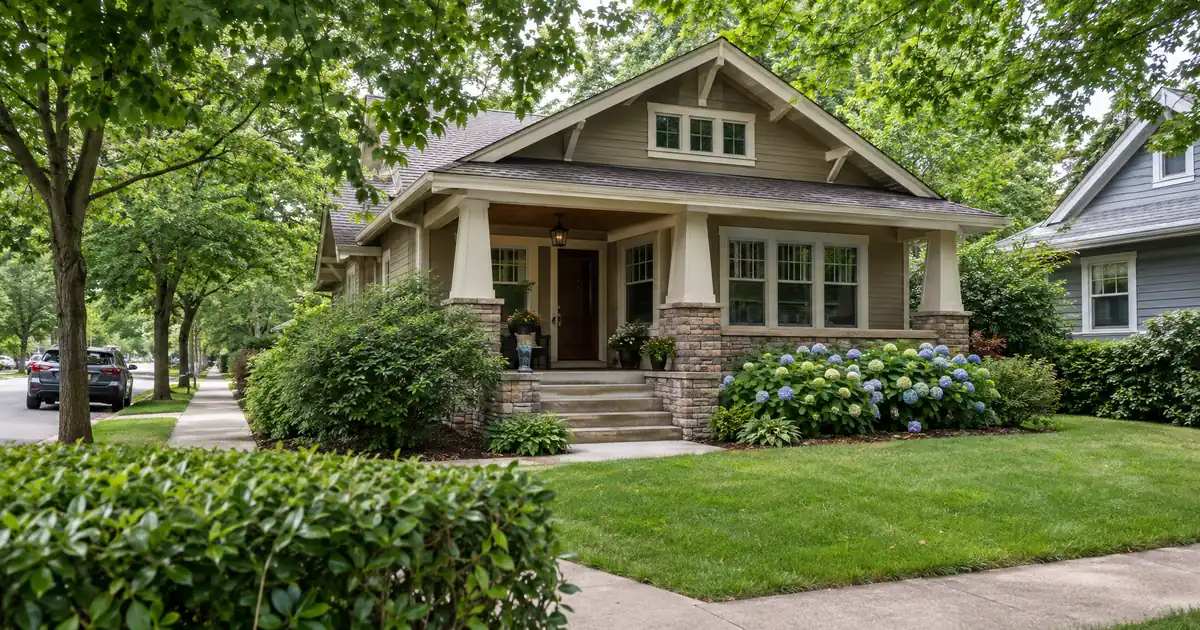
The Quick Read: Setting up an entity for an out-of-state rental means forming an LLC, usually in the property’s state or registered there as a foreign entity, then handing the lender a clean entity file. Nothing in federal law forces an LLC on a DSCR loan. The lender program decides whether you close in your own name or in an entity. The entity changes the paperwork, not the rent test.
- Many programs allow either structure. Some programs or states require entity vesting.
- The default is to form the LLC where the property sits.
- Formed elsewhere? Expect a foreign registration and a good-standing certificate.
- An individual typically still signs a personal guaranty.
- Rent coverage is tested the same way, with or without an LLC.
You found a duplex three states away. The numbers look fine. Then the lender asks what entity will own it, and the deal stalls on a question you hadn’t planned for. This walkthrough covers how that question gets answered.
What Does the Lender Actually Want From an Entity?
The lender wants proof that the borrowing entity exists, is in good standing, and has someone with authority to sign. It also wants a guarantor who brings credit, reserves, and experience. Across our wholesale network, those same four items show up on nearly every entity file.
DSCR means debt service coverage ratio. It compares the property’s rent to its monthly obligation (principal, interest, taxes, insurance, and any association dues, together called PITIA). The entity does not touch that math. A lease, an appraiser’s market rent schedule, or short-term rental history still has to support the rent.
Qualification runs primarily on property-level rental income covering the payment, subject to lender guidelines. The entity is the container. The property’s income is what gets tested.
Key Terms Defined
Domestic LLC: an LLC formed in the same state where it does business or holds property.
Foreign LLC (foreign registration): an LLC formed in one state and registered to operate in another. “Foreign” here means out of state, not out of country.
Registered agent: the person or company a state designates to receive legal papers for the LLC.
Good standing: a state’s confirmation that the LLC has filed what it owes and may legally operate.
Guarantor: the individual who personally backs a loan made to the LLC.
Operating agreement: the document that sets out who owns the LLC and who can sign for it.
Does a DSCR Loan Require an LLC?
No law requires one. Vesting, meaning the name that holds title, is set by each lender program’s guidelines. Many programs accept either a personal name or an entity. Some programs or states require the entity. Ask which applies before you pick a structure.
DSCR loans are designed for non-owner-occupied investment properties. Because they are business-purpose investor loans, they are reviewed differently from a standard owner-occupied mortgage. That is also why lending to an LLC is routine. The federal rule that defines business-purpose credit, Regulation Z section 1026.3, exempts business-purpose credit, and its commentary says the lender decides case by case whether the primary purpose qualifies. The purpose controls, not the label on the collateral.
For a property you plan to rent out, an entity is usually a good-practice choice for liability reasons. It is rarely a legal necessity.
Where Should You Form the LLC?
Form it in the property’s state by default. The alternative is to form it at home and register it in the property’s state as a foreign LLC. Either path can work for a lender. The difference is cost and paperwork.
Here is how the three common structures compare.
| Factor | Property-state LLC | Home-state LLC, foreign-registered | Parent LLC over property LLC |
|---|---|---|---|
| Filings | One formation | Formation plus registration | Two formations, often more |
| Upkeep | One state’s annual items | Two states’ annual items | Several filings |
| Lender file | Simplest | Adds registration papers | Adds ownership chart |
| Best fit | First purchase there | Existing LLC, new state | Privacy or portfolio goals |
| Watch-out | Another entity to track | Easy to skip registration | Acceptance varies |
A common belief says a Wyoming or Delaware LLC lets you skip registration where the property sits. Generally it does not. An attorney’s overview from Aaron Hall explains that triggers vary by state, and that an unregistered LLC may be served with a lawsuit through a state office rather than through the owner. Where the property sits tends to decide where disputes land, so a distant formation state rarely buys protection.
Registering an existing LLC in a new state is often cheaper than forming a second entity. Weigh that against keeping each property in its own LLC.
What Documents Will the Underwriter Ask For?
Expect a short entity file. Most programs in our network want some version of this list:
- Articles of organization, the filing that created the LLC.
- The operating agreement, showing owners and signing authority.
- The EIN letter, which is the IRS tax ID for the LLC.
- A certificate of good standing.
- Foreign registration paperwork, when the formation state differs from the property state.
- Government ID and credit authorization for the guarantor.
The underwriter reads these for three things. Who owns the LLC? Who can sign for it? Does the exact legal name match everywhere? A mismatch between the note, title, insurance policy, lease, and appraisal is one of the most common snags at the end of a file. Fix the name on every document before the title team finds it.
On guaranty: the loan goes to the LLC, but an individual typically still signs. The LLC does not replace the guarantor.
Can You Apply Before the LLC Exists?
Often yes. Many programs accept an application under a to-be-formed entity, provided the LLC is formed and in good standing before closing. That is lender-specific, so confirm it before you rely on it.
The practical sequence runs like this.
1. Confirm the program’s vesting rule and the lender’s entity checklist.
2. Form the LLC and get the EIN.
3. Open an LLC bank account.
4. Register as a foreign entity in the property state, if the LLC was formed elsewhere.
5. Assign the purchase contract to the LLC, or sign it in the LLC’s name from the start.
6. Order the good-standing certificate and send the full entity file.
7. Match the exact name on title, insurance, lease, and appraisal.
8. Close in the LLC’s name.
Run the steps in that order. Good-standing and registration certificates take time to arrive, so starting them late is how entity paperwork becomes the last open item on a file.
Picture an investor in one state buying a fourplex in another. She forms the LLC at home, registers it in the property state, and the lender asks for both sets of papers. Her contract was signed in her personal name, so she assigns it to the LLC before closing. Nothing about the rent test changed. Only the file got heavier.
Where Do Layered Structures Fit?
Some investors put a parent LLC above a property LLC for privacy or portfolio organization. Series LLCs, trusts, and multi-tier ownership also appear. Acceptance varies by program, so get written pre-clearance before you build the structure. Across the network, a second layer means extra documents: an ownership chart, the parent’s own formation papers, and clarity on who the borrower is and who the guarantor is.
Owning several LLCs? Keep the guarantor profile consistent across files. Reserves and credit are viewed at the guarantor level, so the same person is effectively being counted again each time.
For investors holding multiple rentals, some programs offer a single loan across several properties. That is a different product, with its own entity requirements. Lendmire’s complete DSCR loans guide covers how the main program types fit together.
Where the Rules Break
A few edge cases deserve a straight answer.
Deeding a mortgaged property into an LLC. Transferring a property you already finance into an LLC before the refinance risks a due-on-sale clause. The cleaner fix is to vest in the LLC at the refinance closing.
Foreign-formed entities. An LLC formed outside the United States is still a reporting company under the federal beneficial-ownership rule. Many DSCR programs also require a U.S.-formed entity. Confirm with the program before you form anything.
Owner-occupied or mixed-purpose loans. The word “investment” on a property does not by itself exempt a loan from consumer rules. Compliance Alliance notes the exemption depends on occupancy, loan purpose, and unit count. An LLC guaranteeing an individual’s consumer-purpose loan does not change that, per the ABA Banking Journal. Purpose controls, not the guarantor.
Property types. Manufactured homes, log homes, and barndominiums are not offered through our network’s DSCR programs, entity or no entity.
What About Federal Beneficial-Ownership Reporting?
As of the latest published guidance, domestic LLCs are exempt. FinCEN says U.S.-formed companies and U.S. persons no longer file beneficial-ownership reports. The Federal Register notice says only entities formerly called foreign reporting companies must still report. A final rule has been under federal review, so treat any permanence claim with caution. State-level LLC transparency rules may still apply as well.
Check the current position with your attorney before you file or skip anything.
What Changes After Closing?
The loan does not end the entity’s obligations. Plan a short compliance calendar: annual reports in each state, registered agent renewals, and good-standing upkeep. Keep a dedicated LLC bank account and avoid mixing personal and LLC funds, because commingling weakens the liability shield.
Letting the entity lapse can create trouble with the lender and with the state. Set reminders in both states from day one.
Common fix-it situations come up too:
- Formed in the wrong state: you can register it as a foreign entity, or form a new one and move title at the next refinance.
- Never registered in the property state: register it, then confirm that good standing is in place before any new loan application.
- Bought personally, want an LLC: vest in the LLC at a refinance closing, not through a stand-alone deed, to avoid due-on-sale risk.
Leverage, Credit, and Reserves Still Apply
Entity choice does not move the loan terms. Across our network, purchase loans on investment property typically land at 75% to 80% LTV, and cash-out refinances top out near 75%. LTV is loan-to-value, the loan as a share of the property’s value. A 620 credit floor exists in parts of the network, most programs want around 660, and 700 or higher opens the strongest leverage tiers. Reserves, the cash you hold after closing, commonly run about six months of PITIA, with about nine months above $1,500,000, subject to lender guidelines.
DSCR starts at 1.00 on select programs. Clearing it is not the same as positive cash flow, because repairs, vacancy, management, and utilities sit outside the calculation. Sub-1.00 coverage is available through select lenders in the network, with leverage and terms adjusted.
If you are also weighing a cash-out later, Lendmire’s piece How to Cash Out Multi-State Rentals After a DSCR Lender Cap picks up where this one stops.
Who Does What?
An attorney advises on formation, foreign registration, and liability. A CPA handles taxes, including any nonresident filings. The registered agent receives legal papers. The title company confirms the vesting and names. The lender reviews the entity file against program rules.
A broker’s role sits between you and the lenders. Lendmire arranges financing through select lenders in its wholesale network across 41 markets, including Washington, D.C. It does not give legal advice. For state-by-state filing details, see Lendmire’s guide DSCR Cash-Out Entity Registration Rules for LLC-Held Rentals by State.
Tax treatment varies; consult a qualified professional before relying on any deduction or filing position.
This article is general information, not legal or tax advice. Talk with a qualified attorney or CPA about your own situation before forming or registering an entity.
Frequently Asked Questions
Do I have to buy an out-of-state rental in an LLC to get a DSCR loan?
No. Many programs allow either a personal name or an entity, and some require the entity. The program’s vesting rule decides, so ask before you form anything.
Should I form the LLC at home or in the property’s state?
The common default is the property’s state. Forming at home usually means you also register as a foreign entity where the property sits, which adds a second set of filings and fees. If you already hold a home-state LLC, registering it can cost less than forming a new one.
Can I apply before the LLC is formed?
Often, yes. Many programs accept a to-be-formed entity if the LLC exists and is in good standing before closing. This is lender-specific, so confirm it first.
Does the LLC replace the personal guaranty?
Typically not. The loan is made to the LLC, and an individual usually signs a guaranty. That person’s credit, reserves, and experience still get reviewed.
Does an LLC change how rent coverage is calculated?
No. The coverage ratio compares the property’s rent to its PITIA, and the rent still has to be supported by a lease, an appraiser’s market rent schedule, or short-term rental history. Short-term rental rules can vary by city, county, HOA, and property type, so investors should confirm local rules before relying on projected rental income.
If you are buying or refinancing a rental property and want to see how the numbers work, Lendmire can help you compare DSCR loan options based on the property income, credit profile, leverage, and investor goals.
About Lendmire
As a non-QM mortgage broker (NMLS# 2371349), Lendmire facilitates DSCR investor loans across 41 markets, including Washington, D.C. DSCR eligibility is generally reviewed around property-level rental income instead of personal income documentation, subject to lender guidelines, serving LLC-structured portfolios and self-employed borrowers who don’t fit conventional boxes. A two-time Scotsman Guide Top Mortgage Workplace (2025, 2026).
Get Started
Ready to find the right loan for you?
In about 30 seconds you can review financing options available for your investment property. No commitment required.
Informational only. Not a Loan Estimate, approval, or commitment to lend. Program availability and eligibility are subject to lender guidelines, credit approval, property review, and underwriting.
References
1. CFPB, Regulation Z § 1026.3
2. Aaron Hall, LLCs and Out-of-State Property
3. Compliance Alliance, Regulation Z and Investment Properties
4. ABA Banking Journal, LLC guarantor and exemption question
5. FinCEN, Beneficial Ownership Information
This article is part of Lendmire’s DSCR loan program — full qualification details, guidelines, and scenarios live on the program page.
Related reading: Does a DSCR Lender Accept Airdna Projections for a New-Build STR? · Will a DSCR Lender Count Mid-Term Income for an STR Portfolio Operator? · Can One DSCR Lender Finance All Four LLC-Held Tower Units?
Brandon Miller
Founder & CEO, Mortgage Loan Originator, Lendmire LLC
- Mortgage Loan Originator · NMLS# 1129696 · Verify on NMLS Consumer Access
- North Carolina Real Estate Broker · License# 343312 · Verify on NCREC
- North Carolina Insurance Producer · License# 19053198 · Property, Casualty, Life, Health · Verify on NAIC SBS
- Lendmire LLC · Firm NMLS# 2371349 · Verify firm licensure
Important disclosures. Lendmire (NMLS# 2371349) is a licensed mortgage brokerage. Lendmire is not a direct lender, depository institution, or financial advisor. All loan inquiries are subject to lender underwriting; this article does not constitute a commitment to lend. Rates, terms, and program guidelines are subject to change without notice and vary by borrower profile, property type, and state. Information in this article is general in nature and is not financial, legal, or tax advice. Equal Housing Opportunity. NMLS Consumer Access: nmlsconsumeraccess.org.