
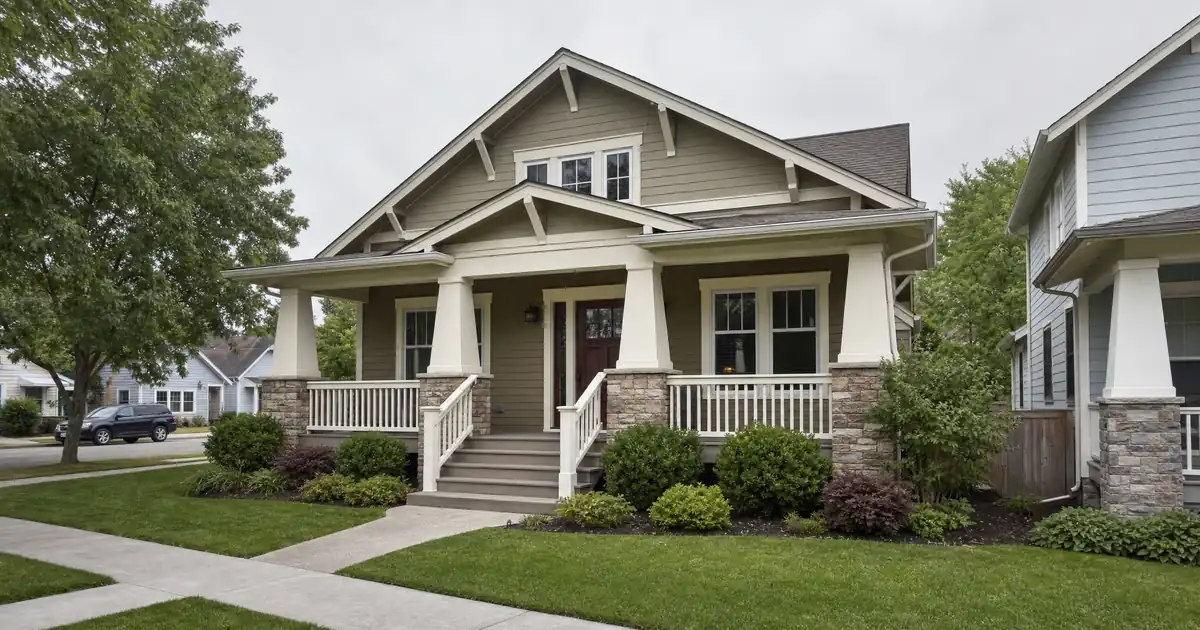
Estate planning with DSCR-financed rentals covers the federal law and tax basis rules that determine how rental property transfers to heirs or trusts. Moving a DSCR-financed rental into an estate plan comes down to two things: one 1982 federal law, and one IRS basis rule. The Garn-St Germain Act protects certain transfers from triggering a lender’s due-on-sale clause. This includes moving a property into a revocable living trust. It also includes passing a property to heirs at death. But it does NOT protect a transfer into an LLC. Irrevocable trusts sit in a gray zone. The cleanest fix? Vest the DSCR loan directly in the LLC — or the trust-owned LLC — at the start. Do this at origination, and you sidestep most of this analysis entirely.
DSCR Calculator
Run the numbers in your market
Rate source: Freddie Mac 30-yr average via FRED® — Federal Reserve Bank of St. Louis · effective Jul 30, 2026
Prefilled with starting assumptions — enter your own rent or nightly figures, taxes, insurance, and HOA for a more accurate picture.
Program parameters update from Lendmire’s centralized guideline source. Taxes and insurance are editable estimates.
As of Jul 30, 2026 · General Freddie Mac market benchmark, not a Lendmire loan offer. Rent, nightly rate, occupancy, taxes, and insurance are editable estimates. Short-term rental figures are estimates only and vary significantly by season, property type, management approach, and local short-term-rental rules — confirm local regulations before relying on them. Qualifying income for short-term rentals varies by program — some use appraisal market rent, others use documented STR history or projections — and is confirmed in underwriting. Not a Loan Estimate, approval, or commitment to lend. Program availability and eligibility are subject to lender guidelines, credit approval, property review, and underwriting.
What Actually Governs This — And What Doesn’t
The rules here don’t come from any DSCR lender’s guidelines. They come from federal law. Specifically, they come from the Garn-St Germain Depository Institutions Act of 1982, codified at 12 U.S.C. § 1701j-3. They also come from IRC § 1014, which governs how basis works at death. Every mortgage — DSCR or conventional — has a due-on-sale clause. This clause lets the lender call the loan due if title changes hands without the lender’s OK. Garn-St Germain blocked states from limiting that clause. But it also carved out nine specific transfers that a lender can’t use to speed up a loan. This protection applies to residential property under five units. The Cornell Legal Information Institute explains the clause plainly: it lets a lender demand full repayment if the property is sold or transferred.
Two of those nine exemptions matter most for estate planning on a rental. First: a transfer by devise, descent, or operation of law at death. Second: a transfer into a revocable living trust, as long as the borrower stays a beneficiary. Neither one needs the lender’s approval first. Both are protected by statute. Everything else is where DSCR investors run into trouble.
DSCR loans work differently than agency loans. They’re built as business-purpose products that can close directly into an LLC, corporation, or trust. Agency loans instead rely on Form 1007 or Form 1025 to document market rent for a borrower who qualifies under their own name (per Fannie Mae’s Selling Guide). That flexibility at closing is exactly why estate planning overlaps with DSCR financing far more than it overlaps with a standard 30-year owner-occupied mortgage. Want the full picture on how a DSCR lender reviews a file before trust or LLC mechanics get layered in? Lendmire’s complete DSCR loans guide covers the basics.
Why the LLC Doesn’t Get the Same Protection
Putting a rental into an LLC is not the same move as putting a primary residence into a revocable trust. Treating them the same is the single most common estate-planning mistake DSCR investors make. Garn-St Germain’s nine exemptions say nothing about LLCs. Several estate-planning law firms confirm this gap directly. The Act does not exempt a transfer to an LLC or any other ownership vehicle. An LLC is its own separate legal entity. That means a transfer from you to your own single-member LLC can trigger the due-on-sale clause — even though nothing really changed about who benefits from the property, according to Navigate Law Group.
This is where the residential-occupancy framing bites. Paramus Estate Planning puts it plainly: an owner-occupant can move a primary residence into a trust without triggering the clause. But there’s no federal protection built for an owner-landlord.
The fix that avoids the whole question: vest the DSCR loan in the LLC — or the trust-owned LLC — right at closing. Don’t wait until after. If no transfer happens after the lien attaches, there’s nothing for the due-on-sale clause to catch. This single decision matters more than almost anything else in this whole process. Make it once, at origination. Don’t try to fix it later.
Revocable Trust, Irrevocable Trust, or LLC — Which One Actually Works
| Structure | Due-on-sale protection | Control retained | Best fit |
|---|---|---|---|
| Revocable living trust (borrower stays beneficiary) | Protected under statute | Full control during life | Probate avoidance on an already-titled property |
| Irrevocable trust | Generally NOT protected | Reduced or none | Asset protection / Medicaid planning goals |
| LLC (any form) | Not protected by the Act | Full, but entity-level | Liability separation, DSCR origination vehicle |
| Trust-owned LLC, vested at origination | No transfer occurs — question moot | Full, layered | Combines liability separation with estate continuity |
A revocable living trust is the exact tool Congress built this exemption for. A grantor is usually also the beneficiary of their own revocable trust. The trustee simply holds the property for the grantor’s benefit. So this exemption is usually satisfied automatically when someone moves an already-financed rental into a revocable living trust (Law Stein Anderson, LLP).
Irrevocable trusts get murkier. Why? Because the whole point of using one is often to remove the grantor as a controlling beneficiary. Once the grantor stops being a beneficiary, the Garn-St Germain protection no longer applies, per Miller, Miller & Canby. This isn’t a drafting error you can just fix. It’s a structural tradeoff. Asset protection and Medicaid-planning trusts remove control on purpose, to shield assets from creditors. That same removal is what strips away the due-on-sale exemption.
What Happens at the Owner’s Death
An heir who inherits a DSCR-financed rental — through devise, descent, or as a surviving relative — gets independent protection from loan acceleration. This comes from Garn-St Germain’s death exemptions. It’s completely separate from what happens to the property’s tax basis. That’s the mechanical good news. Here’s the tax good news too: under IRC § 1014, administered through IRS Publication 551, the property’s basis generally resets to fair market value on the date of death. (Or on the alternate valuation date, if the estate elects it.)
That step-up matters more than most investors expect. The old depreciation schedule ends at death. The heir does not inherit it. A new depreciation schedule starts on the stepped-up basis instead, according to The Real Estate CPA. If an heir plans to keep operating the rental rather than sell it, that fresh depreciation schedule can change the cash-flow picture for years.
But what happens to the loan itself is a different question than what the law protects. The statute protects against forced acceleration. It doesn’t say who services the debt during the transition. It doesn’t say whether an heir needs to formally assume or refinance the note to keep the DSCR loan going long-term. This gap is where most estate plans for leveraged rentals fall short. They plan for who inherits the property. They don’t plan for who keeps making the payment while probate or trust administration plays out. A liquidity reserve — or a life insurance policy sized to the outstanding balance — is the practical answer here. Investors and their attorneys should weigh this alongside the trust or LLC structure itself, not as an afterthought.
Getting a professional appraisal near the date of death matters too. Why? Because documenting the stepped-up value supports it later, if the property gets sold or refinanced.
Multiple Heirs, Unequal Splits, and Forced-Sale Risk
Leaving a single rental to multiple heirs creates a specific problem. Someone has to manage the property. Someone has to keep the DSCR loan current. Meanwhile, co-heirs may want different things. One wants cash. One wants to hold. One wants to sell. If the estate plan doesn’t address how a buyout gets funded, the default outcome is often a forced sale. That sale happens whenever the market happens to be, not when the heirs would have chosen it with better planning.
This is where the trust-plus-LLC structure earns its complexity. A trust can name a single successor trustee. That trustee can manage the LLC’s membership interests and keep the DSCR loan serviced without disruption. Heirs get fractional interests in the trust, rather than direct co-ownership of the property itself. This avoids the deed-level tangle of multiple names on one title and one loan. It won’t eliminate disagreement among heirs. But it keeps the property — and the loan — administratively intact while that disagreement gets sorted out.
Community Property and the Double Step-Up
Nine states use community-property rules: Arizona, California, Idaho, Louisiana, New Mexico, Nevada, Texas, Washington, and Wisconsin. In these states, a surviving spouse gets a more generous basis reset than the general rule allows. Per Fidelity, a surviving spouse in a community property state can get a full step-up in basis on both halves of jointly owned assets. In a common-law state, that spouse only gets half the adjustment. For a couple holding a DSCR-financed rental jointly, this makes a real difference in what the surviving spouse’s basis looks like going forward. And it’s state-specific — not a nationwide default.
The Gift-Versus-Devise Mistake
Gifting a rental property during life feels proactive. But it often costs the recipient real money later. A lifetime gift into an LLC or irrevocable trust carries over the original owner’s basis. The recipient doesn’t get a reset. Leaving the same property through a will or trust at death gets the full step-up instead. LLK Law states the cost plainly: gifting a property instead of leaving it through a will or trust means the recipient loses the stepped-up basis. That can add up to thousands in avoidable capital gains tax down the road. The instinct to “get it out of the estate early” by gifting often works against the very tax outcome the estate plan is trying to achieve.
When Lender Consent Is the Missing Step
Sometimes a planned transfer isn’t clearly covered by one of the nine Garn-St Germain exemptions. An irrevocable trust move. An LLC transfer. Anything outside the death and revocable-trust carve-outs. In these cases, the smart move is getting the lender’s written consent before you make the transfer — not after. Lenders probably aren’t watching land records for every transfer that might trigger the clause. But “probably not caught” is a risk bet, not a legal position. The loan stays technically callable indefinitely. That risk tends to matter more when lenders have a financial reason to look closely.
There’s real litigation on this exact situation. In Baldin v. Wells Fargo Bank, N.A., a borrower transferred a rental property to an LLC. That LLC was then funded into a trust. This is nearly the exact structure many DSCR investors use. The Ninth Circuit found that the lender’s occupancy requirement — which came from regulation, not the statute itself — went beyond what regulators were allowed to require. But the court still held that the LLC transfer got no statutory protection. One law firm warns that because the ruling was unpublished, some courts may not follow it. It shows how one federal court reasoned through this situation. It’s not a guarantee that any other court would agree.
Working DSCR files that involve trust or LLC transfers after closing shows a clear pattern. Documentation completeness makes the difference. That means trustee certification, entity operating agreement, and clear chain-of-title language. These are what separate a smooth lender review from a stalled one. Files that get the lender’s consent letter in hand before the deed records tend to move through refinance or servicing transfer review without a hitch. Files that transfer first and explain later create exactly the kind of open question that a servicer’s transfer-review desk flags.
Where DSCR Program Mechanics Fit In
None of the trust or LLC analysis above changes how a DSCR loan actually qualifies. DSCR loans are built for non-owner-occupied investment properties. Because they’re business-purpose products, they get reviewed differently than a standard owner-occupied mortgage. Qualification runs mainly on whether the property’s rental income covers the payment, subject to lender guidelines — not on personal income documents.
Across the wholesale network Lendmire works with, most purchase files land at 75%-80% LTV. Some high-leverage programs reach 85% LTV for borrowers around a 700+ credit score. A coverage ratio of 1.00 is the standard floor for most programs. Stronger ratios open up better leverage and pricing tiers. Credit floors run as low as 620 in parts of the network, though most programs want something closer to 660. Reserve requirements vary by lender, leverage, and loan size. They commonly land around six months of PITIA. Loans above roughly $1,500,000 often need closer to nine months.
Say an heir inherits a DSCR-financed property and wants to refinance instead of simply assuming the note. Cash-out refinances in the network generally top out around 75% LTV, with about six months of seasoning expected. That timeline matters when an estate needs liquidity to equalize a distribution among heirs, or to fund a buyout. Lendmire’s guide on pulling equity from a rental covers this in more depth, along with its breakdown of DSCR loans versus conventional financing. Weighing whether to hold, refinance, or exit a leveraged rental through a different structure? It can help to compare a DSCR loan against a bridge loan for short-hold situations, or to look at how DSCR financing scales a broader portfolio across multiple entities under one trust.
Not every property type fits this kind of financing, no matter how the estate is structured. Manufactured homes — single- and double-wide — along with log homes and barndominiums fall outside these DSCR programs entirely. This matters when an estate plan assumes a property can simply be refinanced into a trust-owned LLC structure without checking eligibility first.
This article is general information only, not legal or tax advice. Estate planning involving a DSCR-financed rental touches property law, trust law, and federal tax rules. These vary by state and by individual situation. Anyone weighing these structures should talk to a qualified estate planning attorney and a CPA about their specific situation before transferring title or restructuring ownership. Nothing here is a commitment to lend. Any DSCR scenario discussed is subject to lender approval and to borrower, property, and program guidelines that can change.
Key Terms Defined
Due-on-sale clause — a provision in nearly every mortgage letting the lender demand full repayment if the property, or an interest in it, is transferred without the lender’s consent.
Garn-St Germain Act — the 1982 federal law that preempted state limits on due-on-sale clauses while carving out nine specific transfers a lender can’t use to accelerate the loan.
DSCR vs. conventional financing
Two common ways to finance an investment property in this market. They qualify you differently — here’s how investors weigh them.
Why investors choose it
- Qualifies on the property’s rental income — no personal tax returns, W-2s, or pay stubs needed to document income.
- No personal debt-to-income ceiling to clear, so existing mortgages and obligations don’t cap your borrowing the same way.
- Can be closed in an LLC, keeping the property inside a business entity.
- Built for scaling — not held to the limit on number of financed properties that conventional financing applies.
- Underwriting centers on the deal: generally qualifies when the rent covers the payment, a 1.00x coverage ratio being a common baseline (confirmed in underwriting).
- Designed specifically for investment property, including long-term and, where the program allows, short-term rentals.
Where it’s strong
- Often the lowest ongoing financing cost for a buyer who fully qualifies on personal income — a fit for a first property or a cost-first purchase.
Trade-offs for investors
- Requires full personal income documentation and must fit within a debt-to-income limit — salary, existing debts, and other mortgages all count.
- Typically held in your personal name rather than a business entity.
- Caps how many financed properties you can carry, which can become a ceiling as a portfolio grows.
- Evaluates you as a borrower as much as the property, which usually means more paperwork.
How investors usually choose: a first or single property often optimizes for the lowest financing cost; portfolio builders often optimize for leverage, vesting in an LLC, and scaling past conventional caps. The right answer depends on your goals, the property, and current guidelines — both paths run through select lenders in Lendmire’s wholesale network, with eligibility and terms confirmed in underwriting.
Step-up in basis — the tax rule under IRC § 1014 that resets an inherited property’s cost basis to its fair market value on the date of death, shrinking taxable gain if the heir later sells.
Revocable living trust — a trust the grantor can change or revoke during life, typically naming the grantor as both trustee and beneficiary while alive.
Irrevocable trust — a trust that can’t easily be changed once created, often used for asset protection or Medicaid planning, usually at the cost of the grantor no longer being a named beneficiary.
Frequently Asked Questions
What is a DSCR loan for real estate?
A DSCR loan reviews a rental property based on the income the property itself produces, not the borrower’s personal W-2 or tax return income. Lenders compare the property’s monthly rent to its monthly PITIA (principal, interest, taxes, insurance, and any HOA dues) to get a coverage ratio. It’s a business-purpose loan built for investment properties. That’s part of why it’s structured to close directly into an LLC or trust, rather than just a personal name.
What is a DSCR loan for rental property?
It’s financing where the rental income the property produces — not the investor’s personal income — carries the qualification. Certain programs in Lendmire’s wholesale network start at a rent-to-payment ratio of 1.00, though stronger coverage usually unlocks better leverage and terms. Because qualification is based on the property, DSCR loans fit naturally with the LLC and trust ownership structures used in estate planning.
Can an LLC transfer trigger a due-on-sale clause even if I still own the LLC?
Yes. Courts and estate-planning attorneys agree that an LLC is a legal entity separate from its owner. So transferring title from you to your own single-member LLC can technically trigger the clause, even though who actually benefits from the property hasn’t changed. The safer route is vesting the DSCR loan directly in the LLC at origination. This avoids the post-closing transfer question entirely.
Does putting a rental in a revocable trust protect it from due-on-sale acceleration?
Generally, yes — as long as the borrower stays a beneficiary of the trust and the transfer doesn’t change occupancy rights. This is one of the nine transfers Garn-St Germain specifically protects. It’s usually satisfied automatically in a standard revocable living trust setup.
What happens to a DSCR loan when the property owner dies?
The Garn-St Germain Act’s death-related exemptions protect the transfer to heirs or a surviving joint tenant from triggering acceleration. Separately, the property generally gets a stepped-up basis under IRC § 1014, which resets depreciation. Whether the heir keeps the existing loan, needs to formally assume it, or refinances depends on the lender, the loan documents, and whether the heir wants to keep operating the property. This is worth reviewing directly with the lender, or by looking at a refinance option.
If a rental property already sits inside a DSCR loan, and an estate plan is being built or revisited around it, Lendmire can help compare refinance and structuring options based on the property’s income, current leverage, and the borrower’s goals. Reach out at 828-256-2183 or through a pricing quote request.
This article is for general informational purposes only and does not constitute legal, tax, or financial advice. Loan approval is never guaranteed, and nothing here represents a commitment to lend. Any DSCR loan scenario described is subject to lender approval and to underwriting guidelines covering the borrower, the property, and the specific program. Lendmire (NMLS# 2371349) is a mortgage broker that arranges DSCR investor financing through select lenders in its wholesale network, covering 41 markets including Washington, D.C. Terms, eligibility, and program availability vary by lender and are subject to change.
About Lendmire
Lendmire is a DSCR-focused mortgage brokerage, NMLS# 2371349, placing investor loans across 41 markets, including Washington, D.C. DSCR eligibility is generally reviewed by the lender on a property’s rental income rather than personal income documentation, which fits LLC-held rentals, self-employed investors, and portfolios scaling past conventional financed-property limits. Scotsman Guide named Lendmire a Top Mortgage Workplace in both 2025 and 2026.
Get Started
Ready to find the right loan for you?
In about 30 seconds you can review financing options available for your investment property. No commitment required.
Informational only. Not a Loan Estimate, approval, or commitment to lend. Program availability and eligibility are subject to lender guidelines, credit approval, property review, and underwriting.
References
1. Cornell Legal Information Institute — 12 U.S.C. § 1701j-3
2. Cornell LII Wex — Due-on-Sale Clause
3. Fannie Mae Selling Guide — Rental Income (B3-3.8-01)
4. Navigate Law Group — Garn-St Germain Act Explainer
5. Paramus Estate Planning — Due-on-Sale and Trust/LLC Explainer
6. Law Stein Anderson, LLP — Garn-St Germain Act Exceptions
7. Miller, Miller & Canby — Garn-St Germain Act Explainer
8. IRS Publication 551, Basis of Assets
9. The Real Estate CPA — How to Inherit a Rental Property
10. Fidelity — What Is a Step-Up in Cost Basis
11. LLK Law — The Garn-St. Germain Act: Key Implications for Estate Planning
12. Justia — Baldin v. Wells Fargo Bank, N.A., 9th Circuit
This article is part of Lendmire’s DSCR loan program — full qualification details, guidelines, and scenarios live on the program page.
Related reading: How The Due-on-sale Clause Applies To A DSCR Rental Transfer? · How A Jumbo DSCR Loan Treats A Transfer To An LLC Under Due-on-sale? · How To Vest A Jumbo DSCR Rental Loan In A Revocable Or Irrevocable Trust
Brandon Miller
Founder & CEO, Mortgage Loan Originator, Lendmire LLC
- Mortgage Loan Originator · NMLS# 1129696 · Verify on NMLS Consumer Access
- North Carolina Real Estate Broker · License# 343312 · Verify on NCREC
- North Carolina Insurance Producer · License# 19053198 · Property, Casualty, Life, Health · Verify on NAIC SBS
- Lendmire LLC · Firm NMLS# 2371349 · Verify firm licensure
Compliance and disclosures. Lendmire (NMLS# 2371349) is a licensed mortgage broker and is not a direct lender, depository institution, financial advisor, or tax professional. Content in this article is general market analysis and educational information — not financial, legal, or tax advice for any specific situation. Lendmire does not guarantee loan approval; every transaction is subject to underwriting by the funding lender. Mortgage pricing and loan program guidelines are subject to change at any time without notice and vary by borrower characteristics, property type, and state regulations. Lendmire complies with Equal Housing Opportunity. Licensure verification: NMLS Consumer Access.