
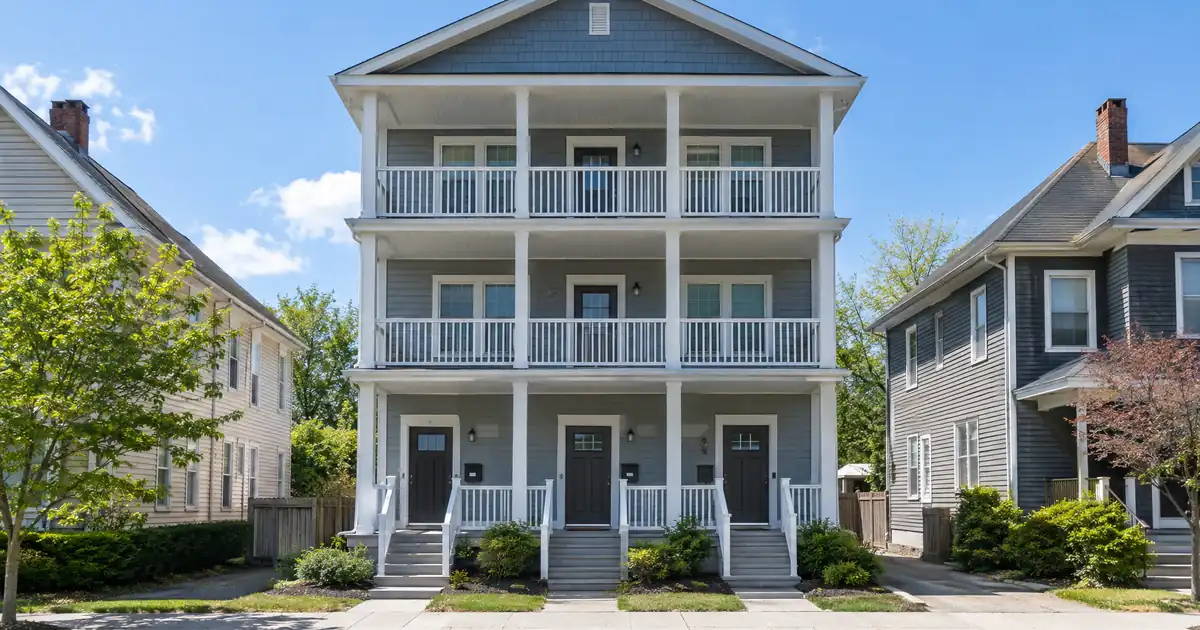
The Quick Read: No, not on the core rules. FHA uses the same cash-out rules on a duplex as on a single-family home. A three- or four-unit home adds a rental-income test, so it can be harder, not easier. Where FHA can feel more generous is against other loan types, and that is a different comparison. Everything here is subject to lender guidelines and full file review.
What Does “Easier” Actually Mean?
“Easier” can mean four different things. Each one has its own answer for a multi-unit home.
- Easier on credit? The unit count does not change the credit floor. The wholesale programs Lendmire places FHA loans with start at a 580 decision score.
- Easier on equity? No. The leverage cap is the same on a duplex and a single-family home.
- Easier on paperwork? For two units, about the same. For three or four units, there is more to document.
- Easier than the alternatives? Sometimes. That depends on what a conventional lender would allow on the same building, and it is covered below.
Here is how it works in practice. The FHA cash-out refinance program reaches 80% loan-to-value (LTV) on a home you have owned and lived in for 12 months before the case number is assigned. LTV is the loan amount divided by the appraised value. That 80% ceiling applies whether the building has one unit or four.
So the unit count does not unlock more cash. It only decides how many extra tests the property must pass.
The “owner-occupied” part matters here. The building can have up to four units, but you must live in one of them as your principal residence. A rental building you do not live in does not qualify for this program, and rental income cannot stand in for the occupancy history.
The Scorecard: 1–2 Units vs. 3–4 Units
This table shows what changes and what stays put on an FHA cash-out for an owner-occupied home.
| Factor | 1–2 units | 3–4 units |
|---|---|---|
| Maximum LTV | 80% | 80% |
| Ownership and occupancy | 12 months | 12 months |
| Credit starting point | 580 score | 580 score |
| Rental-income test | None | Self-sufficiency test |
| Appraiser’s rent estimate | Informational | Drives the test |
| Mortgage insurance | Upfront and annual | Upfront and annual |
Only two rows change, and both change in the harder direction. Everything else carries across.
Ratios work the same way on both. The base pair is 31/43: housing costs as a share of income, then all debts as a share of income. Documented compensating factors can stretch that to 40/50 at the top tier. The automated underwriting finding decides most files. Ratios are about you and your income, not the unit count.
How Unit Count Changes the Rules
Start with what does not change. HUD cut the maximum LTV and combined LTV on FHA cash-out refinances to 80% of the adjusted value in Mortgagee Letter 2019-11. That is one standard. It is not split by number of units. HUD’s Handbook 4000.1 update wrote the same 80% into the handbook. Adjusted value is the appraised value, with the adjustments FHA requires.
Loan size is still held to the FHA county loan limit for the number of units. County loan limits apply and change every year, so check HUD’s lookup for your county. Limits rise with the unit count.
Two units
A duplex is treated much like a single-family home for cash-out purposes. Your income, debts and credit carry the loan. The appraiser still estimates market rent, but there is no rental-coverage test on top of your income.
Three and four units
This is where it gets harder. Handbook 4000.1 sets a “self-sufficiency” standard for three- to four-unit properties. In plain words, the building’s estimated rent must cover the full housing payment on its own.
The appraiser estimates fair market rent for every unit, including yours. That figure is then reduced for vacancy and upkeep. If the reduced rent does not cover the payment, the loan amount has to come down.
Two cautions from the desk:
- The appraiser’s rent estimate drives the test. Your current leases do not.
- Lenders can differ on how they apply this test to a refinance. Plan for it on any three- or four-unit cash-out, and ask your loan officer how the lender will treat it.
The “extra unit” question is worth raising early too. Some lenders count a duplex with an accessory dwelling unit as a three-unit property. If your home has an in-law suite or a converted garage, that can pull the test in.
How Rent Counts on a Cash-Out
Rent does less than most owners expect. On a one- or two-unit home, your personal income and debt ratios qualify you. The rent from the other unit is a cushion for your budget. It is not the engine of the approval.
On three or four units, rent plays a bigger part, but as a test of the property. It does not replace your own income. You must still meet the ratio and credit standards.
Think of it as two gates. Gate one is you: income, credit, payment history. Gate two applies only to larger buildings: whether the rent estimate supports the payment. A strong income does not open gate two.
A Worked Example in Percentages
Say a fourplex appraises at 100% of its value. You owe 65% of that value on your current loan. The 80% cap leaves 15% of value as room to work with.
That 15% is a ceiling, not a payout. Several things come out of it before you see cash:
- Closing costs on the new loan.
- Any debts you choose to pay off at closing.
- The balance on any other liens on the home.
The upfront mortgage insurance premium is 1.75% of the base loan and is usually financed, so it adds to the new balance. Then the rental test checks whether the building’s estimated rent supports the new, larger payment. If it falls short, the loan shrinks and so does your cash.
The takeaway: equity is not cash. The same fourplex could produce less cash than the 80% math suggests.
Does “Easier” Mean Approved?
No. Lender overlays can still limit the cash. An overlay is a lender’s own rule on top of the program minimum. Across the wholesale lenders that handle FHA files, the things that most often decide the outcome are:
1. Appraised value and rent estimate. A low appraisal shrinks the 80% ceiling.
2. The 12-month history. Ownership, occupancy and on-time mortgage payments over that period all get checked. Utility bills and similar records often back up occupancy.
3. Debt-to-income with the new insurance included. The new payment, including mortgage insurance, goes into your ratios. Paying off debts at closing can lower the ratio the underwriter measures.
4. Credit. FHA is more forgiving than many options, but HUD’s waiting periods still apply after a bankruptcy or foreclosure: two years from a Chapter 7 discharge and three years from a foreclosure.
5. The rental-coverage test, on three- and four-unit homes.
Mortgage insurance is part of the program, not an add-on. The upfront premium is 1.75% of the base loan. The annual premium runs between 0.15% and 0.75% of the balance, depending on term, loan amount and LTV. On a thirty-year loan at or below 90% LTV, the annual premium ends after eleven years. Above 90% LTV, it lasts for the term. A cash-out sits at 80% at most. Each figure is subject to lender guidelines and a complete review of property type, leverage, and credit.
Occupancy is also a matter of honesty. FHA cash-out is for a home you actually live in. Claiming a home as your residence when you do not live there is a serious problem for the borrower, and lenders check.
What the Cash Costs You
A cash-out refinance replaces your current mortgage with a larger one. The CFPB’s home equity guide notes that your monthly payment may rise and that the loan terms reset. Keep your current loan’s terms in mind. You may be giving up a good one.
The CFPB’s cash-out borrower report found that borrowers most often used the cash to pay off other debts. Home repairs came second. The same release cautions that paying non-mortgage debts with mortgage debt can raise foreclosure risk. Credit card balances that become a mortgage balance are now secured by your home.
Because you keep at least 20% equity, there is a cushion. It is not a license to spend freely. Tax treatment can depend on your situation; borrowers should speak with a qualified tax professional before relying on any deduction or credit.
Is FHA Easier Than Conventional on a Multi-Unit Home?
Sometimes, on leverage. Some conventional programs cap cash-out lower on 2–4 unit primary homes than on single-family homes. Where that holds, FHA’s flat 80% can leave more room. Conventional guidelines change, so confirm the current figures before you rely on a comparison.
This is also why the web looks contradictory. Some pages say multi-unit cash-out is restricted. Others say it is allowed. Both can be true. A particular lender or channel may add its own limits, while the FHA program itself does not split by unit count. Pages written years ago may also be out of date.
Eligibility Checklist
- You live in the home as your principal residence.
- You owned and lived in it for 12 months before the case number was assigned.
- Your mortgage payments over that period were on time.
- The property has one to four units. Larger buildings, and buildings with commercial space, are a different product.
- Your credit meets the lender’s floor, starting at a 580 decision score on the wholesale programs Lendmire works with.
- Your ratios fit the base 31/43 or a documented stretch up to 40/50.
- For three or four units, the appraiser’s rent estimate supports the payment.
Narrow exceptions to the 12-month period may exist, such as certain inherited homes. A lender has to review and approve any exception. Do not assume one applies.
A recent purchase blocks cash-out. A rate-and-term refinance has different rules. It reaches 97.75% LTV on a principal residence occupied for the previous twelve months. It pays off the old loan but does not hand you cash. Leverage, reserves, and pricing vary by lender and program; the final terms follow the full file review.
Who Should Pick FHA, Conventional, or Wait?
| Your situation | Likely fit | Why |
|---|---|---|
| Duplex, 12 months in, modest credit | FHA cash-out | Credit-flexible, same 80% cap |
| Fourplex, rent covers the payment | FHA cash-out | Passes the extra test |
| Fourplex, rent falls short | Compare options | Loan may be reduced |
| Strong credit, lots of equity | Compare conventional | May fit a larger loan |
| Owned under 12 months | Wait | Occupancy rule not met |
| Already holding an FHA loan, no cash needed | FHA Streamline | No appraisal; premium continues |
The Streamline refinances an existing FHA loan with a limited credit review and a net tangible benefit. It does not pay out cash.
Common Myths
“More units means more cash.” No. The 80% cap applies to every unit count.
“My rental income lets me cash out.” Not by itself. You must live in the home, and that history comes first.
“The self-sufficiency test applies to duplexes.” The published standard covers three- and four-unit properties.
“I need an FHA loan already.” Not necessarily. Lenders can pay off a conventional or other loan with an FHA cash-out, if you meet the requirements.
“The 80% cap is new.” It has been in place since HUD’s 2019 change.
Key Terms Defined
Cash-out refinance: a new, larger mortgage that pays off your old one and gives you the difference in cash.
Loan-to-value (LTV): the loan amount divided by the home’s appraised value.
Adjusted value: the appraised value after FHA’s required adjustments, which the 80% cap is applied to.
Self-sufficiency test: an FHA check on three- and four-unit homes that asks whether the building’s estimated rent covers the housing payment.
Debt-to-income ratio: your monthly debts divided by your monthly income, which lenders use to judge what you can carry.
Mortgage insurance premium: FHA’s upfront and yearly insurance charges, paid by the borrower to protect the lender.
Case number: the number FHA assigns to your loan file, which marks the date the 12-month occupancy clock is measured against.
What to Confirm Before You Apply
Check these with a loan officer before you spend money on an appraisal:
- Whether your home counts as two, three or four units, including any accessory unit.
- How the lender applies the rental test to a refinance.
- What your county’s loan limit is for your unit count.
- Whether your payoff, debts and closing costs leave any cash.
- The current version of HUD’s handbook, since rules get updated.
If you are weighing a cash-out refinance against keeping the loan you have, Lendmire can help you compare the programs and the equity each one reaches.
Frequently Asked Questions
Is an FHA cash-out easier to get on a 2–4 unit primary home than on a single-family home?
No. The 80% LTV cap and the 12-month ownership and occupancy rule are the same. Two units look much like one. Three and four units add a rental-coverage test, which makes approval harder if the rent estimate is low. Terms vary by lender guidelines, property type, leverage, credit profile, and full file review.
Can I use FHA cash-out on a rental building I do not live in?
No. FHA cash-out requires a principal residence you have lived in for 12 months. Occupancy decides the leverage, and rental income cannot replace it.
Does the rent from the other units help me qualify?
It depends on the unit count. On one or two units, your own income and ratios carry the loan. On three or four units, the appraiser’s rent estimate must also support the payment. Your current leases do not drive that figure.
How much cash will I actually get?
Less than 80% of value minus your payoff suggests. Closing costs, debts you pay off and other liens all come out of that room. On three or four units, a low rent estimate can shrink the loan further.
Can I do this soon after buying with FHA and moving in?
Not for cash-out. The home must be owned and occupied for 12 months before the case number. A rate-and-term refinance has separate rules but pays no cash.
For your own numbers, request a scenario review with Lendmire.
About Lendmire
As a mortgage broker (NMLS# 2371349), Lendmire helps homeowners and home buyers in 16 states with FHA, VA, conventional and jumbo purchase and refinance loans arranged through wholesale lenders. Lendmire is never the lender; program terms are set by the lender and the agency guidelines. Scotsman Guide named Lendmire a Top Mortgage Workplace in both 2025 and 2026.
Get Started
Ready to find the right loan for you?
In about 30 seconds you can review financing options available for your home or investment property. No commitment required.
Informational only. Not a Loan Estimate, approval, or commitment to lend. Program availability and eligibility are subject to lender guidelines, credit approval, property review, and underwriting.
References
1. HUD Mortgagee Letter 2019-11
2. HUD Handbook 4000.1 update, December 2019 transmittal
3. CFPB, Using home equity guide
4. CFPB: CFPB Report Finds Cash Out Mortgage Refinance Borrowers Improve Credit Scores
This article is part of Lendmire’s FHA Loan series — every loan program’s qualification details, guidelines, and scenarios live on the loan options page.
Related reading: FHA and Conventional Cash-Out Requirements for a Condo Primary Home · FHA vs Conventional Cash-Out When You Live in a 2-4 Unit Primary Home · FHA Cash-Out LTV Limit on a 2-4 Unit Primary Home
Brandon Miller
Founder & CEO, Mortgage Loan Originator, Lendmire LLC
- Mortgage Loan Originator · NMLS# 1129696 · Verify on NMLS Consumer Access
- North Carolina Real Estate Broker · License# 343312 · Verify on NCREC
- North Carolina Insurance Producer · License# 19053198 · Property, Casualty, Life, Health · Verify on NAIC SBS
- Lendmire LLC · Firm NMLS# 2371349 · Verify firm licensure
Legal disclosures. Lendmire (NMLS# 2371349) is a state-licensed mortgage brokerage that arranges financing through wholesale lender relationships. Lendmire is not a direct lender, depository institution, or registered financial advisor. The discussion above is general informational content about real estate financing — it is not financial, legal, or tax advice, and readers should consult licensed professionals for guidance on their individual circumstances. Loan inquiries are subject to lender underwriting; this article does not represent a commitment to lend. Loan terms, rates, and qualification standards vary by borrower, property, and state, and are subject to change at any time. Equal Housing Opportunity. NMLS Consumer Access: nmlsconsumeraccess.org.