
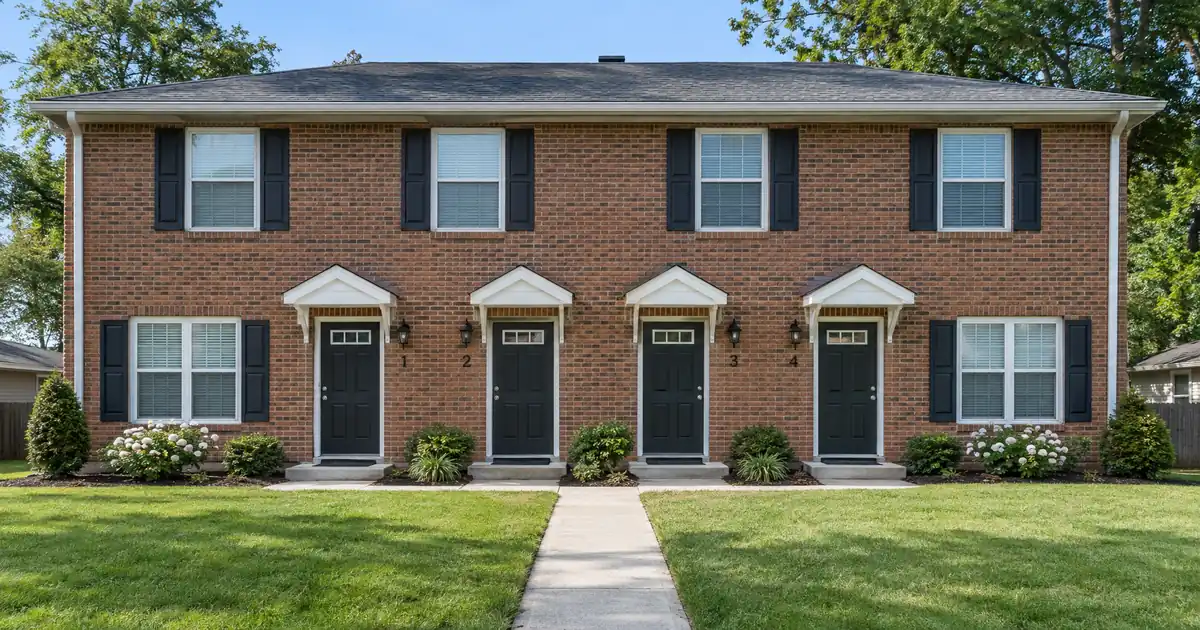
How To Finance A Fourplex On A Standard DSCR Rental Loan — The Quick Read: A fourplex qualifies for a standard DSCR rental loan because one-to-four-unit properties are treated as residential collateral, not commercial real estate, across the mortgage industry. That means a standard residential appraisal, a property-rent-based lender review model, and leverage that steps down gradually with loan size instead of jumping into commercial underwriting. The property still has to produce enough combined rent to cover its full monthly payment, but the math is built unit by unit rather than off one blended guess. Cross into five units and the whole file — appraisal, income analysis, leverage — moves to a different track.
Why Four Units Is the Line That Matters
A fourplex sits on the residential side of a hard threshold in mortgage finance. One to four units counts as residential. Five units or more counts as multifamily commercial. Fannie Mae’s Multifamily Guide defines an eligible multifamily loan as one secured by a property with at least five dwelling units. That’s exactly why a fourplex — the largest property size still under that line — gets treated like a big single-family rental instead of a small apartment complex.
DSCR Calculator
Run the numbers in your market
Rate source: Freddie Mac 30-yr average via FRED® — Federal Reserve Bank of St. Louis · effective Sep 17, 2026
Prefilled with local estimates — enter your own rent or nightly figures, taxes, insurance, and HOA for a more accurate picture.
Program parameters update from Lendmire’s centralized guideline source. Taxes and insurance are editable estimates.
As of Sep 17, 2026 · General Freddie Mac market benchmark, not a Lendmire loan offer. Rent, nightly rate, occupancy, taxes, and insurance are editable estimates. Short-term rental figures are estimates only and vary significantly by season, property type, management approach, and local short-term-rental rules — confirm local regulations before relying on them. Qualifying income for short-term rentals varies by program — some use appraisal market rent, others use documented STR history or projections — and is confirmed in underwriting. Not a Loan Estimate, approval, or commitment to lend. Program availability and eligibility are subject to lender guidelines, credit approval, property review, and underwriting.
That distinction isn’t cosmetic. It decides which appraisal form gets ordered, how income gets documented, and how the lender builds the qualifying ratio. Cross the line to five units, and you’re suddenly in operating-statement territory. That means trailing twelve months of income and expenses, a narrative commercial appraisal, and an entirely different underwriting mindset. Stay at four units, and the file still runs on the same basic DSCR mechanics as a single-family rental — just with four rent lines instead of one.
Key Terms Defined
DSCR (debt service coverage ratio): the property’s monthly rent divided by its full monthly housing payment — principal, interest, taxes, insurance, and any dues — used to size the loan instead of the borrower’s personal income.
PITIA: the full monthly payment obligation a lender counts against rent: principal, interest, taxes, insurance, and association dues if any.
Business-purpose loan: financing made to an investor for a non-owner-occupied rental, underwritten around the property’s income rather than the borrower’s personal wages or traditional personal-income documentation.
Small Residential Income Property Appraisal Report (Form 1025): the appraisal form used for two-to-four-unit properties, combining a rent-comparison grid with a sales-comparison value opinion, distinct from the simpler one-unit rent schedule.
LTV (loan-to-value): the portion of the property’s value the loan covers, expressed as a percentage — the rest is the down payment or existing equity.
How the Appraisal Actually Builds Your Rent Number
The appraisal on a fourplex isn’t a single number pulled from the best unit — it’s four separate rent opinions stitched together. On a fourplex, the assignment goes out as a Small Residential Income Property Appraisal Report, sometimes called Form 1025, rather than the one-page rent schedule used for a single-family rental.
Here’s the mechanical difference that trips up first-time fourplex buyers. The appraiser has to support an individual market-rent conclusion for each of the four units, matched by unit type and bedroom count. They can’t just use one blended guess times four. For an occupied unit, underwriting generally compares the signed lease against the appraiser’s market-rent opinion and uses whichever number is lower. So a tenant paying above-market rent won’t lift your coverage figure past what the appraisal supports for that unit. The higher lease doesn’t count for more than the market says the unit is worth.
For a vacant unit, there’s no lease to compare, so the appraiser’s opinion becomes the only figure available. Once all four per-unit numbers are set, they get summed into one gross monthly rent figure for the building. That figure then gets divided by the property’s full monthly payment — the same PITIA-over-rent formula used on any DSCR file — to produce the coverage ratio.
Across our wholesale network, this per-unit build is where a lot of the deal’s actual leverage gets decided. One weak or unsupported rent opinion on a single unit can drag the whole building’s coverage number down even when the other three units are performing well.
What Coverage and Leverage Actually Look Like
Coverage of 1.00 or higher — where rent covers the full payment — typically earns full leverage on most files in our network, with purchase and rate-and-term leverage running up to 80% through $1,000,000 and stepping down to 75% through $3,000,000. Programs below 1.00 coverage are available through select lenders in the network, but LTV and terms adjust to reflect the thinner cushion. Credit floors generally start around 660 on most files, moving to 700 above the $3,000,000 mark, alongside six months of PITIA reserves held on the subject property.
Some fourplex investors use interest-only structuring to keep their monthly payment lighter while the property builds equity. This can help a marginal coverage ratio clear the bar. Lenders typically allow up to a 120-month interest-only period on longer terms, generally up to 75% LTV. Above $2,000,000, lenders typically order two separate appraisals instead of one. This adds a layer of verification that most single-family DSCR files never see.
None of these numbers guarantee approval — every file gets underwritten individually, and program guidelines shift. But they’re the honest range investors should expect walking in.
Who Actually Owns These Buildings
Small 2-4 unit rentals aren’t a niche corner of the market — they’re a huge share of where renters actually live. Nationally, 48 percent of rental units sit in properties with one to four units, and 73 percent of those units are owned by individuals rather than institutions, according to the Urban Institute. Research cited by the Harvard Joint Center for Housing Studies puts it even more starkly: micro investors owning just one or two units account for two-thirds of all small rental properties.
That’s the exact borrower DSCR financing was built for. Say someone owns a fourplex and a duplex, and their day job doesn’t show much taxable income on paper. Conventional financing often shuts this person out, since it leans on personal debt-to-income math. A DSCR loan sidesteps that problem entirely. It qualifies primarily on whether the property’s rental income covers the payment, subject to lender guidelines, rather than on traditional personal-income documentation and W-2s.
The Edge Cases That Change Your Deal
One vacant unit can move your whole ratio. If three of four units are leased and performing but the fourth sits empty, that unit’s income comes entirely from the appraiser’s opinion. If the appraiser can’t find strong comparables for that unit type, the whole property’s blended rent — and therefore its coverage ratio — takes the hit.
Unusual unit mixes create appraisal friction. A fourplex built with an odd combination — say, three one-bedrooms and a studio — can be harder to appraise cleanly if comparable rentals with that same mix aren’t common nearby. This is one of the more common sources of delay on 2-4 unit files, simply because the appraiser needs matched comps for every unit type.
Five units is a different world, not a bigger fourplex. A five-unit building next door to your fourplex, even one unit larger, typically shifts into a narrative income-based commercial appraisal and a full operating-statement income analysis instead of a simple rent-over-payment ratio. If you’re eyeing that jump, it’s worth reading how standard DSCR treatment compares to super jumbo DSCR structuring before assuming the math carries over.
Mixed occupancy is a program exception, not the default. Some lenders in the network want every unit either tenant-occupied or available for standard long-term lease. An owner living in one unit, or a unit run as a short-term rental inside an otherwise long-term-lease building, generally gets pulled out for separate underwriting handling rather than sliding through the normal path.
Short-term rental income needs real history. Where an investor wants to count short-term rental income on one or more units, most programs in the network want twelve months of documented operating history on a refinance, or the appraisal’s short-term-rent analysis on a purchase, generally counted at a discount to gross. This path is reserved for experienced investors — typically defined as having owned income property within the trailing thirty-six months — and isn’t available on no-ratio files. Municipal permission to run a short-term rental has to be documented for that specific property; it’s never assumed for a given city or state, and short-term rental rules can vary by city, county, HOA, and property type, so investors should confirm local rules before relying on projected rental income.
DSCR loans are designed for non-owner-occupied investment properties. Because they are business-purpose investor loans, they are reviewed differently from a standard owner-occupied mortgage.
Three Common Myths, Cleared Up
“A great lease beats the appraisal.” Not typically. Underwriting on most 2-4 unit files uses the lower of the signed lease or the appraiser’s market-rent conclusion — an above-market lease usually doesn’t lift your coverage figure beyond what the appraisal supports.
DSCR vs. conventional financing
Two common ways to finance an investment property in this market. They qualify you differently — here’s how investors weigh them.
Why investors choose it
- Qualifies on the property’s rental income — no personal tax returns, W-2s, or pay stubs needed to document income.
- No personal debt-to-income ceiling to clear, so existing mortgages and obligations don’t cap your borrowing the same way.
- Can be closed in an LLC, keeping the property inside a business entity.
- Built for scaling — not held to the limit on number of financed properties that conventional financing applies.
- Underwriting centers on the deal: generally qualifies when the rent covers the payment, a 1.00x coverage ratio being a common baseline (confirmed in underwriting).
- Designed specifically for investment property, including long-term and, where the program allows, short-term rentals.
Where it’s strong
- Often the lowest ongoing financing cost for a buyer who fully qualifies on personal income — a fit for a first property or a cost-first purchase.
Trade-offs for investors
- Requires full personal income documentation and must fit within a debt-to-income limit — salary, existing debts, and other mortgages all count.
- Typically held in your personal name rather than a business entity.
- Caps how many financed properties you can carry, which can become a ceiling as a portfolio grows.
- Evaluates you as a borrower as much as the property, which usually means more paperwork.
How investors usually choose: a first or single property often optimizes for the lowest financing cost; portfolio builders often optimize for leverage, vesting in an LLC, and scaling past conventional caps. The right answer depends on your goals, the property, and current guidelines — both paths run through select lenders in Lendmire’s wholesale network, with eligibility and terms confirmed in underwriting.
“Multifamily means commercial financing.” Not for a fourplex. The word “multifamily” gets used loosely to describe both small residential buildings and large commercial apartment complexes, but a two-, three-, or four-unit property is still treated as residential collateral, with a completely different underwriting track than a five-unit-plus building.
“A DSCR at or above 1.00 means the deal cash-flows in real life.” Coverage ratio compares rent to the payment alone — it doesn’t account for vacancy stretches, repairs, management fees, or capital expenses. Clearing a clean number on paper doesn’t automatically mean the property throws off cash once real operating costs get layered in. That gap is worth stress-testing before you commit, not after.
Who This Fits, and Who Should Look Elsewhere
This structure fits an investor who wants to hold a small multi-unit rental in an entity. It lets them qualify on the building’s rent rather than their personal income. It also helps them avoid the heavier documentation load that comes with commercial financing. It fits especially well for someone scaling past their second or third rental property. That’s the point where conventional lenders start capping how many financed properties they’ll count.
This loan is a weaker fit for someone planning to live in one of the four units. That’s an owner-occupied purchase, not a business-purpose DSCR loan, and it runs through entirely different programs. It’s also a tougher road for a fourplex with heavy vacancy or an unusual unit mix. In those cases, the appraisal itself becomes the bottleneck before financing terms even enter the conversation.
For investors weighing whether to stop at four units or push toward a larger property, it’s worth comparing how standard DSCR programs handle leverage against super jumbo DSCR structuring once loan size and unit count both start climbing.
This isn’t legal or tax advice, and it isn’t specific to any investor’s situation — readers should talk with a qualified attorney or CPA about how a fourplex purchase or refinance fits their own tax and legal picture before acting on it. Tax treatment can depend on how the funds are used and how the property is held; investors should keep clear records and speak with a qualified tax professional before relying on any deduction.
Frequently Asked Questions
Do all four units need to be leased before closing?
No. A vacant unit at closing isn’t disqualifying on most 2-4 unit files — the appraiser’s market-rent opinion for that unit substitutes for a lease inside the DSCR calculation, subject to underwriting. The other three units still get evaluated the same way, lease versus appraised rent, whichever is lower.
Can I count short-term rental income on one unit of a fourplex?
Sometimes, if the investor has a documented operating history and enough experience owning income property. Programs in the network generally want twelve months of trailing income on a refinance or the appraisal’s short-term analysis on a purchase, counted at a discount to gross rent, and this path isn’t available on no-ratio files. Local permission to operate has to be verified for that specific unit.
Does a fourplex need a bigger down payment than a single-family rental?
Not automatically — leverage in the network runs off loan size and credit profile more than unit count, generally up to 80% on purchases through $1,000,000 and stepping down as the loan balance climbs. Coverage below 1.00 is available through select programs but comes with reduced leverage.
What happens if I want to buy a five-unit building instead?
It shifts to an entirely different underwriting track. A five-unit-plus building typically moves from a residential comparable-sales appraisal to a narrative commercial appraisal built on a full operating-statement income analysis, rather than the simple rent-over-payment ratio used on a fourplex.
Can I finance a fourplex in an LLC?
Entity vesting is generally welcome on most files in the network, subject to lender program eligibility and underwriting review. Investors scaling past several financed properties should also look at how programs treat financing beyond the standard ten-property cap, since that ceiling can matter more than the fourplex itself once a portfolio grows.
If you’re buying or refinancing a fourplex and want to see how the numbers actually work for your file, Lendmire can help compare DSCR loan options based on the property’s income, your credit profile, leverage, and your goals as an investor. For the fuller mechanics of how these loans are structured, Lendmire’s complete DSCR loans guide walks through the program from the ground up.
For current guidelines and terms, see Lendmire’s super jumbo DSCR loan programs page.
Self-employed borrowers can compare both super jumbo programs on Lendmire’s self-employed mortgages page.
About Lendmire
Lendmire — NMLS# 2371349 — is a mortgage brokerage specializing in DSCR investor loans, helping arrange financing across 40 markets, including Washington, D.C., through wholesale and investor-lending channels. The model centers on property-level rental income reviewed by the lender rather than W-2 documentation, subject to lender guidelines, suiting entity-owned and multi-property investors. Lendmire holds Scotsman Guide Top Mortgage Workplace recognition for 2025 and 2026.
Lendmire’s Top Mortgage Workplace recognition is documented by Scotsman Guide 2025 Top Mortgage Workplace and Scotsman Guide 2026 Top Mortgage Workplace.
Get Started
Ready to find the right loan for you?
In about 30 seconds you can review financing options available for your home or investment property. No commitment required.
Informational only. Not a Loan Estimate, approval, or commitment to lend. Program availability and eligibility are subject to lender guidelines, credit approval, property review, and underwriting.
References
1. Fannie Mae Multifamily Guide – Eligible Properties
2. Fannie Mae Form 1025 Official Form Display
3. Urban Institute – Landlords Who Own Few Units
Brandon Miller
Founder & CEO, Mortgage Loan Originator, Lendmire LLC
- Mortgage Loan Originator · NMLS# 1129696 · Verify on NMLS Consumer Access
- North Carolina Real Estate Broker · License# 343312 · Verify on NCREC
- North Carolina Insurance Producer · License# 19053198 · Property, Casualty, Life, Health · Verify on NAIC SBS
- Lendmire LLC · Firm NMLS# 2371349 · Verify firm licensure
Disclosures. The information presented in this article is general market commentary, not financial, legal, or tax advice. Lendmire is a mortgage brokerage (NMLS# 2371349) — not a direct lender or depository institution — and loan placement is subject to lender underwriting. Nothing in this content represents a commitment to lend. Loan terms, pricing, and program availability vary based on borrower qualifications, property characteristics, and state of subject property, and are subject to change at any time. Lendmire complies with Equal Housing Opportunity requirements. Consumer access: nmlsconsumeraccess.org.


