
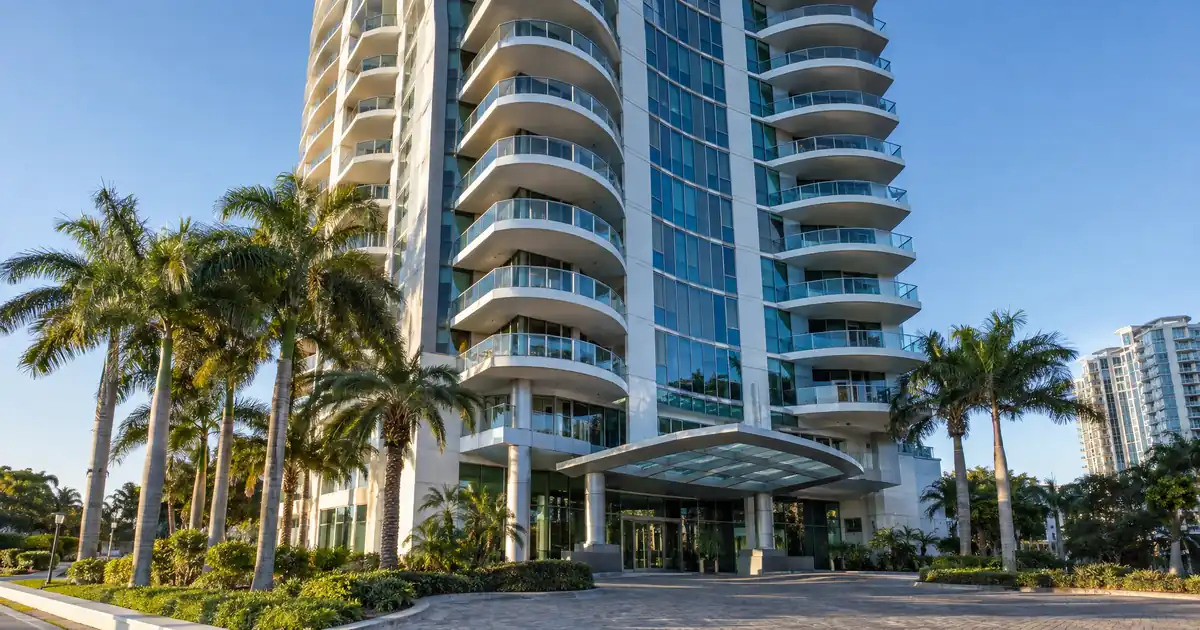
How To Finance A Resort Condo You Will Rent Short-term As A Business Owner — The Quick Read: Resort condos almost never qualify for a standard bank mortgage once short-term rental income is part of the plan. The path that usually works is a DSCR loan — a loan sized to the property’s rental income rather than your traditional personal-income documentation — but only after two questions get answered: is the building a warrantable condo, a non-warrantable condo, or a true condotel, and how will the lender count nightly income. Get those two answers first. Everything else follows from them.
Why Your Bank Says No Before You Even Finish the Sentence
Big banks and depository lenders sell most of their mortgages to Fannie Mae and Freddie Mac, and those two buyers will not purchase a loan on a condotel. That single fact explains almost every rejection a business owner hits when shopping a resort condo at a retail bank.
DSCR Calculator
Run the numbers in your market
Rate source: Freddie Mac 30-yr average via FRED® — Federal Reserve Bank of St. Louis · effective Sep 17, 2026
Prefilled with local estimates — enter your own rent or nightly figures, taxes, insurance, and HOA for a more accurate picture.
Program parameters update from Lendmire’s centralized guideline source. Taxes and insurance are editable estimates.
As of Sep 17, 2026 · General Freddie Mac market benchmark, not a Lendmire loan offer. Rent, nightly rate, occupancy, taxes, and insurance are editable estimates. Short-term rental figures are estimates only and vary significantly by season, property type, management approach, and local short-term-rental rules — confirm local regulations before relying on them. Qualifying income for short-term rentals varies by program — some use appraisal market rent, others use documented STR history or projections — and is confirmed in underwriting. Not a Loan Estimate, approval, or commitment to lend. Program availability and eligibility are subject to lender guidelines, credit approval, property review, and underwriting.
It’s not personal. It’s structural. A condotel is a building where a hotel-style management program controls who occupies your unit and when — you own the deed, but you don’t control the asset the way a normal owner does. Agency guidelines are built around owner-controlled housing, so a condotel simply doesn’t fit the box. A standard non-warrantable condo is a different animal: it fails agency rules for some other reason — investor concentration, litigation, commercial space in the lobby — but you still decide who stays in your unit. That distinction, control versus no control, is the line that decides whether a non-QM lender will even look at the file.
This is exactly why non-QM and DSCR programs exist — they were built to finance property types the agencies won’t touch. DSCR stands for debt-service coverage ratio: the lender compares the property’s rental income to its full monthly obligation (principal, interest, taxes, insurance, and HOA dues) instead of asking for your traditional personal-income documentation. If the rent covers the payment, the file has a real shot. Lendmire’s complete DSCR loans guide walks through the mechanics in more depth if this is new territory.
Key Terms Defined
Non-warrantable condo — a condo project that fails one or more agency eligibility rules, but where each owner still independently controls occupancy of their own unit.
Condotel — a resort-style building where a hotel management program controls unit availability, often through mandatory rental-pool participation.
DSCR — debt-service coverage ratio; monthly rental income divided by the monthly debt obligation (PITIA). A ratio of 1.00 means the rent exactly covers the payment.
PITIA — principal, interest, taxes, insurance, and association dues; the full monthly obligation lenders measure rent against.
Trailing operating history — actual income the property has already produced, usually the last twelve months of booking-platform statements, averaged to smooth seasonal swings.
Step 1: Figure Out What You’re Actually Buying
Property classification comes first, before anyone talks about income. It decides which financing tier is even possible. A building with mandatory rental-pool participation makes for a much harder file than a non-warrantable condo, where you keep full control over your own unit.
Ask the listing agent or HOA directly: is participation in any rental program optional or mandatory? Some buildings offer hotel-style services as an amenity but let you self-manage or list on your own platforms — these are evaluated very differently from buildings that force you into a shared revenue pool. Optional programs generally leave room for non-QM financing. Mandatory pools generally don’t, because the lender can’t be confident you control the collateral.
Across the wholesale network Lendmire places files through, condotels are reviewable up to 75% loan-to-value on a purchase and 65% on a refinance, capped at a $1,500,000 loan amount, and refinances in this category typically require $250,000 in cash-in-hand as part of the structure. Standard non-warrantable condos get better terms — up to 75% LTV and a $1,500,000 cap, without the cash-in-hand requirement — because the owner-control issue isn’t in play. Both figures are ceilings through select lenders and remain subject to underwriting.
Step 2: Decide How Income Gets Documented
There is no industry-standard form for this. Fannie Mae’s own Form 1007 — the appraisal rent schedule used to estimate long-term monthly rent — was never built to capture nightly rate income, and appraisers who try to force it are stepping into compliance risk. As Class Valuation puts it, the form “cannot be used to support short-term rental appraisals” because it “was built exclusively to estimate long-term monthly market rent.” A separate update from the same firm notes there is still “no GSE-approved form for reporting STR Market Rent” (Class Valuation).
That gap is exactly why non-QM lenders built their own income tracks. Across programs Lendmire places, short-term rental income is counted one of two ways, and which one applies depends on whether you’re buying or refinancing:
- On a refinance: twelve months of documented operating history — actual booking platform statements — counted at a discount, typically 80% of gross rent.
- On a purchase with no operating history: the appraisal’s own short-term-rent analysis, also discounted before it’s used as the DSCR numerator.
Full trailing-twelve-month statements matter more than a curated peak-season slice. Files built on partial-year data tend to get pushed back for more documentation, which slows the file without changing the eventual number — better to hand over the whole year up front.
What Happens on a Brand-New Resort Condo With No History
New construction is the trickiest case for documentation, because there’s no rental history to rely on. Instead, the file has to lean on a market-data projection — typically an AirDNA Rentalizer-style report. This draws on a database that AirDNA describes as tracking “15M+ Airbnb, Vrbo, and Booking.com listings” since 2014 (AirDNA).
Independent testing shows why lenders discount these numbers rather than accepting them at face value. Awning’s review found that “Rentalizer estimates can be 15 to 30 percent off in either direction, and sometimes more for properties that do not match the typical profile of their area” — a luxury unit in a market dominated by budget units, for instance, gets a projection skewed toward the budget comps around it. That error band is the whole reason projected revenue gets haircut before it’s used to qualify a file: an unverified projection simply carries more risk than twelve months of real deposits.
There’s a practical wrinkle too — new resort condos usually need a certificate of occupancy and HOA control handed off from the developer to unit owners before permanent financing can close. A construction-stage building without that transfer isn’t ready for this type of loan yet, regardless of how good the market projection looks.
Note that Lendmire’s short-term-rental program is reserved for experienced investors. This generally means you’ve owned income property for at least twelve months within the last three years. If you’re a first-time investor looking at a resort condo purchase, expect this requirement to shape which program fits you.
The Leverage Ladder — What Size Actually Gets You
Loan amounts across Lendmire’s wholesale network for this asset class run from $150,000 up to $10,000,000 on the portfolio program, though the standard DSCR program stops at $3,000,000 and the ladder above that carries qualified investors further. Short-term-rental and no-ratio files are capped lower, at $2,000,000.
| Loan Size | Purchase LTV | Cash-Out LTV | Credit Floor |
|---|---|---|---|
| $150K–$1M | 80% | 75% (standard rental) | 660+ |
| $1M–$1.5M | 75% | 70% | 700+ |
| $1.5M–$2M | 75% | 60% | 720+ |
| $2M–$3M | 75% | 60% | 720+ |
| $3M–$4M | 65% | none | 700+ |
| $4M–$10M | 60%, reviewed case by case | none | 700+ |
Coverage of 1.00 or better on the DSCR ratio earns full leverage at whichever tier applies. Below that — files running 0.75 to 0.99, or true no-ratio deals — are still real select-program paths through Lendmire’s network up to $2,000,000, though LTV and terms adjust downward and every case runs through underwriting individually. No-ratio qualification specifically requires a seven-year clean housing history and no late payments on housing debt in the last twenty-four months; it isn’t available on the short-term-rental income path itself.
Above $4,000,000, every file gets reviewed case by case before it’s even submitted — purchase or rate-and-term only, no cash-out. That’s not a flat “up to” number; it’s a conversation with underwriting before the deal works forward at all.
Cash-out on a resort condo file runs unlimited proceeds at or below 60% LTV, with a $1,500,000 cap above that threshold, and cash-out disappears entirely above $3,000,000. On short-term-rental collateral specifically, that cash-out ceiling tops out at 70%, versus 75% on a standard long-term rental — worth keeping straight since the two numbers get conflated constantly. Exact terms depend on the lender’s guidelines, property type, leverage, and a full review of the borrower’s file.
Insurance Isn’t a Line Item You Guess At
The insurance figure that gets plugged into your monthly obligation changes depending on which policy actually covers the unit — and a standard landlord policy usually doesn’t cover short-term guests at all. Nolo puts it plainly: “Standard landlord insurance policies do not typically cover short-term rentals either. Thus, if you rent out your home many days a year to short-term guests, you might need to purchase a hotel or a bed-and-breakfast insurance policy.”
That’s not a cosmetic detail. The right commercial-style policy costs differently than a standard landlord policy, and whichever number lands in your monthly obligation directly shapes your coverage ratio. Get a quote for the correct policy type before you assume your DSCR math holds.
HOA Rules Can Kill an Income Stream the City Already Approved
A city permit and an HOA restriction are two separate systems. Neither one overrides the other. As the AirROI glossary explains, “an HOA ban is a private contractual obligation, not a zoning rule — and unlike a zoning variance, there is no government agency to appeal to.” Some investors secure a city short-term rental permit without reading the condo’s governing documents first. They often only discover the conflict after they’ve furnished the unit and listed it.
HOA boards often limit rentals in different ways. They may ban rentals outright, cap the percentage of units that can be rented at once, or require minimum lease terms — often 6 or 12 months. A rule like that would rule out nightly rentals completely. Read the declaration and any recent amendments before you go under contract, not after. Short-term rental rules can vary by city, county, HOA, and property type. So investors should confirm local rules before relying on projected rental income. Lendmire never guarantees that short-term rentals are legal in any specific market — that’s because this documentation is property-specific and must be verified directly.
For a deeper look at how a resort condo compares against a standalone beach house on the same DSCR math, Lendmire’s resort condo vs. beach house comparison breaks down the tradeoffs side by side.
Entity Vesting — The Business-Owner Angle
Lendmire’s DSCR loan network lets you close in the name of a business entity instead of an individual. This is subject to program eligibility. Most business-owner investors already prefer this setup because it separates liability. But layered entity structures — like an LLC that owns another LLC — generally aren’t accepted. So keep things simple: use one entity that directly owns the property.
Tax treatment can depend on how the funds are used and how the property is held; investors should keep clear records and speak with a qualified tax professional before relying on any deduction.
A Practitioner’s View From the File Room
Across resort-condo files that come through a broker’s desk, the ones that move cleanest almost always have one thing in common: a full trailing-twelve-month platform export sitting in the file before the loan officer even asks for it. The files that stall are the ones built on a curated three-month peak-season screenshot — underwriting sees the gap immediately and asks for the rest of the year anyway, so nothing is saved by submitting it partial. The other recurring theme is HOA paperwork arriving late. A buyer who pulls the condo declaration and any rental-restriction amendments before making an offer avoids a scramble mid-escrow that a seller in a resort market has little patience for.
This is general education, not legal or tax advice specific to your situation — a real estate attorney or CPA can evaluate how these rules and structures apply to your particular property and business.
Frequently Asked Questions
Can I get a conventional mortgage on a resort condo I plan to rent nightly?
Almost never once nightly rental is the disclosed intent, and even less often if the building is a true condotel, because Fannie Mae and Freddie Mac do not purchase condotel loans. A non-warrantable condo where you retain occupancy control has a slightly better shot at some portfolio lenders, but DSCR financing is the more consistent path for this property type.
Does an AirDNA report guarantee my income projection?
No — independent testing shows Rentalizer-style projections can run 15 to 30 percent off in either direction, sometimes more for properties that don’t match their area’s typical profile. That’s exactly why lenders discount projected revenue before using it to qualify a file rather than accepting the raw number.
Do I need twelve months of rental history to qualify?
On a refinance, yes — twelve months of documented operating history is the standard path, typically counted at a discount to gross rent. On a purchase with no history, the appraisal’s own short-term-rent analysis fills that role instead, also discounted.
What credit score do I need for a resort condo DSCR loan?
Programs across Lendmire’s network typically start at a 660 floor for smaller loan amounts, stepping up to 700 or higher as loan size increases past $1,000,000 — exact eligibility depends on lender guidelines, reserves, property type, and the specific program.
Can my HOA stop me from renting nightly even if my city allows it?
Yes. An HOA restriction is a private contractual matter separate from city zoning or permitting, and a rental ban or cap in the governing documents can override what the city otherwise allows — always review the declaration and any recent amendments before purchase.
Are you buying or refinancing a resort condo? Do you want to see how the DSCR numbers work for your situation? Lendmire can help you compare loan options. We look at the property’s rental income, the building’s classification, your credit profile, and your goals as an investor. Reach out to discuss your file at 828-256-2183 or request a quote.
For current guidelines and terms, see Lendmire’s super jumbo DSCR loan programs page.
Self-employed borrowers can compare both super jumbo programs on Lendmire’s self-employed mortgages page.
About Lendmire
As a non-QM mortgage broker (NMLS# 2371349), Lendmire facilitates DSCR investor loans across 40 markets, including Washington, D.C. DSCR eligibility is generally reviewed around property-level rental income instead of personal income documentation, subject to lender guidelines, serving LLC-structured portfolios and self-employed borrowers who don’t fit conventional boxes. A two-time Scotsman Guide Top Mortgage Workplace (2025, 2026).
Lendmire’s Top Mortgage Workplace recognition is documented by Scotsman Guide 2025 Top Mortgage Workplace and Scotsman Guide 2026 Top Mortgage Workplace.
Get Started
Ready to find the right loan for you?
In about 30 seconds you can review financing options available for your home or investment property. No commitment required.
Informational only. Not a Loan Estimate, approval, or commitment to lend. Program availability and eligibility are subject to lender guidelines, credit approval, property review, and underwriting.
References
1. Class Valuation — Appraisal Form 1007
2. Class Valuation — Short-Term Rentals Update
5. Nolo — Insurance Questions When Renting Out Your Home Short-Term
Brandon Miller
Founder & CEO, Mortgage Loan Originator, Lendmire LLC
- Mortgage Loan Originator · NMLS# 1129696 · Verify on NMLS Consumer Access
- North Carolina Real Estate Broker · License# 343312 · Verify on NCREC
- North Carolina Insurance Producer · License# 19053198 · Property, Casualty, Life, Health · Verify on NAIC SBS
- Lendmire LLC · Firm NMLS# 2371349 · Verify firm licensure
Important disclosures. Lendmire (NMLS# 2371349) is a licensed mortgage brokerage. Lendmire is not a direct lender, depository institution, or financial advisor. All loan inquiries are subject to lender underwriting; this article does not constitute a commitment to lend. Rates, terms, and program guidelines are subject to change without notice and vary by borrower profile, property type, and state. Information in this article is general in nature and is not financial, legal, or tax advice. Equal Housing Opportunity. NMLS Consumer Access: nmlsconsumeraccess.org.


