
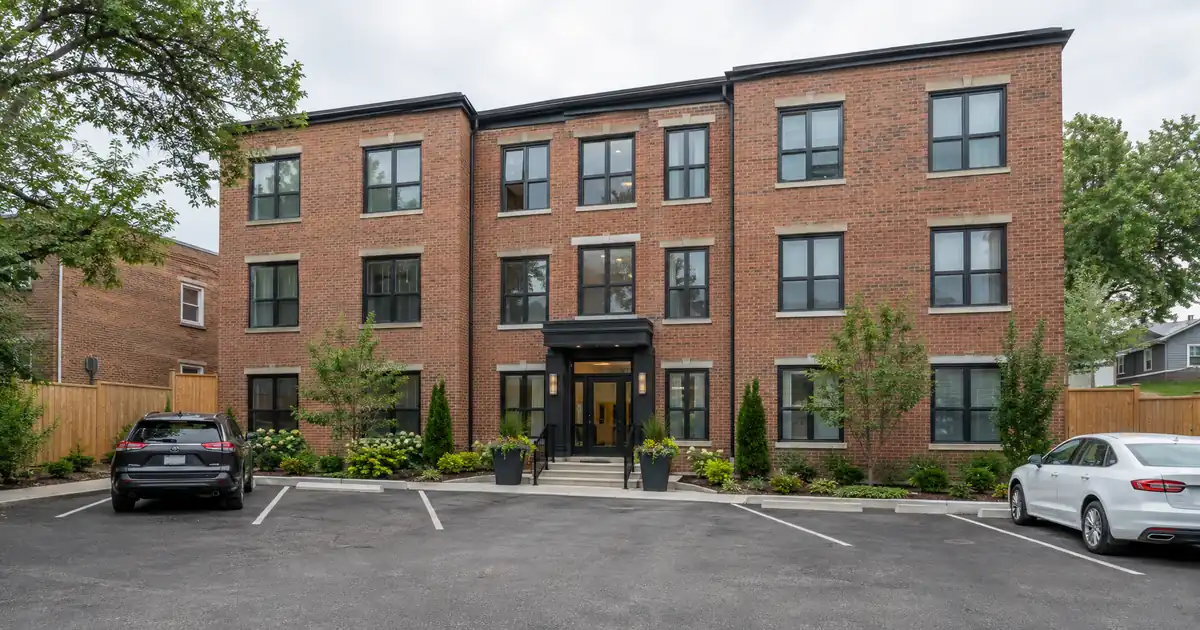
The Quick Read: A ten-unit building is financed as a large-balance DSCR loan on a different product than the 1-to-4 unit super jumbo ladder, and it is sized on the building’s net operating income, the appraisal, and a leverage cap rather than on the owner’s traditional personal-income documentation. The points that matter most:
- At five or more units, the building leaves the 1-to-4 unit ladder and runs through a rental portfolio term loan, which Lendmire’s network prices from $500,000 to $10,000,000 at up to 75% of value, subject to underwriting.
- The loan is sized by the tightest of three tests: coverage, debt yield, and leverage.
- The rent roll, leases, and operating statement carry the file more than the borrower’s personal income does.
- Two appraisals are standard above $2,000,000 in loan amount, and a commercial appraisal using the income approach replaces the 2-to-4 unit form.
- Entity vesting is common, and the credit, reserve, and coverage floors for a ten-unit file come from the term loan sheet, not from the ladder.
Most confusion on this topic comes from one label doing two jobs. “Super jumbo” describes a loan size, and “ten-unit” describes a property class. They meet in the middle, but the product that handles them is not the one most investors expect. This piece walks through the file in order.
DSCR Calculator
Run the numbers in your market
Rate source: Freddie Mac 30-yr average via FRED® — Federal Reserve Bank of St. Louis · effective Oct 22, 2026
Prefilled with starting assumptions — enter your own rent or nightly figures, taxes, insurance, and HOA for a more accurate picture.
Program parameters update from Lendmire’s centralized guideline source. Taxes and insurance are editable estimates.
As of Oct 22, 2026 · General Freddie Mac market benchmark, not a Lendmire loan offer. Rent, nightly rate, occupancy, taxes, and insurance are editable estimates. Short-term rental figures are estimates only and vary significantly by season, property type, management approach, and local short-term-rental rules — confirm local regulations before relying on them. Qualifying income for short-term rentals varies by program — some use appraisal market rent, others use documented STR history or projections — and is confirmed in underwriting. Not a Loan Estimate, approval, or commitment to lend. Program availability and eligibility are subject to lender guidelines, credit approval, property review, and underwriting.
What Does “Super Jumbo” Mean on a Ten-Unit Building?
Super jumbo is a lender-set size tier, not a regulated category. No regulator defines it. The only federal dollar line nearby is the conforming loan limit, and the FHFA sets the current baseline one-unit limit at $832,750, with a high-cost ceiling of $1,249,125. Those limits govern agency-eligible loans on one-to-four unit homes. A ten-unit building sits outside that framework, so it has no conforming limit to exceed.
In Lendmire’s network, the working marker is $3,000,000. The standard DSCR program stops there, and a high-balance ladder carries qualified investors past it, up to $10,000,000. That ladder is built for 1-to-4 unit buildings. Five-plus unit buildings are eligible only inside the rental portfolio term loan.
So the honest framing of this title is “a ten-unit building financed as a large-balance DSCR loan.” Investors who search for a flat yes or no on this question usually find both answers. The explanation is simple. A standard residential DSCR product says no to ten units, and a specialty large-balance term loan says yes under conditions. Both answers are correct for their own product.
For the full background on how this loan type works, Lendmire’s complete DSCR loans guide covers the basics before the large-balance details.
What Does “Boutique” Mean to an Underwriter?
Boutique is a marketing word, and underwriters do not price it. What they see is a smaller unit count at a higher price per unit, often with premium finishes, irregular rents, furnished units, or some short-term-rental use.
That matters in three places. First, the appraiser has to support the rents, and premium rents with thin comparables get tested hard. Second, the expense load on a finished, amenity-heavy building usually runs heavier than on plain workforce housing. Third, any furnished or nightly-stay income gets treated differently from a long-term lease.
The appraiser’s supported rent and the lender’s treatment of that income can move proceeds more than the headline price does. A strong building with weak documentation of its rents can size lower than a plain building with a clean rent roll.
Why Ten Units Is a Different Product From One to Four
At five units, the market treats the building as commercial multifamily. LoopNet’s commercial real estate education arm describes the shift this way: lenders evaluate the property’s NOI and cash flow rather than the borrower’s personal income, though borrower net worth and liquidity still matter.
Inside Lendmire’s network, the ten-unit routing looks like this:
| Factor | 1-4 unit super jumbo ladder | Ten-unit rental portfolio term loan |
|---|---|---|
| Eligible units | 1 to 4 | 5+ units eligible here only |
| Size range | Up to $10,000,000 | $500,000 to $10,000,000 |
| Leverage shape | Steps down as balance rises | Up to 75% of value |
| Multi-property note | Not the design | Same note can hold several markets |
Do not carry the ladder’s credit tiers, reserve counts, or leverage steps onto a ten-unit file. The term loan has its own sheet. For ten units, the credit floor, reserve count, and coverage floor are confirmed against that sheet during structuring, subject to underwriting.
Lendmire’s own piece on super jumbo DSCR requirements for a 5-to-10 unit building goes deeper on the unit-count line.
How Does Underwriting Treat the Building, Step by Step?
The deal works through six checkpoints. Each one can change proceeds.
1. Classify the asset. The lender confirms the legal unit count, the zoning use, and whether every unit is permitted. A mismatch between advertised and legal units is the most common early stall. A building sold as ten units with eight permitted units is an eight-unit building to the lender.
2. Build the income picture. The file needs a rent roll with leases, a trailing income and expense statement, and occupancy history. At five or more units, those are the key documents. Qualification runs primarily on property-level rental income covering the debt, subject to lender guidelines. Credit, assets, and entity documents sit alongside it.
3. Choose the coverage formula. Commercial practice divides NOI by annual debt service. Residential DSCR programs often divide gross monthly rent by the full monthly obligation of principal, interest, taxes, insurance, and association dues. Which one applies to a ten-unit file depends on the program, and the term loan sheet settles it. Do not assume one formula is universal.
4. Order the appraisal. Fannie Mae’s Selling Guide lists its Form 1025 operating income report for two-to-four unit properties. A ten-unit building falls outside that form. The usual route is a commercial appraisal using the income approach, where a 5+ unit building is valued by NOI divided by a cap rate. Above $2,000,000 in loan amount, two appraisals are standard.
5. Size the loan. Proceeds equal the lower of the leverage cap and the coverage test. Practitioners on the commercial side describe the loan as bound by the tightest of DSCR, debt yield, or LTV. Debt yield is NOI divided by the loan amount.
6. Clear entity, title, and reserves. The borrowing entity’s documents, the vesting, and the reserve documentation all clear before the deal works. Cash-out proceeds do not count as reserves above the super-jumbo overlay on the ladder, and the term loan sheet states its own rule.
A Coverage Example, Without Dollars
Run the logic with ratios only. Assume the building’s NOI covers annual debt service at 1.30x. Now assume that a heavier expense load or lower occupancy cuts NOI by 15% from what the seller showed. Coverage falls to about 1.10x, because 1.30 times 0.85 is 1.105.
That drop is why seller-prepared operating statements deserve skepticism. A file that clears comfortably on the seller’s numbers can tighten on the lender’s numbers, and the loan amount tightens with it.
Market surveys report that lenders on 5+ unit assets often look for 1.20x to 1.30x coverage. The network figure to plan around is leverage of up to 75% of value, with the coverage floor set on the term loan sheet and confirmed per file. A coverage of 1.00x is break-even, so on a ten-unit file above $2,000,000, plan on 1.00x or better as a minimum and expect the lender to want a cushion above it.
How Leverage Steps Down on the 1-4 Unit Ladder (And Why That Matters Here)
The ladder is a useful contrast, not a rule for the ten-unit file. On a 1-to-4 unit investment purchase, leverage typically runs to 80% on loans up to $1,000,000, 75% through $3,000,000, 65% to $4,000,000, and 60% beyond that on case-by-case review. Credit scores needed for the top cell rise with the balance, and above $3,000,000 the ladder requires a 700 floor and excludes rural property. All of it is subject to underwriting.
The pattern to take from it is that bigger balances mean less leverage. A ten-unit building at a large balance should expect the same direction of travel, even though the exact steps come from the term loan sheet. Plan on equity of at least 25% on a purchase. That is the other side of the 75% cap, and it is a ceiling, not a promise.
Which Ten-Unit Buildings Fit, and Which Get Redirected?
Stabilized buildings fit best. A building that is mostly leased, with documented rents and clean permits, is the profile the term loan is built for.
| Building type | How it usually reads |
|---|---|
| Stabilized, documented rents | Best fit for the term loan |
| Partly vacant or lease-up | Sized on in-place income |
| Heavy rehab needed | Often needs bridge financing first |
| Mixed-use with commercial space | On review |
| Condo-converted building | On review |
| Unit count not fully permitted | Sized on legal units only |
Mixed-use and condo-converted boutique buildings do not have a single published rule, so they are reviewed one at a time. Value-add buildings can work, but proceeds follow the income that is in place today, not the income after renovation.
Where the General Rule Breaks: Named Edge Cases
The four-versus-five unit cliff. This is the lead edge case. A ten-unit building cannot go through the 1-to-4 unit ladder, no matter how large the balance. Investors who price a deal off the ladder’s figures can be wrong by a full product.
Short-term rentals. Short-term-rental files stop at $2,000,000 in loan amount, and income is counted at 80% of gross on documented history or an appraisal analysis. A boutique building run on nightly stays above that size has to qualify on long-term rent. Short-term rental rules can vary by city, county, HOA, and property type, so investors should confirm local rules before relying on projected rental income. Permission to operate is documented for each property and is never assumed.
Rural or acreage. On the ladder, above $3,000,000, rural property is excluded and non-rural land is limited to ten acres. A boutique building on a large parcel can trip this.
Cash-out. The ladder allows none above $3,000,000. The term loan rules are checked separately, so a cash-out on a ten-unit building should be confirmed before any equity plan is built around it.
Sub-1.00 coverage. Select programs in the network accept coverage between 0.75 and 0.99 on the 1-to-4 unit ladder up to $2,000,000, but only at reduced leverage, with LTV and terms adjusting, subject to underwriting. Above $2,000,000, plan on 1.00 or better.
Agency and government-insured alternatives. Stabilized 5+ unit assets can also go to agency and HUD channels. Those channels test the property and the sponsor differently and are not Lendmire products.
DSCR vs. conventional financing
There are two common ways to finance an investment property, and they qualify you differently — here’s how investors weigh them.
Why investors choose it
- Qualifies on the property’s rental income — no personal tax returns, W-2s, or pay stubs needed to document income.
- No personal debt-to-income ceiling to clear, so existing mortgages and obligations don’t cap your borrowing the same way.
- Can be closed in an LLC, keeping the property inside a business entity.
- Built for scaling — not held to the limit on number of financed properties that conventional financing applies.
- Underwriting centers on the deal: generally qualifies when the rent covers the payment, a 1.00x coverage ratio being a common baseline (confirmed in underwriting).
- Designed specifically for investment property, including long-term and, where the program allows, short-term rentals.
Where it’s strong
- Often the lowest ongoing financing cost for a buyer who fully qualifies on personal income — a fit for a first property or a cost-first purchase.
Trade-offs for investors
- Requires full personal income documentation and must fit within a debt-to-income limit — salary, existing debts, and other mortgages all count.
- Typically held in your personal name rather than a business entity.
- Caps how many financed properties you can carry, which can become a ceiling as a portfolio grows.
- Evaluates you as a borrower as much as the property, which usually means more paperwork.
How investors usually choose: a first or single property often optimizes for the lowest financing cost; portfolio builders often optimize for leverage, vesting in an LLC, and scaling past conventional caps. The right answer depends on your goals, the property, and current guidelines — both paths run through select lenders in Lendmire’s wholesale network, with eligibility and terms confirmed in underwriting.
One Note Across Several Buildings
The same term loan structure can hold properties in several markets under one note. That helps an investor with two or three boutique buildings, and it carries a trade-off. One default can reach every property on the note, and a sale of one building follows the release terms in the loan documents. Read those release terms before signing, not after.
Entity and Title Structure
Entity vesting is welcome on most files, with layered entities being the problem. A single LLC that holds title and signs the note is cleaner than an LLC owned by another LLC owned by a trust. Entity documents, operating agreement, and ownership percentages should be clean before submission, subject to program terms.
DSCR loans are designed for non-owner-occupied investment properties. Because they are business-purpose investor loans, they are reviewed differently from a standard owner-occupied mortgage.
Tax treatment varies; consult a qualified professional before relying on any deduction.
How Does This Compare With Other Ways to Finance Ten Units?
| Factor | Large-balance DSCR term loan | Agency or HUD | Bank or portfolio | Bridge |
|---|---|---|---|---|
| What the lender tests | Property income | Property and sponsor | Sponsor and property | Exit plan |
| Best fit | Stabilized, entity-held | Large stabilized assets | Existing relationships | Rehab, lease-up |
| Documentation | Rent roll, entity, assets | Heaviest | Heavy, personal | Moderate |
| Network leverage | Up to 75% of value | Set by the agency, not the network | Set by the bank, not the network | Set by the bridge lender |
The difference that matters most is what gets tested. A bank wants the sponsor’s net worth and traditional personal-income documentation. A DSCR term loan wants the building’s income.
What Experience Teaches About These Files
Across large-balance DSCR files, the preventable delays come from the same place. The seller’s rent roll and the lender’s rent roll do not match, the unit count is not fully permitted, or the entity paperwork is incomplete. A reserves statement that mixes cash-out proceeds with real liquidity is another common gap. Investors who build the rent roll, lease copies, trailing statement, and entity file before the appraisal is ordered give the lender fewer preventable gaps to review.
Red Flags That Stall a Ten-Unit File
- Advertised unit count that does not match permits.
- Rent roll rents that do not match leases.
- Premium or furnished-unit rents with no comparables behind them.
- Layered entities between the borrower and the title.
- Reserves held partly in cash-out proceeds.
- A short-term-rental plan with no documented local permission.
- Rural designation or acreage beyond program limits, where the ladder applies.
Key Terms Defined
NOI (net operating income): The building’s rental income minus its operating expenses, before debt service.
Debt yield: NOI divided by the loan amount, which shows how fast the income would repay the loan.
Coverage ratio (DSCR): The income measure divided by the debt obligation, with 1.00x meaning break-even.
Rental portfolio term loan: The network product that holds 5+ unit buildings, from $500,000 to $10,000,000, at up to 75% of value.
Super jumbo: A lender-set size tier, with $3,000,000 as the common marker.
Rent roll: The unit-by-unit list of tenants, rents, lease dates, and occupancy.
Frequently Asked Questions
Can a DSCR loan finance a ten-unit building?
Yes, through a rental portfolio term loan rather than the 1-to-4 unit ladder. The loan is sized on the building’s income and a leverage cap of up to 75% of value, subject to underwriting. A standard residential DSCR product will say no, which is why answers vary.
Does the super jumbo ladder apply above five units?
No. The ladder is built for one to four units, and five-plus unit buildings are eligible only inside the term loan. Its leverage, credit, and reserve figures should not be transplanted onto a ten-unit file.
Can the building have a commercial space or short-term-rental units?
Mixed-use buildings are reviewed one at a time, and no single rule covers them. Short-term-rental income files stop at $2,000,000 in loan amount, and local permission is documented for each property.
What if the building is not fully leased?
The loan is sized on in-place income, so vacancy lowers proceeds. Lease-up and renovation buildings often need a different structure first, and the terms are set during underwriting.
How much cash does a ten-unit purchase take?
With leverage capped at up to 75% of value, plan on equity of at least 25% of value, plus reserves. The exact figures depend on the term loan sheet and the file, and all of it is subject to lender guidelines and underwriting.
Next Steps
If you are buying or refinancing a high-balance rental property and want to see how the numbers work, Lendmire can help you compare super jumbo DSCR loan options based on the property income, the loan balance, credit profile, leverage, and investor goals. Lendmire’s piece How to Qualify a Luxury Multi-Unit Building on a Super Jumbo DSCR Loan is a good companion read, and an editable calculator on the site offers an illustrative estimate.
For current guidelines and terms, see Lendmire’s super jumbo DSCR loan programs page.
Lendmire’s self-employed mortgages page presents both super jumbo programs, bank statement and DSCR, side by side.
About Lendmire
Lendmire is a DSCR-focused mortgage brokerage, NMLS# 2371349, placing investor loans across 41 markets, including Washington, D.C. DSCR eligibility is generally reviewed by the lender around a property’s rental income rather than personal income documentation, which fits LLC-held rentals, self-employed investors, and portfolios scaling past conventional financed-property limits. Scotsman Guide named Lendmire a Top Mortgage Workplace in both 2025 and 2026.
Get Started
Ready to find the right loan for you?
In about 30 seconds you can review financing options available for your investment property. No commitment required.
Informational only. Not a Loan Estimate, approval, or commitment to lend. Program availability and eligibility are subject to lender guidelines, credit approval, property review, and underwriting.
References
1. FHFA 2026 conforming loan limits
2. LoopNet’s commercial real estate education arm
3. Fannie Mae Selling Guide B4-1.2-01
4. Multifamily-USA 5+ unit guide
5. Investor Multifamily 5+ financing guide
This article is part of Lendmire’s super jumbo DSCR loan program — full qualification details, guidelines, and scenarios live on the program page.
Related reading: How to Refinance a Maturing Bank Loan With a Super Jumbo DSCR Loan · Super Jumbo DSCR Loan After Divorce or With a Spouse Off the Loan · How to Finance a Coastal Six-Unit on a Super Jumbo DSCR Loan
Brandon Miller
Founder & CEO, Mortgage Loan Originator, Lendmire LLC
- Mortgage Loan Originator · NMLS# 1129696 · Verify on NMLS Consumer Access
- North Carolina Real Estate Broker · License# 343312 · Verify on NCREC
- North Carolina Insurance Producer · License# 19053198 · Property, Casualty, Life, Health · Verify on NAIC SBS
- Lendmire LLC · Firm NMLS# 2371349 · Verify firm licensure
Compliance and disclosures. Lendmire (NMLS# 2371349) is a licensed mortgage broker and is not a direct lender, depository institution, financial advisor, or tax professional. Content in this article is general market analysis and educational information — not financial, legal, or tax advice for any specific situation. Lendmire does not guarantee loan approval; every transaction is subject to underwriting by the funding lender. Mortgage pricing and loan program guidelines are subject to change at any time without notice and vary by borrower characteristics, property type, and state regulations. Lendmire complies with Equal Housing Opportunity. Licensure verification: NMLS Consumer Access.