
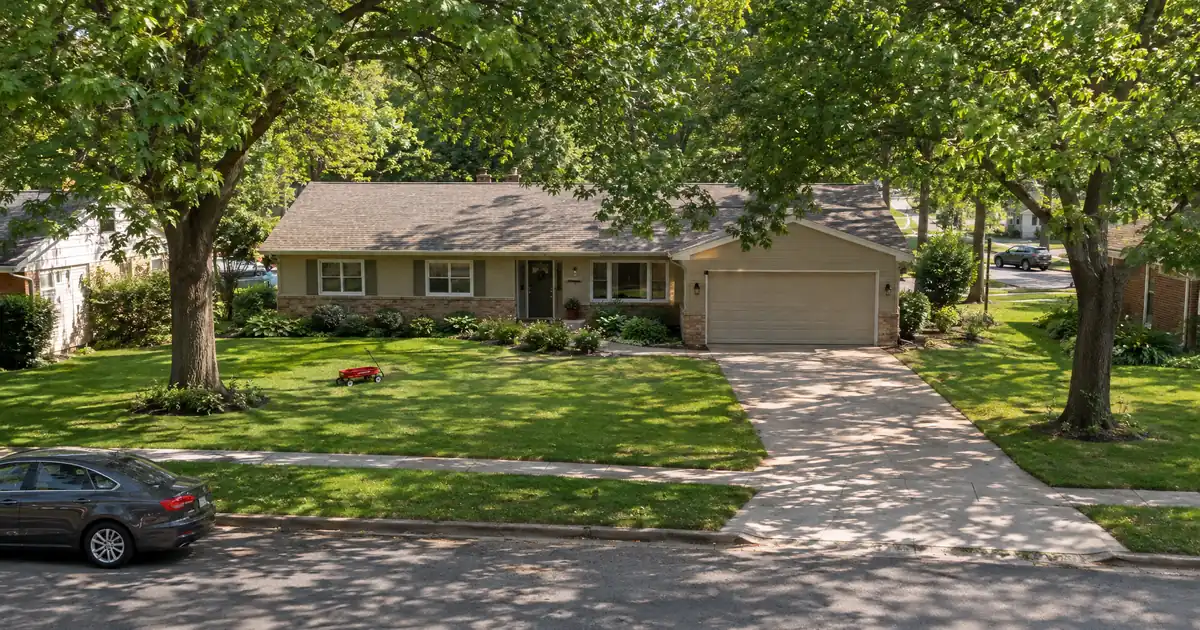
The Quick Read: A fire on one older rental does not pause or cancel a portfolio DSCR loan. The note stays in force, payments continue during repairs, and the lender is protected through the hazard policy rather than the borrower’s cash. The burned house still counts in the pool’s coverage test but earns no rent until it is re-leased. Here “pool” means the group of rentals under one note, not a swimming pool.
- The note, the lien and the payment schedule all continue after a fire.
- The lender’s mortgagee clause gives it a claim on dwelling proceeds, usually released in stages as repairs progress.
- Loss-of-rent coverage bridges income, but it is capped and may run out before repairs finish.
- Older houses add shortfall risk: depreciation, code upgrades and wiring that an insurer may flag.
- Coverage is tested on the pool, so stronger rentals can carry a weaker one, up to a point.
What Stays the Same After a Fire?
Everything on the loan stays the same. The note, the lien and the payment obligation remain in force while the house is damaged. A fire is a casualty event under the policy. It is not a pause button on the debt.
This article widens the lens to an older-house pool. For the program basics, the complete DSCR loans guide is the starting point.
One naming point first. Here, “portfolio DSCR loan,” “blanket loan” and “cross-collateralized loan” all name the same thing: one note secured by several rentals. A bank’s “portfolio loan,” meaning a loan the bank keeps on its books, is a different sense of the word. Separately, a batch of individual notes closed together is not a blanket at all. The loan documents decide which one you have, not the label.
Who Controls the Insurance Money?
The lender controls it, to the extent the mortgagee clause says so. A lender named as mortgagee or loss payee has a right to property proceeds. That right is different from “additional insured” status, which is a liability-policy concept and gives no rights to casualty proceeds. A real-estate finance law firm draws that line, and it also notes that loss payee status carries the right to cancellation and non-renewal notice.
In practice the flow runs like this.
1. The investor reports the loss to the insurer and the servicer right away. Landlord-insurance guidance says same-day reporting is ideal and lists what a claim typically needs: photos, repair estimates and the current lease showing monthly rent.
2. The insurer issues dwelling proceeds jointly to the borrower and lender, or to the lender, per the clause. Endorsement control matters here, because an insurer generally need not reissue a check it addressed correctly.
3. The lender holds the funds and typically releases them in stages tied to repair progress. This is the loss-draft process. If repair is not economically feasible, proceeds may instead be applied to the debt.
4. The lender may also appear on checks beyond the main dwelling coverage, such as other structures, as United Policyholders notes.
The loss-draft schedule itself lives in the loan documents and varies by lender. No two files should be assumed identical. Read the casualty clause before closing, not after the loss.
Why Does an Older House Change the Claim?
An older house changes the claim in three ways: valuation, code upgrades and insurability. Each one can leave proceeds short of the repair bill, and a shortfall slows the loss draft or forces the borrower to add cash.
Valuation. A policy written on actual cash value pays depreciated value, which can fall well below rebuild cost on old housing stock. Replacement cost coverage pays closer to the full rebuild. Check which one is on each policy in the pool.
Code upgrades. A standard policy restores what existed. Ordinance-or-law coverage pays the extra cost of rebuilding to current code. Older homes are exposed because opening walls and pulling permits can trigger required upgrades. Per Adjusters International, the coverage entered homeowners forms in 2000, and eligibility generally requires that compliance be needed to obtain a building permit or certificate of occupancy. The limit is often a small slice of the dwelling limit. WP Insure notes that the base amount, often around 10%, frequently falls short. The declarations page controls, not the rule of thumb.
Insurability. Knob-and-tube wiring has no ground wire and was never built for modern loads. Steadily notes that some insurers require inspections as a condition of coverage on knob-and-tube or aluminum-wired properties. Insure.com adds that many standard insurers decline active knob-and-tube wiring and that failing to disclose it can invalidate a policy at claim time.
That last point is the one pool investors miss. An older house can bring an insurance problem, not only a physical one. If a policy lapses or is voided, the pool has a property without proper hazard coverage, and that is a loan-compliance issue.
| Shortfall layer | What causes it | Who absorbs it |
|---|---|---|
| Depreciation | Actual cash value policy | Borrower |
| Code upgrade gap | Ordinance-or-law limit too low | Borrower |
| Deductible | Policy terms | Borrower |
| Rent gap | Loss-of-rent cap or waiting period | Borrower, then the pool |
How Does Loss-of-Rent Coverage Bridge the Payment?
Loss-of-rent coverage, also called fair rental value, pays while the unit cannot be rented. It is the bridge between the fire and the next lease. It is not a guarantee that the pool’s payment is covered.
Three details matter. It is typically paid on market rent for a comparable unit, not necessarily what the tenant paid, per Steadily’s loss-of-rent guidance. It is often capped by time or dollar limit, and may carry a short waiting period. And most policies cover around 12 months of fair rental value, while a major fire can push restoration to 18 to 24 months.
Steadily’s restoration timeline says a significant fire commonly takes 60 to 90 days and can stretch to 120 once inspections and contractor gaps are counted. It also gives a useful warning: a modest dollar cap can fall short of several months of rent on one unit. Check both the duration and the cap on every policy in the pool.
A related point: not every dwelling-fire form includes fair rental value. Treat that as a prompt to check the form, not as a rule.
What Does the Fire Do to Pooled Coverage?
On a true blanket loan, the pool is tested as pooled rent against pooled debt service. On the 30-year portfolio DSCR loan, the pool floor is 1.00, with 2 to 20 properties under one note, subject to lender guidelines. The burned house stays in the count but earns no rent until it is re-leased. The other rentals carry the load.
Say the pool clears the floor comfortably, around 1.3x, with eight houses. One house goes dark. The pooled number drops by that house’s share of rent, and the payment does not change. Whether the pool stays above 1.00 depends on how much that house contributed. If it was a top earner, the dip is larger. If rent-loss insurance pays during repairs, the servicing picture is better than the raw rent number suggests.
Here is the catch. Lost rent shows up in servicing, not in a new appraisal. The lender is not re-appraising the pool because one house burned. The pressure is on cash flow and reserves, not on valuation. That is why reserves and the insurance bridge are the real buffer. Remember too that coverage above 1.00 is a ratio of rent to PITIA only. It is not positive cash flow. Repairs, vacancy, management and capex sit outside the calculation.
| Factor | Individual loan on the house | Pooled note |
|---|---|---|
| Payment during repairs | Continues on that loan | Continues on the whole note |
| Claim money | Controlled under that loan’s clause | Controlled under the pooled loan’s clause |
| Coverage test | That house’s rent | Pooled rent against pooled debt |
| Other houses | Not affected | Carry the income gap |
What Do Release, Substitution and Paydown Mean for the Burned House?
They decide whether a burned house can leave the pool. Release and substitution terms follow the loan documents, and the release price runs above the property’s allocated balance. After a release, the remaining pool must still cover its debt service and meet the loan’s other tests.
Investor-education guidance from Nav says a release clause lets a property be removed once conditions are met, and without one, selling a property tied to a cross-collateralized loan is much harder. That cuts both ways. A burned house with an unresolved claim is a poor candidate for sale or substitution. Plan on repairing and re-leasing first.
This is where an older-house pool can get stuck. One weak house with an insurance gap can make a later release or refinance harder, since the rest of the pool has to pass the post-release tests.
Cross-Collateralization and Default: What Is and Isn’t Triggered?
A fire alone triggers nothing. Default begins when the note’s terms are breached, such as missed payments or a lapse in required insurance. On a cross-collateralized note, the effect of a missed payment is shared across the pool. On separate notes, the fire stays contained to that house’s loan.
A total loss is the harder case. The lender is first in line for proceeds up to the loan balance. Whether proceeds pay down the whole note or only the allocated amount comes down to the document language. Read that clause. Do not assume it.
Lendmire’s guide to blanket structures and cross-collateralization covers how to tell which structure a file really is.
Getting the House Back Into the Pool
The house contributes rent again once repairs are done, the certificate of occupancy or final inspection clears, and a lease is signed. Every property in the pool still needs a lease or an appraiser-supported market rent.
A clean re-entry file typically has these pieces.
1. The final inspection or certificate of occupancy.
2. The new signed lease, or a market rent opinion.
3. Proof of continued hazard coverage with the lender correctly named.
4. Documentation of how loss-draft funds were applied.
Gaps in item three cause the most grief on older houses. An insurer that wanted a rewire or inspection as a condition of coverage may not renew until the work is shown.
Timeline of a Fire on a Pooled Note
The sequence runs from the day of the fire to the re-test. Day of the fire: report to insurer and servicer. Then the adjuster visit and the payee determination. Then the loss draft opens and staged releases begin. Repairs follow, with loss-of-rent coverage running in the background. Then re-leasing. Then the pool is tested again on full rent. Payments continue the entire time.
What to Check Before Closing a Portfolio Loan
Fire planning is a closing-table task. Before the loan closes, check these items.
1. Loss-of-rent duration and cap on each policy. 2. Ordinance-or-law limit, especially on older houses. 3. Whether the mortgagee clause is correct on every policy in the pool. 4. Whether any older house has wiring an insurer may flag. 5. The release, substitution and paydown terms. 6. Whether the loan is truly one blanket note or separate notes. 7. Reserve requirements, which typically run around 6 months of PITIA on standard DSCR programs, with the rental portfolio term loan holding reserves for taxes, insurance and capital expenditures, subject to lender guidelines.
On program fit: the 30-year portfolio DSCR loan runs 2 to 20 properties, with leverage up to 80% of value on a purchase or rate-and-term refinance and a 1.00 coverage floor on the pool. The rental portfolio term loan covers five or more rental properties or units, with leverage up to 75% of value and fixed terms with a balloon at maturity. Cash-out on either is capped at 75% of pooled value. Credit floors on the portfolio programs start at 640, and some structures want more. Manufactured and mobile homes are not reviewable on these programs. All of this is subject to lender guidelines and individual underwriting, and none of it is a commitment to lend.
If You Meant the Swimming Pool
If you searched for post-fire pool care, this is a different topic. Ash, debris and drain-or-treat questions belong with a pool professional or local fire-recovery guidance.
Key Terms Defined
Mortgagee clause: The policy language that names the lender and gives it a direct claim on property proceeds.
Loss draft: The process where a lender holds insurance proceeds and releases them in stages as repairs progress.
Actual cash value: A payout equal to replacement cost minus depreciation.
Ordinance-or-law coverage: Insurance that pays the added cost of rebuilding to current building code.
Loss-of-rent coverage: Insurance that pays fair rental value while a unit cannot be rented.
Cross-collateralization: One note secured by several properties, so all of them stand behind the debt.
Release clause: A loan term that lets one property leave the pool once conditions are met.
Pooled coverage: The test of total rent against total debt service across all properties on the note.
Frequently Asked Questions
Do I keep paying the loan while the burned house is being repaired?
Yes. The note stays in force and the payment does not pause. Loss-of-rent insurance and reserves are the buffer, and the pooled rent from the other houses carries the rest.
Who gets the insurance check after a fire?
The lender is typically named on dwelling proceeds under the mortgagee clause, so the check is joint or goes to the lender. The lender then releases funds, often in stages tied to repair progress. Terms vary by loan document.
Does fire coverage pay for code upgrades on an older house?
Not automatically. Ordinance-or-law coverage pays the extra code cost, and its limit is often small relative to the dwelling limit, so check the declarations page.
Can an older house with knob-and-tube wiring hurt the whole pool?
It can, through insurance. Some insurers decline or condition coverage on that wiring, and undisclosed wiring can void a policy at claim time. A coverage lapse on one house is a compliance problem for the loan.
Does one burned house put the other houses at risk?
Not by itself. A fire is not a default. On a cross-collateralized note the pool shares the payment, so a long rent gap with thin reserves is where pressure builds.
Closing Note
If you are buying or refinancing a rental property and want to see how the numbers work, Lendmire can help you compare DSCR loan options based on the property income, credit profile, leverage, and investor goals. Tax treatment varies; consult a qualified professional.
About Lendmire
A DSCR-focused mortgage broker, Lendmire (NMLS# 2371349) places investor financing across 41 markets — 40 states plus Washington, D.C. — with DSCR eligibility generally reviewed by the lender on property cash flow instead of tax returns, subject to lender guidelines. Scotsman Guide named Lendmire a Top Mortgage Workplace in 2025 and 2026.
Get Started
Ready to find the right loan for you?
In about 30 seconds you can review financing options available for your investment property. No commitment required.
Informational only. Not a Loan Estimate, approval, or commitment to lend. Program availability and eligibility are subject to lender guidelines, credit approval, property review, and underwriting.
References
1. Federman Steifman – additional insured vs loss payee
2. Steadily – does landlord insurance cover fire
3. United Policyholders – getting your mortgage company to release proceeds
4. Adjusters International – ordinance or law
5. WP Insure – ordinance or law
6. Steadily
9. Steadily – fire restoration timeline
10. Nav – cross-collateralization
This article is part of Lendmire’s DSCR loan program — full qualification details, guidelines, and scenarios live on the program page.
Related reading: Portfolio DSCR Loan vs. a DSCR Loan on Every Rental · Does a Portfolio DSCR Loan Save Money Over One Loan per Rental? · Can a Portfolio DSCR Loan Get You Past the Conventional Loan Cap?
Brandon Miller
Founder & CEO, Mortgage Loan Originator, Lendmire LLC
- Mortgage Loan Originator · NMLS# 1129696 · Verify on NMLS Consumer Access
- North Carolina Real Estate Broker · License# 343312 · Verify on NCREC
- North Carolina Insurance Producer · License# 19053198 · Property, Casualty, Life, Health · Verify on NAIC SBS
- Lendmire LLC · Firm NMLS# 2371349 · Verify firm licensure
Disclosure information. Lendmire is a state-licensed mortgage brokerage under NMLS# 2371349. Lendmire is not a depository institution, direct lender, or financial advisor — all loans referenced are placed through wholesale lender partners and are subject to each lender's underwriting standards. This article is provided for general informational purposes and is not a commitment to lend, nor does it constitute financial, legal, or tax advice. Loan programs, terms, rates, and qualification standards change without notice and depend on borrower profile, property type, and the state in which the subject property is located. Equal Housing Opportunity provider. NMLS Consumer Access: nmlsconsumeraccess.org.