
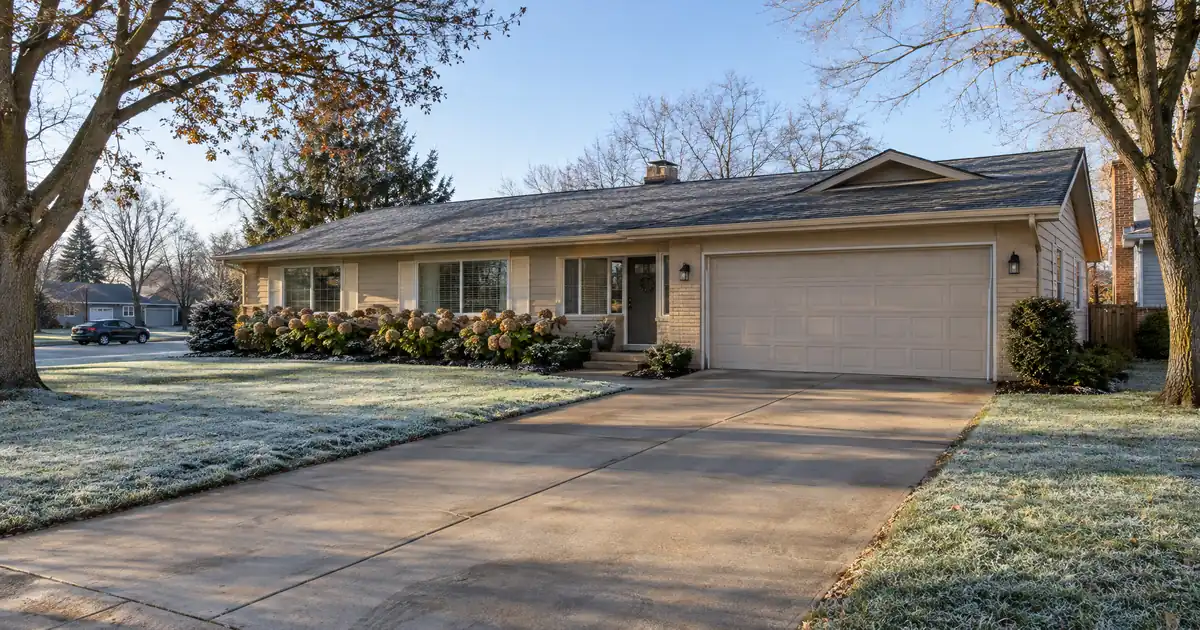
The Quick Read: A paid-off rental can carry a first-lien HELOC, but the lender underwrites you, not the rent. On investment lines through select lenders in Lendmire’s wholesale network, expect a 700 minimum score, a 70% CLTV ceiling, a $500,000 maximum line, and title held personally or in a revocable trust.
- Credit: 700 is a hard floor. A higher score does not raise your leverage on an investment property.
- Line size: the lower of 70% of value less existing liens, or $500,000.
- Debt-to-income: up to 50%, tested on the interest-only payment at the maximum draw.
- Title: an individual or a revocable living trust. An LLC cannot hold it.
- Structure: at least 75% of the line is drawn at closing, and pricing floats for the life of the line.
Subject to lender guidelines and full file review. Not a commitment to lend.
How large a line the equity supports.
An equity line is sized by combined loan-to-value, occupancy, and credit — not by rental coverage. Switch the occupancy or the credit band and the ceiling moves with it.
Investment-property lines require a 700 minimum credit score; second-home lines start at a 640 minimum and primary-residence lines at 600, and the combined-LTV ceiling steps down as the credit band drops on primary-residence and second-home lines and holds on investment-property lines; the line cap steps down on primary-residence lines and holds at every tier on investment-property and second-home lines.
A debt-to-income ratio above 45% requires 680+ credit. Profiles under 640 are limited to single-family homes. At least 75% of the approved line is drawn at closing. Ceilings, floors, and caps update from Lendmire’s centralized guideline source.
Line estimate
Illustrative estimate only — not a quote, Loan Estimate, approval, or commitment to lend. The rate is an editable assumption; equity-line pricing is variable through both the draw and repayment periods and never converts to fixed. Occupancy and credit drive the ceiling together: an investment property tops out at 70% combined LTV (minimum credit 700, line cap $500,000); a second home tops out at 90% combined LTV (minimum credit 640, line cap $500,000), with the ceiling stepping down as the credit band drops (the cap holds at every tier); a primary residence tops out at 90% combined LTV (minimum credit 600), and its $750,000 maximum line is available only at 75% combined LTV or below with a 700-or-better credit profile (720 on the longer-runway program) and a full appraisal. Lines above $500,000 require a full appraisal. Credit, debt-to-income, property type, and full underwriting review all affect the final line.
Why a Paid-Off Rental Becomes First Lien Automatically
Lien position follows recording order, not the product name. A HELOC is a second mortgage only when something is already recorded ahead of it. On a free-and-clear rental, nothing is, so the new line becomes the only loan on the property and sits in first position.
That is why this product exists for landlords who own outright. There is no first mortgage to protect and no junior-lien language in an older loan to worry about. The line can also pay off an existing mortgage at closing, which makes the HELOC the lone lien. One BiggerPockets thread on first-lien HELOC positioning describes exactly that payoff-and-replace structure on a rental.
Availability is narrower than most investors expect. Lendmire arranges these lines in 16 full-service states, a smaller footprint than its 41-market DSCR platform (40 states plus Washington, D.C.) Plenty of big banks and depository institutions skip investment-property lines entirely, so lender choice is thin before your credit even matters.
Paid off does not mean approved. Large equity does not offset weak credit, heavy debts, or the wrong kind of title. Lenders approve the borrower first and the collateral second.
Key Terms Defined
First lien: the loan recorded first against a property. It gets paid first if the property is ever sold to satisfy debt.
Free and clear: a property with no mortgage or other lien against it.
CLTV (combined loan-to-value): all loans against the property, added together, divided by its value.
HELOC: a home equity line of credit. It is an open-end line you can draw on, repay, and draw on again within set limits.
DTI (debt-to-income): your monthly debts divided by your monthly income.
Vesting: how the title names the owner, such as an individual, a trust, or an LLC.
DSCR (debt service coverage ratio): a property’s monthly rent divided by its monthly principal, interest, taxes, insurance, and any HOA dues. DSCR loans qualify primarily on property-level rental income covering the payment, subject to lender guidelines.
The Requirements, Factor by Factor
Every figure below applies to an investment property, and every one is subject to lender guidelines. Terms for primary residences are different, so don’t borrow numbers from a primary-home article.
| Factor | What the lender tests | Investment-line figure |
|---|---|---|
| Credit score | Your personal credit | 700 minimum |
| Leverage | CLTV against value | 70% ceiling |
| Line size | Maximum amount | $500,000 |
| DTI | Debts vs. income | Up to 50% |
| Title | Who owns it | Individual or revocable trust |
| Property type | What it is | Eligible types only |
| Exposure | Lines and properties | Three lines; 15 financed properties |
Two details here surprise people. First, 720 and 700 both reach the same 70% CLTV on an investment property. Credit above 700 buys eligibility, not extra leverage, and nothing sits beneath the 700 floor. Second, the file reviews your credit report, which must be no more than 90 days old at closing, and the scoring keys to the primary wage earner.
How Underwriting Actually Runs, in Order
Here is the sequence a file typically follows.
1. Confirm free and clear. A title search shows no mortgage or other lien. A leftover judgment or old home-equity lien changes the math.
2. Check vesting. The deed names you or your revocable trust. If an LLC holds it, the file stops here until that is fixed.
3. Check property type. Single-family, 2-4 units, PUDs, townhomes, and condos are eligible. Non-warrantable condos are included.
4. Pull credit. The score has to reach 700. Housing and credit history across your financed properties get reviewed too.
5. Run DTI. The lender counts your personal debts plus the new line’s interest-only payment on the full maximum draw, not just the amount you plan to use.
6. Order valuation. Lines at or below $500,000 ordinarily run on an automated valuation with no traditional appraisal. You can request a full appraisal anyway.
7. Close and draw. At least 75% of the line is drawn at closing.
Notice what is missing. The rent never enters the calculation. The HELOC lender underwrites you. A DSCR lender underwrites the rental. Neither approval guarantees the other.
Sizing the Line on a Zero-Balance Rental
The formula is value times 70%, minus existing liens, capped at $500,000. On a paid-off rental, existing liens are zero.
That creates a crossover near $700,000 of value. Below it, the 70% limit binds first, so the line grows as value grows. Above it, the $500,000 cap binds, and extra equity does nothing for you.
Picture an investor with a free-and-clear duplex valued well under that crossover. Her line is a straight percentage of value. Now picture another with a fourplex valued comfortably above it. His line stops at the dollar cap no matter how much equity he holds. Same product, different constraint. That is also why the larger holder often ends up looking at a DSCR cash-out instead.
Because the cap is $500,000, an investment line sits in the automated-valuation lane almost by design. Full appraisals are required only on lines above $500,000, and those are primary-residence only.
Mechanics Landlords Don’t Expect
Treat this as a drawn loan with a revolving feature, not a standby account.
- Draw at closing: at least 75% of the line is drawn on day one. You cannot leave it mostly untouched.
- Structure: investment lines run a 5-year interest-only draw period, then a 25-year fully amortizing repayment period.
- Pricing: it floats through both periods and never converts to fixed.
- No escrow: taxes and insurance stay on your calendar. BiggerPockets members discussing a first-lien HELOC strategy flag this as an out-of-pocket item.
- Later draws: most subsequent draws carry a $1,000 minimum.
- Freezes: a line can be frozen or reduced. If you plan to use it as acquisition cash, open and fund it before you go under contract.
Across the programs Lendmire places files with, the borrower who gets surprised is usually the one who pictured an unused safety net. The 75% draw rule turns the line into real debt on closing day, so the payment test and the budget both need to assume it.
Where the General Rule Breaks
LLC-held rentals. This is the sharpest edge. A HELOC cannot be vested in an LLC, corporation, partnership, or an irrevocable, blind, or land trust. Your options are a vesting change, a business line of credit, or a DSCR cash-out refinance, which can usually stay in the entity, subject to lender program eligibility. Before retitling, read Lendmire’s piece Rental HELOC Solar Lien and HOA Rules for a First-Time Landlord, since those issues can surface during a title review.
Property types that are not offered. Manufactured homes, co-ops, condotels, log homes, commercial, mixed-use, and agricultural-zoned properties are not eligible.
Count caps. A borrower is limited to three lines. An owner of more than 15 financed properties is not eligible. Portfolio landlords hit this wall faster than they expect. A BiggerPockets post shows the same pattern at a credit union, where a property count cap shut out a borrower with several rentals.
Credit history. A bankruptcy needs four years of seasoning from discharge or dismissal. On investment files, foreclosure history follows a seven-year path, and a deed-in-lieu, pre-foreclosure, or short sale follows a four-year path.
Strong equity, thin credit. This is the classic dead end. A score under 700 ends the HELOC conversation no matter how much equity you hold. A DSCR cash-out reads credit differently, because it leans on rent coverage. Most programs want around 660, and a 620 floor exists in parts of the network.
Short-term rentals. Short-term rental rules can vary by city, county, HOA, and property type, so investors should confirm local rules before relying on projected rental income.
First-Lien HELOC or a DSCR Cash-Out?
With no first mortgage to protect, the usual argument for a HELOC (keep the cheap first loan) disappears. A DSCR cash-out on a free-and-clear rental is simply a new first-lien loan. So the choice turns on whose income carries the loan, whose name is on title, and how much you need.
| Factor | First-lien HELOC | DSCR cash-out |
|---|---|---|
| Reviewed on | Your credit, DTI, equity | Rental coverage and credit |
| Structure | Floating draw line | Closed-end lump sum |
| Leverage ceiling | 70% CLTV, investment | About 75% LTV, standard rentals |
| Title | Individual or revocable trust | LLC often workable |
| Your personal debts | Adds to your debt stack | Stay outside the DSCR math |
| Size | Up to $500,000 | Up to $3,000,000 on standard programs |
On the DSCR side, about 6 months of seasoning is the common expectation, and 1.00 is where many select programs start. A separate select-lender path takes coverage below 1.00, with leverage and terms adjusted. Stronger ratios open better pricing and leverage. This is the part of Lendmire’s complete DSCR loans guide worth reading before you choose.
One warning on coverage: clearing 1.00 is not the same as positive cash flow. The ratio compares rent to the full monthly obligation only. Repairs, vacancy, management, utilities, and capital expenses sit outside it.
A HELOC fits an investor who holds title personally or in a revocable trust, has strong credit and low debt, and wants staged access to a smaller amount. A DSCR cash-out fits when the rental sits in an LLC, you need a bigger lump sum, or your personal DTI is already crowded.
This one is closer than it looks. The HELOC’s draw flexibility is real, but a 75% draw at closing and floating pricing take away much of the flexibility. The DSCR cash-out gives you a defined structure, though not every rental will clear the coverage test.
Using the Line as Down-Payment Money
Get the line first. It has to be open and funded before you go under contract. Even then, the purchase lender decides whether the borrowed cash counts toward your down payment.
Purchase leverage on DSCR files typically lands at 75% to 80% LTV, and select high-leverage programs reach 85% with roughly a 700-plus score. A bigger down payment can lift your coverage ratio. It never erases credit floors, reserve rules, or property eligibility. The strongest files clear both tests: enough equity and enough rental coverage.
Also remember the borrowed money is debt on the paid-off rental. If that rental underperforms, you owe the line on one property and the new loan on another.
What the Federal Disclosure Rules Cover
Federal rules around HELOCs protect consumers through disclosure. They do not set investor credit, leverage, or title limits. Each lender sets those. Under Regulation Z, a lender must give applicants the HELOC brochure when the application is provided, per the Federal Register notice on the CFPB’s revised booklet.
The CFPB’s HELOC booklet is written for homeowners, and it carries the sober reminder that your property secures the line. That applies to a rental the same way. Miss payments and the property is at risk. Lenders can also freeze or reduce a line, and a bank could call the loan in a downturn.
Frequently Asked Questions
Can I get a first-lien HELOC on a rental I own outright?
Yes, on an investment property through select lenders. You need a 700 score, a DTI within 50%, eligible property type, and title in your name or a revocable trust. The line is capped at 70% CLTV or $500,000, whichever is lower.
Does my rental income count toward qualifying?
Not on this product. The lender reviews your credit, DTI, and equity. If you want rent to carry the qualification, a DSCR cash-out refinance is the better fit, subject to lender guidelines.
Can my LLC take out the line?
No. Title has to sit with an individual or a revocable living trust. If an LLC owns the rental, the options are a vesting change, a business line of credit, or a DSCR cash-out, depending on program guidelines.
Will I need an appraisal?
Usually not. Lines at or below $500,000 ordinarily use an automated valuation, and an investment line cannot exceed $500,000. You can request a full appraisal, and a higher CLTV may call for a secondary valuation.
Is it always a first lien?
Only if nothing is recorded ahead of it. On a free-and-clear rental, it is the only loan, so it holds first position. If a mortgage remains, the line is junior unless it pays that mortgage off at closing.
Next Step
If you are considering a home equity line and want to see how the numbers work, Lendmire can help you compare HELOC options based on the property, the equity available, credit profile, combined leverage, and your goals. As a mortgage broker, it arranges these through select wholesale lenders and does not lend itself. Reach the team at 828-256-2183, or request a quote. Any illustrative calculator estimate is just that, not an offer.
The practical test before you apply is simple: check your title, your score, and your property count first, and only then look at the equity.
About Lendmire
Lendmire (NMLS# 2371349) is a mortgage brokerage serving homeowners and real estate investors in its 16 full-service states. Home equity lines of credit are arranged through wholesale lending channels; Lendmire brokers the line and the lender underwrites each application under its occupancy-based guidelines. Scotsman Guide named Lendmire a Top Mortgage Workplace in both 2025 and 2026.
Get Started
Ready to find the right loan for you?
In about 30 seconds you can review financing options available for your home or investment property. No commitment required.
Informational only. Not a Loan Estimate, approval, or commitment to lend. Program availability and eligibility are subject to lender guidelines, credit approval, property review, and underwriting.
References
1. BiggerPockets: HELOC 1st Lien Position
2. BiggerPockets: First Lien HELOC Strategy
3. BiggerPockets: HELOC for rental properties in NC
4. Federal Register: Notice of Availability of Revised Consumer Information Publication
This article is part of Lendmire’s investment property HELOC program — full qualification details, guidelines, and scenarios live on the program page.
Related reading: How to Get a First-Position HELOC on a Texas Rental · How Much Remodel a Rental HELOC Can Carry Before a DSCR Loan · Can You Get a HELOC After a Pandemic Mortgage Forbearance?
Brandon Miller
Founder & CEO, Mortgage Loan Originator, Lendmire LLC
- Mortgage Loan Originator · NMLS# 1129696 · Verify on NMLS Consumer Access
- North Carolina Real Estate Broker · License# 343312 · Verify on NCREC
- North Carolina Insurance Producer · License# 19053198 · Property, Casualty, Life, Health · Verify on NAIC SBS
- Lendmire LLC · Firm NMLS# 2371349 · Verify firm licensure
Important disclosures. Lendmire (NMLS# 2371349) is a licensed mortgage brokerage. Lendmire is not a direct lender, depository institution, or financial advisor. All loan inquiries are subject to lender underwriting; this article does not constitute a commitment to lend. Rates, terms, and program guidelines are subject to change without notice and vary by borrower profile, property type, and state. Information in this article is general in nature and is not financial, legal, or tax advice. Equal Housing Opportunity. NMLS Consumer Access: nmlsconsumeraccess.org.