
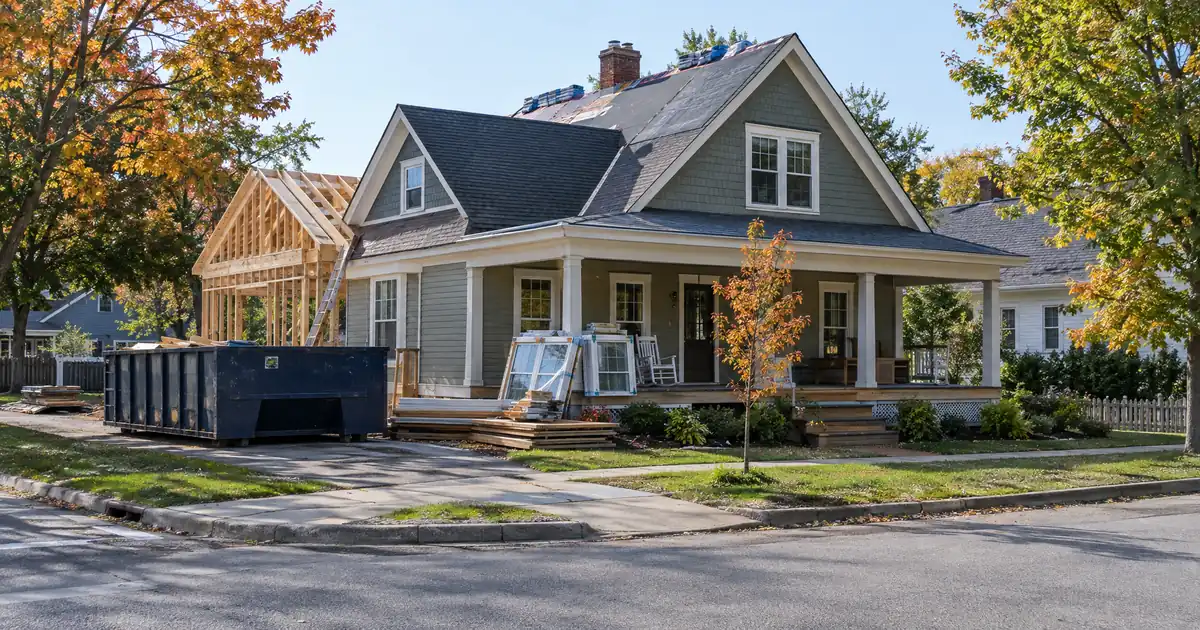
The Quick Read: A first flip gets safer when the investor makes the key decisions before closing: buy at a price that leaves room to be wrong, build the after-repair value and budget conservatively, hold cash beyond the down payment, and pick an exit before the loan matures. Hard money lends against the property, the plan, and the exit, so most of the risk sits in the plan. The lender checks whether the loan is safe for the lender. The flipper has to check whether the deal is safe for the flipper.
- Screen the offer price with the 70% rule, then adjust it for the price tier.
- Use recent renovated comps for the after-repair value, and keep the first scope light.
- Add a contingency of 10% to 15% and get line-item bids before you offer.
- Count cash for the down payment, fees, interest reserves, and the first draw as separate buckets.
- Know whether the exit is a sale or a refinance before you sign, and check the loan term against that exit.
Why a First Hard Money Flip Is Risky
The spread on a typical flip is thinner than most beginners assume. ATTOM’s most recent flipping report puts the typical gross margin at 21.5%, with typical gross profit of $60,526, down from $66,932 the prior quarter and $71,000 a year earlier. Margins fell in 126 of the 186 metros analyzed. That figure is purchase price versus resale price only.
What this loan actually costs to carry.
Hard money is sized against the project and priced by time. Enter the deal and see how much the program will lend, the cash required at closing, the carry while you hold it, and what is left at the exit.
Leverage tiers on the current program: 85% with fewer than 2, 90% with 2 or more, 93% with 5 or more completed projects — every tier capped at 75% of after-repair value. Loan amounts up to $5,000,000, larger by exception; terms of 6 to 18 months, interest-only, no prepayment penalty. The rehab portion funds in draws against completed work, not at closing.
Program parameters shown update from Lendmire’s centralized guideline source. Rate, points, and months are editable assumptions, not quoted terms.
Cost cap sets the loan · positive spread
Illustrative estimate only — not a quote, Loan Estimate, approval, or commitment to lend. Rate, points, and months are editable assumptions. Hard money is business-purpose financing for real estate investors, not a consumer mortgage. Leverage on the current program tops out at 93% of project cost for investors with a documented track record, capped at 75% of after-repair value, with rehab funding up to 100% of the documented budget released in draws; actual terms vary by lender, borrower experience, property, and exit. Lendmire is a mortgage broker, not a lender.
Price tier matters too. HousingWire’s coverage of ATTOM’s earlier data shows homes bought between $100,000 and $200,000 posted the strongest typical return at 32%, while homes bought under $50,000 posted a 14% loss. The takeaway is simple. A first-timer has little margin for error, so risk control has to come from price discipline, accurate numbers, and short timelines.
Hard money adds a second layer. Lenders and borrowers worry about different things, and the lender’s review does not cover most of what can hurt a first-timer.
| Item | What the lender checks | What only you check |
|---|---|---|
| Value | Collateral and after-repair value | Whether your comps are truly comparable |
| Budget | Scope against loan size | Whether bids are realistic and padded |
| Condition | A valuation, not a full inspection | Hidden defects and permit risk |
| Exit | That repayment looks plausible | Whether a sale or refinance works at your numbers |
| Contractor | Draw paperwork | Whether the contractor can finish on budget |
Key Terms Defined
After-repair value (ARV): The estimated resale value of the property once the planned work is finished.
Loan-to-cost: The loan amount as a share of purchase price plus rehab budget, used instead of a plain purchase LTV on flips.
Draw: A release of rehab funds from the lender’s holdback after the lender confirms completed work.
Holdback: The part of the loan reserved for rehab and paid out in stages rather than at closing.
Interest-only: A payment structure where the borrower pays interest during the term and repays principal at payoff.
Seasoning: The ownership period a long-term lender expects before it will refinance or cash out a property.
Before the Offer: Pick a Deal You Can Survive Being Wrong On
The 70% rule is the standard screen. Maximum offer equals after-repair value times 0.70, minus the rehab budget. HomeLight’s explanation of the rule makes the key point that the remaining 30% is not profit. It has to cover financing, holding, selling, and the costs nobody planned for. Beginners who treat that 30% as their profit are the ones who end up underwater.
The rule is a screen, not a law. It strains at both extremes. On very low-value homes the 30% cushion is too small in dollar terms to absorb one bad surprise. On high-value homes, investors stretch it, but that thins the safety net. The tier data above points the same way: very cheap purchases lost money on average.
Set a walk-away test before you make an offer. Pass on the deal if any of these is true:
1. The maximum offer under the rule is below what the seller will take.
2. The after-repair value depends on a single comp or on unrenovated sales.
3. The scope needs a roof, an addition, or heavy permit work.
4. You cannot name the exit and the backup exit.
A hard money practitioner interview suggests a first-time renovation budget of roughly 25% to 30% of the purchase price. That is one lender’s opinion, not a rule. The principle is sound, though. A light cosmetic scope on an existing structure carries fewer unknowns than a gut rehab.
Smaller can also mean safer on leverage. Across the wholesale network, hard money for fix-and-flip is tiered by completed projects. Typical terms run to 85% of project cost with fewer than two completed projects, 90% at two or more, and 93% at five or more, with every tier capped at 75% of after-repair value. The top tier is reserved for experienced investors. All of this varies by lender, property, and experience, and nothing here is a commitment to lend.
Build an ARV and a Budget That Hold Up
Overestimating the after-repair value is the standard error on a first flip. Use recently renovated sales close to the property, not the neighborhood average. Ask a local agent to confirm the number, and ask for a conservative figure rather than a hopeful one. If the after-repair value only works at the top of the comp range, the deal does not work.
Next comes the budget. BiggerPockets’ cost guide says the full budget should include acquisition, rehab, holding, and selling costs, and that the project should carry a contingency of 10% to 15%. Build the rehab piece line by line:
1. Walk the property with the contractor and list every item by room and system.
2. Get written bids from more than one contractor before you make the offer.
3. Price materials separately from labor so a swapped finish does not blow the number.
4. Add the contingency on top, not inside, the line items.
5. Add holding costs for the full loan term, not the planned schedule.
Tax treatment varies; consult a qualified professional about how rehab and sale costs are handled.
How Much Cash a First Flip Really Takes
Hard money is not a zero-down product. Market surveys report that flip borrowers are often expected to put in 10% to 20% of their own money, according to Homes.com’s guide for first-time flippers. In the wholesale network, a first-timer with fewer than two completed projects typically sees leverage up to 85% of project cost, so expect to fund roughly 15% of project cost yourself, and the 75% after-repair-value cap can bind harder than the cost tier. Lenders also want a 620 minimum score on the program, with added conditions below 660, and underwriting stays tied to the property, the plan, and the exit.
The down payment is only the first bucket. Break the cash requirement into five pieces and add them up before you commit:
| Bucket | What it covers |
|---|---|
| Down payment | Your share of project cost |
| Closing and lender fees | Origination, title, and third-party reports |
| Interest reserve | Interest-only carry through the full term |
| First-draw cash | Early rehab costs you front before reimbursement |
| Contingency cash | Overruns beyond the budgeted contingency |
Up to 100% of the rehab budget can fund in draws against completed work. That is a rehab figure, not a purchase leverage figure. It also does not mean the rehab money arrives at closing. Loan amounts on the program run up to $5,000,000, and terms run 6 to 18 months, interest-only, with no prepayment penalty.
Inspect It Yourself, Then Use the Draws as Checkpoints
A lender valuation is not a property inspection. Hire an independent inspector before you remove contingencies. Foundation, roof, electrical, plumbing, and drainage issues can wipe out a thin margin, and the lender’s appraiser is not looking for them on your behalf.
Draw mechanics work in your favor if you treat them as a checkpoint. The purchase portion funds at closing. The rehab budget sits in a holdback and is released after the lender confirms completed work, per Yieldstack’s draw schedule explainer. A first-timer should assume reimbursement, meaning you pay first and get repaid. That shapes the contractor deal:
- Tie contractor payments to phases that match draw milestones.
- Never prepay labor beyond what your cash can cover until the draw lands.
- Keep invoices and proof of payment organized, because a slow draw delays the contractor and raises carry.
- Treat each inspection as a free progress check on scope and quality.
Also read the interest clause. Interest may accrue only on funds drawn, or on the full loan balance from day one. Yieldstack describes both. The difference changes carry cost materially, so the term sheet should say which one applies before you sign.
Stress-Test the Deal Three Ways
Run every first flip through three versions before you close. The numbers belong to your own deal. The pattern below shows where the pressure lands.
| Scenario | What changes | What absorbs it |
|---|---|---|
| On schedule | Nothing | Planned margin |
| Rehab runs long | More months of interest and holding costs | Interest reserve, then margin |
| Overrun plus slow sale | Higher payoff balance and extended carry | Contingency, then your equity |
Each draw raises the payoff balance, so budget overruns and delays flow straight into the payoff number. If the deal only works in the first row, it is not a deal you can survive being wrong on. A margin that survives the third row is the one worth taking.
Plan the Exit Before You Close
Every hard money loan is a short bridge, and the exit has three layers. Plan A is a sale at your after-repair value. Plan B is a sale at a lower price, with the budget showing you still repay the loan. Plan C is a refinance into a long-term loan and a hold as a rental. ATTOM’s falling margins mean a flip that does not clear the sale can fall back to being a rental. Plan for that at purchase. BiggerPockets forum commentary notes that landlords often pay a higher share of after-repair value than flippers, so a rental fallback can change what price makes sense.
The refinance backup has its own clock. The bridge must not mature before the long-term lender’s seasoning or ownership period runs. When the exit is a refinance, the long-term lender reads invoices, proof of payment, the appraisal, and the ownership timeline, not the draw schedule. For a DSCR cash-out on a standard rental, the network commonly looks for about 6 months of seasoning and tops out around 75% LTV, subject to lender guidelines. Many investors refinance out of hard money into long-term DSCR investor loans once the property is stabilized, and Lendmire arranges that path through its wholesale network.
Rental coverage matters on that exit. For select programs, 1.00 is where coverage starts, while a separate select-lender path takes coverage below 1.00 with leverage and terms adjusted. Clearing 1.00 is also not the same as positive cash flow. DSCR compares rent to principal, interest, taxes, insurance, and HOA only. Repairs, vacancy, management, and capex sit outside it. The complete DSCR loans guide walks through how the ratio is calculated and what the long-term side expects.
Where the General Rules Break
- Low-priced homes: Sub-$50,000 purchases lost money on average in the HousingWire data, and a 30% cushion is small in absolute dollars.
- Heavy rehab or new construction: A first flip is cleaner on an existing structure. Ground-up construction is a separate program tier, and it is not a beginner’s first project.
- Gap money: Second-lien or gap funding is hard to line up on a first flip.
- Choosing the capital source: Some investors compare hard money against private money before they commit.
- Property type: The program covers non-owner-occupied residential property of one to four units, so commercial, land, and owner-occupied purchases are outside it.
Phase-by-Phase Checklist
1. Before the offer: Run the 70% screen, validate comps, price the scope, and set a walk-away number.
2. Before closing: Hire an inspector, total all five cash buckets, confirm the interest structure, and name Plans A, B, and C.
3. During rehab: Pay contractors to draw milestones, document each phase, and watch the budget weekly against the contingency.
4. At exit: Start the sale or refinance work before maturity, and confirm the seasoning clock for any refinance.
Mistakes First-Timers Make
- Treating the 30% under the 70% rule as profit.
- Quoting the typical flip profit as if it were net.
- Assuming rehab money arrives at closing.
- Skipping the independent inspection because the lender ordered a valuation.
- Taking a scope that is too heavy for a first project.
- Closing without a written exit that survives a delay.
Next Step
If you are buying, rehabbing, or refinancing an investment property on a short timeline and want to see how the numbers work, Lendmire can help you compare hard money options based on the project, the exit plan, leverage, and your goals. Programs are offered in 41 markets, including Washington, D.C., and every file is reviewed individually by the lender.
Frequently Asked Questions
Can a first-time flipper get hard money without prior flips?
Often yes, but at lower leverage. In the wholesale network, borrowers with fewer than two completed projects typically see up to 85% of project cost, capped at 75% of after-repair value, and the top tiers are reserved for experienced investors. Terms vary by lender, property, and experience, and nothing is a commitment to lend.
Is hard money zero down?
No. There is no true 100% purchase program. Up to 100% of the rehab budget can fund in draws against completed work, but that is a rehab-budget figure, and the purchase side requires your own cash.
What happens to the rehab money at closing?
It stays in a lender-held holdback. The purchase funds at closing, and rehab money is released in draws after work is confirmed, so a first-timer should plan to front early costs and be reimbursed.
How much contingency should a first flip carry?
A range of 10% to 15% of the project is the common guide from BiggerPockets, set on top of line-item costs. Heavier or older properties belong at the upper end, and a light cosmetic scope can sit lower.
What if the house does not sell before the loan matures?
That is why the exit has three layers. A lower-price sale and a refinance into a long-term rental loan are the backups, and the refinance depends on seasoning, appraisal, and rental coverage, all subject to lender guidelines.
About Lendmire
A DSCR-focused mortgage broker, Lendmire (NMLS# 2371349) places investor financing across 41 markets — 40 states plus Washington, D.C. — with DSCR eligibility generally reviewed by the lender on property cash flow instead of tax returns, subject to lender guidelines. Scotsman Guide named Lendmire a Top Mortgage Workplace in 2025 and 2026.
Get Started
Ready to find the right loan for you?
In about 30 seconds you can review financing options available for your investment property. No commitment required.
Informational only. Not a Loan Estimate, approval, or commitment to lend. Program availability and eligibility are subject to lender guidelines, credit approval, property review, and underwriting.
References
1. attomdata.com: Home Flipping Profits Continue Gradual Two Year Decline
2. HousingWire coverage of ATTOM flipping data
3. HomeLight on the 70% rule in house flipping
4. BiggerPockets guide to the cost of flipping a house
5. Homes.com’s guide for first-time flippers
6. Yieldstack on fix-and-flip loan draw schedules
This article is part of Lendmire’s hard money loan program — full qualification details, guidelines, and scenarios live on the program page.
Related reading: Can a First-Time Flipper With a Due Note Still Get a DSCR Loan? · Can You Use Hard Money to Flip a Triplex or Fourplex? · Is a Hard Money Loan Too Risky for a First-Time Flipper?
Brandon Miller
Founder & CEO, Mortgage Loan Originator, Lendmire LLC
- Mortgage Loan Originator · NMLS# 1129696 · Verify on NMLS Consumer Access
- North Carolina Real Estate Broker · License# 343312 · Verify on NCREC
- North Carolina Insurance Producer · License# 19053198 · Property, Casualty, Life, Health · Verify on NAIC SBS
- Lendmire LLC · Firm NMLS# 2371349 · Verify firm licensure
Compliance and disclosures. Lendmire (NMLS# 2371349) is a licensed mortgage broker and is not a direct lender, depository institution, financial advisor, or tax professional. Content in this article is general market analysis and educational information — not financial, legal, or tax advice for any specific situation. Lendmire does not guarantee loan approval; every transaction is subject to underwriting by the funding lender. Mortgage pricing and loan program guidelines are subject to change at any time without notice and vary by borrower characteristics, property type, and state regulations. Lendmire complies with Equal Housing Opportunity. Licensure verification: NMLS Consumer Access.