
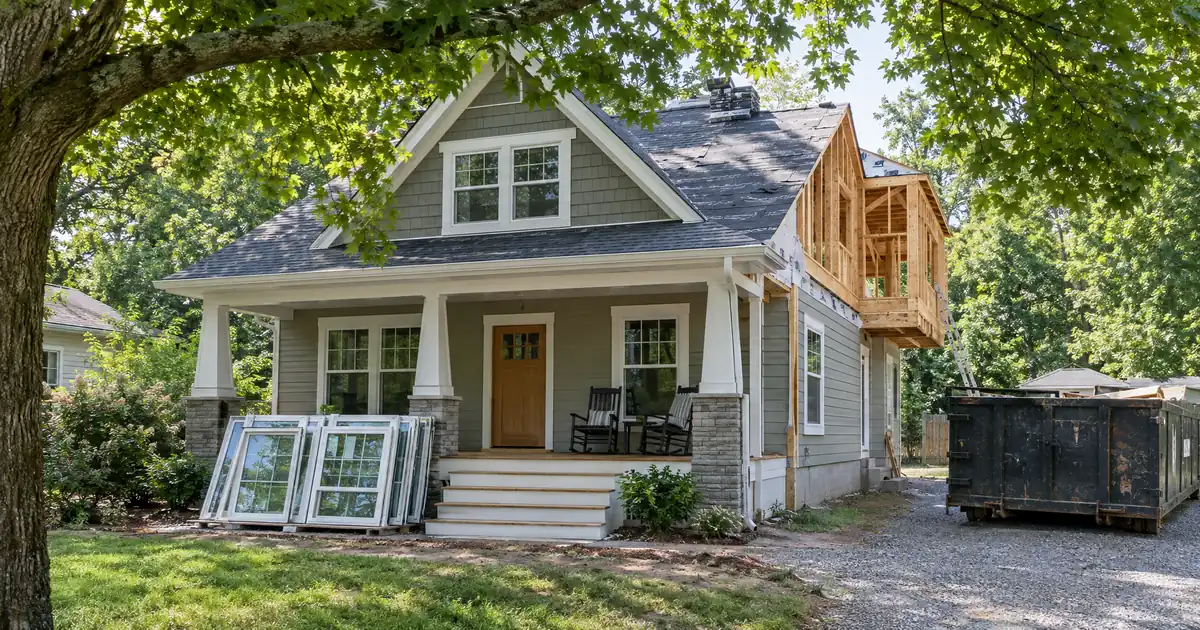
The Quick Read: Usually only when the property needs purchase money or rehab funding before it can qualify for long-term rental financing, and only when you have mapped the exit loan before you close, because a bridge is a short, interest-only loan that must be repaid within months.
- Across Lendmire’s wholesale network, hard money terms typically run 6 to 18 months, interest-only, with no prepayment penalty. Terms vary by lender, property, and experience.
- Fix-and-flip leverage is tiered by completed projects: typically 85% of project cost with fewer than 2, 90% at 2 or more, and 93% at 5 or more. Every tier is capped at 75% of after-repair value.
- Rehab money is released in draws as work gets finished, so you front the work and get reimbursed.
- A stabilized, leased rental rarely needs a bridge. Permanent rental financing fits that case better.
- The exit is the whole decision. If you cannot explain how the bridge gets repaid, skip the deal.
What Is a Hard Money Bridge Loan?
A hard money bridge loan is a short-term, asset-based loan that “bridges” you from buying a property to a longer-term outcome. That outcome is a sale or a refinance into permanent financing.
What this loan actually costs to carry.
Hard money is sized against the project and priced by time. Enter the deal and see how much the program will lend, the cash required at closing, the carry while you hold it, and what is left at the exit.
Leverage tiers on the current program: 85% with fewer than 2, 90% with 2 or more, 93% with 5 or more completed projects — every tier capped at 75% of after-repair value. Loan amounts up to $5,000,000, larger by exception; terms of 6 to 18 months, interest-only, no prepayment penalty. The rehab portion funds in draws against completed work, not at closing.
Program parameters shown update from Lendmire’s centralized guideline source. Rate, points, and months are editable assumptions, not quoted terms.
Cost cap sets the loan · positive spread
Illustrative estimate only — not a quote, Loan Estimate, approval, or commitment to lend. Rate, points, and months are editable assumptions. Hard money is business-purpose financing for real estate investors, not a consumer mortgage. Leverage on the current program tops out at 93% of project cost for investors with a documented track record, capped at 75% of after-repair value, with rehab funding up to 100% of the documented budget released in draws; actual terms vary by lender, borrower experience, property, and exit. Lendmire is a mortgage broker, not a lender.
Two terms need definitions. Hard money means a loan sized mainly on the property and the plan rather than your personal finances. A bridge loan is any short loan meant to cover a gap until a planned payoff. The labels overlap heavily in practice. For an investor, a hard money bridge loan is one product: a short, interest-only note secured by the property.
Here is how a typical file moves.
1. Acquire. The loan funds a share of the purchase price or project cost.
2. Work. Rehab money is released in draws after the lender sees completed work.
3. Stabilize. The property is finished, inspected, and leased if you plan to hold it.
4. Exit. You sell, or you refinance into long-term rental financing and pay off the bridge.
The loan runs on a clock. That clock is what makes the product useful and risky at once.
Why Do First-Timers Consider It, and Why Are Lenders Careful?
First-time investors consider it because the lender focuses on the deal, not on a long work history. A lender in this space mostly asks whether the property is a real opportunity and whether the plan adds value.
Careful does not mean casual. The lender still reviews credit, and the network generally wants a 620 minimum score, with added conditions below 660. Programs vary by lender, property, and experience. Hard money is not a loan for people with no credit at all.
Lenders are careful with first-timers for one reason. You have no completed projects to show that you can finish on budget. So the leverage tiers reward experience. A newer investor sits at the lower tier, with more cash in the deal. That structure protects you as much as the lender.
One side benefit is easy to miss. A lender who sizes the loan on the deal will often decline a weak one. That is irritating in the moment. For a rookie, a “no” from a lender can be cheaper than a bad purchase.
The Go/No-Go Scorecard
Run your deal through this table before you apply. Three or more answers in the Stop column means walk away or restructure.
| Question | Go | Stop |
|---|---|---|
| Is the exit loan or sale mapped? | Written, with realistic numbers | “I’ll figure it out” |
| Does the deal work at the low leverage tier? | Yes, with cash left over | Only at the top tier |
| Do you hold reserves beyond the down payment? | Yes, for delays and overruns | Every dollar is in the deal |
| Is the rehab scope modest? | Cosmetic or light | Structural, or permits unclear |
| Does the term outlast the work plus lease-up? | Comfortably | Barely, with no cushion |
Honest read: a first deal that passes four of five is a decent candidate. A first deal that fails the exit question is not, no matter how good the purchase price looks.
What Does It Cost You in Cash?
Expect interest, lender fees, appraisal and inspection costs, and the cash you put down. Pricing is set lender by lender, so Lendmire does not quote it here. What you can plan around is the structure.
The leverage tiers tell you your minimum cash. Take the lowest tier, for investors with fewer than two completed projects. The loan covers up to 85% of project cost, so you bring the remaining 15% plus closing costs and reserves. The rehab budget is separate. Up to 100% of it can fund in draws, but you pay contractors first and the lender reimburses you after inspection. That means you need working cash between draws. The 100% figure is a rehab-budget figure, never a purchase loan-to-value.
Here is the cap that catches people. Every tier is limited to 75% of after-repair value, or ARV, which is the projected value once the work is finished. If your ARV estimate is optimistic, the loan shrinks and your cash requirement grows. Run the deal on conservative comps.
Two more cost lines get underestimated.
- Holding costs. Interest, insurance, utilities, and taxes accrue the whole time the property sits unfinished.
- Two sets of closing costs. A bridge followed by a refinance means you pay to close twice. A bridge that only postpones the real question can cost you double.
There is one cost you do not pay in this network. The terms carry no prepayment penalty, so repaying early costs nothing extra. That helps when a sale or refinance lands ahead of schedule.
How Should You Exit? (Plan Backward From the Maturity Date)
You exit by selling or by refinancing into long-term rental financing. Pick one as the primary plan and keep the other as a backup. Work backward from the end of the term, not forward from the purchase.
Exit by sale. This is the classic flip. Your margin must survive a slow market, price cuts, and carrying costs. If the project only works at the top of your price estimate, it does not work.
Exit by refinance. This is the rental route, often called BRRRR (buy, rehab, rent, refinance, repeat). Many investors refinance out of hard money into long-term DSCR financing once the property is stabilized, and Lendmire brokers that path. The refinance works when four things are true:
- The rehab is finished.
- The property is leased.
- The lender’s waiting period has run.
- The new appraisal supports a loan big enough to repay the bridge.
DSCR stands for debt service coverage ratio. It compares the property’s monthly rent to its monthly payment: principal, interest, taxes, insurance, and any HOA dues, together called PITIA. Many select programs start at 1.00. A separate select-lender path takes coverage below 1.00, with leverage and terms adjusted. Stronger ratios generally open better leverage and pricing.
Do not mistake this ratio for cash flow. Clearing 1.00 only means rent covers PITIA. Repairs, vacancy, management, utilities, and capital expenses sit outside the calculation. Budget for them separately.
The Seasoning Trap
Seasoning is the waiting period a lender wants between buying a property and refinancing it on its new value. It is lender policy, not law. Programs differ, and about six months is a common expectation on cash-out refinances in the network. Many lenders measure it from the date title was recorded, not from the day the rehab ended.
A common surprise is the belief that hard money skips this clock. It does not. Strong rent does not shorten it either, and neither does a bigger down payment. A larger down payment can lift your DSCR, but it never erases seasoning rules, credit floors, reserve requirements, or property eligibility. The strongest files clear two tests: enough equity and enough rental coverage. Final terms depend on lender guidelines, property type, leverage, and the borrower’s complete credit picture.
On cash-out refinances, most programs in the network top out around 75% loan-to-value on standard rentals. Short-term rental collateral generally tops out near 70%. Your bridge payoff has to fit inside whichever number applies.
Because of all this, choose a term that outlasts the work, the lease-up, and the seasoning wait. The network’s hard money terms run 6 to 18 months, so a longer project belongs at the longer end. Extensions, where a lender offers them, add cost.
What If the Exit Slips?
Plan the failure before it happens. You have five realistic options, roughly in order of preference:
1. Talk to the lender early. Ask about extension mechanics months before maturity, not the week before.
2. Refinance anyway. If the property is leased, ask whether a DSCR refinance works at a lower loan amount, with cash from you covering the gap.
3. Switch to a sale. List it, even if the margin shrinks.
4. Bring in cash. Pay down the bridge from reserves.
5. Sell at a discount. This hurts, but it ends the clock.
The worst move is silence. Lenders handle late projects constantly. They handle missed maturity dates without a conversation very differently.
The Edge Cases
The property is already stable. If it is leased and producing rent, skip the bridge. A DSCR loan underwrites the finished asset (value, rent, reserves) and is built for long-term holds. Lendmire’s complete DSCR loans guide walks through how that works.
The property is distressed. DSCR financing generally cannot be used yet, because there is no documentable rent. Once it is habitable and leased, the rent can be documented and the ratio calculated. That gap is exactly what a bridge fills.
A beautifully renovated property with soft rent may support a smaller permanent loan than the bridge you need to repay.
The appraisal comes in short. A bridge at the top of its leverage range leaves almost no cushion. This is why the lowest tier plus reserves is a sturdier first deal than the highest tier on paper.
A conventional-world refinance exception. Some conventional programs waive the waiting period for a cash purchase. It is not a DSCR feature, and it generally does not apply when hard money financed the purchase, because the property secured that loan. Do not build your plan on it.
What Lenders Look For in a First-Timer
Since you lack a track record, other items stand in for one. These are what strengthen a first file, subject to lender guidelines.
- A strong deal. Purchase price, scope, and ARV all supported by comparable sales.
- A written scope and budget. Line items, not a round number.
- An experienced contractor. A bid in hand and a history you can point to.
- Reserves. Cash that is visible and separate from the down payment.
- A defined exit. Sale plan or refinance plan, in writing.
- An entity, if you will hold title that way. An LLC works subject to lender program eligibility.
Have these ready before you apply:
- Purchase contract
- Scope of work and contractor bid
- Comparable sales supporting your ARV
- Proof of funds and bank statements
- Entity documents, if applicable
- Insurance quote
For the exit loan later, keep your settlement statement, hard money note, draw history, rehab invoices, lease, and the lender’s payoff letter. Organized files reduce surprises at the refinance.
Key Terms Defined
Hard money loan: a short-term loan sized mainly on the property and the plan, not on your personal income.
Bridge loan: a short loan that covers the gap until a planned sale or refinance.
ARV (after-repair value): the projected value of the property once rehab is finished.
Loan-to-cost: the share of purchase price plus rehab that the lender funds.
Draw: a release of rehab funds after a lender confirms completed work.
Balloon payment: a lump sum of remaining principal due at the end of the term.
Seasoning: the lender’s required waiting period before refinancing on current value.
DSCR: the ratio of rent to PITIA, used to underwrite long-term rental loans.
Choosing a First Deal That Fits the Loan
A good first bridge deal is boring. It has a modest scope, a clear comp set, and a timeline with slack in it.
Look for cosmetic work: paint, floors, kitchens, fixtures. Avoid foundations, additions, and anything where permits could stall the job. The network funds 1-4 unit non-owner-occupied residential property, and ground-up construction up to 10 units is a program for experienced builders, not for first projects.
Size the deal so that you survive a bad surprise. If one overrun or one slow month wipes you out, the deal is too big for a first one. The loan amounts reach up to $5,000,000, larger by exception, but a first project does not need to test that ceiling.
Consider also a bridge on a purchase with no rehab. Those can run up to 80% of purchase price. That is a simpler structure if the property only needs a short runway before a refinance.
Alternatives for First-Timers
Hard money is not the only way in. Compare before you commit.
| Option | Best for | Main tradeoff |
|---|---|---|
| Hard money bridge | Rehab or purchase before rental stabilization | Short clock, higher cost, two closings |
| DSCR purchase loan | Leased or rent-ready rental | Property must already show rent |
| Partner capital | Thin cash, strong deal | Shared profit and control |
| Seller financing | Motivated seller, flexible terms | Hard to find, terms vary widely |
| Smaller first deal | Building experience | Less upside per project |
On a DSCR purchase, most files land at 75% to 80% LTV, which means 20% to 25% down. Select high-leverage programs reach 85% with roughly a 700 score. Standard programs below that tier generally want about 660, though a 620 floor exists in parts of the network. The tradeoff is simple. A DSCR loan is cheaper to hold but needs a rentable property. A bridge handles the property that is not ready.
Borrowing is usually cleaner than partnering. You may need to bring more cash, but you keep control and the profit. Lendmire’s piece Should an Investor Use a DSCR Loan Over Hard Money to Cash Out? covers the cash-out side of that comparison.
Red Flags When Comparing Lenders
Compare full terms, not headlines. Watch for:
- A prepayment penalty or exit fee. Network terms carry no prepayment penalty, so one is worth questioning.
- Vague draw rules. You should know how many draws, how inspections work, and who pays for them.
- Unclear extension terms. Ask what an extension costs before you need one.
- Junk fees. Ask for every fee in writing and compare them side by side.
- Pressure to take the highest tier. A lender who pushes you past your comfort zone is selling a loan, not protecting your deal.
- Silence about the exit. A good lender asks how you will repay.
Practitioner pattern: on files like these, the deals that go badly are rarely the ones with a rough purchase price. They are the ones where the exit appraisal or rent came in below the plan and nobody had run a conservative version first. Run that version before you sign.
One Short Note on Business-Purpose Loans
Hard money for investment property is business-purpose lending, and this is a practical distinction, not a free pass. Federal truth-in-lending rules exempt credit extended primarily for business or commercial purposes. But a law firm’s analysis calls it a misconception that hard money loans escape all consumer regulation, and it flags a 14-day occupancy test: whether the owner plans to occupy the property more than 14 days in the coming year. In plain terms, buy to rent or flip, never to live in. This is not legal advice.
Tax treatment varies; consult a qualified professional.
The Bottom Line
Choose it if the property needs work or cannot yet show rent, the deal passes the scorecard at the lower leverage tier, you have reserves, and your exit is mapped on conservative numbers.
Skip it if the property is already stabilized, your margin depends on best-case numbers, your reserves are thin, or the term barely outlasts the project.
If you are buying, rehabbing or refinancing an investment property on a short timeline and want to see how the numbers work, Lendmire can help you compare hard money options based on the project, the exit plan, leverage, and your goals. Lendmire is a broker arranging financing through select lenders across 41 markets, including Washington, D.C. Programs vary by lender, property, and experience, and nothing here is a commitment to lend.
Frequently Asked Questions
Can I qualify as a first-time investor with no completed projects?
Often yes, at the lower leverage tier. Across the network, investors with fewer than two completed projects typically see up to 85% of project cost, capped at 75% of after-repair value. A 620 credit minimum applies, with added conditions below 660. Approval is never assured, and terms vary by lender, property, and experience.
Is a bridge loan the same as a hard money loan?
For most investors, effectively yes. Both are short, asset-based, interest-only loans repaid by a sale or refinance. The labels overlap in the market. What matters is the term, the leverage, the draw rules, and the exit, not the name on the brochure.
Can the loan cover my rehab costs?
Yes, in draws. Up to 100% of the rehab budget can fund against completed work, subject to lender review. You usually front the cost of each stage and get reimbursed after inspection, so keep cash available. That 100% applies to the rehab budget only, not to the purchase.
What if my project runs past the loan term?
Talk to your lender before maturity. Options include an extension, a refinance into long-term rental financing, a sale, or a cash paydown. Extensions can add cost, and a refinance still has to meet seasoning and coverage tests. Choose a term that leaves room for delays from the start.
Does hard money get me out of the DSCR waiting period?
No. Seasoning is lender policy, and a hard money purchase does not remove it. Many lenders count it from the recording date of title, and about six months is a common expectation on cash-out refinances. Rent strength and a larger down payment do not shorten it, so confirm each lender’s rule before you buy.
About Lendmire
Lendmire, NMLS# 2371349, is a mortgage brokerage focused on investor financing, arranging DSCR loans in 40 states plus Washington, D.C. — 41 markets total. Qualification is based on the property’s income rather than personal income documentation, subject to lender guidelines, making it a fit for LLC-held rentals and scaling portfolios. Scotsman Guide named Lendmire a Top Mortgage Workplace in both 2025 and 2026.
Get Started
Ready to find the right loan for you?
In about 30 seconds you can review financing options available for your investment property. No commitment required.
Informational only. Not a Loan Estimate, approval, or commitment to lend. Program availability and eligibility are subject to lender guidelines, credit approval, property review, and underwriting.
References
1. CFPB Truth in Lending Act reference
2. Hunton: Beware of “Business Purpose”
This article is part of Lendmire’s hard money loan program — full qualification details, guidelines, and scenarios live on the program page.
Related reading: Can a DSCR Refinance Close Before Hard Money Maturity on a Long Rehab? · Hard Money Loan Requirements to Exit Seller Financing or Subject-to · Seller Financing vs Airbnb DSCR Loan for a First-Time Host
Brandon Miller
Founder & CEO, Mortgage Loan Originator, Lendmire LLC
- Mortgage Loan Originator · NMLS# 1129696 · Verify on NMLS Consumer Access
- North Carolina Real Estate Broker · License# 343312 · Verify on NCREC
- North Carolina Insurance Producer · License# 19053198 · Property, Casualty, Life, Health · Verify on NAIC SBS
- Lendmire LLC · Firm NMLS# 2371349 · Verify firm licensure
Compliance and disclosures. Lendmire (NMLS# 2371349) is a licensed mortgage broker and is not a direct lender, depository institution, financial advisor, or tax professional. Content in this article is general market analysis and educational information — not financial, legal, or tax advice for any specific situation. Lendmire does not guarantee loan approval; every transaction is subject to underwriting by the funding lender. Mortgage pricing and loan program guidelines are subject to change at any time without notice and vary by borrower characteristics, property type, and state regulations. Lendmire complies with Equal Housing Opportunity. Licensure verification: NMLS Consumer Access.