
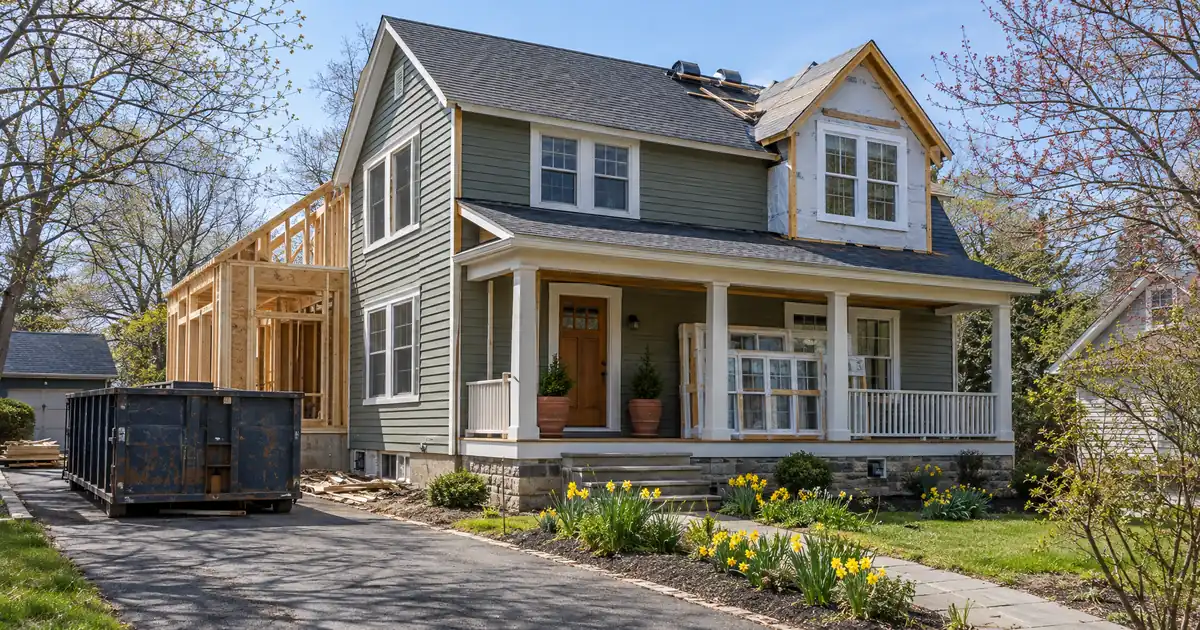
The Quick Read: Yes, a single-family flip is the standard hard money deal, because this loan is built to buy and renovate a non-owner-occupied property on a short timeline. Approval rests mainly on the property, the rehab plan, and the exit, not on the borrower’s income, and every file is still reviewed individually and is not a commitment to lend.
- Across Lendmire’s wholesale network, fix-and-flip leverage is tiered by completed projects: 85% of project cost with fewer than 2, 90% with 2+, and 93% with 5+, each capped at 75% of after-repair value (ARV). Figures vary by lender, property, and experience.
- A 620 minimum score is the starting point, with added conditions below 660.
- Terms run 6-18 months, interest-only, with no prepayment penalty.
- Cash still matters: points, fees, and the first-draw float come out of the borrower’s pocket.
- Hard money funds the flip. A DSCR loan is usually the exit if you keep the property.
What Do Hard Money Lenders Actually Approve?
They approve deals, then borrowers. A hard money loan is short-term, interest-only financing for buying and renovating an investment property, and the underwriting leans on three things: the property, the rehab plan, and the exit.
What this loan actually costs to carry.
Hard money is sized against the project and priced by time. Enter the deal and see how much the program will lend, the cash required at closing, the carry while you hold it, and what is left at the exit.
Leverage tiers on the current program: 85% with fewer than 2, 90% with 2 or more, 93% with 5 or more completed projects — every tier capped at 75% of after-repair value. Loan amounts up to $5,000,000, larger by exception; terms of 6 to 18 months, interest-only, no prepayment penalty. The rehab portion funds in draws against completed work, not at closing.
Program parameters shown update from Lendmire’s centralized guideline source. Rate, points, and months are editable assumptions, not quoted terms.
Cost cap sets the loan · positive spread
Illustrative estimate only — not a quote, Loan Estimate, approval, or commitment to lend. Rate, points, and months are editable assumptions. Hard money is business-purpose financing for real estate investors, not a consumer mortgage. Leverage on the current program tops out at 93% of project cost for investors with a documented track record, capped at 75% of after-repair value, with rehab funding up to 100% of the documented budget released in draws; actual terms vary by lender, borrower experience, property, and exit. Lendmire is a mortgage broker, not a lender.
That is why single-family homes fit so naturally. The collateral is easy to value, comparable sales are usually plentiful, and a buyer pool exists at the end of the project. Most files in the network are one- to four-unit residential, non-owner-occupied, bought for business purposes. A home you plan to live in does not belong in this product.
Two leverage tests control the loan size. Loan-to-cost measures the loan against the purchase price plus the approved rehab budget. Loan-to-ARV measures it against the projected finished value. The lower ceiling wins. A “100% financing” headline still has to fit under the lender’s ARV cap, as Nav’s explainer on 100% hard money financing points out.
Here is the part the headlines skip. There is no true 100% purchase program. Up to 100% of the rehab budget can be funded, but it is released in draws against completed work. It is a rehab-budget figure, never a purchase loan-to-value.
How Much Leverage Can a Flip Reach?
Leverage depends on how many projects you have completed. Across the network, fix-and-flip loans run up to 85% of project cost for borrowers with fewer than two completed projects, 90% at two or more, and 93% at five or more. Every tier is capped at 75% of ARV, and the top tier is reserved for experienced investors.
| Experience | Loan-to-cost ceiling | ARV cap |
|---|---|---|
| Fewer than 2 projects | 85% of project cost | 75% of ARV |
| 2+ projects | 90% of project cost | 75% of ARV |
| 5+ projects | 93% of project cost | 75% of ARV |
Two other structures sit nearby. Bridge purchases without a rehab scope run up to 80% of purchase price. Cash-out and rate-and-term refinances run up to 65% of value. Loan sizes go up to $5,000,000, with larger balances by exception and smaller balances varying by lender.
Notice how these numbers interact. A first-time flipper at 85% of cost still has to clear the ARV cap. On a deal with thin margin, the ARV cap binds first, and the borrower’s cash requirement rises. The tier you land in sets the ceiling. The deal’s margin decides whether you reach it.
Do You Need Flipping Experience?
No, but experience changes the tier. First-time investors qualify at the lower leverage tiers, and many lenders do not require prior flips at all. Experience mostly shifts leverage and pricing rather than flipping the approval decision.
What lenders do want from a newer flipper is a credible plan. That means a line-item budget, contractor bids, a realistic timeline, and a clear exit. A scope mismatch draws questions. A flipper who has only done cosmetic single-family work and proposes a large ground-up project next will face tougher review than one making a measured step up.
Also, lenders count projects differently. One lender may credit a completed flip held as a rental, while another may not. If you are sitting on the border of a tier, ask how your projects are counted before you apply.
What Does the Borrower Still Need?
Hard money is asset-based, not borrower-blind. Credit, liquidity, and the exit all shape the outcome, even when the property carries the file.
Credit. The network’s minimum score is 620, with additional conditions below 660. Stronger scores generally help with tier placement. No lender should promise approval without a credit review, and none should promise one without looking at the deal.
Liquidity. This is where flips quietly fail. Closing costs, points, and the first draw bridge all come from your cash. Because rehab money is reimbursed after the work is done, you carry each phase before you are repaid. Home equity generally does not substitute for cash reserves on these files, so plan for liquid funds.
Entity and purpose. The loan is business-purpose. Many investors buy through an LLC, subject to lender program eligibility, and the lender will want entity documents and a schedule of real estate owned.
How Does Approval Work, Step by Step?
Approval is a sequence, and delays tend to cluster in the same places. Here is the usual flow.
1. The deal goes in. You submit the executed purchase contract (or a target property if you want preliminary feedback).
2. Value support. The lender reviews ARV comps or a broker price opinion. Single-family flips are valued on sold comparables, so the quality of those comps matters.
3. Budget review. The line-item rehab budget and contractor bids get checked for realism.
4. Borrower file. Credit, proof of funds or bank statements, entity documents, and a written exit strategy.
5. Title and insurance. Clean title is essential. Title problems that block a clean transfer can make a property ineligible.
6. Closing and the first advance. The initial advance funds the purchase, and the rehab holdback is set aside for draws.
| Stage | What the lender wants | Common snag |
|---|---|---|
| Value | Sold comps, ARV support | Comps from a different neighborhood tier |
| Budget | Line items, bids | Round-number budgets with no detail |
| Borrower | Funds, entity papers | Thin cash after fees |
| Title | Clean transfer | Liens or ownership gaps |
Why Do Single-Family Deals Get Declined?
Most declines trace back to the deal, not the person. The common causes are an ARV the comps do not support, a budget that looks light, cash that falls short at closing, title trouble, and an exit that is vague.
| Decline reason | What it looks like | Typical fix |
|---|---|---|
| ARV too high | Comps are older or larger | Re-run with tighter comps, or lower the price |
| Thin margin | Cost plus rehab crowds the ARV cap | Negotiate price or trim scope |
| Budget not credible | No bids, no line items | Add contractor bids and detail |
| Cash short | Loan fits, fees do not | Bring more liquidity or reduce the deal |
| Weak exit | No sale or refinance plan | Write a specific plan with a fallback |
Think of it this way. A lender is lending against a house that does not yet exist in its finished form. Every item above is a way the finished house might fail to appear on budget.
How Do Rehab Draws Affect Approval?
Rehab money is not wired to you at closing. It is held back and released in draws as work is completed and inspected. You finish a phase, document it, an inspection confirms it, and the lender releases funds. A construction-software vendor’s FAQ on the draw inspection process describes the same holdback-and-inspection pattern, and notes that the lender decides what to release when an inspection shows less work than requested.
That matters at approval because the draw schedule is built from your budget. A vague budget produces a vague schedule, and a vague schedule produces friction later. Partial completion, work outside the approved scope, and unsubmitted change orders can all hold up a draw. A failed municipal inspection is separate from the lender’s inspection, but it stops the work and, in practice, the draw with it.
The practical rule: build a contingency into your own cash plan, because delays are paid for in interest-only carry.
What Exit Strategies Do Lenders Want to See?
Lenders want one primary exit and one fallback. The primary exit is usually a sale. The fallback is often a refinance. Each needs a different kind of proof.
Selling. The lender wants to see that the finished home fits the neighborhood’s price tier and that your timeline fits the loan term of 6-18 months.
Refinancing and holding. Many investors refinance out of hard money into long-term DSCR financing once the property is stabilized, and Lendmire brokers that path. Know the catch, though. Approval at the bridge stage does not guarantee the exit. The DSCR lender runs its own appraisal and rent test, so your ARV is not automatically the exit value.
Think through the DSCR test before you buy. Coverage compares rent to the full monthly obligation (principal, interest, taxes, insurance, and any HOA dues). Select programs start at 1.00, and stronger coverage opens better pricing and leverage. A separate select-lender path goes below 1.00, with leverage and terms adjusted. Clearing 1.00 is also not the same as positive cash flow, since repairs, vacancy, management, and capex sit outside the calculation. If you want the full mechanics, Lendmire’s complete DSCR loans guide walks through them.
A rough rule: size the bridge from the exit backward. If all-in cost sits near the refinance ceiling, a cash-out refinance recycles little capital, and selling may be the better move.
Worked Example: A Modeled Single-Family Flip
Say an investor with one prior flip targets a single-family house with a $300,000 purchase price. Treat every input here as a modeled assumption, not market data.
- The investor falls in the lower tier (fewer than 2 completed projects): up to 85% of project cost, capped at 75% of ARV.
- The lender checks cost against ARV first. If purchase plus rehab already sits near 75% of the supported ARV, the ARV cap binds and the borrower brings more cash.
- If the comps come in lower than the investor assumed, the same cap shrinks the loan. The investor either renegotiates price, trims scope, or adds cash.
Now the exit. If the investor plans to hold, the DSCR test at refinance asks whether stabilized rent covers the full monthly obligation. Coverage near 1.0x leaves little room. Coverage meaningfully above it gives the file more flexibility. If the numbers do not support a hold, a sale is the cleaner finish.
Across the network, the strongest flip files tend to have the same traits: a tight comp set, a budget with bids behind every line, cash left over after closing, and an exit written down in two versions.
Myths Versus Reality
| Myth | Reality |
|---|---|
| Hard money ignores the borrower | Credit, liquidity, and experience still set tier and terms |
| You need flipping experience | Not required, but leverage is lower without it |
| 100% financing means no cash in | The loan must fit the ARV cap, and fees still need cash |
| Rehab money arrives at closing | It is held back and released in draws |
| My ARV is the exit value | A DSCR lender runs its own appraisal and rent test |
| DSCR can fund the flip | It generally needs a rent-ready property |
Key Terms Defined
ARV (after-repair value): The projected value of the property once renovations are complete.
Loan-to-cost: The loan amount measured against purchase price plus the approved rehab budget.
Holdback: The portion of the loan reserved for renovations and released in draws.
Draw: A release of holdback funds after completed work is documented and inspected.
DSCR: The ratio of a property’s rent to its full monthly obligation, used to test a rental exit.
Exit strategy: The plan for repaying the loan, usually by sale or refinance.
Readiness Self-Check
Before you apply, answer these.
- Does my purchase price plus rehab leave room under 75% of a conservative ARV?
- Do I have bids behind every budget line?
- Will I still hold cash after closing costs and the first draw?
- Is my credit at or above 620, ideally higher?
- Is the title clean?
- Do I have a primary exit and a fallback?
Several “no” answers mean the deal or the plan needs work first. All terms here vary by lender, property, and experience, and nothing here is a commitment to lend. Tax treatment varies; consult a qualified professional.
If you are buying, rehabbing or refinancing an investment property on a short timeline and want to see how the numbers work, Lendmire can help you compare hard money options based on the project, the exit plan, leverage, and your goals. Reach the team at 828-256-2183.
Frequently Asked Questions
Can a first-time flipper get approved?
Often yes, at the lower leverage tiers. Lendmire’s network places fix-and-flip files at up to 85% of project cost for borrowers with fewer than two completed projects, always capped at 75% of ARV. Expect to bring meaningful cash, a detailed budget, and a clear exit.
Does hard money check credit?
Yes. A 620 minimum score is the network starting point, with additional conditions below 660. The underwriting stays asset-based, meaning the property, plan, and exit carry the file, but credit still affects tier and terms.
Can I flip a house I plan to live in?
No. Hard money here is for non-owner-occupied, business-purpose properties. Residential collateral runs one to four units, and owner-occupied property is not offered.
What happens if my renovation runs over budget?
The extra cost comes from your cash, since the holdback is sized to the approved budget. Overruns also extend interest-only carry within a 6-18 month term. A contingency in your own plan is the practical protection.
Can DSCR financing pay for the flip itself?
Generally not. A DSCR loan tests a rent-ready property, so it works as the hold-phase exit rather than the rehab funding. Many investors refinance from hard money into DSCR financing once the property is stabilized, subject to lender guidelines.
For current guidelines and terms, see Lendmire’s DSCR loan programs page.
About Lendmire
Lendmire — NMLS# 2371349 — is a DSCR and non-QM mortgage brokerage with investor loan programs in 41 markets, including Washington, D.C. DSCR eligibility is commonly reviewed by the lender around property-level rent rather than personal income documentation, subject to lender guidelines, and the brokerage helps arrange financing for LLC-owned portfolios beyond conventional financed-property limits. Recognized by Scotsman Guide as a Top Mortgage Workplace in 2025 and 2026.
Short-term financing tends to work best when the long-term plan is decided early – see refinancing out of a hard money loan with a DSCR loan.
Get Started
Ready to find the right loan for you?
In about 30 seconds you can review financing options available for your investment property. No commitment required.
Informational only. Not a Loan Estimate, approval, or commitment to lend. Program availability and eligibility are subject to lender guidelines, credit approval, property review, and underwriting.
References
1. Nav – Hard money loans and 100% financing
2. Get Araze – Construction draw inspection process FAQ
This article is part of Lendmire’s hard money loan program — full qualification details, guidelines, and scenarios live on the program page.
Related reading: Hard Money Loan ARV Requirements in a Small Town With No Comps · How a Lender Reads a Seller-Carried Note on a Hard Money Loan · Hard Money Rehab Draw Inspections for a Full-Gut Rehab
Brandon Miller
Founder & CEO, Mortgage Loan Originator, Lendmire LLC
- Mortgage Loan Originator · NMLS# 1129696 · Verify on NMLS Consumer Access
- North Carolina Real Estate Broker · License# 343312 · Verify on NCREC
- North Carolina Insurance Producer · License# 19053198 · Property, Casualty, Life, Health · Verify on NAIC SBS
- Lendmire LLC · Firm NMLS# 2371349 · Verify firm licensure
Compliance and disclosures. Lendmire (NMLS# 2371349) is a licensed mortgage broker and is not a direct lender, depository institution, financial advisor, or tax professional. Content in this article is general market analysis and educational information — not financial, legal, or tax advice for any specific situation. Lendmire does not guarantee loan approval; every transaction is subject to underwriting by the funding lender. Mortgage pricing and loan program guidelines are subject to change at any time without notice and vary by borrower characteristics, property type, and state regulations. Lendmire complies with Equal Housing Opportunity. Licensure verification: NMLS Consumer Access.