
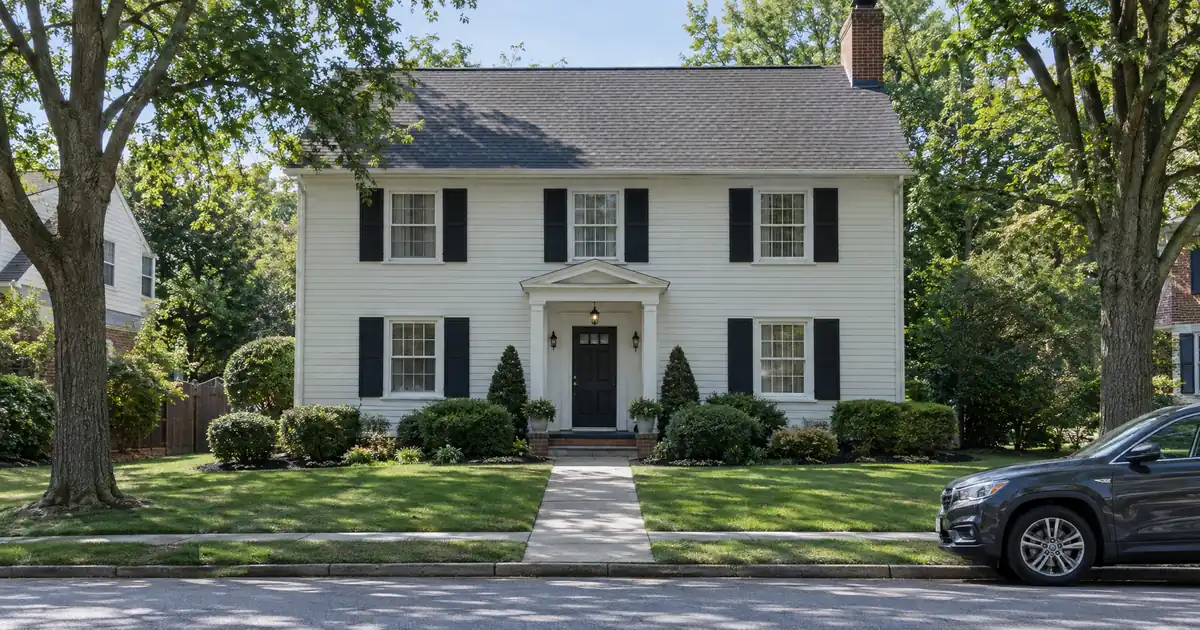
The Quick Read: A DSCR cash-out refinance is usually still possible with solar on the roof, but the type of lien decides the path. A solar loan or lease filing typically has to be paid off, released, or subordinated so the new lender holds first position. Cash-out tops out around 75% LTV on a standard rental, and about 6 months of ownership is the common expectation.
- Four different things get called a “solar lien,” and each behaves differently on title.
- A UCC-1 filing is the most common and is usually resolved by payoff or release.
- PACE, a solar loan repaid through your property tax bill, is the hardest to work around.
- Paying off solar at closing shrinks your net cash, so size the refinance with that in mind.
- Clearing the coverage ratio does not mean the rental produces positive cash flow.
DSCR stands for debt service coverage ratio. It compares a rental’s monthly rent to its full monthly obligation: principal, interest, taxes, insurance, and any HOA dues. The loan is reviewed primarily on property-level rental income covering the payment, subject to lender guidelines. DSCR loans are designed for non-owner-occupied investment properties. Because they are business-purpose investor loans, they are reviewed differently from a standard owner-occupied mortgage.
DSCR Cash-Out Calculator
Run the cash-out numbers in your market
Rate source: Freddie Mac 30-yr average via FRED® — Federal Reserve Bank of St. Louis · effective Oct 8, 2026
Prefilled with starting assumptions — enter your property’s value, balance, taxes, and insurance for a more accurate picture.
Program parameters update from Lendmire’s centralized guideline source. Taxes and insurance are editable estimates.
As of Oct 8, 2026 · General Freddie Mac market benchmark, not a Lendmire loan offer. Property value, balance, taxes, and insurance are editable estimates. Maximum loan-to-value varies by lender, program, property type, and seasoning. Not a Loan Estimate, approval, or commitment to lend. Program availability and eligibility are subject to lender guidelines, credit approval, property review, and underwriting.
That does not mean title gets a pass. The lender still wants a clean first-lien position on the collateral. Solar is where first-time landlords most often get surprised. Lendmire’s complete DSCR loans guide covers the basics if you want the full picture first.
Key Terms Defined
UCC-1: A public filing that tells the world a creditor has a security interest in specific equipment, such as solar panels and inverters.
UCC-3: The form filed to release or amend a UCC-1 once the debt is paid or the arrangement changes.
Fixture filing: A UCC filing recorded in the county real-property records, which ties the equipment to the real estate.
PACE: Property Assessed Clean Energy financing, repaid as an extra assessment on your property tax bill.
Subordination: An agreement in which an existing creditor accepts a lower priority behind the new first mortgage.
Seasoning: The waiting period between buying a property and refinancing it for cash. Across most of the network it is about 6 months, measured from title recording.
Which Solar Setup Do You Have?
Start here, because the answer drives everything else. Pull the loan statements, the lease or power purchase agreement, and a payoff quote. Then order a title search.
| Arrangement | On title? | Effect on cash-out | Action before closing |
|---|---|---|---|
| Cash purchase | Nothing | None | Confirm no filing exists |
| Unsecured solar loan | Nothing | Counted as a debt | Pay off or disclose |
| Loan with UCC-1 | Equipment filing | Usually must be resolved | Payoff and UCC-3, or subordination |
| Fixture filing | County records | Shows in title search | Payoff and release |
| Lease or PPA | Usually a UCC-1 | Contract must be handled | Buyout, assignment, or filer’s cooperation |
| Mortgage-secured solar loan | Junior lien | Real second lien | Payoff at closing |
| PACE assessment | Tax lien | Hardest to work around | Typically paid off |
Two cautions apply to this table. Lender treatment varies, and no published DSCR rulebook spells out solar handling. What follows is how files typically run across the network, not a guarantee for your property.
Is a UCC-1 Really a Lien on the House?
Legally, a UCC-1 attaches to the equipment, not the land. Solar-industry and consumer sites say so, and they are right on the law. Practically, the panels are bolted to your roof, and the filing still shows up in a title search.
Most cash-out lenders will not fund until that filing is released, subordinated, or formally addressed. Investor guidance from MacDoesREI adds a useful warning: a standard title search does not always surface UCC filings, so ask the title company for a separate UCC search.
Whether title insurance will carve out an exception for the filing is a separate question. It depends on the lender, the title underwriter, and the program. Treat it as case-by-case.
Why PACE Is Its Own Category
PACE is not just another solar loan. It is a tax assessment. The CFPB’s final rule announcement says PACE is repaid ahead of first mortgages in a foreclosure. It also reports that PACE raised borrowers’ property taxes substantially on average.
Mayer Brown’s analysis describes the same priority: a tax lien that sits ahead of existing and future mortgages. That priority is exactly why lenders dislike it. A new first mortgage cannot be first.
Many lenders will not lend with a PACE assessment in place, and it typically must be paid off at or before closing. Some PACE programs are structured as junior liens, so read your documents. Don’t assume.
PACE also bites twice. The assessment arrives on the tax bill, so it can raise the taxes in your coverage calculation. Confirm that treatment against the specific program’s guidelines.
How Underwriting Treats the Solar Payment
Underwriting follows lien order and payment treatment, in that sequence. First the lender asks who gets paid first. Then it asks what the monthly obligation really is.
- Paid off at closing: The solar debt never enters the coverage calculation.
- Left in place as an unsecured loan: It is typically counted as a monthly debt.
- Lease or PPA: The payment is typically counted as a debt, not as a lien.
- PACE left in place: It may inflate the tax line in the denominator.
Run the numbers on a modeled example. These ratios are illustrative assumptions, not market data. Say a rental covers its full monthly obligation at about 1.20x before any solar cost. Add a solar payment that must be counted, and coverage might slide toward 1.05x. Pay the solar loan off at closing, and the payment disappears.
The payoff then comes out of proceeds instead. Net cash to you is the new loan minus the old mortgage, the solar payoff, and closing costs. If you borrow more to protect your net cash, the payment rises and coverage falls again. The 75% LTV ceiling on a cash-out refinance of a standard rental caps how much you can borrow at all. Final terms depend on the lender’s guidelines, the property type, and the borrower’s complete credit picture.
Treat coverage as one test, not the whole picture. Clearing 1.00 is where select programs start, and stronger ratios open better pricing and leverage. A separate select-lender path takes coverage below 1.00, with leverage and terms adjusted. Either way, DSCR compares rent to the monthly obligation only. Repairs, vacancy, management, utilities, and capex sit outside it. Clearing the ratio is not the same as positive cash flow.
What Changes for a First-Time Landlord
Being new is not a disqualifier by itself. Across most of the network there is no formal landlord-experience requirement, though credit and leverage terms can differ by program. Lendmire’s page on DSCR loans for first-time rental buyers covers the first-time rules in detail.
Three solar issues hit new landlords harder:
1. You may find the lien late. Buyers, heirs, and house-hackers who converted a home often learn about solar only when title comes back. Check before you make an offer, not before you refinance.
2. Seasoning interacts with the lien. Cash-out typically wants about 6 months of ownership from title recording. That gives you a built-in window to line up the payoff or release.
3. The names must match. If the filing names an entity or an owner different from the one on title, sort that out early. Loans to LLC-titled borrowers are subject to lender program eligibility, so confirm it before you move the property.
On credit, a 620 floor exists in parts of the network. Most programs want around 660, and 700 and above unlocks the strongest leverage tiers. Reserves commonly run about 6 months of PITIA (principal, interest, taxes, insurance, and association dues), and about 9 months for loans above $1,500,000. Solar payoff cash does not count toward reserves, so plan for both.
The Closing Sequence, Step by Step
1. Identify the instrument: owned, financed, leased, or PACE.
2. Order title plus a separate UCC search.
3. Request a payoff quote or lease buyout figure from the solar company.
4. Decide the route: pay off from proceeds, pay off beforehand, subordinate, or arrange a temporary lift of the filing.
5. Get the release or subordination in writing, and confirm the UCC-3 is filed.
6. Size the refinance with the payoff inside the new loan, then rerun coverage.
Contact the solar company early. Their process runs on their schedule, not yours. For a leased system, the third-party owner may agree to temporarily remove its filing for the transaction, but it needs to know first.
DSCR vs. conventional financing
There are two common ways to finance an investment property, and they qualify you differently — here’s how investors weigh them.
Why investors choose it
- Qualifies on the property’s rental income — no personal tax returns, W-2s, or pay stubs needed to document income.
- No personal debt-to-income ceiling to clear, so existing mortgages and obligations don’t cap your borrowing the same way.
- Can be closed in an LLC, keeping the property inside a business entity.
- Built for scaling — not held to the limit on number of financed properties that conventional financing applies.
- Underwriting centers on the deal: generally qualifies when the rent covers the payment, a 1.00x coverage ratio being a common baseline (confirmed in underwriting).
- Designed specifically for investment property, including long-term and, where the program allows, short-term rentals.
Where it’s strong
- Often the lowest ongoing financing cost for a buyer who fully qualifies on personal income — a fit for a first property or a cost-first purchase.
Trade-offs for investors
- Requires full personal income documentation and must fit within a debt-to-income limit — salary, existing debts, and other mortgages all count.
- Typically held in your personal name rather than a business entity.
- Caps how many financed properties you can carry, which can become a ceiling as a portfolio grows.
- Evaluates you as a borrower as much as the property, which usually means more paperwork.
How investors usually choose: a first or single property often optimizes for the lowest financing cost; portfolio builders often optimize for leverage, vesting in an LLC, and scaling past conventional caps. The right answer depends on your goals, the property, and current guidelines — both paths run through select lenders in Lendmire’s wholesale network, with eligibility and terms confirmed in underwriting.
When the Release Stalls
Releases hit snags. A few edge cases come up repeatedly.
Uncooperative or bankrupt solar company. Getting a filing released from a defunct filer is slow and sometimes needs an attorney. Start before you apply.
Expired or refiled filings. Investors on BiggerPockets note that a UCC lapses after five years unless refiled, and that some filers keep refiling. Do not assume a lapse has cleared your title.
Foreclosure or auction purchases. Whether a foreclosure wipes out the filing is disputed in practice. Verify before you buy.
The clean-slate claim. You will hear that DSCR loans need a spotless title. That overstates it. The accurate version is that lenders need a first-lien position, and a solar filing you can resolve is workable.
Ineligible property types. Manufactured homes, log homes, and barndominiums are not offered in the network’s DSCR programs, with or without solar.
Your Decision Options
| Route | Best when | Tradeoff |
|---|---|---|
| Pay off at closing | Balance fits inside the new loan | Reduces net cash |
| Pay off beforehand | You have cash on hand | Ties up reserves |
| Subordination | Holder agrees | Depends on the holder |
| Lease buyout or transfer | Leased or PPA system | Contract paperwork |
| Wait | Seasoning or release not ready | Delays the refinance |
Waiting is a legitimate answer. If the payoff would leave too little net cash or thin reserves, a few more months of rent history and a clean release can strengthen the file. Tax treatment varies; consult a qualified professional.
Program Numbers at a Glance
These are typical ranges from select wholesale-network guidelines, subject to lender guidelines and individual underwriting. They are not commitments to lend. Programs change.
- Cash-out LTV: up to 75% on a cash-out refinance of a standard rental.
- Seasoning: about 6 months from title recording.
- Coverage: 1.00 is where select programs start.
- Credit: 620 floor in parts of the network, around 660 typical, 700+ for the strongest tiers.
- Loan size: up to $3,000,000 on standard programs, with smaller balances routed through select lenders.
- Structure: 30-year fixed is the spine, with 40-year terms and interest-only periods through select lenders and ARM options available.
Frequently Asked Questions
Can I do a DSCR cash-out if my solar panels are leased?
Often yes, but the lease contract becomes the issue instead of a payoff balance. It typically must be bought out, assigned, or otherwise addressed, and a UCC-1 is usually filed on the system. Ask the lease holder early about options.
Does a PACE assessment kill a cash-out refinance?
It frequently complicates it. Many lenders want PACE paid off at or before closing, because the assessment sits ahead of a new first mortgage. Some PACE structures differ, so check yours against the program.
Does clearing 1.00 coverage mean the rental has positive cash flow?
No. The ratio compares rent to the monthly obligation only. Repairs, vacancy, management, utilities, and capex are outside it, so a rental can clear the ratio and still lose money.
Can I hold the property in an LLC?
Often yes, subject to lender program eligibility. The entity on title should match the filing and the loan documents, so confirm that before you close.
Is there a lender path below 1.00 coverage?
Yes, through select lenders in the network, with leverage and terms adjusted. It is a separate path, not a lower floor on the same program.
Next Step
If you are buying or refinancing a rental property and want to see how the numbers work, Lendmire can help you compare DSCR loan options based on the property income, credit profile, leverage, and investor goals. Lendmire is a broker arranging financing through select lenders across 41 markets, including Washington, D.C.
For the mechanics of pulling equity out of a rental property, see Lendmire’s guide to cash-out refinance on an investment property.
About Lendmire
Lendmire — NMLS# 2371349 — is a mortgage brokerage specializing in DSCR investor loans, helping arrange financing across 41 markets, including Washington, D.C., through wholesale and investor-lending channels. The model centers on property-level rental income reviewed by the lender rather than W-2 documentation, subject to lender guidelines, suiting entity-owned and multi-property investors. Lendmire holds Scotsman Guide Top Mortgage Workplace recognition for 2025 and 2026.
Get Started
Ready to find the right loan for you?
In about 30 seconds you can review financing options available for your investment property. No commitment required.
Informational only. Not a Loan Estimate, approval, or commitment to lend. Program availability and eligibility are subject to lender guidelines, credit approval, property review, and underwriting.
References
1. MacDoesREI – Solar liens for real estate investors
2. CFPB – Final PACE rule press release
3. Mayer Brown – CFPB PACE rule analysis
4. BiggerPockets – Solar lien removal options
This article is part of Lendmire’s investment property cash-out refinance program — full qualification details, guidelines, and scenarios live on the program page.
Related reading: Cash Out Refinance Investment Property Laws · Should I Pay Off My HELOC or Invest? · Cash Out Refinance Balloon LLC Property
Brandon Miller
Founder & CEO, Mortgage Loan Originator, Lendmire LLC
- Mortgage Loan Originator · NMLS# 1129696 · Verify on NMLS Consumer Access
- North Carolina Real Estate Broker · License# 343312 · Verify on NCREC
- North Carolina Insurance Producer · License# 19053198 · Property, Casualty, Life, Health · Verify on NAIC SBS
- Lendmire LLC · Firm NMLS# 2371349 · Verify firm licensure
Compliance and disclosures. Lendmire (NMLS# 2371349) is a licensed mortgage broker and is not a direct lender, depository institution, financial advisor, or tax professional. Content in this article is general market analysis and educational information — not financial, legal, or tax advice for any specific situation. Lendmire does not guarantee loan approval; every transaction is subject to underwriting by the funding lender. Mortgage pricing and loan program guidelines are subject to change at any time without notice and vary by borrower characteristics, property type, and state regulations. Lendmire complies with Equal Housing Opportunity. Licensure verification: NMLS Consumer Access.