
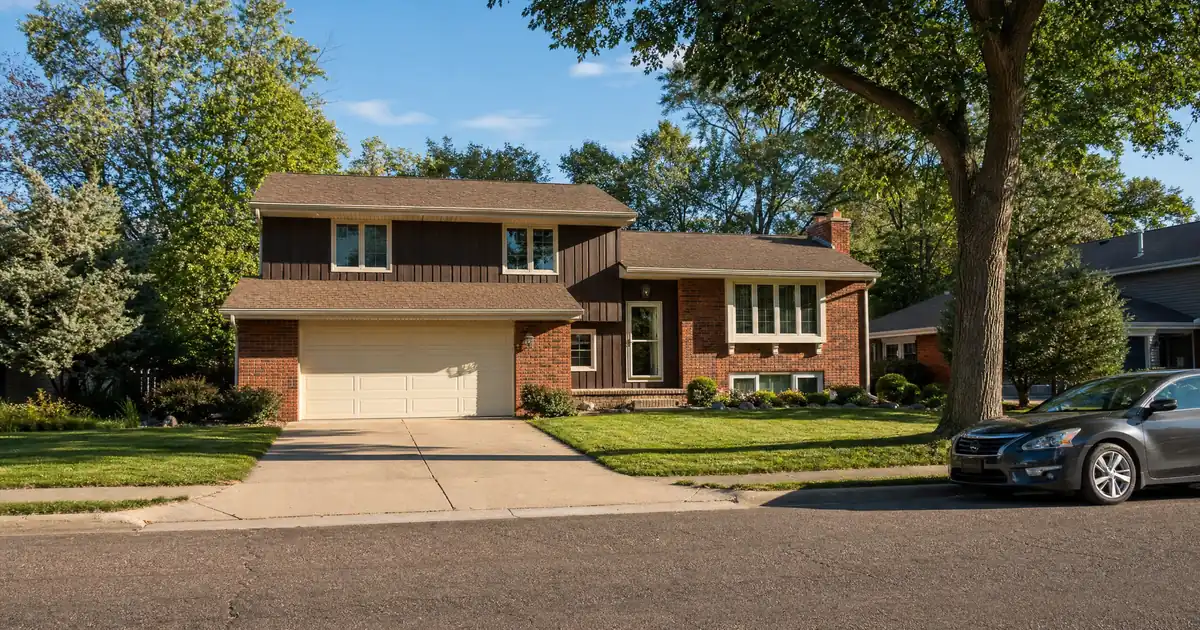
Fix-and-flip Loan Complete Guide — The Quick Read: A fix-and-flip loan is a short-term, interest-only loan built to fund the purchase and renovation of a non-owner-occupied property, structured as an acquisition advance plus a rehab holdback released in draws. Leverage is capped by whichever number comes in lowest — a percentage of total project cost, or a percentage of the projected after-repair value — not by your paycheck. Terms typically run 6 to 18 months, credit floors start around 620, and the strongest leverage goes to investors with a track record of finished projects. Most flippers either sell once the rehab wraps or refinance into longer-term rental financing if the plan shifts to holding the property instead.
What You Need to Know First
- Fix-and-flip loans — also called hard money, bridge, or rehab loans — are business-purpose loans. They aren’t underwritten the way a conventional purchase mortgage is.
- The loan funds in two pieces: money at closing to buy the property, and a rehab holdback released in draws as work gets done.
- Leverage is capped by the lower of a cost-based ratio and an ARV-based ratio, never by just one number in isolation.
- Credit floors run lower than a conventional purchase, but a track record of completed projects moves the needle on leverage more than the score does.
- The exit is a sale or a refinance into a hold loan. The fix-and-flip loan itself was never meant to be permanent financing.
What Is a Fix-and-Flip Loan?
A fix-and-flip loan is a short-term loan secured by a non-owner-occupied property, sized around the deal rather than the borrower’s income, and built to cover both the purchase and the renovation before the property sells or gets refinanced. Some lenders call it hard money. Some call it a bridge loan or a residential transition loan. The label changes; the mechanics don’t.
What this loan actually costs to carry in your market.
Hard money is sized against the project and priced by time. Enter the deal and see how much the program will lend, the cash required at closing, the carry while you hold it, and what is left at the exit.
Leverage tiers on the current program: 85% with fewer than 2, 90% with 2 or more, 93% with 5 or more completed projects — every tier capped at 75% of after-repair value. Loan amounts up to $5,000,000, larger by exception; terms of 6 to 18 months, interest-only, no prepayment penalty. The rehab portion funds in draws against completed work, not at closing.
Program parameters shown update from Lendmire’s centralized guideline source. Rate, points, and months are editable assumptions, not quoted terms.
Cost cap sets the loan · positive spread
Illustrative estimate only — not a quote, Loan Estimate, approval, or commitment to lend. Rate, points, and months are editable assumptions. Hard money is business-purpose financing for real estate investors, not a consumer mortgage. Leverage on the current program tops out at 93% of project cost for investors with a documented track record, capped at 75% of after-repair value, with rehab funding up to 100% of the documented budget released in draws; actual terms vary by lender, borrower experience, property, and exit. Lendmire is a mortgage broker, not a lender.
Lendmire’s own breakdown of what a fix-and-flip loan is covers the basic shape of the product. This guide goes further — into the leverage math, the draw process, and the specific places where the general rule stops applying.
Financing is also becoming a bigger part of how flips actually get done. ATTOM Data Solutions tracked roughly 64,348 home flips in Q1 2026 alone, about 8% of all home sales nationwide. Investor flips still make up a modest slice of the overall market — a share of all 2025 home sales that slipped slightly from the year before, according to data reported by CNBC.
Key Terms Defined
- After-repair value (ARV): what the property is projected to be worth once the renovation is finished, based on recent sales of comparable renovated homes nearby.
- Loan-to-cost (LTC): the loan expressed as a percentage of total project cost — purchase price plus rehab budget — rather than as a percentage of current value.
- Draw: a scheduled release of rehab funds, paid out after an inspector confirms a stage of work is done, not handed over upfront.
- Holdback: the portion of the loan set aside for the rehab budget and held until it’s needed for draws.
- Interest-only: a payment structure where the monthly obligation covers interest alone, with the principal repaid in one lump sum at sale or refinance.
- Exit strategy: the borrower’s plan for paying off the loan — selling the finished property, or refinancing into longer-term financing.
How the Money Actually Moves
This isn’t a lump-sum loan sitting in a bank account. Trade analysis of the category notes that whether a lender calls it hard money, a bridge loan, or an RTL, the mechanics are the same: the lender funds acquisition and renovation separately, the borrower executes the project, and the exit comes through a sale or a refinance, typically inside a 6-to-18-month term.
At closing, the acquisition advance funds the purchase side of the deal. The rehab holdback stays with the lender. As work gets completed — framing done, drywall up, kitchen finished — the borrower requests a draw, an inspector confirms the stage is complete, and the lender releases funds against that completed work. Across the lenders in Lendmire’s wholesale network, rehab funding can run up to 100% of the rehab budget in draws. That figure describes the rehab side only — it is never a purchase leverage number, and it doesn’t change the cost or ARV caps governing the loan overall.
The Three Numbers That Actually Cap Your Leverage
Every fix-and-flip file gets tested against more than one ratio, and the lowest number wins — not the one a lender advertises up front. On the standard rehab structure, leverage typically runs 85%-93% of total project cost depending on how many completed projects the borrower has behind them, but every tier caps at 75% of the after-repair value regardless of how strong the cost-based number looks.
That ARV cap is the guardrail. An investor with a strong track record might qualify for 93% of project cost on paper, but if that dollar figure exceeds 75% of ARV, the ARV number controls the file. It exists because the lender’s real exposure is tied to what the finished property is actually worth, not what the borrower spent getting there.
Other structures run different math entirely:
| Structure | Leverage Cap | Best For |
|---|---|---|
| Standard rehab loan | 85%-93% of project cost, capped at 75% of ARV | A property needing renovation before resale |
| Bridge purchase (no rehab) | Up to 80% of purchase price | A near-turnkey property needing a simple purchase loan |
| Ground-up construction | Up to 90% of cost / 75% of completed value (3+ completed projects) | Building new rather than renovating an existing structure |
| Cash-out / rate-term refinance | Up to 65% of value | Pulling equity or repositioning debt on a property already owned |
Lendmire’s page on residential fix-and-flip loans covers how this applies specifically to 1-4 unit deals, which is where most of the volume in this category actually sits. Ground-up construction can stretch to 10 units under the same broad program family.
Why This Doesn’t Look Like a Conventional Mortgage
These loans are made for business purposes to acquire non-owner-occupied property, and that classification changes the rulebook. The Consumer Financial Protection Bureau’s summary of the Truth in Lending Act lists credit extended for a business or investment purpose, and credit extended to acquire or improve rental property that isn’t owner-occupied, as transactions exempt from Regulation Z. That exemption is why a fix-and-flip loan skips the disclosure timelines and ability-to-repay rules built for consumer mortgages — the underwriting question isn’t “can this person repay from their paycheck,” it’s “does this deal make sense on its own terms.”
That’s a genuinely different underwriting posture than a house purchase loan, and it’s worth sitting with for a second: the property and the plan carry the file. The borrower’s income statement barely enters the conversation.
Credit, Experience, and Who Gets the Best Leverage
Credit matters less here than on a conventional purchase, but it isn’t ignored. Hard money programs across Lendmire’s wholesale network typically run a 620 credit floor, with additional conditions attached below 660 — a stronger score doesn’t automatically buy the top leverage tier on its own.
Experience with completed projects carries more weight than the score does. An investor with five or more finished flips can reach up to 93% of project cost. An investor with fewer than two completed projects typically tops out around 85% — both tiers still capped at 75% of ARV. First-time flippers still get financed. They just start at the more conservative end of the leverage range, and the underwriting leans harder on the quality of the plan itself: the comps behind the ARV, the specificity of the rehab scope, the realism of the timeline.
Where the General Rule Breaks: Named Edge Cases
There’s no true 100% purchase program here, even though rehab funding can reach 100% of the rehab budget. That 100% figure is a rehab-draws number, funded against completed work — it’s never a purchase-side leverage ceiling, and no combination of tiers gets an investor to a zero-down acquisition.
Property type has hard boundaries too. Commercial, industrial, land or unimproved lots, hospitality, and owner-occupied properties are not offered under this program family — not “harder to finance,” simply not part of the collateral this financing covers. Eligible collateral is non-owner-occupied residential, 1-4 units, with ground-up construction extending to 10.
Geography has gaps as well. This financing isn’t available in Los Angeles, Minnesota, North Dakota, or South Dakota, and it doesn’t reach Baltimore, Chicago, or Detroit specifically, even though the broader footprint spans 40 markets, including Washington, D.C.
Loan size has its own ceiling: standard files run up to $5,000,000, with larger amounts possible by exception and smaller balances varying by lender. And the completed-value tier on ground-up construction — 75% of finished value rather than a lower blended number — requires three or more completed construction projects. Fewer than that, and leverage caps at the lower cost-based figure instead.
A Worked Example: Where the Leverage Cap Actually Bites
Run the numbers on a straightforward deal. Say an investor is buying a property for $220,000 with a $60,000 rehab budget, putting total project cost at $280,000. A local appraiser and the investor’s own comps put the after-repair value at $340,000.
For an investor with five or more completed projects, the cost-based cap allows up to 93% of $280,000 — about $260,400. But the ARV cap allows only 75% of $340,000, or $255,000. The ARV number is lower, so it controls. The loan tops out around $255,000, not $260,400.
Now swap in a first-time flipper on the identical deal. Their cost-based cap runs 85% of $280,000 — $238,000. That number sits below the $255,000 ARV cap, so the cost-based figure controls instead. Same property, same ARV, two different binding constraints depending entirely on the investor’s track record.
If the property sells at that $340,000 ARV, the gross spread against the $280,000 project cost is $60,000 — before selling costs, carrying costs, and financing costs come out. That figure lines up reasonably well with what ATTOM Data Solutions found nationally: a typical flip’s gross profit ran $66,000 on a 25.4% return in its most recent quarterly report — down from the year before, a reminder that flip margins have compressed even as flip volume has held up.
Across the files Lendmire places with lenders in its wholesale network, the deals that clear underwriting cleanly tend to share three things: an ARV backed by real, recent comps rather than an optimistic guess, a rehab budget with contingency built in rather than shaved to the dollar, and an investor whose paper trail shows they’ve done this before. Files missing all three usually don’t get denied outright — they just land at the more conservative end of every leverage tier available.
What It Actually Costs to Borrow This Way
Fix-and-flip financing carries cost categories that don’t show up on a conventional mortgage: origination points charged as a percentage of the loan, underwriting or processing fees, an appraisal or valuation fee tied to the ARV determination, title and legal costs, and carrying costs during the hold period itself. None of these are fixed nationally — they vary by lender, loan size, and the specifics of the deal, which is exactly why comparing more than one program before committing to a lender matters.
The Exit: Sell, or Refinance Into a Hold
Every fix-and-flip loan ends one of two ways, and the term length forces the decision — there’s no multi-year version of this product to fall back on if a sale or refinance doesn’t happen on schedule. Sell the finished property and pay off the loan from proceeds. Or, if the plan shifts from flipping to holding, refinance out of the short-term loan into permanent rental financing.
That second path changes the underwriting completely. Instead of a deal-based review focused on cost and ARV, the lender looks at whether the property’s rental income covers its payment — a different underwriting model entirely, laid out in Lendmire’s DSCR loan vs. fix-and-flip loan comparison. Investors who want the full picture of how that rental-income underwriting works can read Lendmire’s complete DSCR loans guide before deciding which exit fits their plan.
What the Decision Actually Looks Like
The math usually tilts toward financing over all-cash once an investor is running more than one project at a time — tying up all cash in a single flip caps how many deals can run in parallel. For someone doing one owner-managed flip with plenty of idle capital, the cost of leverage may genuinely not be worth it. That’s a real judgment call, and it depends less on the deal itself than on how many deals an investor wants moving at once.
The practical checklist before approaching a lender comes down to a handful of things: a defensible ARV built on recent comps, a rehab scope specific enough to price accurately, a realistic sense of which leverage tier fits the investor’s completed-project history, and an honest exit plan — sale or refinance — decided before the loan closes, not after.
Frequently Asked Questions
Is a fix-and-flip loan the same thing as a hard money loan? In practice, yes — the terms get used interchangeably along with “bridge loan” and “residential transition loan.” All describe the same underlying structure: a short-term, asset-based loan funding acquisition and rehab, repaid through a sale or refinance.
Do I need a down payment on a fix-and-flip loan? Yes. Leverage caps at 85%-93% of project cost depending on completed-project history, and every tier is also capped at 75% of ARV — there’s no zero-down structure, even though rehab draws can fund up to 100% of the rehab budget itself.
What happens if my rehab costs more than I budgeted? The rehab holdback is fixed at closing based on the original budget, so a cost overrun beyond that amount typically has to be covered by the investor out of pocket. This is exactly why lenders scrutinize the rehab scope closely before funding, and why building contingency into the original budget matters.
Can I get a fix-and-flip loan with no completed projects? First-time investors can typically still qualify, generally at the more conservative end of the leverage range — around 85% of project cost rather than the higher tiers reserved for investors with five or more completed flips, subject to lender guidelines and credit review.
What happens if the property doesn’t sell before the loan term ends? Since these loans typically run 6 to 18 months with no multi-year extension built in, an investor who hasn’t sold or refinanced by term end needs an exit plan in place before that deadline arrives — usually a refinance into longer-term financing if the sale timeline has slipped.
If you’re weighing whether to sell at the end of a rehab or hold the property as a rental instead, Lendmire can help you compare financing options based on the property, your leverage needs, your credit profile, and your investor goals — reach the team at 828-256-2183 or request a quote directly.
Many investors treat hard money as the acquisition tool and plan the exit up front – see refinancing out of a hard money loan with a DSCR loan.
The exit plan matters as much as the purchase price on short-term financing – see refinancing out of a hard money loan with a DSCR loan.
About Lendmire
Lendmire (NMLS# 2371349) is a mortgage brokerage built around DSCR investor lending, with programs available in 40 markets, including Washington, D.C. DSCR lenders commonly evaluate rental-income coverage instead of personal income paperwork — a practical fit for LLC-owned and multi-property investors. Terms vary by lender, property, leverage, and program. Scotsman Guide named Lendmire a Top Mortgage Workplace in both 2025 and 2026.
Short-term financing tends to work best when the long-term plan is decided early – see how DSCR loans work as the long-term exit.
Get Started
Ready to find the right loan for you?
In about 30 seconds you can review financing options available for your home or investment property. No commitment required.
Informational only. Not a Loan Estimate, approval, or commitment to lend. Program availability and eligibility are subject to lender guidelines, credit approval, property review, and underwriting.
References
1. ATTOM Data Solutions — Q1 2026 U.S. Home Flipping Report
2. CNBC — Home Flippers See Smallest Profits Since Great Recession
3. Baseline Software — Fix and Flip Loans Complete Guide
4. Consumer Financial Protection Bureau — Truth in Lending Act Summary
Brandon Miller
Founder & CEO, Mortgage Loan Originator, Lendmire LLC
- Mortgage Loan Originator · NMLS# 1129696 · Verify on NMLS Consumer Access
- North Carolina Real Estate Broker · License# 343312 · Verify on NCREC
- North Carolina Insurance Producer · License# 19053198 · Property, Casualty, Life, Health · Verify on NAIC SBS
- Lendmire LLC · Firm NMLS# 2371349 · Verify firm licensure
Disclosure information. Lendmire is a state-licensed mortgage brokerage under NMLS# 2371349. Lendmire is not a depository institution, direct lender, or financial advisor — all loans referenced are placed through wholesale lender partners and are subject to each lender's underwriting standards. This article is provided for general informational purposes and is not a commitment to lend, nor does it constitute financial, legal, or tax advice. Loan programs, terms, rates, and qualification standards change without notice and depend on borrower profile, property type, and the state in which the subject property is located. Equal Housing Opportunity provider. NMLS Consumer Access: nmlsconsumeraccess.org.


