
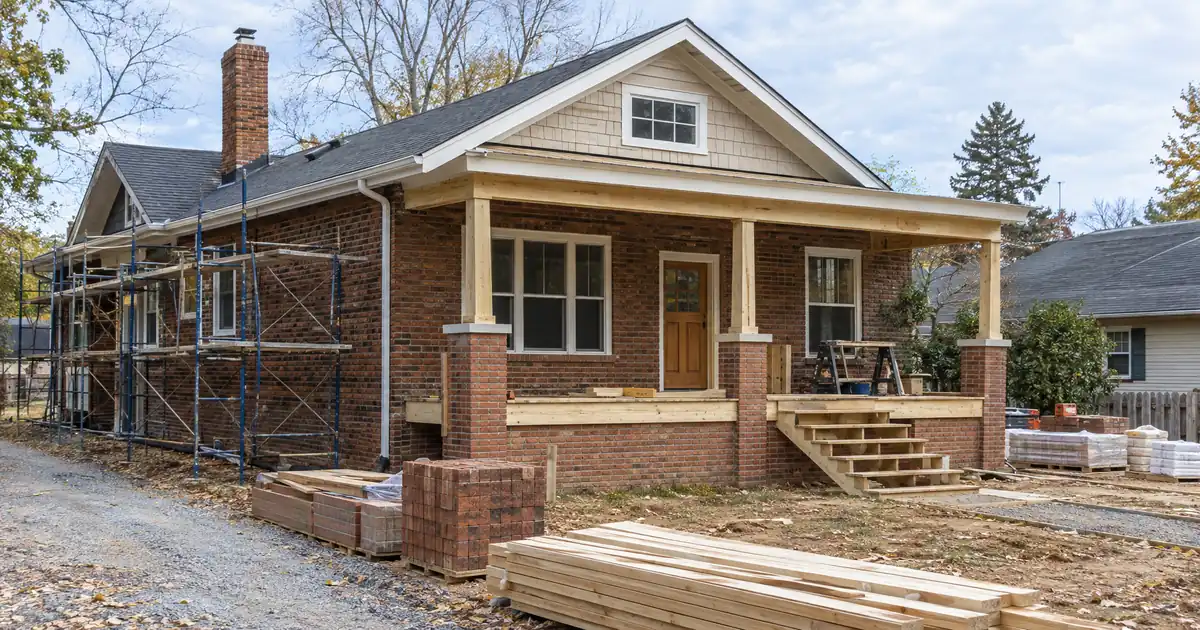
The Quick Read: A fix-and-flip loan funds the purchase and the rehab on a short term and is sized on the project and its after-repair value, while a cash-out refinance on a rental is a long-term loan sized on the finished, rented property’s appraised value and rent coverage, so the first builds the asset and the second pulls cash out of it. For many investors the two are not rivals. They are steps in one sequence. If you plan to sell, you rarely need the refinance at all.
- A flip loan is judged on the deal: purchase price, scope of work, after-repair value and your track record.
- A DSCR cash-out refinance is judged on the property: appraised value, documented rent and enough ownership time (DSCR means debt service coverage ratio, the test of whether rent covers the monthly payment).
- On most files across Lendmire’s wholesale network, flip leverage is 85% to 93% of project cost, capped at 75% of after-repair value. DSCR cash-out on a standard rental tops out around 75% LTV.
- The cash-out refinance comes after the rehab and leasing are done, not during construction.
- Figures here reflect select lenders in the network and vary by lender, property, and experience. Nothing here is a commitment to lend.
Who Each Option Is Really For
The flip loan is for the investor who needs money now for a property that is not ready to rent. The cash-out refinance is for the investor who has finished the work, leased the property, and wants to recover capital while holding it.
That is the honest answer. The two loans sit at different points in a property’s life. One carries you through construction. The other replaces that debt with something built to last.
DSCR loans are designed for non-owner-occupied investment properties. Because they are business-purpose investor loans, they are reviewed differently from a standard owner-occupied mortgage.
Here is the catch. Investors often frame this as a pick-one decision, then discover the property they want to refinance is not eligible yet. The better question is which loan fits the property’s condition today and which fits it once the work is done.
Side-by-Side
The table shows how the two structures differ. The cash-out column reflects Lendmire’s network as a placing broker. Treat both columns as typical ranges, since they vary by lender, property, and experience.
| Factor | Fix-and-Flip Loan | DSCR Cash-Out Refinance |
|---|---|---|
| Review basis | Deal, plan, and exit | Property rent coverage and value |
| Sized on | Project cost, capped by after-repair value | Appraised value after seasoning |
| Leverage (typical) | 85%-93% of project cost, max 75% of ARV | Up to about 75% LTV |
| Rehab money | Up to 100% of budget, released in draws | None; the work is already done |
| Property condition | Can be distressed or vacant | Finished, rentable, legal to lease |
| Documentation | Scope of work, budget, experience, assets | Credit, rent evidence, reserves, entity papers |
| Entity vesting | Often an LLC | LLC possible, subject to program terms |
| Term structure | 6-18 months, interest-only | Long-term; 30-year fixed is the spine |
| Reserve expectations | Cash for down payment and carry | Commonly about 6 months of PITIA |
| Main risk | Overrun or late exit | Low appraisal or too little seasoning |
PITIA stands for principal, interest, taxes, insurance, and association dues. It is the full monthly obligation that the DSCR test measures rent against.
Key Terms Defined
After-repair value (ARV): the estimated worth of the property once the planned work is finished.
Loan-to-cost: the share of purchase price plus rehab budget that a lender will fund.
Draw schedule: the plan for releasing rehab money in stages as completed work is verified.
Seasoning: the ownership wait a lender wants before it sizes a refinance on appraised value rather than on what you paid.
Payoff-only refinance: a refinance that mainly retires the existing loan and returns little or no cash.
Cash-out refinance: a new, larger loan that pays off the old one and returns the difference, after costs, as cash.
Scope of work (SOW): the line-item list of repairs, with budget, that the lender uses to judge the plan.
How a Fix-and-Flip Loan Works on a Rehab
Underwriting here looks at the project, not your paycheck. Lenders size on the purchase price, the scope of work, and the ARV. Your credit, liquidity, and prior projects matter, but the property and the plan carry the file.
Across our network, leverage is tiered by experience. Borrowers with five or more completed projects reach roughly 93% of project cost. Two or more completed projects reach about 90%. Fewer than two lands near 85%. Every tier is capped at 75% of ARV, and the top tier is reserved for experienced investors. There is no true 100% purchase program. The only part funded at up to 100% is the rehab budget itself, and it is released in draws against completed work.
Other terms follow the same short-term logic. Loans run up to $5,000,000, with larger by exception. Terms are 6 to 18 months, interest-only, and prepayment penalties vary by lender. A 620 minimum credit score applies, with extra conditions below 660. The collateral is non-owner-occupied residential property of 1-4 units.
Draws shape how the project runs. You close, the lender advances the purchase portion, and you request rehab money as milestones are finished and confirmed. That gives the lender control and gives you discipline. It also means you front some cash and wait for reimbursement as work is verified.
A short loan term also raises the cost of delay. If the rehab runs long, carrying costs build while the clock on the loan keeps running. Many investors budget a cushion in both time and money for that reason.
How an Investment-Property Cash-Out Refinance Works
A DSCR cash-out refinance qualifies primarily on property-level rental income covering the payment, subject to lender guidelines. The lender wants a finished, rentable property, evidence of rent, and enough time on title.
The income test starts with the appraisal. The appraiser documents market rent on Form 1007 for single-family investment property. A 2-4 unit property uses the companion operating income form, Form 1025. When a lease and an appraisal both estimate rent, most programs work from the lower figure.
Coverage is rent divided by the full monthly obligation. A 1.00 ratio is where many select programs start, and stronger ratios open better terms and leverage. A separate select-lender path takes coverage below 1.00, with leverage and terms adjusted. Clearing 1.00 does not mean the property cash flows, though. Repairs, vacancy, management, utilities, and capex all sit outside the calculation.
On a cash-out refinance, most programs in our network top out at about 75% LTV on a standard investment rental. They expect around six months of seasoning. Credit floors begin at 620 in parts of the network, most programs want about 660, and 700 or higher unlocks the strongest leverage. Loan sizes run up to $3,000,000 on standard programs (smaller balances available through select lenders), and above $2,500,000 the network generally holds to 30-year fixed structures. Reserves vary by lender, leverage, and loan size, commonly around six months of PITIA.
Seasoning is lender policy, not law. AdviceOnly’s BRRRR glossary makes the broader point that BRRRR is not a lending product and no agency defines it. The refinance step is an ordinary cash-out refinance, and each lender writes its own terms. On most files the clock runs from the recorded deed date, not from rehab completion.
Inside the seasoning window, the lender typically uses the lower of the appraisal or your cost basis. Cost basis is purchase price plus documented rehab spend. Invest Four More notes the same pattern: many lenders will not lend more than the lower of appraisal or recent purchase price during that period. The equity your rehab created can sit stranded until the clock runs out.
An LLC can hold title on the takeout, subject to lender program eligibility. Expect to show clear ownership, borrowing authority, and an individual guarantor.
Can You Refinance the Rehab Property to Pay for Its Own Rehab?
Rarely, and not as a DSCR cash-out. That loan needs a finished property that is legal to rent and has documented rent. A property mid-rehab usually has neither.
A flip loan is the tool that pays for construction. It funds the work in draws. A cash-out refinance returns a lump sum after the fact, based on value. Neither product reimburses receipts as such. If you paid for the rehab with your own cash, the refinance can return part of it only if the new appraisal and the seasoning clock support the loan size.
Hard money lenders also offer refinance products. In our network, a hard money cash-out or rate-and-term refinance runs up to about 65% of value, with leverage varying by lender, property, and experience. It stays a short-term loan, so it extends the runway rather than ending it.
The other option is a cash-out refinance on a different property you already own. That is a separate transaction.
When a Fix-and-Flip Loan Is the Better Fit
A flip loan wins when the property is distressed, vacant, or not yet rentable. It also wins when you plan to sell, or when you need purchase and rehab money in one structure.
- The property cannot be leased. A DSCR lender needs documented rent. A gutted kitchen and an open roof produce none.
- You plan to sell. A long-term takeout loan adds closing costs for a loan you will repay when you sell.
- You want rehab funded, not reimbursed. Draws release money as work is verified, so you do not have to carry the full budget yourself.
- You are building a track record. First-time investors qualify at the lower leverage tiers, and each completed project can move you up.
- The exit is clear. Sale, or refinance into rental financing, is mapped before you close.
The risks are time and cash. Flipping stays cash-intensive even with strong leverage, since you cover the gap between loan and total cost. If the rehab overruns or the sale slips, the short term runs out and carrying costs keep building.
Many investors also refinance out of hard money into long-term DSCR financing once the property is stabilized. Lendmire brokers that path.
When a Cash-Out Refinance Is the Better Fit
A cash-out refinance wins when the work is done, the property is rented, and you plan to hold it. It replaces temporary debt with a long-term loan and can return cash for the next deal.
- The property is stabilized. A lease or appraisal rent schedule is in hand, and rent covers the full monthly obligation.
- Seasoning is satisfied. About six months of ownership is the common expectation, so the lender can size on appraised value.
- You are holding, not selling. The refinance is the exit, and 30-year fixed structures give long runway.
- You want capital recycled. Cash returned, after paying off the bridge and closing costs, funds the next purchase.
- You have equity and credit to support it. The strongest files clear two tests at once: enough equity and enough rental coverage.
The risk is the appraisal. If it lands under your plan, the loan shrinks and your capital stays in the property. A larger down payment up front can lift coverage, but it does not erase leverage caps, credit floors, reserve rules, or property eligibility.
If you would rather buy a finished rental outright, a DSCR purchase works differently. On an investment-property purchase, most files land at 75% to 80% LTV, with select high-leverage programs reaching 85% LTV on a roughly 700-plus score. Our overview of DSCR cash-out refinance on investment property shows how that fits an existing portfolio.
A Modeled Sequence
These inputs are modeled assumptions, not market data. Say your total project cost lands at 80% of the planned ARV. Using the 90% of cost tier:
- Flip loan sized on cost: 72% of planned ARV.
- Cap check: 72% is under the 75% of ARV ceiling, so the cost-based figure governs.
If total cost runs at 85% of planned ARV instead, 90% of cost would reach 76.5% of ARV. The cap binds, and the loan stops at 75% of ARV. You cover the rest.
Now the takeout. Say the flip loan balance sits near 72% of planned ARV. After rehab and leasing, the new appraisal comes in at plan. The DSCR takeout is sized as a percentage of that appraised value, up to the program’s ceiling for a standard rental. At plan, the new loan can retire the bridge with a small cushion left over, before closing costs. Exact terms depend on the lender’s guidelines, property type, leverage, and a full review of the borrower’s file.
Now suppose the appraisal lands 10% below plan.
- Appraised value: 90% of planned ARV.
- The takeout loan shrinks in step with that value, so the small cushion disappears.
- Result: the new loan can fall short of the bridge balance, and the gap, plus closing costs, is paid in cash at the table. Every figure here varies by lender and program, and guidelines, property type, leverage, and credit profile all apply.
That last case is the over-leveraged bridge problem. A bridge at high loan-to-cost can leave a payoff larger than the takeout loan can retire. Stress-test a conservative ARV before you close the first loan, not after.
What Breaks Each Path
Rehab runs over. Interest-only carry builds on the flip loan. Leasing also slips, which pushes the DSCR test and the seasoning clock back.
Appraisal comes in low. On the flip side, the lender’s after-repair value may differ from your estimate. On the refinance side, your projected ARV is not the loan basis. The new appraisal is.
Seasoning mismatch. The bridge matures before the clock does. If the clock runs from the recorded deed date and the loan term is short, plan backward from maturity.
Coverage falls short. Rent may not cover the full obligation at the loan size you wanted. Select lenders in the network will review coverage below 1.00, with leverage and terms adjusted.
Early refinance. Some lenders will close inside the window but size the loan on cost. Whether a first-step refinance restarts the clock is lender-specific, so ask before you buy.
Cash purchase. If you paid cash and the property needs little work, a delayed financing structure can recover your cost. It is capped at documented cost, not after-repair value.
A Brief Agency Contrast
Agency refinance rules are a different system. The Fannie Mae Selling Guide requires at least six months on title for a cash-out refinance, with exceptions such as delayed financing. It also expects title moved out of an LLC into an individual’s name. DSCR files are not agency products and follow the lender’s own policy, so use this as contrast only.
What to Prepare Before You Apply
For a flip loan, assemble the scope of work with line-item budget, purchase contract, proof of liquidity, and a summary of completed projects.
For a DSCR cash-out refinance, plan to provide identification and credit authorization, a lease or appraisal rent schedule, asset and reserve statements, the existing mortgage statement, and entity documents if the property is in an LLC. DSCR does not mean no documentation. Start leasing during the rehab, because the lender needs documented rent and a property that is legal to rent at appraisal.
Tax treatment can depend on how the funds are used and how the property is held; investors should keep clear records and speak with a qualified tax professional before relying on any deduction.
The Verdict
Choose the loan that matches the property today, then plan the one that follows.
Use a fix-and-flip loan when the property needs work, cannot be leased yet, or will be sold. Use a DSCR cash-out refinance when the property is finished, rented, seasoned, and held. The strongest hold plans run both in order: bridge the rehab, lease the finished property, then refinance into long-term debt.
The decision hinges on three things. Is there rent to document, has enough time passed, and will the appraisal support your payoff? If any answer is no, the flip loan is the right tool for now. If all three are yes, the refinance is the natural exit.
Frequently Asked Questions
Can I cash-out refinance a house I’m about to rehab?
Generally not as a DSCR loan. That program expects a finished, rentable property with documented rent. For a house that needs work, a fix-and-flip loan funds the purchase and the rehab in draws. After the work and leasing are done, the refinance becomes an option.
Does a flip qualify for an investment-property cash-out refinance?
Only if the plan changes from selling to holding. The property must be finished, legal to rent, leased or supported by an appraisal rent schedule, and seasoned. A flip listed for sale does not fit that profile.
Is a fix-and-flip loan the same as hard money?
Usually, yes. In practice, fix-and-flip loans are a hard money product: short-term, interest-only, and sized on the deal and after-repair value. Terms run 6 to 18 months on most files in our network, varying by lender, property, and experience.
What if I paid for the rehab with my own cash?
A cash-out refinance can return part of it, but only up to what the appraisal and leverage cap allow. Inside the seasoning window, many lenders size on cost. After it, they size on appraised value, so waiting can free more equity.
Does clearing a 1.00 coverage ratio mean the rental cash flows?
No. DSCR compares rent to the monthly payment only. Repairs, vacancy, management, utilities, and capital expenses sit outside the calculation, so stress-test those separately.
Run the Numbers on Your Rehab
If you are buying, rehabbing, or refinancing an investment property and want to see how the numbers work, Lendmire can help you compare hard money options and DSCR financing based on the project, the exit plan, leverage, and your goals. For the full picture of how these loans fit together, read the complete DSCR loans guide.
About Lendmire
As a DSCR and non-QM mortgage broker, Lendmire — NMLS# 2371349 — connects investors with wholesale lending channels across 41 markets, including Washington, D.C. The property’s rental income, not the borrower’s traditional personal-income documentation, is central to lender review, which works for self-employed operators and portfolios beyond four financed properties. Scotsman Guide named Lendmire a Top Mortgage Workplace in both 2025 and 2026.
Get Started
Ready to find the right loan for you?
In about 30 seconds you can review financing options available for your investment property. No commitment required.
Informational only. Not a Loan Estimate, approval, or commitment to lend. Program availability and eligibility are subject to lender guidelines, credit approval, property review, and underwriting.
References
1. Fannie Mae Appraiser Update
3. Invest Four More BRRRR guide
4. Fannie Mae Selling Guide B2-1.3-03
This article is part of Lendmire’s hard money loan program — full qualification details, guidelines, and scenarios live on the program page.
Related reading: Investment Property HELOC vs Bridge Loan for Cash-Out on a Rental · Investment Property HELOC vs Better-Terms Refinance for Cash-Out Plans · 1099-Only Conventional Cash-Out Refinance vs Fix-and-Flip Loan
Brandon Miller
Founder & CEO, Mortgage Loan Originator, Lendmire LLC
- Mortgage Loan Originator · NMLS# 1129696 · Verify on NMLS Consumer Access
- North Carolina Real Estate Broker · License# 343312 · Verify on NCREC
- North Carolina Insurance Producer · License# 19053198 · Property, Casualty, Life, Health · Verify on NAIC SBS
- Lendmire LLC · Firm NMLS# 2371349 · Verify firm licensure
Disclosures. The information presented in this article is general market commentary, not financial, legal, or tax advice. Lendmire is a mortgage brokerage (NMLS# 2371349) — not a direct lender or depository institution — and loan placement is subject to lender underwriting. Nothing in this content represents a commitment to lend. Loan terms, pricing, and program availability vary based on borrower qualifications, property characteristics, and state of subject property, and are subject to change at any time. Lendmire complies with Equal Housing Opportunity requirements. Consumer access: nmlsconsumeraccess.org.