
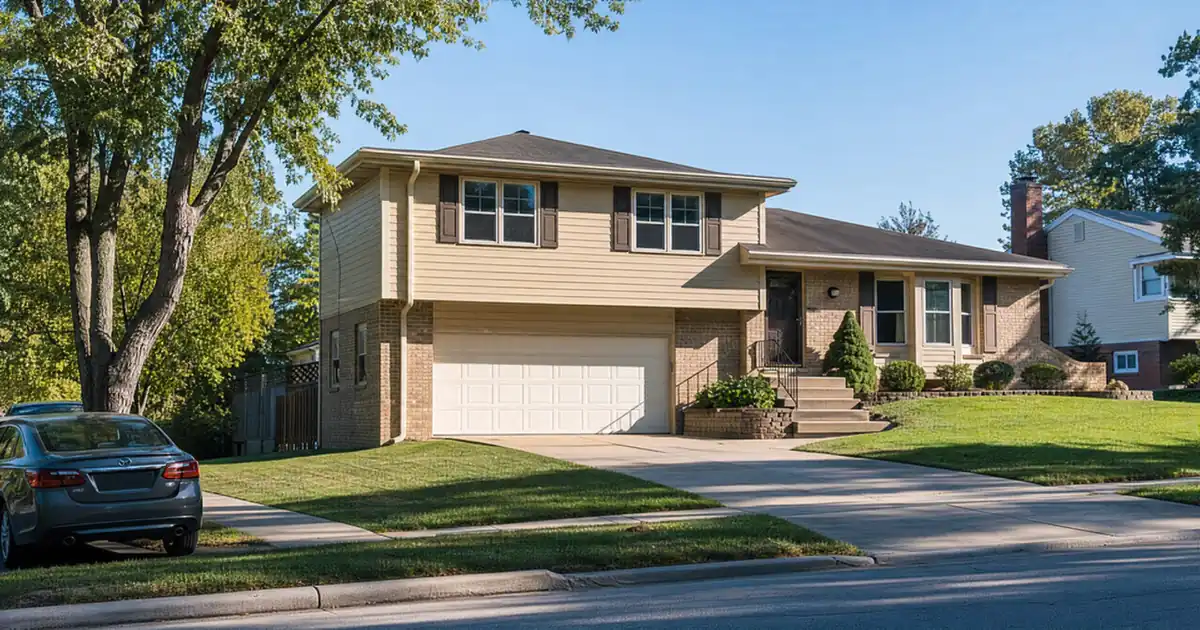
Fix and Flip Loans for Beginners — The Quick Read: A fix-and-flip loan is a short-term, business-purpose loan built for buying and renovating a property to resell (or, increasingly, to refinance into a rental hold). It funds in two pieces — money at closing to buy the property, and a separate rehab holdback released in stages as work gets done. Underwriting leans on the deal and the property, not a paycheck, which is exactly why first-time investors can get funded — usually with more conservative leverage and more scrutiny on the numbers than an experienced flipper gets.
Beginners tend to ask one question before any other: can I actually qualify with zero track record? Short answer — yes, in most cases, though the terms won’t look identical to what a repeat operator gets. The rest of this piece walks through exactly how that works.
What this loan actually costs to carry in your market.
Hard money is sized against the project and priced by time. Enter the deal and see how much the program will lend, the cash required at closing, the carry while you hold it, and what is left at the exit.
Leverage tiers on the current program: up to 85% of project cost with fewer than two completed projects, 90% with two or more, 93% with five or more — every tier capped at 75% of after-repair value. Loan amounts up to $5,000,000, larger by exception; terms of 6 to 18 months, interest-only, no prepayment penalty. The rehab portion funds in draws against completed work, not at closing.
Program parameters shown update from Lendmire’s centralized guideline source. Rate, points, and months are editable assumptions, not quoted terms.
Cost cap sets the loan · positive spread
Illustrative estimate only — not a quote, Loan Estimate, approval, or commitment to lend. Rate, points, and months are editable assumptions. Hard money is business-purpose financing for real estate investors, not a consumer mortgage. Leverage on the current program tops out at 93% of project cost for investors with a documented track record, capped at 75% of after-repair value, with rehab funding up to 100% of the documented budget released in draws; actual terms vary by lender, borrower experience, property, and exit. Lendmire is a mortgage broker, not a lender.
Key Takeaways
- Fix-and-flip loans are asset-based. The property and the deal’s math drive approval far more than traditional personal-income documentation or pay stubs.
- The loan comes in two parts: an acquisition advance and a rehab holdback released through a draw process.
- Underwriters look at more than one leverage number — as-is value, total project cost, and after-repair value all get checked, and the file gets sized to the most conservative of the three.
- First-time investors generally qualify, but the highest leverage tiers are usually reserved for borrowers with a completed-project track record.
- Selling isn’t the only exit. A growing share of flippers are refinancing the finished property into a long-term rental loan instead.
What Makes a Fix-and-Flip Loan Different From a Mortgage
A conventional mortgage is priced around a borrower’s income, debt-to-income ratio, and personal creditworthiness because it’s a consumer loan on an owner-occupied home. A fix-and-flip loan is neither of those things — it’s a business-purpose loan made to an investor (usually through an LLC) on a property nobody plans to live in. That single distinction changes almost everything about how the file gets built.
The name itself gets used loosely. “Fix-and-flip loan,” “rehab loan,” and “bridge loan” mostly describe the same product: short-term, interest-only-friendly financing that carries a property from purchase through renovation to sale or refinance. A ground-up construction loan is a cousin, not the same thing — it finances building from a slab up rather than renovating an existing structure, though hard money lenders in this space often finance both. If you’re weighing whether this is even the right category of loan for your situation, Lendmire’s overview of what fix-and-flip loans are is a useful place to see the product laid out on its own.
Key Terms Defined
Loan-to-Cost (LTC): the loan amount measured against the total cost of the deal — purchase price plus rehab budget combined.
Loan-to-Value (LTV): the loan amount measured against the property’s current, as-is value before any work is done.
After-Repair Value (ARV): an appraiser’s opinion of what the property will be worth once the defined scope of renovation is finished, based on comparable sales of already-renovated homes nearby.
Draw (or holdback): the portion of rehab money the lender doesn’t release at closing — it gets paid out in stages as completed work is verified.
Business-purpose loan: a loan made to an investor or entity for a rental or resale property, not a home the borrower lives in — reviewed under a different rulebook than a consumer mortgage.
DSCR (debt-service coverage ratio): a measure lenders use on rental-hold loans that compares a property’s rent to its full monthly obligation, relevant here mainly because it’s the metric that governs the refinance exit once a flip becomes a rental.
How Underwriting Actually Treats a Flip
Underwriting on a fix-and-flip file is deal-centric first, borrower-centric second. The lender wants to know: does the spread between total cost and after-repair value leave enough room for the loan, a profit, and a margin for error?
Three ratios get checked, not one. LTC compares the loan to the full cost of the project. LTV compares it to what the property is worth today, before any work happens. And the loan-to-ARV ratio compares it to what the property should be worth once renovated. The near-universal convention across private lending is that whichever ratio produces the smallest loan amount is the one that controls — a deal that looks great on ARV can still get capped by the as-is value or the total cost if those numbers are tighter.
Across the wholesale network Lendmire places files through, fix-and-flip leverage on the current program runs up to 93% of project cost for investors with five or more completed projects and up to 90% with two or more, with every tier capped at 75% of after-repair value; bridge purchases without rehab run up to 80% of purchase price, and cash-out or refinance files top out at 65% of value. On top of that purchase leverage, many programs will finance up to 100% of the rehab budget itself — that’s a rehab-cost figure, not a second purchase-price loan, and it’s released through the draw process described below, not handed over at closing. There’s no true 100% purchase-price program in this space; when a beginner hears “100% financing,” it almost always means this purchase-plus-full-rehab structure, not zero cash to close.
Credit still matters, but it’s not the deciding factor it would be on a conventional purchase. The current program carries a 620 minimum credit score, with additional conditions under 660; credit is one input among several in an asset-based review that centers on the property, the plan, and the exit. Reserves, liquidity, and a completed-project track record shape both the leverage offered and how closely the renovation plan gets scrutinized. Loan sizes on the current program run up to $5,000,000, with larger amounts considered by exception.
The Two-Part Structure: Acquisition Money and Rehab Money
Every fix-and-flip loan splits into two pieces, and understanding this is the single most important budgeting fact for a beginner. The acquisition advance funds at closing, through the title company, just like a purchase loan would. The rehab holdback does not — it sits with the lender and gets released in stages as work is completed and verified.
That draw cycle looks roughly the same across the industry: the borrower or contractor finishes a phase of work, submits a draw request, an inspector confirms the completed work matches the agreed scope, and the lender releases that tranche of funds. That cycle repeats until the rehab budget is spent. It’s a control mechanism, not red tape — it keeps the lender’s exposure tied to verified, in-place value at every stage of the project, and it protects the borrower from a contractor who gets paid for work never done.
Anyone weighing hard money as the vehicle for this structure should look closely at how hard money lenders for fix-and-flip projects typically size and release these draws — the mechanics vary enough between lenders that it’s worth understanding before signing anything.
Running the Numbers on a First Deal
Picture a beginner tying up a property at $180,000, with a modeled rehab budget of $55,000 and a projected after-repair value of $300,000. These are illustrative figures, not a quote — every file gets sized individually.
Total project cost comes to $235,000. At 85% loan-to-value on the purchase, the acquisition advance runs $153,000, meaning the investor brings roughly 15% of the as-is price to closing, plus reserves and closing costs the lender sizes to the file. If the program finances the full $55,000 rehab budget through draws, the total loan committed reaches $208,000.
Check the ratios: loan-to-cost lands around 89%, and loan-to-ARV comes in near 69% — both inside the range a lender would expect to see on a well-structured file, though the exact caps a given program applies depend on leverage tier, property type, and experience. Worth noting: a $55,000 rehab budget against a $300,000 ARV works out to roughly 18% of after-repair value — on the lean side compared to the 20%-33% range flipping veterans typically budget for repairs and carrying costs, according to ATTOM’s 2025 Year-End U.S. Home Flipping Report. That gap is exactly where beginners get squeezed — the headline “gross profit” number doesn’t include those costs, so a thin rehab budget can quietly eat the margin a deal looked like it had on paper.
The Structures Available in the Network
Beyond a straight fix-and-flip purchase-and-rehab loan, a few adjacent structures show up regularly for investors working through the same lifecycle — buy, renovate, and either sell or hold.
| Financing Path | Best For | Leverage Ceiling | Typical Use Stage |
|---|---|---|---|
| Fix-and-flip / bridge loan | Acquisition plus renovation | Up to 93% of project cost for investors with 5+ completed projects (90% at 2+), capped at 75% of after-repair value; rehab funded up to 100% in draws | Purchase through renovation |
| Investment-property HELOC | Tapping equity already in a rental | Capped at $500,000 total line | Funding a down payment or reserves on the next deal |
| DSCR cash-out refinance | Converting a stabilized flip into a rental hold | Generally around 75% LTV on most files | After renovation, once the property is rent-ready |
Eligible collateral on the current program is non-owner-occupied residential property of one to four units, with ground-up construction up to ten units. Terms are short by design — 6 to 18 months on the current program, interest-only, with no prepayment penalty — and investors who need longer runway refinance into a DSCR loan once the property qualifies. All of this varies by lender, property, and borrower experience, and every parameter here is subject to lender guidelines and program eligibility — nothing described is a commitment to lend.
Where the General Rule Breaks
The clean version of fix-and-flip financing — buy, borrow, renovate, sell — has real exceptions worth knowing before they surprise a first-timer.
Entity versus individual borrower. Most lenders in this space require the loan close in an LLC or similar entity rather than to an individual, subject to lender program eligibility. That’s partly structural preference and partly regulatory: business-purpose loans made to entities generally sit outside the consumer-protection framework that governs owner-occupied mortgages, according to legal analysis from Hunton Andrews Kurth on business-purpose lending. Investors who close as individuals instead of entities sometimes find the loan gets treated differently than they expected.
First-time versus experienced investors. Approval isn’t usually the thing that changes between a first-timer and a repeat flipper — leverage tier and pricing usually are. The top leverage tier tends to sit with borrowers who’ve completed prior projects; a first deal generally means a more conservative structure and closer review of the renovation plan, not an automatic decline.
Property type changes the math. A single-family renovation is the cleanest file to underwrite. Multi-unit, mixed-use, condo, or heavily distressed properties complicate the appraisal — they often require a full interior valuation rather than a lighter review, and that can shift which of the three ratios (cost, as-is value, or ARV) ends up controlling the loan size.
The exit isn’t always a sale anymore. Flip margins have thinned nationally, with ATTOM’s year-end data putting the typical 2025 gross profit at $65,981, down from $77,000 the year before, and return on investment at 25.5% — the lowest reading since 2008. That squeeze is a real reason DSCR loan volume grew more than 50% year over year, as more investors refinanced finished renovations into rental holds instead of selling into a softer resale market. A borrower who kept clean title, consistent entity documentation, and a realistic rental-income picture on the property is in a far better position to make that pivot than one who structured the acquisition assuming a sale was the only outcome. When that pivot happens, appraisers on the rental side often use forms like Fannie Mae’s Single-Family Comparable Rent Schedule (Form 1007) — the same family of documentation used to qualify a property on rental income rather than a borrower’s paycheck, a concept worth understanding if a DSCR loan for the flip that didn’t sell becomes part of the plan. Coverage on those refinance exits generally starts around a 1.00 ratio on select programs — not a universal floor, and stronger ratios open better leverage and pricing.
The Mistakes That Sink First Deals
The most common beginner mistake isn’t a bad property — it’s a misunderstanding of what “ARV” actually means. ARV is an appraisal input, not a financing product. Investors sometimes ask about an “ARV loan” expecting something close to zero-down financing based on the projected future value; in reality, ARV is one of several data points — alongside as-is value, cost, and leverage — that a lender weighs when sizing the loan. It was never meant to be a standalone loan program.
The second-most-common mistake is underestimating true project cost. Purchase price and an obvious rehab number are easy to see. Holding costs, insurance, permitting delays, and contingency for the unexpected are the line items that quietly erode a deal’s margin — exactly the reason ATTOM’s own flipping methodology assumes rehab and carrying costs commonly run 20%-33% of a property’s after-repair value.
The third: treating a sale as the only possible outcome. Given how far flip margins have compressed, building a file without at least considering a rental-refinance fallback is a planning gap, not just bad luck.
Overleveraging on the assumption that maximum leverage is guaranteed rounds out the list — the top tier of leverage in this space is earned through track record, reserves, and a clean file, never assumed.
Making the Decision
A first fix-and-flip deal comes down to three honest questions: does the spread between cost and after-repair value leave room for error, does the investor have the reserves to survive a slower sale, and is there a real plan B if the market softens before the property sells. Beginners who partner with an experienced flipper — even informally, for advice on scope and budget — tend to avoid the costliest first-deal errors, because the renovation plan and the exit strategy are exactly where lenders focus their scrutiny.
For investors comparing a pure fix-and-flip structure against holding and renting from day one, it’s worth reading through how a DSCR loan stacks up against a fix-and-flip loan before locking into either path — and for a full walkthrough of how rental-income review framework works once a flip becomes a hold, Lendmire’s complete DSCR loans guide covers that ground.
Lendmire (NMLS# 2371349) arranges fix-and-flip and DSCR financing through a wholesale network of lenders spanning 40 markets, including Washington, D.C. Investors comparing structures for a first deal can reach Lendmire at 828-256-2183 or request a quote to see how leverage, reserves, and exit strategy line up for a specific property.
Nothing here is a commitment to lend, and loan approval is never guaranteed. Every scenario described is subject to lender approval, underwriting review, and the specific guidelines of the borrower, property, and program involved. This content is general information only and isn’t financial, legal, or tax advice — tax treatment can depend on how funds are used and how a property is held, and investors should keep clear records and speak with a qualified tax professional before relying on any deduction.
Frequently Asked Questions
Can a first-time investor with zero completed projects actually get a fix-and-flip loan?
Generally, yes. Underwriting on these loans is asset-based, centered on the property and the deal’s math rather than a track record. The difference for a beginner usually shows up in leverage tier and documentation scrutiny, not in an outright decline — the highest leverage tier just tends to sit with investors who’ve already finished projects.
How much cash does a beginner actually need to close?
It depends on the leverage tier, the property, and the program, but the down payment portion typically falls in the 10%-25% range of the as-is purchase price, plus reserves and closing costs the lender sizes to the file. Rehab funds are usually financed separately through the draw process rather than paid out of pocket up front.
What credit score does a fix-and-flip lender want to see?
Credit is one input among several on the current program: a 620 minimum score applies, with additional conditions under 660, and the review centers on the property, the plan, and the exit. No legitimate program promises approval without any credit review at all.
What happens if the property doesn’t sell before the loan matures?
Because these are short-term loans with a defined maturity, the exit matters as much as the renovation itself. A growing number of investors are refinancing an unsold flip into a long-term rental loan instead of extending or selling under pressure — a path that depends on the property’s rental income covering its monthly obligation and on meeting that program’s own guidelines.
Can a fix-and-flip loan finance a duplex or small multifamily property, not just a single-family home?
Often, yes — collateral in this space commonly includes small multifamily alongside single-family and larger commercial assets. Multi-unit properties can trigger a fuller appraisal than a straightforward single-family renovation, which can shift which leverage ratio ends up controlling the loan size.
Many investors treat hard money as the acquisition tool and plan the exit up front — see refinancing out of a hard money loan with a DSCR loan.
About Lendmire
Lendmire (NMLS# 2371349) is a mortgage brokerage focused on DSCR investor financing, helping arrange programs through wholesale and investor-lending channels in 40 markets, including Washington, D.C. DSCR loans are evaluated by the lender on property cash flow rather than personal income, subject to lender guidelines, supporting LLC closings and accommodating investors with four or more financed properties. Scotsman Guide Top Mortgage Workplace in both 2025 and 2026.
Get Started
Ready to find the right loan for you?
In about 30 seconds you can review financing options available for your home or investment property. No commitment required.
Informational only. Not a Loan Estimate, approval, or commitment to lend. Program availability and eligibility are subject to lender guidelines, credit approval, property review, and underwriting.
References
1. ATTOM 2025 Year-End U.S. Home Flipping Report
2. Hunton Andrews Kurth — Beware of Business Purpose
3. Scotsman Guide — DSCR Lending Is Surging
Brandon Miller
Founder & CEO, Mortgage Loan Originator, Lendmire LLC
- Mortgage Loan Originator · NMLS# 1129696 · Verify on NMLS Consumer Access
- North Carolina Real Estate Broker · License# 343312 · Verify on NCREC
- North Carolina Insurance Producer · License# 19053198 · Property, Casualty, Life, Health · Verify on NAIC SBS
- Lendmire LLC · Firm NMLS# 2371349 · Verify firm licensure
Disclosure information. Lendmire is a state-licensed mortgage brokerage under NMLS# 2371349. Lendmire is not a depository institution, direct lender, or financial advisor — all loans referenced are placed through wholesale lender partners and are subject to each lender's underwriting standards. This article is provided for general informational purposes and is not a commitment to lend, nor does it constitute financial, legal, or tax advice. Loan programs, terms, rates, and qualification standards change without notice and depend on borrower profile, property type, and the state in which the subject property is located. Equal Housing Opportunity provider. NMLS Consumer Access: nmlsconsumeraccess.org.


