
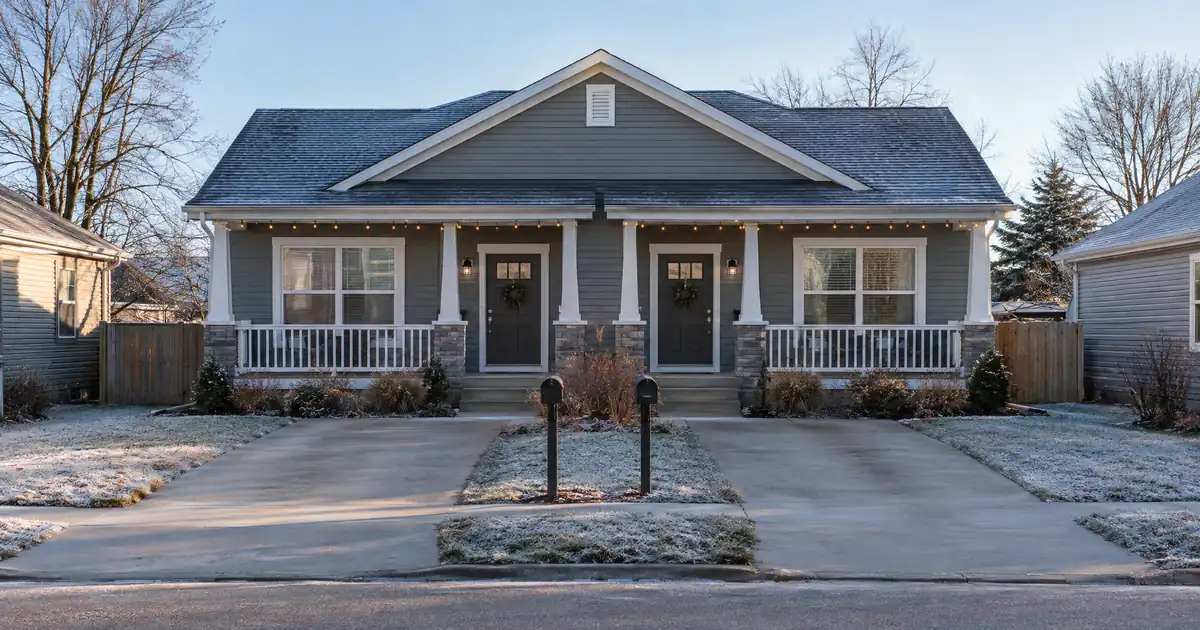
The Quick Read: Yes. A non-owner-occupied duplex, triplex or fourplex is standard collateral for a hard money flip loan, provided you buy as an investor with a business purpose, put a credible rehab budget and exit plan on paper, and plan to repay within a short interest-only term that typically runs 6 to 18 months.
- Eligible property: investment 1-4 unit residential. Owner-occupied buildings are not part of this program.
- Leverage is sized on project cost and capped by after-repair value. The top tier is reserved for experienced investors.
- Rehab money arrives in draws after completed work, not at closing.
- You exit by sale or by refinancing into long-term rental financing.
- Every figure varies by lender, property, and experience, and nothing here is a commitment to lend.
Key Terms Defined
Hard money loan: a short-term, interest-only loan secured by the property, underwritten mainly on the deal rather than your paycheck.
After-repair value (ARV): what the building should be worth once the renovation is finished.
Loan-to-cost: the loan as a share of purchase price plus rehab budget.
Draw: a release of rehab funds after the lender confirms a phase of work is done.
Non-owner-occupied: you do not live in the property. The loan is for investment.
DSCR loan: a long-term rental loan that qualifies primarily on property-level rental income covering the payment, subject to lender guidelines.
Seasoning: the waiting period lenders want between buying a property and refinancing it.
What this loan actually costs to carry.
Hard money is sized against the project and priced by time. Enter the deal and see how much the program will lend, the cash required at closing, the carry while you hold it, and what is left at the exit.
Leverage tiers on the current program: 85% with fewer than 2, 90% with 2 or more, 93% with 5 or more completed projects — every tier capped at 75% of after-repair value. Loan amounts up to $5,000,000, larger by exception; terms of 6 to 18 months, interest-only, no prepayment penalty. The rehab portion funds in draws against completed work, not at closing.
Program parameters shown update from Lendmire’s centralized guideline source. Rate, points, and months are editable assumptions, not quoted terms.
Cost cap sets the loan · positive spread
Illustrative estimate only — not a quote, Loan Estimate, approval, or commitment to lend. Rate, points, and months are editable assumptions. Hard money is business-purpose financing for real estate investors, not a consumer mortgage. Leverage on the current program tops out at 93% of project cost for investors with a documented track record, capped at 75% of after-repair value, with rehab funding up to 100% of the documented budget released in draws; actual terms vary by lender, borrower experience, property, and exit. Lendmire is a mortgage broker, not a lender.
What Does a Lender Look at on a 2-4 Unit Flip?
Lenders look at the property, the plan, and the exit. Your credit matters, but it is not the main event. Across our wholesale network, a flip file on a small multifamily building gets read in roughly this order: what you are buying, what you will spend, what it will be worth, and how you will repay.
Here is what the file usually needs:
- The contract and a scope of work. A line-item rehab budget, ideally unit by unit.
- A written exit. “Sell when the market improves” is not an exit. “List within a set window after the final inspection, or refinance once units are leased” is.
- Proof of liquidity. Cash for your share of the cost, interest carry, and a cushion.
- An entity. Most flip programs want the borrower to be an LLC or corporation, subject to program terms.
- Credit. Programs set a minimum credit score of 620, with extra conditions below 660. First-time investors qualify at the lower leverage tiers. All of this varies by lender, property, and experience.
The building must also be 1-4 units. That line decides which loan product you can use.
DSCR loans and this program are designed for non-owner-occupied investment properties. Because they are business-purpose investor loans, they are reviewed differently from a standard owner-occupied mortgage.
How Much Can You Borrow on a Flip?
Leverage is sized on project cost and then capped by ARV. On the current program sheet, flip loans run 93% of project cost at 5 or more completed projects, 90% at 2 or more, and 85% with fewer than 2. Every tier is capped at 75% of ARV. Up to 100% of the rehab budget can be funded through draws against completed work. Loan amounts go up to $5,000,000, with larger by exception.
Two other structures matter. A bridge purchase without a rehab runs up to 80% of the purchase price. A cash-out or rate-and-term refinance runs up to 65% of value.
Notice what is missing: a 100% purchase loan. It does not exist. The “100%” you hear about refers to the rehab budget, funded in stages.
Here is how the two caps interact. These are modeled assumptions in index units, not market data.
- Say purchase plus rehab costs 100 units and the ARV is 130. At the 90% tier, the cost test gives 90. The ARV test gives 97.5. The lower number wins, so cost is the limit.
- Keep the same cost but say the ARV is only 110. The ARV test now gives 82.5, which is below 90. ARV becomes the limit, and you bring more cash.
The second case is how flips get squeezed. You overpay, the numbers move, and the cap bites. On a multi-unit, the ARV can be harder to nail down, which brings us to the unit-count question.
Does Unit Count Change the Flip?
Yes, and mostly in ways a single-family flip never shows you. More units mean more kitchens, baths, and systems, more tenants to manage, and more carrying cost per month of delay.
| Factor | Duplex | Triplex | Fourplex |
|---|---|---|---|
| Rehab scope | Two units | Three units | Four units, longest |
| Tenant issues | Fewest | Moderate | Most |
| Valuation | Mostly comps | Comps plus rent | Rent often weighs more |
| Delay sensitivity | Lower | Moderate | Highest |
| Likely buyer | Owner-occupant or investor | Mixed | Often investors |
Valuation is the quiet difference. Buyers of larger small-multifamily buildings often price in the rent, while single-family buyers do not. So your ARV may rest on both sale comps and what the units can rent for. Appraisers and underwriters will look at both, and an improvement may support a higher appraised value, depending on comps and underwriter review. Never assume a dollar lift.
Then there is the fifth unit. Five units or more is commercial. Some buildings have been “converted” informally, so confirm that the legal unit count matches county records before you sign. A “fourplex” that is legally a triplex with a bootleg fourth unit is a different loan problem.
Occupied or Vacant: What About Tenants?
Buying with tenants in place changes both the rehab and the exit. It is not disqualifying. It is a planning issue.
An occupied building gives you rent during the project, which helps with carry. But it limits how fast you can gut units, and you may need to phase work around leases. A vacant building lets you renovate in one pass, but every month empty is carry with no offset.
Many flippers buy a mixed building: one or two units vacant, the rest leased. They renovate the empty units first, lease them at market rent, and then decide whether to sell or keep. That approach also helps if you plan a long-term rental refinance later, since lenders want to see leased, rent-ready units.
State and local landlord rules govern notices and relocation. Check them before you underwrite the timeline.
How Do Draws Work When There Are Several Units?
Draws are where multi-unit flips either run smoothly or stall. The lender holds back the rehab funds and releases them in stages after the completed work is verified. On a fourplex, you can ask for the budget to be broken into phases by unit and by system.
A clean multi-unit draw plan usually has these pieces:
1. Exterior and structural first. Roof, foundation, and safety items.
2. Shared systems next. Electrical, plumbing, and heating, especially if units share them.
3. Unit interiors in sequence. One unit at a time, so completed units can be inspected and drawn.
4. Final punch list and cleanup.
Permits are typically required for major, structural, or safety work, and more units usually means more inspections. Budget for them. The most common failure we see in this property type is an underbuilt rehab budget, where the scope was written for one unit and the cost was multiplied by hope.
Selling the Finished Flip (the FHA Wrinkle)
The sale is the exit most people picture, and 2-4 unit buildings carry one special catch. Many buyers of small multifamily are owner-occupants who live in one unit and rent the others, and some finance with FHA-insured loans.
Under 24 CFR 203.37a, a property is not eligible for an FHA-insured mortgage if the resale date is 90 days or less after the seller’s acquisition. The clock stops when the sales contract is signed, not when the sale closes. HUD’s notice on the rule describes acquisition as the date the seller can transfer title under state law.
For resales after day 90 and within the following several months, HUD can require extra documentation. Per Cornell’s copy of the regulation, that can include an appraisal from another appraiser when the price has doubled or more. Treat the details as “HUD may require,” and check the current rules before you list.
Three practical points follow:
- The rule applies to FHA financing. Cash and conventional buyers are not subject to it.
- A flipper who contracts inside the window loses the FHA buyer pool. On a 2-4 unit, that pool can matter.
- Most flips on this program take longer than 90 days anyway. The risk is a quick resale, not a normal one.
Flip or Hold: Which Exit Fits?
Your exit should be chosen at purchase, not at the end of the rehab. Each one needs different things from the building.
| Exit | How it works | Main catch |
|---|---|---|
| Sell to owner-occupant | Buyer lives in one unit | FHA window if FHA-financed |
| Sell to investor | Buyer prices on rent | Units should be rent-ready |
| Refinance and hold | Long-term loan repays the flip loan | Leased units, seasoning gap |
Many investors refinance out of hard money into long-term DSCR financing once the property is stabilized, and Lendmire brokers that path. The DSCR lender wants a rent-ready, leasable building with every unit leased or showing documented market rent. Lenders also require a gap between acquisition and refinance. Our complete DSCR loans guide covers how the long-term side works.
Keep one limit in mind. Clearing 1.00 on a DSCR loan is not the same as positive cash flow. The ratio compares rent to the monthly payment only. Repairs, vacancy, management, and utilities sit outside it.
Where Do 2-4 Unit Flips Go Wrong?
Margins are thinner than the TV version. ATTOM’s quarterly flipping report put the typical profit margin on a flipped home at 21.5%, down from 27.6% a year earlier, with 161 days from purchase to resale. Those figures cover single-family homes and condos, not 2-4 unit buildings, so treat them as directional only.
When margins shrink, carry costs decide the outcome. These are the usual failure modes:
- Underbuilt rehab budget. Multiple units multiply surprises.
- Optimistic ARV. Rent assumptions that look great on paper but are not supported by comps or leases.
- Slow lease-up or sale. Interest-only carry keeps ticking, and the term is short.
- A wrong exit. Buying for a hold, then discovering the units are not rent-ready.
- Wrong unit count. The records say four units, the legal reality says three.
Unit count is a genuine judgment call. A fourplex has more upside and more ways to lose. A duplex is easier to finish but offers less cushion if one unit sits empty.
Run the carry on a delayed scenario, not a perfect one. Then decide whether the deal still works.
What If You Plan to Live There?
Then this is the wrong loan. Hard money flip programs are for non-owner-occupied investment property. A live-in flip or house hack, where you occupy one unit, belongs in an owner-occupied loan category with its own rules. If you will not live in the building, the investor path above applies.
Frequently Asked Questions
Can I live in one unit of a 2-4 unit flip?
Not on this program. Hard money flip loans are for non-owner-occupied investment property. If you plan to occupy one unit, you need an owner-occupied product, which is a different loan with different requirements.
Does a fourplex count as a 2-4 unit property?
Yes, four units is the top of the range. Programs covering 1-4 unit residential property treat a fourplex as eligible collateral, subject to lender guidelines and property review. The fifth unit is where the line moves to commercial.
What if the building has five units?
Five or more units falls outside the 1-4 unit flip program, because lenders treat it as commercial. You would need a commercial-style loan or a different structure. Confirm the legal unit count before you go under contract.
Can a first-time flipper do this?
Often, yes, at lower leverage. The program carries a 620 minimum credit score, with additional conditions below 660. With fewer than 2 completed projects, leverage is 85% of project cost, still capped at 75% of ARV. The 90% and 93% tiers go to experienced investors. All of it varies by lender, property, and experience.
Can I refinance and hold instead of selling?
Yes. Many investors refinance into long-term DSCR financing once the building is stabilized and leased. Lenders require a seasoning gap between purchase and refinance, and the property generally needs to be rent-ready. Plan this exit before you buy, not after the rehab.
Next Step
If you are buying, rehabbing or refinancing an investment property on a short timeline and want to see how the numbers work, Lendmire can help you compare hard money options based on the project, the exit plan, leverage, and your goals. As a DSCR-focused mortgage broker, Lendmire arranges investor loan programs across 41 markets, including Washington, D.C. Call 828-256-2183 to talk through a 2-4 unit deal.
A duplex flip and a fourplex flip are different businesses, and the investors who do best pick the building the exit can actually support.
About Lendmire
Lendmire is a non-QM mortgage brokerage (NMLS# 2371349) arranging DSCR investor loans in 41 markets, including Washington, D.C., through wholesale and investor-lending channels. DSCR loans are evaluated by the lender on rental income rather than personal income, subject to lender guidelines — a fit for LLC-owned portfolios, self-employed investors, and operators scaling beyond conventional loan caps. Recognized as a Scotsman Guide Top Mortgage Workplace in 2025 and 2026.
Get Started
Ready to find the right loan for you?
In about 30 seconds you can review financing options available for your investment property. No commitment required.
Informational only. Not a Loan Estimate, approval, or commitment to lend. Program availability and eligibility are subject to lender guidelines, credit approval, property review, and underwriting.
References
2. Federal Register, FHA flipping waiver notice
3. Cornell LII, 24 CFR 203.37a
4. attomdata.com: Home Flipping Profits Continue Gradual Two Year Decline
This article is part of Lendmire’s hard money loan program — full qualification details, guidelines, and scenarios live on the program page.
Related reading: Seasoning Rules for a Two-Step DSCR Cash-Out After Hard Money · Hard Money Loan ARV Requirements in a Small Town With No Comps · Can a 5-Unit Building Qualify for a DSCR Loan?
Brandon Miller
Founder & CEO, Mortgage Loan Originator, Lendmire LLC
- Mortgage Loan Originator · NMLS# 1129696 · Verify on NMLS Consumer Access
- North Carolina Real Estate Broker · License# 343312 · Verify on NCREC
- North Carolina Insurance Producer · License# 19053198 · Property, Casualty, Life, Health · Verify on NAIC SBS
- Lendmire LLC · Firm NMLS# 2371349 · Verify firm licensure
Compliance and disclosures. Lendmire (NMLS# 2371349) is a licensed mortgage broker and is not a direct lender, depository institution, financial advisor, or tax professional. Content in this article is general market analysis and educational information — not financial, legal, or tax advice for any specific situation. Lendmire does not guarantee loan approval; every transaction is subject to underwriting by the funding lender. Mortgage pricing and loan program guidelines are subject to change at any time without notice and vary by borrower characteristics, property type, and state regulations. Lendmire complies with Equal Housing Opportunity. Licensure verification: NMLS Consumer Access.