
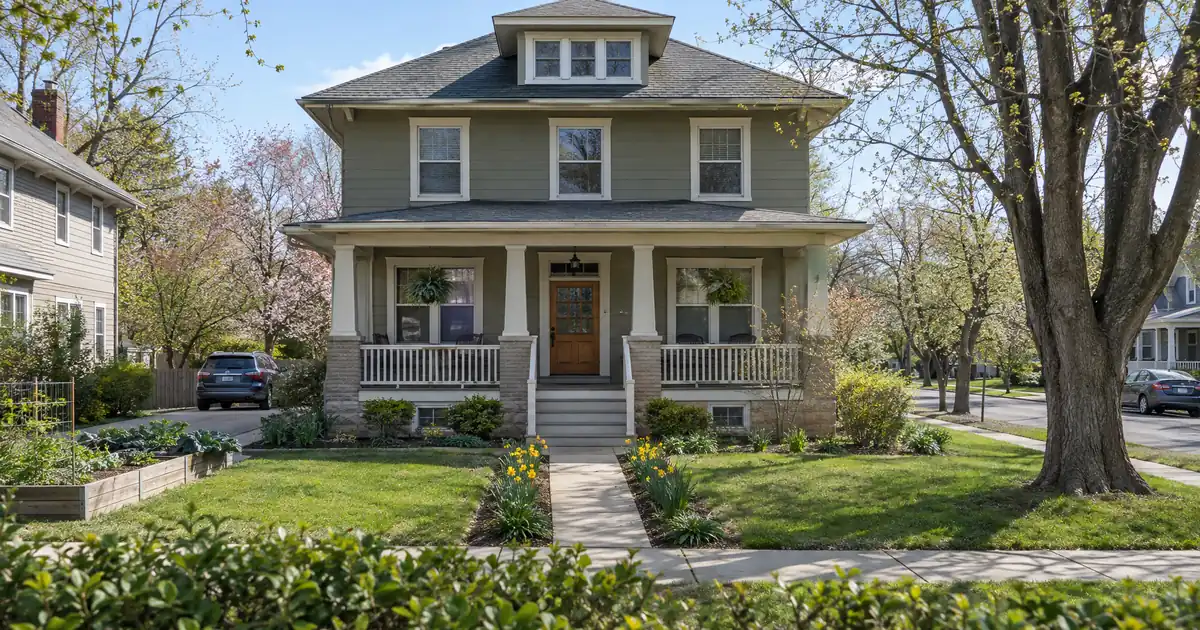
The Quick Read: A flood zone does not create a different HELOC product; it adds an insurance condition and a few extra file steps to the same line, while your employment income, credit, and combined leverage are judged the same way whether the home sits inside or outside a mapped flood area. Think of it as one loan with an extra layer of paperwork and cost. The layer is manageable, but it needs planning.
- A home equity line of credit (HELOC) on a flood-zone home needs proof of flood coverage. A home outside the zone usually does not.
- A low first mortgage does not shrink the flood requirement. It only changes how much total debt the lender counts.
- Your W-2 documents, credit score, and debt-to-income ratio are reviewed identically in both cases.
- Across our wholesale network, the leverage ceiling depends on occupancy and credit tier, not on flood status.
- An LLC cannot hold title on these lines, flood zone or not.
The Honest Answer: Who Each Option Is For
The non-flood line is for the owner who wants the fewest moving parts. You submit the W-2 package, the lender values the home, and the file proceeds on credit, income, and combined loan-to-value (CLTV, which is all liens divided by the home’s value).
How large a line the equity supports.
An equity line is sized by combined loan-to-value, occupancy, and credit — not by rental coverage. Switch the occupancy or the credit band and the ceiling moves with it.
Investment-property lines require a 700 minimum credit score; second-home lines start at a 640 minimum and primary-residence lines at 600, and the combined-LTV ceiling steps down as the credit band drops on primary-residence and second-home lines and holds on investment-property lines; the line cap steps down on primary-residence lines and holds at every tier on investment-property and second-home lines.
A debt-to-income ratio above 45% requires 680+ credit. Profiles under 640 are limited to single-family homes. At least 75% of the approved line is drawn at closing. Ceilings, floors, and caps update from Lendmire’s centralized guideline source.
Line estimate
Illustrative estimate only — not a quote, Loan Estimate, approval, or commitment to lend. The rate is an editable assumption; equity-line pricing is variable through both the draw and repayment periods and never converts to fixed. Occupancy and credit drive the ceiling together: an investment property tops out at 70% combined LTV (minimum credit 700, line cap $500,000); a second home tops out at 90% combined LTV (minimum credit 640, line cap $500,000), with the ceiling stepping down as the credit band drops (the cap holds at every tier); a primary residence tops out at 90% combined LTV (minimum credit 600), and its $750,000 maximum line is available only at 75% combined LTV or below with a 700-or-better credit profile (720 on the longer-runway program) and a full appraisal. Lines above $500,000 require a full appraisal. Credit, debt-to-income, property type, and full underwriting review all affect the final line.
The flood-zone line is for the owner whose property is mapped in a high-risk area and who still wants to tap equity. You do not get to choose between the two. The map decides which one you are in. What you choose is whether the equity is worth the added premium and paperwork.
Brokers see the same pattern often. Borrowers with a small first mortgage have plenty of room on leverage, so the equity is rarely the problem. The flood file is usually slowed by insurance details, not by approval standards.
Side-by-Side
The table below describes the two cases. Pricing is left out on purpose, because it lives in the calculator and depends on the full file.
| Factor | Non-Flood Home | Flood-Zone Home |
|---|---|---|
| Review basis | Personal credit, income, DTI, CLTV | Same |
| W-2 documentation | Pay stubs, W-2s, bank statements | Same |
| Extra file items | None specific to flood | Flood determination, notice, policy page |
| Insurance condition | Lender discretion only | Federal mandate in participating communities |
| Coverage sizing | Not applicable unless lender asks | Lesser-of test on secured debt |
| Property types and vesting | Same eligibility, individual or revocable trust | Same eligibility, same vesting |
| Timeline | Standard file steps | Adds a step; depends on policy binding |
| Ongoing duties | None added | Annual renewal; policy must name lender |
Read the table by row. Eight rows, and five of them differ: extra file items, insurance condition, coverage sizing, timeline, and ongoing duties. The other three match. That is the whole story of the comparison.
What Stays the Same for a W-2 Owner
Underwriting does not care about flood status. It looks at you and your equity.
Most files start with recent pay stubs, two years of W-2s, and bank statements. Lenders add mortgage, tax, and insurance documents for the property. Debt-to-income (DTI, your monthly debts divided by your monthly income) tops out at 50% on the network’s lines. It drops to 45% for credit profiles from 600 to 679. A ratio above 45% needs a 680 score. The lender reviews your file on the interest-only payment at the maximum draw, so budget with that in mind. Credit is a single-bureau score keyed to the primary wage earner. The report must be no more than 90 days old at closing.
Leverage depends on occupancy and credit tier. Subject to lender guidelines, the network’s ceilings look like this:
- Primary residence: The ceiling reaches 90% CLTV only at a 720 or better credit profile, on lines up to $500,000. Lower tiers step down. A 700 score pairs with 85% on lines up to $500,000, and a 640 score with 80%.
- Second home: The 90% ceiling also exists only at 720 or better, on lines up to $500,000. The minimum score is 640.
- Investment property: The ceiling is 70% CLTV, with a 700 minimum score and a line cap of $500,000.
Lines run from $25,000 to $750,000. Anything above $500,000 is primary-residence only. Lines at or below $500,000 ordinarily use automated valuation instead of a traditional appraisal. A full appraisal is required above $500,000, and you can request one at any size.
A low first mortgage is the real advantage here. CLTV counts the first balance plus the new line, so a small first balance leaves room under every ceiling above. The line can sit in first or second lien position.
Two draw structures exist on primary residences and second homes. The shorter-runway one has a 3-year interest-only draw followed by a 17-year repayment. Investment lines use the 5-year structure only. At least 75% of the line is drawn at closing. That matters for flood coverage, as the next section shows.
Eligible properties include single-family homes, 2-4 units, PUDs, townhomes, and condos, including non-warrantable ones. Manufactured homes, co-ops, condotels, log homes, commercial, mixed-use, and agricultural-zoned properties are not offered. Title must sit with you personally or in a revocable living trust. Lendmire places these lines in 16 states, which is narrower than its 41-market DSCR footprint.
What the Flood Zone Actually Adds
When a home sits in a Special Flood Hazard Area (a high-risk zone on the federal flood map) and the community participates in the national flood program, the lender must see flood insurance. The trigger is the map, not your flood history. A new HELOC counts as a new loan event, so a home that closed years ago without flood coverage can face the requirement now. Maps also get redrawn over time.
The OCC Comptroller’s Handbook on the Flood Disaster Protection Act says second mortgages and home equity loans can fall under the requirement. It also says a line of credit may need coverage sized to the full line at origination. The minimum is the lesser of three figures: the outstanding principal (the line amount, for a HELOC), the federal maximum for that structure type, or the building’s insurable value. Federal maximums are $250,000 for a residential structure and $100,000 for contents.
Here is what that means for you. A small first mortgage does not erase the requirement, because the line adds to the secured debt. Lowering the first balance only reduces the total debt counted. In many files the federal maximum or the building value ends up as the binding number, though that depends on your numbers.
Four more mechanics matter:
- Policy source: The coverage can come from the national program or a private insurer. A private policy must be at least as broad as the standard federal policy, per the same OCC handbook.
- One policy per building: The FDIC compliance manual says only one federal policy can be issued per building. Your existing policy, if any, must be confirmed to cover both liens and endorsed to name the new lender.
- More than the minimum: The same manual confirms a lender can require more coverage than the regulatory minimum.
- Building and contents only: Flood coverage protects the structure and belongings, not the land. Coverage sized to satisfy a lender can also fall short of full rebuild cost.
Condos and larger multi-unit buildings follow different federal limits. The FDIC manual lists higher limits for certain residential buildings and non-residential structures. If your property is a condo or a 2-4 unit, have the insurance agent confirm the applicable limit before you apply.
When the Non-Flood Line Is the Better Fit
This is the cleaner file, and it fits several kinds of owners.
You want the smallest document stack. With no determination form, notice, or declarations page, there are fewer things to go wrong. The W-2 package and the valuation carry the file.
You are borrowing a modest amount for a defined need. Premium costs matter most when the borrowed amount is small. A home outside the zone avoids a recurring cost entirely.
Your closing depends on a date. Outside a flood zone, nothing depends on a policy being bound first. The file has fewer outside parties.
You are choosing between two properties. Say you own two homes with similar equity, one mapped in a flood zone and one not. The non-flood home is usually the easier line to open. The line itself is identical. Only the extra steps differ.
A property outside the high-risk zone is not necessarily free of flood risk, though. A lender may still ask for flood coverage on its own policy, and many owners buy it voluntarily.
When the Flood-Zone Line Is the Better Fit
Sometimes the flood-zone home is the only home you have, and the equity is there for a reason. The line can still make sense.
The equity use outweighs the premium. Consider an owner with a very small first mortgage and a large renovation planned on a flood-zone primary residence. The ongoing premium may be small next to the value of the project. A line that funds a flood-mitigation upgrade can partly pay for itself, though that depends on the insurer.
You already carry a flood policy. If your first lender required coverage, you may only need an endorsement and a limits check. The extra work is then light.
You can document the borrower side cleanly. The flood file adds items to the stack, but it does not change who you are. A W-2 owner with steady pay stubs and a mid-to-high credit profile has the same standing in both files.
You may be able to dispute the zone. A map amendment is a federal letter for land on naturally high ground (or on fill) that removes the federal purchase mandate. It needs survey data from you, and the lender can still require coverage afterward. Treat it as a possible way to lower the requirement, not a way out of it.
One more flood-specific risk is the federal flood program itself. When its authorization lapses, new and renewal policies can stop. Insurance Journal reported that a recent lapse halted new and renewal policies, and the National Association of Realtors estimated about 1,300 home sales per day were affected. A flood-zone file depends on a policy being in place. If new federal policies are paused, a private policy may be the workable route. Ask your agent about private options at the start.
When an LLC Owns the Rental
An LLC cannot hold title on these lines. Corporations, partnerships, and irrevocable, blind, or land trusts cannot either. A rental deeded to an LLC needs a vesting change or a different loan type, depending on program guidelines.
The usual alternative is a DSCR cash-out refinance. It qualifies primarily on property-level rental income covering the payment, subject to lender guidelines. Cash-out leverage tops out around 75% LTV on standard rentals across most of the network, and about 6 months of seasoning is the common expectation. The complete DSCR loans guide covers how that math works.
A flood-zone rental carries one extra consideration. The flood premium is part of the monthly obligation, so it lowers the coverage ratio. That is an inference from how the ratio works, and it is worth running before you commit. Clearing a coverage ratio is also not the same as positive cash flow. Repairs, vacancy, and management sit outside that calculation.
Key Terms Defined
HELOC: A revolving line of credit secured by your home, where you draw funds as needed up to a limit.
CLTV (combined loan-to-value): All loans secured by the property, added together and divided by its value.
Special Flood Hazard Area: A zone on the federal flood map where the risk is high enough to trigger mandatory insurance for federally regulated lenders.
Flood determination: A standard form the lender completes to check whether the building sits in a mapped high-risk zone.
Lesser-of test: The rule that sets minimum flood coverage at the smallest of the secured debt, the federal maximum, or the building’s insurable value.
Second lien: A loan recorded behind another loan on the same property, which keeps your first mortgage in place.
Frequently Asked Questions
Does a HELOC on a flood-zone home need flood insurance?
Usually, yes. When the building is in a mapped high-risk zone and the community participates in the federal program, regulated lenders must require coverage. Many lenders require it by their own policy. A home outside the zone does not trigger the federal rule, though a lender may still ask for coverage.
If my first mortgage is small, is my flood coverage requirement small too?
Not necessarily. Coverage is sized against all secured debt, subject to the federal cap and the building’s insurable value. A smaller first balance lowers the total counted, but the new line still adds to it. Ask your insurance agent to confirm one policy covers both liens.
Can a private flood policy satisfy the lender?
Yes, if it is at least as broad as the standard federal policy, according to the OCC handbook. The lender still checks limits, effective dates, and the lender name on the policy.
Can I avoid the requirement by disputing my flood zone?
Sometimes you can lower it, but the lender may still require coverage. A map amendment can remove the federal mandate for land on naturally high ground or on fill. It needs survey or mapping data from you.
My rental is in an LLC and sits in a flood zone. Can I use a HELOC?
Not while the LLC holds title. These lines need individual or revocable-trust ownership. A vesting change or a DSCR cash-out refinance is the usual path, depending on program guidelines.
The Balanced Verdict
Neither option is better in the abstract. The non-flood line is simpler, and the flood-zone line is a bit heavier but fully workable. Your W-2 file, your credit tier, and your CLTV room drive approval in both. The flood zone adds cost and a process step.
Choose the non-flood line if you have a choice of properties and equity is similar. Choose the flood-zone line if the equity serves a purpose that justifies the premium, and start the insurance conversation first. Tax treatment varies; consult a qualified professional.
If you are considering a home equity line and want to see how the numbers work, Lendmire can help you compare HELOC options based on the property, the equity available, credit profile, combined leverage, and your goals. Call 828-256-2183 to talk through your file. Every figure here is subject to lender guidelines and full file review, and nothing here is a commitment to lend.
A mapped flood zone changes what you owe the insurer, but it does not change what the lender needs to know about you.
About Lendmire
Lendmire — NMLS# 2371349 — is a mortgage broker that arranges home equity lines of credit in its 16 full-service states through wholesale lenders, on primary residences, second homes and investment properties. Every line is subject to the lender’s guidelines and full underwriting. Scotsman Guide named Lendmire a Top Mortgage Workplace in both 2025 and 2026.
Investors who want the broader program framework can review how DSCR loans work.
Get Started
Ready to find the right loan for you?
In about 30 seconds you can review financing options available for your home or investment property. No commitment required.
Informational only. Not a Loan Estimate, approval, or commitment to lend. Program availability and eligibility are subject to lender guidelines, credit approval, property review, and underwriting.
References
1. OCC Comptroller’s Handbook – Flood Disaster Protection Act
2. FDIC Consumer Compliance Manual, Section V-6 (PDF)
3. Insurance Journal – NFIP lapse coverage
This article is part of Lendmire’s home equity line of credit program — full qualification details, guidelines, and scenarios live on the program page.
Related reading: Why Low-Yield Index Portfolios Are Harder to Use for a Jumbo Loan · Repriced DSCR Lender vs Broker for a First-Time Landlord · How a DSCR Lender Counts Unpaid Rent for an Out-of-State Owner
Brandon Miller
Founder & CEO, Mortgage Loan Originator, Lendmire LLC
- Mortgage Loan Originator · NMLS# 1129696 · Verify on NMLS Consumer Access
- North Carolina Real Estate Broker · License# 343312 · Verify on NCREC
- North Carolina Insurance Producer · License# 19053198 · Property, Casualty, Life, Health · Verify on NAIC SBS
- Lendmire LLC · Firm NMLS# 2371349 · Verify firm licensure
Disclosure information. Lendmire is a state-licensed mortgage brokerage under NMLS# 2371349. Lendmire is not a depository institution, direct lender, or financial advisor — all loans referenced are placed through wholesale lender partners and are subject to each lender's underwriting standards. This article is provided for general informational purposes and is not a commitment to lend, nor does it constitute financial, legal, or tax advice. Loan programs, terms, rates, and qualification standards change without notice and depend on borrower profile, property type, and the state in which the subject property is located. Equal Housing Opportunity provider. NMLS Consumer Access: nmlsconsumeraccess.org.