
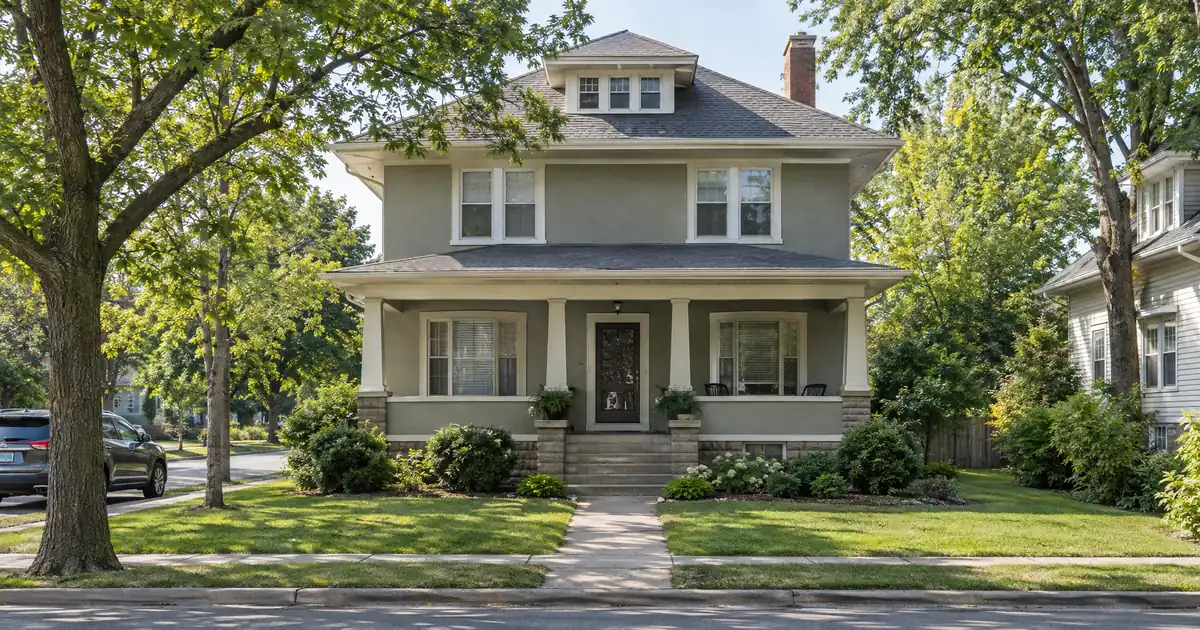
The Quick Read: Retirees qualify on the property, not on a paycheck. Most programs we place files with review whether the rent covers the new payment, subject to lender guidelines. Cash-out leverage tops out around 75% of appraised value. Strong credit, about six months of ownership, and cash reserves round out the file.
Key Takeaways
- Retirement is not a program category. The property, the rent, the equity, your credit, and your reserves decide the file.
- Cash-out refinances on standard rentals generally top out around 75% loan-to-value.
- The property must be a true rental. If you live in it, this path usually closes.
- A bigger loan means a bigger payment, so coverage drops as you pull more cash.
- Passing the rent test is not the same as positive cash flow. Plan the cushion yourself.
Do You Need Income to Qualify in Retirement?
Not in the way a bank expects. On a DSCR loan, the lender asks whether the rent covers the full monthly payment. It does not ask what a W-2 says. That is why retirees living on Social Security, a pension, or portfolio draws fit this structure so well.
DSCR Cash-Out Calculator
Run the cash-out numbers in your market
Rate source: Freddie Mac 30-yr average via FRED® — Federal Reserve Bank of St. Louis · effective Oct 8, 2026
Prefilled with starting assumptions — enter your property’s value, balance, taxes, and insurance for a more accurate picture.
Program parameters update from Lendmire’s centralized guideline source. Taxes and insurance are editable estimates.
As of Oct 8, 2026 · General Freddie Mac market benchmark, not a Lendmire loan offer. Property value, balance, taxes, and insurance are editable estimates. Maximum loan-to-value varies by lender, program, property type, and seasoning. Not a Loan Estimate, approval, or commitment to lend. Program availability and eligibility are subject to lender guidelines, credit approval, property review, and underwriting.
You still need to show a sound file. Expect a credit report, a lease or rent schedule, insurance and tax figures, an appraisal, and statements for the reserve funds. If the property sits in an LLC, add the entity documents. Pay stubs and traditional personal-income documentation are generally not part of the package.
Lendmire’s piece on how to cash out a rental without showing personal income walks through that document trail in more detail.
How Does Underwriting Treat a Retiree’s Rental, Step by Step?
Underwriting runs in a fixed order, and the first gate is occupancy. Here is how a file moves through the network.
1. Confirm it is a true rental. A pure rental is a candidate. A beach house you also live in likely is not. Occupancy and actual use control the outcome.
2. Order the appraisal. The appraised value is the number your loan is sized against.
3. Run two tests together. One is leverage (how much equity you keep). The other is coverage (how well rent covers the payment). The tighter test sets your cash.
4. Calculate the ratio. Monthly rent divided by the full monthly obligation. Select programs start at 1.00, where rent just equals the payment. Stronger ratios usually open better pricing and leverage.
5. Check seasoning. Most programs want about six months of ownership, measured from title recording. This is lender policy, not law.
6. Check reserves. Reserves commonly run around six months of payments, stepping up to about nine months on loans above $1,500,000.
7. Close and net the cash. Payoff, costs, reserves set aside, and any prepayment charge all come out before you see a dollar.
Credit matters too. A 620 floor exists in parts of the network. Most programs want around 660. A 700 or better score unlocks the strongest leverage tiers. Loan sizes run up to $3,000,000 on standard programs, subject to lender guidelines.
One note on property type. Manufactured homes, log homes, and barndominiums fall outside these programs. They are not offered.
What Does the Business-Purpose Rule Mean for You?
DSCR loans are designed for non-owner-occupied investment properties. Because they are business-purpose investor loans, they are reviewed differently from a standard owner-occupied mortgage.
The federal truth-in-lending examination procedures exempt credit extended primarily for a business purpose. The RESPA rule follows the same definition. Here is the practical catch: business-purpose status is not automatic. It turns on how you actually use the property. A rental you occupy part of the year invites questions.
How Much Cash Can You Actually Pull?
Less than the equity on paper. Run the logic in percentages. Say your rental appraises at 100% of value and you owe 40% of it. At a 75% ceiling, the new loan can reach 75% of value. Gross cash is the 35-point gap, before payoff costs, closing costs, and any reserves you must hold back.
Now the coverage side. Say rent covers your current payment about 2.0x. Raise the balance from 40% to 75% of value and that cushion shrinks toward the low 1.1s (roughly, since taxes and insurance do not scale with the loan). Still above 1.00. But the margin is thin.
That is the core trade-off. Equity and rent are tested together, and the tighter one wins. Equity available is never a guaranteed figure.
A short word on coverage below 1.00. A separate path, available through select lenders in the network, takes coverage below 1.00 with leverage and terms adjusted. No-ratio structures are available only through select lenders, generally for borrowers who already own a primary residence. Neither is the default.
Stress-Testing the Rental on Fixed Income
Run this before you apply. A retiree has no paycheck to absorb a bad stretch. Start with your coverage ratio and cut the rent.
| Rent drop | Coverage from a 1.25x start |
|---|---|
| None | 1.25x |
| 10% lower | about 1.13x |
| 20% lower | about 1.00x |
The lender’s ratio compares rent to the payment only. Repairs, vacancy, management, utilities, and capital expenses sit outside the calculation. Clearing 1.00 is not positive cash flow. Not even close, sometimes.
Prepayment terms matter here too. A flat penalty stays the same each year. A step-down penalty shrinks over time. If you might sell or refinance again, that structure affects your exit cost.
Where the General Rule Breaks
You want to live there part-time. Business-purpose financing likely closes. A personal-mortgage lender using asset depletion becomes the relevant tool.
Asset depletion versus DSCR. DSCR qualifies the property. Asset depletion qualifies the person, dividing liquid assets over a set number of months to create a monthly income figure. Retirement accounts are often counted at a reduced share for younger borrowers, since early withdrawal is not penalty-free. Some programs blend the two when rent alone falls short.
Recent purchase. Bought for cash last quarter? Seasoning may limit you to your purchase price rather than the new appraised value. Policies vary by lender.
Entity or trust ownership. LLC-owned properties are eligible on most programs, depending on program guidelines. See Lendmire’s piece on whether an LLC-held short-term rental can qualify for a cash-out for that structure. Trusts are less uniform. A credit union trade group notes that a consumer-purpose loan to a trust can still fall under consumer rules. Vesting is decided program by program.
What happens to the loan at death. That turns on the loan documents and how title is held. Ask an estate attorney before you close.
Your Options Compared
| Option | What gets qualified | Main trade-off |
|---|---|---|
| DSCR cash-out refinance | The property’s rent | Bigger payment, thinner cushion |
| Asset depletion (personal lender) | Your liquid assets | Usually needs owner-occupancy |
| Home equity line | Varies by lender | Limits on investment properties |
| Selling the rental | Nothing | You lose the property and its rent |
The honest question is whether you want to keep the rent. If yes, a refinance converts equity to liquidity while the property keeps working. If the payment would squeeze you, selling may be cleaner. Genuine toss-up for many retirees.
Common uses of proceeds include acquisitions, renovations, retiring bridge debt, and building reserves. Tax treatment can depend on how the funds are used and how the property is held; investors should keep clear records and speak with a qualified tax professional before relying on any deduction.
Retiree Readiness Checklist
1. Confirm the property is a true rental with no personal occupancy.
2. Gather the lease or rent schedule.
3. Pull insurance and tax figures.
4. Check your credit report for errors.
5. Document reserves in accessible accounts.
6. Collect entity paperwork if an LLC holds title.
7. Count your months of ownership.
8. Stress-test the rent before you apply.
Common Mistakes
- Borrowing the maximum to supplement income, then finding the payment too heavy.
- Treating a passing ratio as proof of positive cash flow.
- Ignoring the prepayment structure.
- Assuming a second home you also use qualifies.
- Forgetting that payoff, costs, and reserves shrink the net.
Key Terms Defined
DSCR (debt service coverage ratio): the property’s monthly rent divided by its full monthly debt obligation.
PITIA: principal, interest, taxes, insurance, and association dues, the full payment the ratio is measured against.
LTV (loan-to-value): the loan amount as a percentage of appraised value.
Seasoning: the ownership period a lender wants before it sizes a refinance off the new appraised value.
Reserves: liquid funds, counted in months of payments, that you must hold after closing.
Asset depletion: a method that turns liquid assets into a monthly income figure by dividing them over a set number of months.
Prepayment penalty: a fee for paying off the loan early, either flat or stepping down over time.
Frequently Asked Questions
Is there an age limit for a DSCR cash-out refinance?
Retirement is not a program category. Lenders in the network review the property, the rent, the equity, your credit, and your reserves. Specifics vary by lender, so ask before you apply.
Can I qualify with no job at all?
Yes, on a true rental. The file qualifies primarily on property-level rental income covering the payment, subject to lender guidelines. You still need credit, reserves, and equity.
Do retirement accounts count as reserves?
Often they can, but lenders differ. Withdrawing from a retirement account may trigger taxes or penalties, so confirm treatment with the lender and a tax professional first.
What if my rent barely covers the payment?
A lower loan amount lifts the ratio. Select lenders in the network also offer sub-1.00 coverage with leverage and terms adjusted. The stress test above shows how little room you have.
Should I refinance or sell?
Refinance if you want to keep the rent and the payment fits comfortably. Sell if the larger payment would strain you. Compare your coverage cushion against your tolerance for risk.
What to Do Next
If you are buying or refinancing a rental property and want to see how the numbers work, Lendmire can help you compare DSCR loan options based on the property income, credit profile, leverage, and investor goals. Start with the complete DSCR loans guide, then run your own coverage ratio through the calculator, an illustrative estimate only.
About Lendmire
Lendmire (NMLS# 2371349) is a mortgage broker that arranges DSCR investor financing through select lenders in its wholesale network across 41 markets, including Washington, D.C. It does not lend directly. Programs change, every file is underwritten individually, and nothing here is a commitment to lend. Scotsman Guide named Lendmire a Top Mortgage Workplace in both 2025 and 2026.
Investors weighing their equity options can start with Lendmire’s guide to cash-out refinance on an investment property.
Get Started
Ready to find the right loan for you?
In about 30 seconds you can review financing options available for your investment property. No commitment required.
Informational only. Not a Loan Estimate, approval, or commitment to lend. Program availability and eligibility are subject to lender guidelines, credit approval, property review, and underwriting.
References
1. CFPB TILA examination procedures
2. CFPB Regulation X, 12 CFR 1024.5
3. America’s Credit Unions, regulations and business loans
This article is part of Lendmire’s investment property cash-out refinance program — full qualification details, guidelines, and scenarios live on the program page.
Related reading: Lower vs Higher LTV DSCR Cash-Out: Which Nets More After Pricing · DSCR Cash-Out Seasoning Rules for a Home Awarded in a Divorce · Rental HELOC vs Home HELOC Equity Released at the Same Value
Brandon Miller
Founder & CEO, Mortgage Loan Originator, Lendmire LLC
- Mortgage Loan Originator · NMLS# 1129696 · Verify on NMLS Consumer Access
- North Carolina Real Estate Broker · License# 343312 · Verify on NCREC
- North Carolina Insurance Producer · License# 19053198 · Property, Casualty, Life, Health · Verify on NAIC SBS
- Lendmire LLC · Firm NMLS# 2371349 · Verify firm licensure
Required disclosures. Lendmire (NMLS# 2371349) operates as a licensed mortgage broker, not a direct lender or depository. The discussion in this article is general in nature and should not be relied upon as financial, legal, or tax advice — every investment scenario is unique and should be reviewed by a qualified professional. Any loan inquiry is subject to lender underwriting, and this article is not a commitment to lend or a guarantee of approval. Mortgage rates, loan terms, and program guidelines vary by borrower, property, and state, and may change without notice. Equal Housing Opportunity. Verify licensure at NMLS Consumer Access.