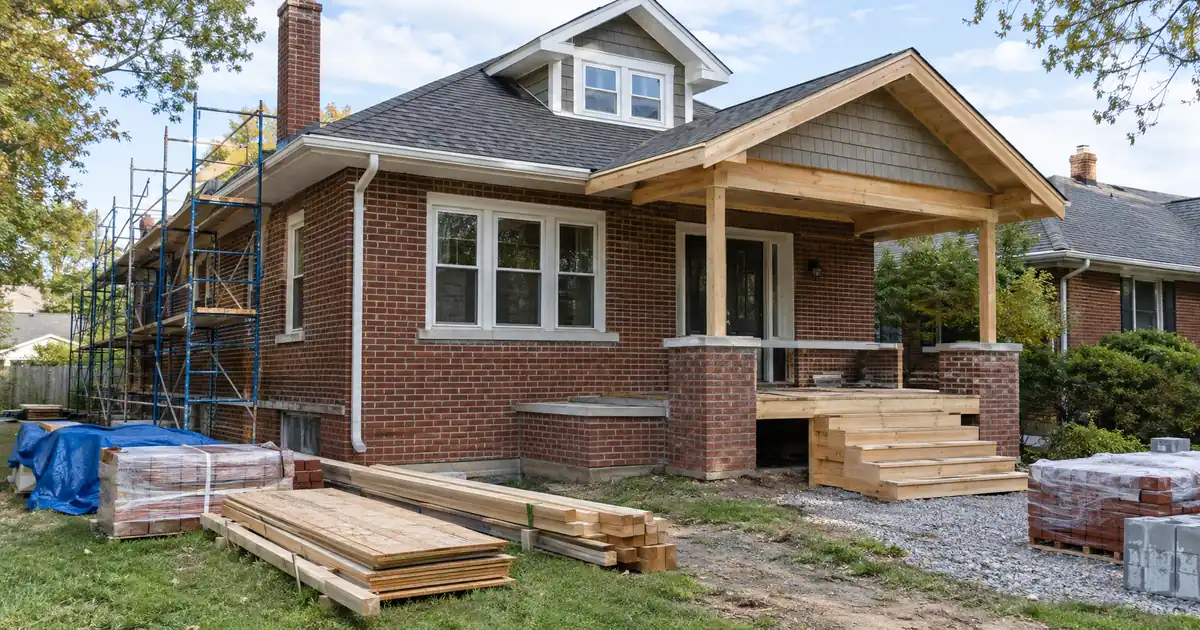
Founder Refinance A Rehab Into A DSCR Loan — The Quick Read: Sometimes, but not automatically. If the refinance only recovers what you already put into the property, most programs skip the seasoning wait entirely. If you’re pulling out fresh equity from a post-rehab appraisal, a real ownership-timeline requirement usually kicks in — though a handful of paths, including delayed financing, can shorten it.
That’s the honest answer. Now let’s get into why it works this way, because the mechanics matter more than the headline.
DSCR Calculator
Run the numbers in your market
Rate source: Freddie Mac 30-yr average via FRED® — Federal Reserve Bank of St. Louis · effective Sep 17, 2026
Prefilled with local estimates — enter your own rent or nightly figures, taxes, insurance, and HOA for a more accurate picture.
Program parameters update from Lendmire’s centralized guideline source. Taxes and insurance are editable estimates.
As of Sep 17, 2026 · General Freddie Mac market benchmark, not a Lendmire loan offer. Rent, nightly rate, occupancy, taxes, and insurance are editable estimates. Short-term rental figures are estimates only and vary significantly by season, property type, management approach, and local short-term-rental rules — confirm local regulations before relying on them. Qualifying income for short-term rentals varies by program — some use appraisal market rent, others use documented STR history or projections — and is confirmed in underwriting. Not a Loan Estimate, approval, or commitment to lend. Program availability and eligibility are subject to lender guidelines, credit approval, property review, and underwriting.
What “Seasoning” Actually Means Here
Seasoning is the minimum time a lender wants you to have owned a property before it will refinance based on the new, higher value. It’s not a law. It’s an underwriting overlay — a risk control each lender sets on its own.
DSCR loans are business-purpose, non-agency products. That means there’s no single federal rulebook forcing every lender to use the same clock. Across the wholesale network Lendmire places files with, seasoning windows vary lender to lender — some want a real ownership period before they’ll touch a cash-out request, others will look at a strong file sooner if the credit, reserves, and rehab documentation are solid.
Fannie Mae’s own conventional guidelines are the closest thing to an industry benchmark, even though they don’t bind DSCR underwriting at all. Fannie Mae requires at least one borrower to be on title for six months before a cash-out refinance disburses, unless a specific exception applies — including delayed financing for cash buyers. Non-QM lenders frequently build their own overlays around that same six-month reference point, but they’re free to shorten it, lengthen it, or waive it for the right file.
The Distinction That Decides Everything: Cash-Out vs. Rate-and-Term
Here’s the single biggest lever in this whole question. A refinance that only recovers your documented cost — purchase price plus rehab spend — is treated very differently than one that pulls out new equity above that number.
Rate-and-term refinance. No cash beyond what you invested. Many programs in Lendmire’s network don’t apply a seasoning gate at all here, or apply a short one, because the lender isn’t handing you money you haven’t already put in.
Cash-out refinance. You’re asking the lender to lend against the new, post-rehab appraised value — and hand you the difference. This is where the real ownership-timeline requirement shows up, because the lender is trusting an appraisal on a property they haven’t watched perform yet.
So a founder who just wants better terms on the rehab-funding debt, without extracting equity, usually has an easier and faster path than one trying to pull the appreciation out.
Where the No-Seasoning Path Actually Exists
Delayed financing is the real mechanism, and it exists for exactly one fact pattern: you paid all cash for the property. If you bought a distressed rehab property with cash — personally or through an entity — and self-funded the renovation, several lenders in Lendmire’s network will let you refinance without waiting out a standard title-seasoning clock, because you never financed the purchase in the first place. There’s nothing to season against.
This isn’t unlimited cash-out. You’ll still need documented source of funds, an arm’s-length purchase (buying from a business partner or related entity complicates this), and the loan amount still respects standard cash-out leverage caps. But for a founder who self-funded a rehab out of pocket, this is the closest thing to a genuine skip-the-clock path.
Outside that scenario, “no seasoning” as a blanket claim oversells what’s actually available. Most cash-out files still face some kind of ownership-timeline check, even if it’s shorter than six months.
Value: Cost Basis vs. Appraised Value
This is the part that trips up a lot of founders who assume seasoning is a binary yes/no gate. It isn’t. Even when a lender is willing to look at a file early, the value used to qualify is often the real limiter.
Picture an investor who put a modest amount into a distressed property and completed a full renovation. The appraisal comes back well above cost basis. If the file hasn’t cleared the lender’s ownership-timeline requirement, many programs will underwrite off the lower of appraised value or documented cost basis — not the fresh number. That caps how much equity you can actually pull, even if the lender is technically willing to close the loan today.
So there are really two separate questions: can you close the refinance, and can you use the new value. They don’t always move together.
Two Clocks, Not One
Ownership seasoning is measured from the day you took title — deed recording, not the day the contractor finished the punch list. A rehab that wrapped in month two doesn’t reset anything; the clock started at closing.
Appraisal timing is a separate issue. The appraiser values the property as it sits today, using the standard income-property forms — a rent schedule addendum on a single-unit rental, or the Fannie Mae Form 1025 Small Residential Income Property Appraisal Report format for a 2-4 unit building. That form is an industry-standard reporting structure, not evidence that agency rules govern DSCR underwriting — it’s simply the paperwork appraisers use across the business.
The appraisal can reflect full post-rehab value the day it’s ordered. Whether the lender will lend against that value depends on the seasoning question above. Don’t confuse “the appraisal came in high” with “I can borrow against it.”
Independent Gates: Coverage Ratio Doesn’t Buy You Time
A strong debt-service coverage number does nothing to shorten a seasoning shortfall. These are two separate underwriting tracks. A file with excellent coverage — rent well above the payment — that’s four months into ownership is still a four-month-old file. The lender isn’t trading one gate for the other.
This surprises founders who assume a great rental number solves every problem. It solves plenty of problems in DSCR underwriting. It doesn’t solve this one.
The LLC Transfer Trap
This is the mistake that costs founders the most time, and it’s avoidable with sequencing. Most DSCR lenders prefer entity borrowers — an LLC vesting the property, rather than you personally. So a common move is to buy the rehab property in your own name, then deed it into an LLC before refinancing.
Here’s the trap: some lenders look through that transfer and preserve your original acquisition date, since beneficial ownership didn’t change. Others treat the deed transfer as a brand-new acquisition and restart the clock from that date — meaning eight months of seasoning can become zero months overnight.
The fix is timing. If you know you’ll want to refinance around a certain point, transfer the property into the LLC early — in the first month or two of ownership — rather than waiting until right before the refinance. By the time you’re ready to apply, the entity has been on title for most of the holding period, not none of it.
Why This Matters More for a Founder Specifically
A founder or business owner running legitimate tax strategy often ends up with traditional personal-income documentation that understate real cash flow — depreciation, retirement contributions, equipment purchases, and reinvested profit all shrink taxable income on paper. That’s smart planning. It’s also exactly what disqualifies a founder from a conventional mortgage that qualifies off personal income documentation.
DSCR loans qualify primarily on the property’s own rental income covering the payment, subject to lender guidelines — not your 1040. Lendmire’s complete DSCR loans guide walks through the qualification logic in more depth if this is new territory. For a founder, that’s the whole appeal: the rehab property’s rent, not the founder’s adjusted gross income, drives the approval.
DSCR loans are business-purpose products for non-owner-occupied investment property. Because they’re underwritten as investor financing rather than owner-occupied mortgages, they’re reviewed under different rules than a standard home loan — which is also why they’re exempt from the consumer-mortgage disclosure timelines (like a Loan Estimate or Closing Disclosure three-day rule) that apply to owner-occupied lending.
What the Numbers Actually Look Like
Across Lendmire’s wholesale network, the size and leverage ladder for this kind of file scales with loan amount. On loans from $150,000 to $1 million, purchase and rate-and-term financing typically reach up to 80% loan-to-value, with cash-out capped around 75% on standard rental collateral (a 70% ceiling applies specifically to short-term-rental collateral at that tier), generally requiring credit in the 660 range. Move into the $1 million to $1.5 million band and leverage typically steps down to around 75% on purchase and rate-and-term, with cash-out nearer 70% and credit expectations closer to 700.
DSCR vs. conventional financing
Two common ways to finance an investment property in this market. They qualify you differently — here’s how investors weigh them.
Why investors choose it
- Qualifies on the property’s rental income — no personal tax returns, W-2s, or pay stubs needed to document income.
- No personal debt-to-income ceiling to clear, so existing mortgages and obligations don’t cap your borrowing the same way.
- Can be closed in an LLC, keeping the property inside a business entity.
- Built for scaling — not held to the limit on number of financed properties that conventional financing applies.
- Underwriting centers on the deal: generally qualifies when the rent covers the payment, a 1.00x coverage ratio being a common baseline (confirmed in underwriting).
- Designed specifically for investment property, including long-term and, where the program allows, short-term rentals.
Where it’s strong
- Often the lowest ongoing financing cost for a buyer who fully qualifies on personal income — a fit for a first property or a cost-first purchase.
Trade-offs for investors
- Requires full personal income documentation and must fit within a debt-to-income limit — salary, existing debts, and other mortgages all count.
- Typically held in your personal name rather than a business entity.
- Caps how many financed properties you can carry, which can become a ceiling as a portfolio grows.
- Evaluates you as a borrower as much as the property, which usually means more paperwork.
How investors usually choose: a first or single property often optimizes for the lowest financing cost; portfolio builders often optimize for leverage, vesting in an LLC, and scaling past conventional caps. The right answer depends on your goals, the property, and current guidelines — both paths run through select lenders in Lendmire’s wholesale network, with eligibility and terms confirmed in underwriting.
From $1.5 million up through $3 million, purchase and rate-and-term financing still typically reaches 75%, though cash-out leverage compresses further — often toward 60% — with credit generally expected around 720. Above $3 million, most programs in the network move to purchase and rate-and-term only, without a cash-out option, and leverage steps down again, with every file above $4 million reviewed case by case before submission — never a flat percentage promised upfront.
Coverage of 1.00 or better typically earns the fullest leverage available at a given size. Some select programs in the network will still consider files with coverage between roughly 0.75 and 0.99, though loan-to-value and terms adjust downward to offset that risk, subject to underwriting. Loan sizes on this ladder run from $150,000 up through $10 million on the portfolio side, with the standard DSCR program topping out at $3 million — this ladder exists specifically to carry stronger files past that ceiling.
Reserve expectations typically run six months of the property’s monthly obligation (interest, taxes, insurance — or just interest and taxes on interest-only structures), climbing to twelve months for a first-time real estate investor. Interest-only structuring is available on a 120-month runway within 30- and 40-year terms on many of these files, generally capped at 75% loan-to-value with coverage of 0.75 or better.
None of these figures are universal or guaranteed — they reflect typical ranges from select programs in Lendmire’s wholesale network, and every file is underwritten individually, subject to lender guidelines and program terms. If your file involves an LLC, note that program eligibility for entity-titled loans varies by lender and product.
Key Terms Defined
Seasoning — the minimum time a lender wants you to own a property, measured from deed recording, before it will refinance using a new appraised value.
DSCR (debt-service coverage ratio) — a ratio comparing the property’s rental income to its full monthly obligation; a ratio at or above 1.00 means the rent covers the payment.
Delayed financing — a refinance carve-out for buyers who paid all cash, letting them access equity without waiting through a standard seasoning window.
Cash-out refinance — a refinance where the new loan amount exceeds what you originally invested, extracting equity as loan proceeds.
Rate-and-term refinance — a refinance that doesn’t extract new equity, typically just replacing the existing loan balance under new terms.
LTV (loan-to-value) — the loan amount expressed as a percentage of the property’s value; lower LTV means more of your own money or equity in the deal.
Frequently Asked Questions
Can I refinance a rehab into a DSCR loan if the property isn’t leased yet?
Some programs in the network will still consider a file without an active lease, though qualification approach shifts — DSCR underwriting generally wants either signed lease income or a market-rent analysis from the appraisal. An unleased property can complicate, but doesn’t automatically block, a refinance; it depends on the specific program and file strength.
Does refinancing from one DSCR lender to another reset seasoning?
It depends on how the original loan is treated and whether the lender views your holding period as continuous. Refinancing between DSCR lenders is common, but each new lender applies its own seasoning overlay to the file, so it’s not a given that a shorter window carries over automatically.
What documentation proves my rehab costs for cost-basis calculations?
Typically invoices, contractor receipts, and before-and-after documentation showing the scope of work. The more organized this paperwork is going into underwriting, the easier it is for a lender to verify the cost basis figure used if seasoning hasn’t fully cleared.
Can a strong coverage ratio offset a seasoning shortfall?
No — these are independent underwriting checks. A high rent-to-payment ratio doesn’t shorten how long the title needs to season; a file with excellent coverage that’s only a few months into ownership is still evaluated on that ownership timeline.
What happens if my rehab took longer than expected?
The seasoning clock runs from your original purchase title-recording date, not from renovation completion, so a slow rehab doesn’t restart anything — it may actually help, since more time has passed on title by the time you’re ready to refinance.
If you’ve completed a rehab and are weighing whether to refinance now or wait out a seasoning window, Lendmire can help you compare DSCR loan options based on the property’s income, your credit profile, available leverage, and your broader investment goals. Reach Lendmire at 828-256-2183, or request a quote directly through Lendmire’s mortgage quote form.
Tax treatment can depend on how refinance proceeds are used and how the property is held; investors should keep clear records and speak with a qualified tax professional before relying on any deduction.
For current guidelines and terms, see Lendmire’s super jumbo DSCR loan programs page.
Self-employed borrowers can compare both super jumbo programs on Lendmire’s self-employed mortgages page.
About Lendmire
Lendmire, NMLS# 2371349, is a non-QM mortgage broker serving real estate investors in 40 markets, including Washington, D.C., through DSCR investor loan programs. Qualification is generally reviewed around the subject property’s rental income, not the borrower’s W-2 history — a practical fit for LLC-titled portfolios and self-employed investors. All scenarios remain subject to lender review and program guidelines. Two consecutive Scotsman Guide Top Mortgage Workplace recognitions (2025, 2026).
Lendmire’s Top Mortgage Workplace recognition is documented by Scotsman Guide 2025 Top Mortgage Workplace and Scotsman Guide 2026 Top Mortgage Workplace.
Get Started
Ready to find the right loan for you?
In about 30 seconds you can review financing options available for your home or investment property. No commitment required.
Informational only. Not a Loan Estimate, approval, or commitment to lend. Program availability and eligibility are subject to lender guidelines, credit approval, property review, and underwriting.
References
1. Fannie Mae Selling Guide — Cash-Out Refinance Transactions (B2-1.3-03)
2. Fannie Mae Form 1025 (Small Residential Income Property Appraisal Report)
Brandon Miller
Founder & CEO, Mortgage Loan Originator, Lendmire LLC
- Mortgage Loan Originator · NMLS# 1129696 · Verify on NMLS Consumer Access
- North Carolina Real Estate Broker · License# 343312 · Verify on NCREC
- North Carolina Insurance Producer · License# 19053198 · Property, Casualty, Life, Health · Verify on NAIC SBS
- Lendmire LLC · Firm NMLS# 2371349 · Verify firm licensure
Compliance and disclosures. Lendmire (NMLS# 2371349) is a licensed mortgage broker and is not a direct lender, depository institution, financial advisor, or tax professional. Content in this article is general market analysis and educational information — not financial, legal, or tax advice for any specific situation. Lendmire does not guarantee loan approval; every transaction is subject to underwriting by the funding lender. Mortgage pricing and loan program guidelines are subject to change at any time without notice and vary by borrower characteristics, property type, and state regulations. Lendmire complies with Equal Housing Opportunity. Licensure verification: NMLS Consumer Access.