
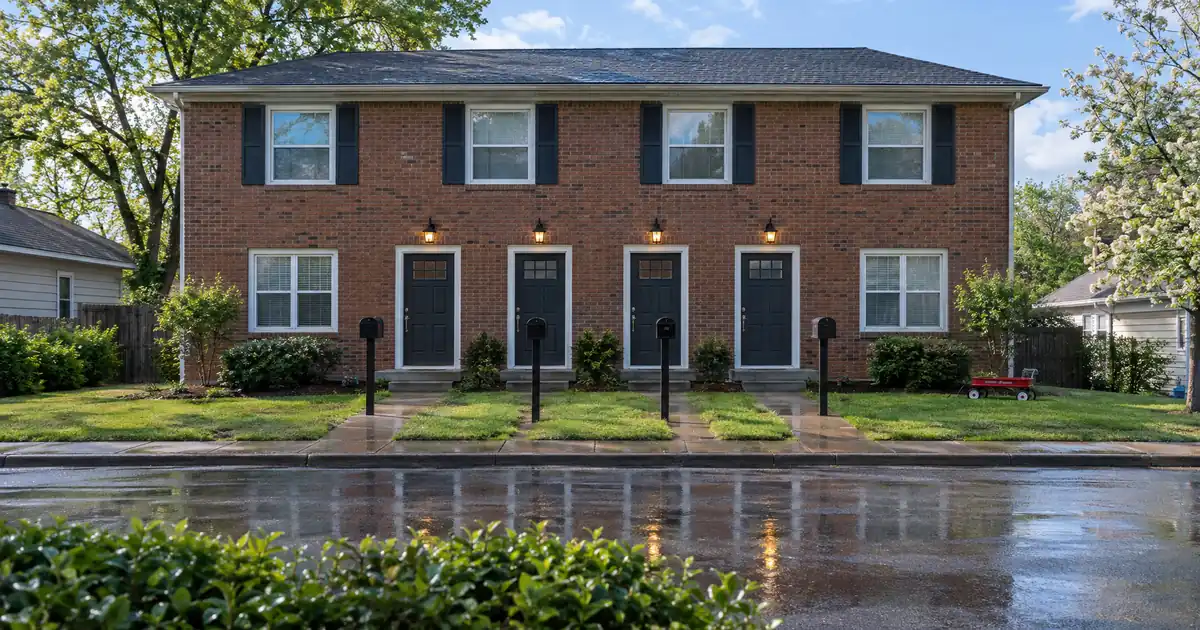
The Quick Read: Yes, three fourplexes can usually go under one portfolio DSCR loan, provided the pooled rent covers the pooled payment, each building is a non-owner-occupied 1-4 unit property, and the pool fits the program’s loan-size and credit limits, all subject to lender guidelines. Twelve doors in three buildings still count as three residential properties, not one commercial building.
- Count: The 30-year portfolio DSCR loan takes 2 to 20 properties under one note, so three buildings clear the property-count test.
- Size: Loan size runs roughly $300,000 to $5,000,000 on that structure. Three fourplexes usually land inside it.
- Coverage: The 1.00 floor is measured on the pool, so rent is added up across all twelve units.
- Leverage: Purchases and rate-and-term refinances run up to 80% of value. Cash-out stops at 75% of the pooled value.
- Credit: The portfolio programs set a 640 floor, and some structures want 680 or 720.
Three fourplexes sit in a sweet spot. They are big enough to justify a pooled note, and small enough that the pool is easy to explain to a lender. Whether the pool is the right structure is a separate question, and the answer depends on how the three buildings perform against each other.
Key Terms Defined
- Portfolio DSCR loan: One note secured by several rentals, also called a blanket or cross-collateralized loan. Each property backs the whole debt.
- Pooled coverage: Total rent across the pool divided by total PITIA (principal, interest, taxes, insurance, and any association dues).
- Cross-collateralization: A structure where every property secures the full balance, so trouble on one building can reach the others.
- Rent schedule: The appraiser’s per-unit rent opinion, or the lease-based rent roll, used to prove income.
- Bank portfolio loan: A different sense of the phrase. It means a loan a bank keeps on its own books, and it says nothing about collateral structure.
Are Fourplexes Eligible, and Do 12 Doors Change the Class?
A fourplex is residential. Industry convention treats four-unit homes as the top of the residential class, with five or more units moving into commercial. Owning three of them does not merge them into a twelve-unit apartment complex. Each building stays a 1-4 unit asset with its own title, its own appraisal, and its own rent schedule.
That matters because the 30-year portfolio DSCR loan accepts single-family, 2-4 unit, condo, and townhome collateral. Small multifamily of five or more units is a different story. It is eligible only inside the rental portfolio term loan, a separate structure for five or more rental properties or units under one loan. Your fourplexes do not need it.
Two exclusions apply to every pool. Owner-occupied property, mixed-use property, and commercial property cannot sit in it. If you live in one of the units, that building is out. Manufactured and mobile homes are not reviewable on any of these programs.
How Underwriting Combines Three Buildings
Underwriting tests the pool as one unit. Here is the sequence a lender follows across the network’s portfolio programs.
1. Appraise each building. Each fourplex is valued separately. Agency forms give a useful vocabulary here: Form 1025 covers the small residential income property report for 2-4 unit buildings, while Form 1007 is the rent schedule for one-unit homes. DSCR lenders set their own appraisal rules, but a fourplex generally follows the 2-4 unit path.
2. Document rent per unit. Every unit needs a lease or an appraiser-supported market rent. Small residential income reports are built from unit-level rent, then rolled into a building-level income picture.
3. Add up the rent. Rent from all twelve units goes in the numerator.
4. Add up the payment. PITIA on the single note, including any association dues, goes in the denominator.
5. Compare to the floor. On the 30-year portfolio DSCR loan, the pooled number needs to reach 1.00. Stronger buildings can offset weaker ones.
Run it with ratios only. Say Building One covers its share at about 1.25x, Building Two at about 1.15x, and Building Three at about 0.90x. If the pooled figure lands near 1.10x, the weak building rides along. Underwriting then tests the pooled coverage, the leverage, and the terms together. If the third building slides lower, the pool slides with it. That cuts both ways.
One honest caveat: clearing 1.00 is not the same as positive cash flow. Coverage compares rent to PITIA only. Repairs, vacancy, management, utilities, and capital expenses all sit outside the calculation, and a fourplex with a few vacant doors burns through all of them.
What About a Vacant Unit?
A vacant door drops to the appraiser’s market-rent figure instead of an actual lease. In a pool of twelve units, one vacancy is a rounding error on paper, but it still shaves the blended ratio. Two vacancies in the weakest building can turn a comfortable pool into a borderline one. Lease up what you can before the file goes in.
Pool, Three Separate Loans, or Something Else?
For three buildings, this is a real toss-up. The table lays out the tradeoffs.
| Factor | One pooled note | Three separate loans |
|---|---|---|
| Closings and payments | One of each | Three of each |
| Coverage test | Pooled, strong offsets weak | Each building alone |
| Default exposure | Cross-collateralized | Contained per building |
| Selling one building | Release terms apply | Pay off that loan only |
| Best fit | Uneven buildings | Three strong buildings |
The pooled note wins when one building is thin. Pooling lets the stronger two carry it. Three separate loans win when all three cover on their own, because each exit stays simple. You can sell, refinance, or cash out one fourplex without asking permission for the other two.
Corporate Finance Institute notes that cross-collateralized assets require every loan to stay in good standing, or the borrower risks default on all of them. That is the central risk. Investors who plan to sell one building in a couple of years should read the release terms before anything else.
Program Mechanics Across the Network
Across the wholesale network, the 30-year portfolio DSCR loan is the natural home for three fourplexes. Leverage runs up to 80% of value on purchase and rate-and-term. Terms are fixed or adjustable on a 30-year schedule, and an interest-only period is available. Lenders typically look for a 640 credit score, with some structures wanting 680 or 720. Some structures also require a special-purpose entity, usually an LLC, subject to lender program eligibility, and recourse loans carry a personal guarantee.
Cash-out has its own limits. It never exceeds 75% of the pooled value on standard rentals. Inside the first six months of ownership, the loan is also capped at 90% of total cost (purchase price plus documented improvements), and 100% of total cost from six to twelve months. The leverage ceiling still applies, so the loan is the lower of the two. After twelve months, the appraised value alone is the basis. A rate-and-term refinance is not subject to the cost-basis cap.
Reserves vary by lender, leverage, and loan size, commonly around 6 months of PITIA, stepping up for larger balances.
This is the broker’s-eye view that a single lender’s page cannot give. Lendmire arranges these loans through select lenders in a wholesale network across 41 markets, including Washington, D.C., so guidelines get compared across programs rather than assumed. Every file is underwritten individually, and nothing here is a commitment to lend. The complete DSCR loans guide covers the single-property basics.
Where Three-Fourplex Files Break
Pools rarely fail on the headline numbers. They fail on details. Here is what usually goes wrong.
| Problem | Why it matters | Fix |
|---|---|---|
| One weak building | Drags down pooled coverage | Lease up or lower leverage |
| Vesting mismatch | Different owners or titles complicate the note | Align ownership before applying |
| Fresh purchase cash-out | Cost-basis cap limits proceeds | Wait for seasoning |
| Missing leases | No lease means appraiser rent only | Gather leases and a rent roll |
| Pool below the loan minimum | Falls under the structure’s size floor | Consider separate loans |
Buildings in different markets are less of a problem than most investors assume. The rental portfolio term loan allows properties in several markets under one loan, though it is built for five or more properties or units, so it is a stretch for a small pool like this.
Document prep helps. Plan on leases and a rent roll for each building, entity documents if you hold in an LLC, insurance, and title. The more organized the per-building file, the fewer surprises at review.
When a Pool Is Not the Right Call
Skip the pool if all three fourplexes cover comfortably on their own and you expect to sell one soon. You would be accepting cross-collateral risk for coverage help you do not need. Skip it too if one building has title or vesting issues that could stall the whole file.
The pool also tends to be a one-time structure. Adding a fourth building later usually means a modification, a refinance of the whole pool, or a separate loan. Investors who plan to keep acquiring should think about that before locking in.
A larger down payment lowers the payment and can lift coverage, but it does not erase leverage caps, credit floors, or reserve rules. The strongest files clear both tests: enough equity and enough rent.
If your numbers are borderline, the tradeoffs are worth running before you commit. A pool can absorb a thin building. It cannot hide a weak one forever.
Frequently Asked Questions
Is three properties enough for a portfolio DSCR loan?
Yes, on the 30-year portfolio DSCR loan, which takes 2 to 20 properties under one note. The loan also has to fit the size range of roughly $300,000 to $5,000,000, subject to lender guidelines. Three fourplexes typically fit both tests.
Do 12 units count as 12 properties or 3?
Three. Each fourplex is one property with its own title and appraisal. The twelve doors matter for rent, since each unit needs a lease or supported market rent, but the property count is three.
Can I hold the buildings in an LLC?
Often yes, and some structures require a special-purpose entity, usually an LLC, depending on program guidelines. Recourse loans carry a personal guarantee. Confirm the vesting for all three buildings matches before applying.
Can I sell one fourplex later?
Sometimes. Partial releases, substitutions, and single-building sales follow the loan documents and the lender’s release terms. The release price runs above the building’s allocated balance, and the remaining pool must still cover its debt service.
Can I mix a fourplex with a single-family home in the same pool?
Generally yes on the 30-year structure, which accepts single-family, 2-4 unit, condo, and townhome collateral. Specific mixes depend on the lender, so ask before assuming.
If you are buying or refinancing a rental property and want to see how the numbers work, Lendmire can help you compare DSCR loan options based on the property income, credit profile, leverage, and investor goals. Tax treatment varies; consult a qualified professional.
About Lendmire
As a non-QM mortgage broker (NMLS# 2371349), Lendmire facilitates DSCR investor loans across 41 markets, including Washington, D.C. DSCR eligibility is generally reviewed around property-level rental income instead of personal income documentation, subject to lender guidelines, serving LLC-structured portfolios and self-employed borrowers who don’t fit conventional boxes. A two-time Scotsman Guide Top Mortgage Workplace (2025, 2026).
Get Started
Ready to find the right loan for you?
In about 30 seconds you can review financing options available for your investment property. No commitment required.
Informational only. Not a Loan Estimate, approval, or commitment to lend. Program availability and eligibility are subject to lender guidelines, credit approval, property review, and underwriting.
References
1. Homebuyer.com: Multi-unit home
2. Fannie Mae Selling Guide B4-1.2-01
3. NJ Real Estate Appraisal: Form 1025
4. Corporate Finance Institute: Cross collateralization
This article is part of Lendmire’s DSCR loan program — full qualification details, guidelines, and scenarios live on the program page.
Related reading: Can a Portfolio DSCR Loan Get You Past the Conventional Loan Cap? · How to Count Duplexes and Fourplexes Toward a DSCR Portfolio Loan · Does a Portfolio DSCR Loan Save Money Over One Loan per Rental?
Brandon Miller
Founder & CEO, Mortgage Loan Originator, Lendmire LLC
- Mortgage Loan Originator · NMLS# 1129696 · Verify on NMLS Consumer Access
- North Carolina Real Estate Broker · License# 343312 · Verify on NCREC
- North Carolina Insurance Producer · License# 19053198 · Property, Casualty, Life, Health · Verify on NAIC SBS
- Lendmire LLC · Firm NMLS# 2371349 · Verify firm licensure
Disclosure information. Lendmire is a state-licensed mortgage brokerage under NMLS# 2371349. Lendmire is not a depository institution, direct lender, or financial advisor — all loans referenced are placed through wholesale lender partners and are subject to each lender's underwriting standards. This article is provided for general informational purposes and is not a commitment to lend, nor does it constitute financial, legal, or tax advice. Loan programs, terms, rates, and qualification standards change without notice and depend on borrower profile, property type, and the state in which the subject property is located. Equal Housing Opportunity provider. NMLS Consumer Access: nmlsconsumeraccess.org.