
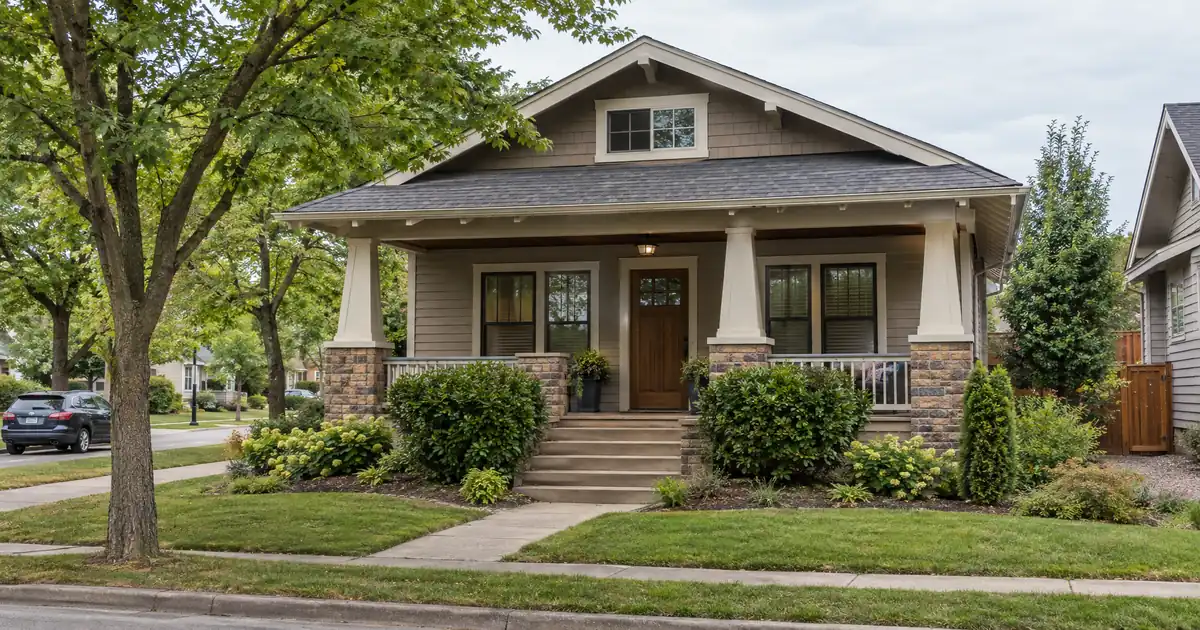
The Quick Read: Yes, with one condition: the cash can go to a business or a rental, but the home securing the VA loan has to be your primary residence, never the rental itself. VA focuses on the collateral, not on what you do with the proceeds.
- The home you refinance must be one you live in. A pure rental cannot be the collateral.
- Proceeds can seed a business or become the down payment on a rental. VA’s own pages describe uses as debt, school, improvements, and “other needs.”
- The rental you buy with that cash needs its own loan, and a DSCR loan is the usual fit.
- A VA cash-out is a funding tool, not a rental-financing tool. It also raises the obligation on the home you live in.
Here is the plain version. A VA-backed refinance that pays you cash swaps your current mortgage for a bigger VA-backed one and hands you the difference. VA’s cash-out page describes that cash as available for debt, school, home improvements, or other needs. It does not list a business or a rental down payment as approved, and it does not list them as banned. What it does require is that the house under the loan is your home.
DSCR Cash-Out Calculator
Run the cash-out numbers in your market
Rate source: Freddie Mac 30-yr average via FRED® — Federal Reserve Bank of St. Louis · effective Oct 15, 2026
Prefilled with starting assumptions — enter your property’s value, balance, taxes, and insurance for a more accurate picture.
Program parameters update from Lendmire’s centralized guideline source. Taxes and insurance are editable estimates.
As of Oct 15, 2026 · General Freddie Mac market benchmark, not a Lendmire loan offer. Property value, balance, taxes, and insurance are editable estimates. Maximum loan-to-value varies by lender, program, property type, and seasoning. Not a Loan Estimate, approval, or commitment to lend. Program availability and eligibility are subject to lender guidelines, credit approval, property review, and underwriting.
What Does VA Actually Restrict?
VA restricts the property, not the purpose. You certify that you will occupy the home as your residence. If you are on active duty and cannot occupy it, your spouse can certify instead. For a refinance, that certification speaks to present occupancy.
So the question “can I use it for a rental?” splits in two. Using the cash toward a rental purchase is fine. Taking a VA refinance against a property that is already a pure rental is not.
VA News notes the lump sum can go to many purposes, including repairs, tuition, and debt consolidation. The “any legal purpose” idea for business and investment use comes mostly from lender explainers rather than a VA text. In practice, lenders may ask what the money is for, so expect a conversation about it.
The Scenarios, Side by Side
| Your plan | Works with VA cash-out? | Why |
|---|---|---|
| Cash from your own home buys a rental elsewhere | Yes | Collateral is your residence |
| Cash from your own home seeds a business | Generally yes | VA looks at collateral, not use |
| Cash-out on a 2-4 unit you live in | Yes | You occupy one unit |
| Cash-out on a property you already rent out | No | Occupancy test fails |
| Pure rental you want to pull equity from | Use a DSCR cash-out | No occupancy test |
The multi-unit row is the legitimate house hack. A VA loan can cover up to four units if you live in one and rent the others. Military.com is clear that VA loans can’t be used for second homes, vacation homes, or short-term rentals you don’t live in.
How the Mechanics Run
A VA cash-out follows a fixed path. You need a Certificate of Eligibility, which is VA’s proof that you have earned the benefit. You also need an existing lien, since a paid-off home generally can’t use this product. A non-VA loan can be refinanced into VA, so you do not need a prior VA loan, a point NerdWallet also makes.
Then come the VA-specific tests. VA’s cash-out user guide explains that the system determines whether the loan is a Type I (no cash taken) or Type II (cash taken because the new loan exceeds the old one). At least one net tangible benefit must be found, which means the refinance has to leave you measurably better off. Paying off an existing VA loan also requires a seasoning certification, with at least 210 days between the two loan closings. That clock applies to VA-to-VA only.
A VA appraisal is required. Full underwriting follows, and your personal income and debt-to-income ratio decide the file. The future rental or business does not carry the loan.
Key Terms Defined
Certificate of Eligibility (COE): VA’s document confirming you qualify for the home loan benefit.
Net tangible benefit: A measurable improvement for you from the refinance, which VA requires.
Occupancy certification: Your signed statement that the home is, or will be, your residence.
DSCR (debt service coverage ratio): Monthly rent divided by the full monthly housing obligation of principal, interest, taxes, insurance, and any HOA dues.
Seasoning: The waiting period a lender wants before you refinance or cash out.
The Cost Side Most Veterans Skip
A VA cash-out is not free money. The funding fee is figured on the whole new loan, not just the cash you take, so pulling less cash does not shrink it. Run the net after fees and closing costs before you count on a number.
You also reset the loan on the home you live in. Taking cash out means a bigger obligation, and your personal debt-to-income ratio is underwritten for it. That can crowd out later approvals that depend on your income. If your current home loan is a good one, refinancing it only to raise rental down-payment cash may cost more than a home-equity line or other options. Compare before you commit.
Then stress-test the plan. If the business stalls or the rental sits vacant, the debt is secured by the home your family lives in. Losses do not stay inside the venture.
Funding the Rental Itself: Where DSCR Comes In
Once the cash is in hand, the rental still needs a loan. That is where a DSCR loan fits. DSCR loans are designed for non-owner-occupied investment properties. Because they are business-purpose investor loans, they are reviewed differently from a standard owner-occupied mortgage. The file qualifies primarily on property-level rental income covering the payment, subject to lender guidelines, and there is no occupancy test.
Across the wholesale network Lendmire works with, most purchase files land at 75%-80% LTV on an investment property, which means 20%-25% down. Select high-leverage programs reach 85% LTV on a purchase with roughly a 700+ score. Your VA cash-out proceeds are what can cover that down payment. Final terms depend on the lender’s guidelines, the property type, and the borrower’s complete credit picture.
Coverage is the other test. 1.00 is where many select programs start, and stronger ratios open better pricing and leverage. A separate select-lender path takes coverage below 1.00, with leverage and terms adjusted. Most programs want credit around 660, a 620 floor exists in parts of the network, and 700+ unlocks the strongest leverage tiers. Reserves commonly run around 6 months of PITIA (principal, interest, taxes, insurance, and HOA dues), though they vary by lender, leverage, and loan size. Loan sizes run up to $3,000,000 on standard programs. All of this is subject to lender guidelines and is not a commitment to lend.
One caution: clearing 1.00 is not the same as positive cash flow. DSCR compares rent to PITIA only. Repairs, vacancy, management, utilities, and capex sit outside the calculation.
For the full picture, Lendmire’s complete DSCR loans guide covers qualification step by step.
When the Property Is Already a Rental
Say you moved out, kept the home, and now it carries a VA loan. A VA cash-out is off the table because the occupancy test no longer passes. The usual alternative is a DSCR cash-out refinance of that rental. Cash-out tops out around 75% LTV on a standard rental across most of the network, with about 6 months of seasoning as the common expectation. Short-term-rental collateral generally runs lower, at about 70% on cash-out. Equity available depends on rent used for lender review, PITIA, reserves, and that ceiling, so it is never a guaranteed cash figure.
Active-duty moves are common here: after genuine occupancy, a PCS often leads to renting the home out. VA does not set a fixed 12-month minimum stay in its own text. Some lenders add that as an overlay, so ask yours.
Which Path Fits Your Goal?
A rough decision frame:
- Seeding a business: VA cash-out works if you accept your home as the collateral risk. Keep the funds separate and documented.
- Down payment on one rental: VA cash-out on your residence, then a DSCR purchase on the rental. Compare the cost against a home-equity line first.
- Pulling equity from a property you already rent: DSCR cash-out, not VA.
- Living in one unit of a 2-4 unit: VA purchase or cash-out can work, since you occupy the property.
Misstating occupancy is the one thing to avoid. A veteran who certifies occupancy they do not intend can face serious consequences. Tax treatment can depend on how the funds are used and how the property is held; investors should keep clear records and speak with a qualified tax professional before relying on any deduction.
Frequently Asked Questions
Can I use VA cash-out money as a down payment on a rental?
Yes. The cash itself is not restricted to a rental or a business, as long as the home securing the VA loan is your primary residence. The rental purchase then needs its own financing, and many investors use a DSCR purchase loan for it.
Can I VA cash-out refinance a house I already rent out?
No. VA requires you to certify occupancy of the collateral home. If the property is a pure rental, a DSCR cash-out refinance is the usual route, subject to seasoning, leverage caps, and lender guidelines.
Does taking less cash lower the funding fee?
Not in the way people expect. The fee applies to the whole new loan, so a smaller cash draw does not shrink it much.
Can I get a VA cash-out if I own my home free and clear?
Generally not. A VA cash-out refinance replaces an existing lien, so a paid-off home typically can’t use this product. A home-equity option may fit better.
Will my future rental income help me qualify for the VA cash-out?
Not on a single-family home you live in. Your personal income and debt-to-income ratio decide the file. Rental income is discussed for multi-unit purchases, not as a cash-out qualifier.
If you are buying or refinancing a rental property and want to see how the numbers work, Lendmire can help you compare DSCR loan options based on the property income, credit profile, leverage, and investor goals. Call 828-256-2183 or request a quote. Lendmire is a broker arranging financing through select lenders in its wholesale network, with DSCR programs in 41 markets, including Washington, D.C.
About Lendmire
Lendmire (NMLS# 2371349) is a mortgage brokerage built around DSCR investor lending, with programs available in 41 markets, including Washington, D.C. DSCR lenders commonly evaluate rental-income coverage instead of personal income paperwork, a practical fit for LLC-owned and multi-property investors. Terms vary by lender, property, leverage, and program. Scotsman Guide named Lendmire a Top Mortgage Workplace in both 2025 and 2026.
For the mechanics of pulling equity out of a rental property, see Lendmire’s guide to cash-out refinance on an investment property.
Get Started
Ready to find the right loan for you?
In about 30 seconds you can review financing options available for your investment property. No commitment required.
Informational only. Not a Loan Estimate, approval, or commitment to lend. Program availability and eligibility are subject to lender guidelines, credit approval, property review, and underwriting.
References
1. VA.gov: Cash-out refinance loan
2. VA News: You could be losing thousands on your home loan
3. Military.com: Buying a duplex or multi-family property with a VA loan
4. NerdWallet: How to refinance a VA loan
This article is part of Lendmire’s investment property cash-out refinance program — full qualification details, guidelines, and scenarios live on the program page.
Related reading: Should You Refinance a $3 Million Rental With DSCR Cash Out? · DSCR Cash-Out Refi vs HELOC on a DSCR-Financed Rental · Can You Cash Out a Vacant DSCR Rental on a Two-to-Four Unit?
Brandon Miller
Founder & CEO, Mortgage Loan Originator, Lendmire LLC
- Mortgage Loan Originator · NMLS# 1129696 · Verify on NMLS Consumer Access
- North Carolina Real Estate Broker · License# 343312 · Verify on NCREC
- North Carolina Insurance Producer · License# 19053198 · Property, Casualty, Life, Health · Verify on NAIC SBS
- Lendmire LLC · Firm NMLS# 2371349 · Verify firm licensure
Compliance and disclosures. Lendmire (NMLS# 2371349) is a licensed mortgage broker and is not a direct lender, depository institution, financial advisor, or tax professional. Content in this article is general market analysis and educational information — not financial, legal, or tax advice for any specific situation. Lendmire does not guarantee loan approval; every transaction is subject to underwriting by the funding lender. Mortgage pricing and loan program guidelines are subject to change at any time without notice and vary by borrower characteristics, property type, and state regulations. Lendmire complies with Equal Housing Opportunity. Licensure verification: NMLS Consumer Access.