
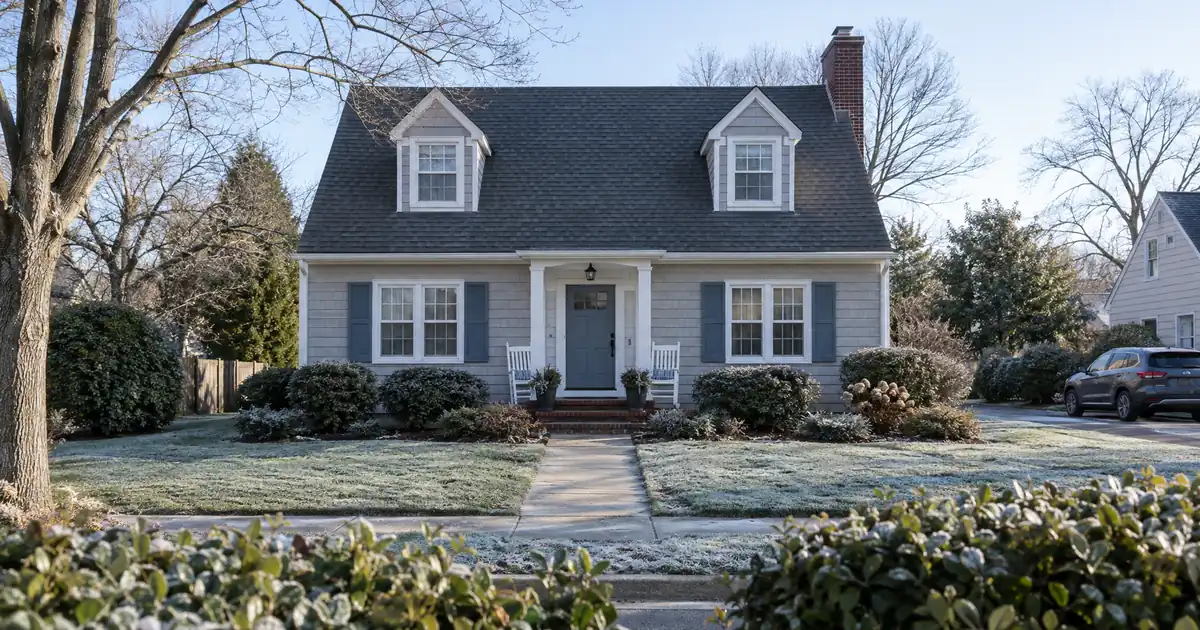
The Quick Read: Only when the rental is still habitable, insured and leased can a rent-qualified home equity line work, so a modest repair on an occupied property fits and a gutted, vacant one generally does not. Rent qualifies the line, not the owner’s personal income, but the property still has to be rentable, insured and valued by the lender.
- A DSCR HELOC is a standalone second lien behind the owner’s first mortgage, or a standalone first lien on a paid-off rental, subject to underwriting.
- A lease must be in place, and a two-to-four-unit building may have at most one vacant unit.
- The smallest line is $50,000, and at least 80% of it is drawn at closing, so a small repair bill is a poor fit.
- Heavy damage usually calls for insurance proceeds, a repair loan or a DSCR cash-out refinance instead.
Storm repair financing is a sequencing problem more than a product problem. The insurance claim, the repair, the lease and the lender’s valuation all have to line up, and a rent-qualified line only works if the property is already earning rent.
What Is a DSCR HELOC, Exactly?
A DSCR HELOC is a revolving line of credit secured by a one-to-four-unit rental. It is reviewed on the property’s rent rather than the owner’s income. Because it is a business loan on an investment property, it is reviewed differently from a standard owner-occupied mortgage.
The label covers more than one structure, so it helps to pin down what Lendmire places. Across the select programs in the wholesale network, the line comes in two forms:
- Second lien: The line sits behind the first mortgage you keep. The first loan is untouched, which matters if you hold a low-balance first mortgage you would rather not refinance.
- First lien: The line is the only loan, on a rental with no mortgage.
It is never closed together with a purchase, never a third lien, and never a line on your own home. Vesting in an LLC is allowed, subject to program terms. The members sign as guarantors.
The coverage test is simple to describe. Gross monthly rent divided by the qualifying payment must reach at least 1.10x. The qualifying payment is a fully amortizing payment on the entire credit limit, run at a stressed rate. A big line therefore tests harder than a small one, even if you plan to draw modestly. The lender’s own calculation governs the exact formula.
Now the storm. Every piece of that structure assumes a working rental.
Why Does Storm Damage Complicate a Rent-Qualified Line?
Storm damage collides with three requirements: a lease in place, a rent figure the appraiser can support, and a property the lender can value. The program relaxes the income test. It does not relax the condition, insurance or value tests.
Take the lease first. A lease in place is required. The rent that counts is the appraiser’s Form 1007 market rent or the lease, whichever is lower. A lease above market rent can count only when three months of rent receipts support it. If the storm emptied the unit, the file loses its income basis. A duplex with one vacant side may still work. A single-family rental with no tenant does not.
Then the valuation. Lines up to $400,000 use an automated valuation paired with a property inspection report. Larger lines need a full interior appraisal. Appraisal waivers are not accepted. An inspection that shows an open roof or water intrusion gives the lender a reason to pause, and an appraiser may report the value as it stands today instead of as repaired.
Insurance is the third gate. Hazard coverage has to protect both liens, and flood coverage is required where the property calls for it. A pending claim on an under-insured building is a weak file.
There is also a seasoning rule that catches storm-season buyers. A rental bought or refinanced inside the last six months is not eligible, and six months of ownership are required. A property you closed on shortly before the storm may simply be too new for this lane.
Reading the whole picture, most heavily damaged rentals do not qualify, and the owner needs a different tool for the repair phase. That does not make equity access impossible. It changes the order of operations.
Which Path Fits Which Level of Damage?
Match the financing to the condition of the building, not to the size of the bill. Minor damage on an occupied, insured rental can support an equity line or a cash-out refinance. Moderate damage often means waiting for repairs to finish. Uninhabitable damage points to insurance proceeds and repair financing first.
| Damage level | Rent picture | Likely path | Next move |
|---|---|---|---|
| Minor, still leased | Lease intact | DSCR HELOC or cash-out | Document damage, confirm coverage |
| Moderate, partly vacant | One unit empty at most | Repair first, then reassess | Finish work, re-lease |
| Uninhabitable | No lease income | Insurance, bridge or repair loan | Rebuild, stabilize, refinance |
A brokerage that sees many lenders’ guidelines notices a pattern here. Storm files arrive as equity requests, but the real constraint is almost always the condition of the property. The files that go smoothly are the ones where the owner repaired first, got the unit leased, and then asked for equity. Asking for equity first, while the roof is still tarped, is where files stall.
How Should You Sequence the Insurance Claim and the Financing?
Start the claim first and the financing second. Insurance proceeds are the primary source for covered damage, and the lender wants to see a settled claim, not a promise of one.
1. Report and document. Photograph everything and keep receipts for temporary repairs such as tarps and water extraction. Hold off on permanent repairs until the adjuster has seen the damage.
2. Learn how the policy pays. Replacement-cost coverage pays to repair at today’s prices, while actual-cash-value coverage pays after depreciation, as Consumer Reports explains. That difference can decide whether you have a funding gap at all.
3. Expect staged payments. Settlements often arrive in pieces, such as an advance, a main payment and later releases as work progresses. If a mortgage is in place, structural payments may be made out to both owner and lender, according to ABC17’s report on how storm claims work.
4. Repair and re-lease. The property earns its best underwriting position once the work is done and a tenant is in place.
5. Then choose the equity tool. With repairs complete, the line or cash-out is judged on a working rental.
The honest tradeoff is cost of carry. While the unit sits empty, the first mortgage still comes due. An owner with thin reserves may need the bridge or repair route even if a line is technically on the table, because the line cannot start until a lease exists.
What Do the Program Numbers Look Like on a Storm File?
On a second lien, combined loan-to-value (the first mortgage balance plus the new line, divided by value) tops out at 70%, with a 720 credit score or better and lines to $500,000. On a first lien, leverage reaches 75% LTV at 740 or better, and 70% at 700 to 739, on lines to $500,000. Lines above $500,000, up to $1,000,000, carry a 65% LTV ceiling. These are ceilings, subject to underwriting, never offers. Final terms depend on lender guidelines, property type, leverage, and the borrower’s complete credit picture.
Lines run from $50,000. At least 80% of the line is drawn at closing, and never less than $50,000, so the minimum draw is the minimum line. Later draws must be at least $5,000 each. The draw period is five years interest-only on the drawn balance, followed by a 25-year repayment period, with a 30-year maturity. The rate is variable.
Run the numbers on a modeled duplex. Both units are leased, the building is habitable, and wind took part of the roof. The first mortgage sits at roughly half of the property’s value. A 70% combined ceiling leaves up to about 20 points of value in new borrowing room. If the repair estimate is far below that room, the $50,000 minimum line may still exceed what the repair needs. A small patch job rarely justifies a line this size.
Now flip it. Say the repair bill is large and the first mortgage already sits near 65% of value. The remaining combined room is thin. A first-lien line on a paid-off rental has more breathing space, but the coverage test runs on the whole credit limit, and a bigger limit pressures the ratio. Rent that clears 1.10x on a modest line may not clear it on the maximum line.
Other eligibility limits matter on a storm file too:
- Rural-designated property, condotels, row homes and leaseholds sit outside the lane.
- Modular and log homes are outside it.
- A property listed for sale in the prior two months is outside it.
- A declining-market flag lowers the ceiling by five points.
- Condominiums, warrantable and non-warrantable, are eligible property types, and the leverage tiers above govern them.
This program is offered in 15 of Lendmire’s 16 licensed states, every licensed state except Tennessee. Those 15 are Alabama, California, Colorado, Florida, Georgia, Indiana, Michigan, Montana, New Mexico, North Carolina, Ohio, Pennsylvania, Texas, Virginia and Washington.
Borrowers need to be US citizens, permanent residents, or non-permanent residents with a Social Security number. Credit tiers apply, with a 720 minimum on a second lien and 700 on a first lien. Lenders look for no 30-day late payment on a mortgage in the last 12 months. No reserves are required, and the program caps exposure at five loans or $2,500,000 per borrower. Rent, lease, credit and valuation are all documented. Exact terms depend on lender and investor guidelines, credit profile, and property review.
HELOC, Cash-Out or Repair Loan: How Do They Compare?
For storm repairs, a DSCR cash-out refinance often fits better than a line. It delivers a single lump sum, it is not restricted to particular uses, and it works on the whole first mortgage. A line suits the owner who wants to keep a low-balance first loan and borrow only behind it.
| Option | Judged on | Fit for storm repairs | Main drawback |
|---|---|---|---|
| DSCR HELOC (second lien) | Rent, CLTV, credit | Minor damage, leased unit | Large minimum draw |
| DSCR HELOC (first lien) | Rent, LTV, credit | Paid-off rental, leased | Needs the property earning |
| DSCR cash-out refinance | Rent, LTV, condition | Repairs inside equity | Replaces the first mortgage |
| Bridge or repair loan | Property and plan | Heavy damage | Needs a later DSCR refinance |
The cash-out path has its own cost. It replaces a first mortgage you may like, so the choice turns on what that first loan looks like. Lendmire’s piece How to Use a DSCR Cash-Out for Storm Repairs on a Coastal Rental walks through that decision in detail.
Honestly, the line-versus-cash-out call is close when the first mortgage is cheap and the repair is mid-sized. If you would lose a valuable first mortgage by refinancing, the second lien earns a look. If the first mortgage is unremarkable, cash-out is simpler.
What If the Answer Is No?
If the property cannot support a rent-qualified line today, fund the repair another way, then refinance into DSCR once the unit is rentable. The new lender sizes the loan on its own appraisal and rent figure, not on your after-repair estimate.
Several sources can carry the repair phase:
- Insurance proceeds for covered damage, released in stages.
- Cash reserves, if the claim is slow or the deductible is large.
- A bridge or rehab loan, repaid by a DSCR refinance after stabilization. This is the standard fix for an uninhabitable rental.
- SBA disaster assistance. Owners of qualified rental properties may be eligible under SBA’s business physical disaster loan program, which requires a declared disaster area. The SBA reduces the eligible amount by insurance proceeds received and allows a mitigation increase of up to 20% of verified damage, per its program page. Its home disaster loans, by contrast, exclude vacation and secondary homes.
One agency contrast is worth a sentence. Fannie Mae has a disaster-related limited cash-out flexibility, but it applies to a principal residence only. It does not govern DSCR rentals.
Two cautions apply to every route. Defaulting on a line secured by an investment property can put the property at risk of foreclosure, and borrowed repair money adds to your total debt load. Also keep the closing statement and a clear record of each disbursement. Tax treatment varies; consult a qualified professional.
For the broader mechanics of how rent-qualified investor loans work, Lendmire’s complete DSCR loans guide is the place to start.
Where Most Investors Get It Wrong
The usual mistake is treating DSCR as a way around property problems. Here are the misreads that cost owners the most.
Assuming the line works like a consumer HELOC. A primary-home line is a different, owner-occupied product. A rental line is a narrower lane with its own eligibility list and a short state footprint.
Assuming ignored income means ignored condition. The coverage test replaces the personal income file. It does not replace the lease, the valuation or the insurance review.
Assuming 1.10x means the rental cash-flows. The ratio compares rent to the qualifying payment. Repairs, vacancy and capital costs sit outside it, so a file can clear the number while the owner is still short of cash.
Treating claim money as free cash. Settlements are often staged and may be payable jointly with a lender, so plan for cash flow gaps between the storm and the final payment.
Key Terms Defined
DSCR (debt service coverage ratio): Gross monthly rent divided by the monthly debt payment, used to judge whether a rental supports its own loan.
Second lien: A loan that sits behind the first mortgage and is repaid after it if the property is sold or foreclosed.
CLTV (combined loan-to-value): The first mortgage balance plus the new line, divided by the property’s value.
Draw period: The stretch, five years on this program, when you can borrow from the line and pay interest only on what you have drawn.
Co-payee: A lender named alongside the owner on an insurance check, which means both must sign before the funds are released.
What Should You Gather Before You Apply?
A clean storm file is mostly a document file. Before asking about a line, pull together:
- The insurance claim status and the adjuster’s findings.
- The current lease and proof of rent receipts, which a lease above market rent needs for three months.
- Photos of the damage and of completed repairs.
- Title and vesting details, including a non-borrowing owner acknowledgment if the title holder is not a borrower.
- The first mortgage statement and a read of any junior-lien language in its terms.
- The hazard policy, plus flood coverage if the property requires it.
Frequently Asked Questions
Can a DSCR HELOC be used on a rental that is vacant after a storm?
Generally not. The program requires a lease in place, and a two-to-four-unit property may carry at most one vacant unit. A fully vacated single-family rental usually has to be repaired and re-leased first, then reviewed again, subject to underwriting.
Is storm repair an allowed use of the money?
Yes in principle. The line is a rent-qualified equity product, so the proceeds are not tied to a construction draw schedule. The real limits are the property’s condition, the valuation, the insurance and the coverage ratio, not what you plan to buy with the money.
Can the line sit behind an existing DSCR loan?
It can sit behind a first mortgage you keep, subject to underwriting, with combined leverage capped at 70% on a second lien. The first loan’s own terms about junior liens are worth reading before you apply. The borrowers on the line need not be the borrowers on the first mortgage.
Does the size of the line change the coverage test?
Yes. The 1.10x test runs on a stress payment calculated on the entire credit limit, not only the drawn amount. A larger limit makes the test harder to clear, so a modest line may qualify where the maximum would not.
Does LLC ownership block a rental line?
Not on this program. Vesting in an LLC is allowed on investment property, subject to program terms, with the members signing as guarantors. Many large retail lenders will not lend to an LLC at all, so confirm title before comparing options.
Ready to Look at the Numbers?
If you are considering a home equity line on a rental property and want to see how the numbers work, Lendmire can help you compare DSCR HELOC options based on the property, the rent, the equity available, credit profile, combined leverage, and your goals. Lendmire is a mortgage broker arranging financing through select lenders in its wholesale network. This is not a commitment to lend. Reach the team at 828-256-2183 or request a quote at Lendmire’s quote page, and keep the storm sequence in mind: the claim settles, the roof gets fixed, the lease comes back, and only then does the equity question get easy.
About Lendmire
Lendmire, NMLS# 2371349, is a mortgage brokerage that arranges home equity lines of credit through wholesale lending partners in its 16 full-service states. Lines on primary residences, second homes and investment properties are each reviewed individually by the lender under the program’s occupancy, credit and combined-loan-to-value guidelines. Scotsman Guide named Lendmire a Top Mortgage Workplace in both 2025 and 2026.
Get Started
Ready to find the right loan for you?
See your offer in seconds. No credit pull, no obligation.
Informational only. Not a Loan Estimate, approval, or commitment to lend. Program availability and eligibility are subject to lender guidelines, credit approval, property review, and underwriting.
References
2. ABC17: How Insurance Claims Work for Storm-Damaged Properties
4. SBA (legacy page): Physical Damage Loans
This article is part of Lendmire’s DSCR HELOC program — full qualification details, guidelines, and scenarios live on the program page.
Related reading: How to Qualify for a DSCR HELOC on One Income Without a Spouse Signing · How to Qualify for a DSCR HELOC Without Tax Returns or W-2s · DSCR HELOC Requirements to Fund a Small Business
Brandon Miller
Founder & CEO, Mortgage Loan Originator, Lendmire LLC
- Mortgage Loan Originator · NMLS# 1129696 · Verify on NMLS Consumer Access
- North Carolina Real Estate Broker · License# 343312 · Verify on NCREC
- North Carolina Insurance Producer · License# 19053198 · Property, Casualty, Life, Health · Verify on NAIC SBS
- Lendmire LLC · Firm NMLS# 2371349 · Verify firm licensure
Legal disclosures. Lendmire (NMLS# 2371349) is a state-licensed mortgage brokerage that arranges financing through wholesale lender relationships. Lendmire is not a direct lender, depository institution, or registered financial advisor. The discussion above is general informational content about real estate financing — it is not financial, legal, or tax advice, and readers should consult licensed professionals for guidance on their individual circumstances. Loan inquiries are subject to lender underwriting; this article does not represent a commitment to lend. Loan terms, rates, and qualification standards vary by borrower, property, and state, and are subject to change at any time. Equal Housing Opportunity. NMLS Consumer Access: nmlsconsumeraccess.org.