
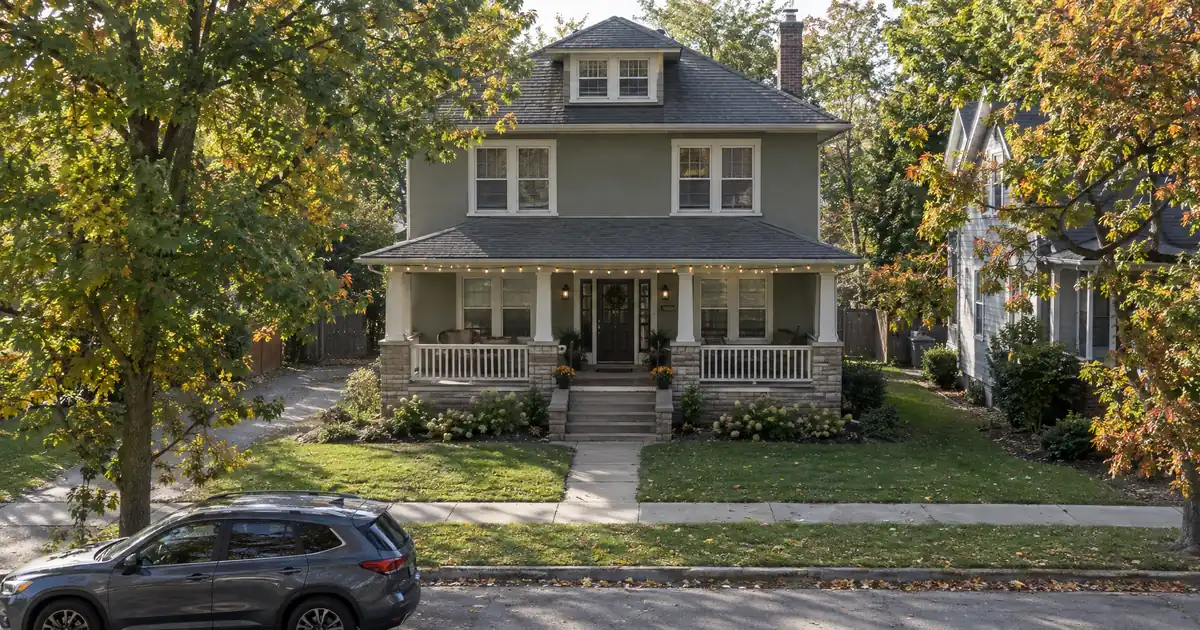
The Quick Read: Usually yes. A rental lost in the housing crash is now old enough that it rarely blocks a DSCR loan on its own, because no law sets a waiting period and the old event has long since dropped off a standard credit report. What decides the file today is your current credit, your reserves, your leverage, and whether the property’s rent covers its payment, all subject to lender guidelines.
- A crash-era loss is roughly 14 to 19 years old, well past the seasoning windows lenders typically use.
- Credit reporting limits (seven years for foreclosure, up to ten for bankruptcy) have expired for a 2008-2012 event.
- Current credit score, reserves, and rent coverage now drive eligibility and leverage.
- A newer event hiding in the file, or an unreleased lien from the crash, can still cause trouble.
You may have carried this loss around for a long time. Many investors who lost a rental during the crash still assume the door is shut. In most cases it isn’t. Lendmire is a DSCR-focused mortgage broker (NMLS# 2371349) that arranges investor loans through select lenders in its wholesale network, serving 41 markets. The pattern below comes from how those files actually move.
DSCR Calculator
Run the numbers in your market
Rate source: Freddie Mac 30-yr average via FRED® — Federal Reserve Bank of St. Louis · effective Oct 15, 2026
Prefilled with starting assumptions — enter your own rent or nightly figures, taxes, insurance, and HOA for a more accurate picture.
Program parameters update from Lendmire’s centralized guideline source. Taxes and insurance are editable estimates.
As of Oct 15, 2026 · General Freddie Mac market benchmark, not a Lendmire loan offer. Rent, nightly rate, occupancy, taxes, and insurance are editable estimates. Short-term rental figures are estimates only and vary significantly by season, property type, management approach, and local short-term-rental rules — confirm local regulations before relying on them. Qualifying income for short-term rentals varies by program — some use appraisal market rent, others use documented STR history or projections — and is confirmed in underwriting. Not a Loan Estimate, approval, or commitment to lend. Program availability and eligibility are subject to lender guidelines, credit approval, property review, and underwriting.
Key Terms Defined
DSCR (debt service coverage ratio): The property’s monthly rent divided by its monthly payment of principal, interest, taxes, insurance, and any association dues.
Seasoning: The waiting period a lender wants between a past housing event and the new loan.
Housing event: A foreclosure, short sale, deed-in-lieu, loan modification after default, or bankruptcy.
Short sale: Selling the property for less than the mortgage balance, with the lender’s agreement.
Deed-in-lieu: Handing the property back to the lender to avoid foreclosure.
Deficiency: The balance a lender can claim after the sale or foreclosure fails to cover the loan.
Reserves: Liquid cash you hold after closing, usually counted in months of payments.
What Does “Losing a Rental” Actually Mean?
It can mean two different things, and lenders treat them differently. Losing the property (foreclosure, short sale, deed-in-lieu) is a housing event with a seasoning clock. Losing the income (a tenant left, rent collapsed) is a cash-flow problem that never becomes a credit event unless payments were missed.
| What happened | How a lender reads it | What matters now |
|---|---|---|
| Foreclosure | Housing event | Completion date, current credit |
| Short sale | Housing event | How it was reported and settled |
| Deed-in-lieu | Housing event | Completion date, any deficiency release |
| Lost tenant, loan stayed current | Not a credit event | Property’s rent coverage |
| Bankruptcy that included the loan | Housing event | Discharge date, rebuilt credit |
If you kept paying while the property sat empty or underwater, there is no housing event at all. Your loan history looks fine. The lender simply looks at the next property and what rent it supports.
How Did the Crash Change the Picture for Borrowers?
The crash changed the circumstances, not the current rules. A market-wide drop put values underwater, softened rent comps, and pushed many solid investors into losses that had little to do with their skill. Lenders know this history. Reference sources date the foreclosure crisis to roughly 2006 through 2012, so a loss from that era sits far outside any current seasoning window.
Today’s underwriting looks forward. It asks what the new property earns, what your credit looks like now, and whether you hold enough cash. A crash-era loss is background at most.
Filings are rising again, which matters if your event is recent. ATTOM data reported by HousingWire show filings up 14% in 2025 from the prior year, yet still 87% below the 2010 peak. Lenders see that gap too. The 2010 wave was a market event; today’s filings are far smaller.
Which Date Starts the Clock?
Two separate clocks run, and mixing them up causes most of the confusion.
The credit-report clock controls how long the event shows up. The CFPB says foreclosure information generally stays on a credit report for about seven years. Experian explains that a Chapter 7 bankruptcy runs ten years from filing, while a Chapter 13 runs seven. A 2008-2012 event has cleared every one of those limits.
The lender’s seasoning clock is a program rule, not a law. Lenders generally measure it from the event’s completion date to the new loan’s note date. Programs differ, and some weigh the event more lightly when credit has recovered. Across the wholesale network, the file is judged on the whole picture, and any specific waiting period depends on the program and lender.
Two common mistakes: counting from the first missed payment instead of the completion date for lender purposes, and assuming a bankruptcy clock starts at discharge when reporting generally runs from filing. If a foreclosure sat inside a bankruptcy, a lender may measure from the discharge date instead. Ask for the rule in writing before you plan around it.
What Still Matters After the Event Has Aged Out?
Four things carry the file now, and they work together.
Credit. DSCR loans qualify primarily on property-level rental income covering the payment, subject to lender guidelines, but your score still sets eligibility and leverage. A 620 floor exists in parts of the network. Most programs want around 660, and 700 or higher opens the strongest leverage tiers.
Leverage. Purchases typically land at 75%-80% LTV on an investment property. Select high-leverage programs reach 85% with roughly a 700 score. Cash-out refinances top out around 75% LTV, with about six months of seasoning as the common expectation.
Reserves. They vary by lender, leverage, loan size, and transaction type. Around six months of payments is common. Conservative rate-and-term files at modest leverage under $1,500,000 can see reserves waived, and larger loans typically step up to about nine months.
Coverage. 1.00 is where many select programs start, which means the rent just covers the payment. A separate select-lender path takes coverage below 1.00 with leverage and terms adjusted. Stronger ratios open better pricing and leverage. See Lendmire’s complete DSCR loans guide for how the ratio is built.
Run a simple picture. Say you want a duplex whose rent covers the full monthly obligation at roughly 1.2x, with a 25% down payment and a 700 score. That file shows rent strength, equity, and recovered credit all at once. A larger down payment can lift the ratio, but it never erases leverage caps, credit floors, or reserve rules. The strongest files clear both tests: enough equity and enough rent coverage. The exact numbers vary by lender and program and follow a full review of property, leverage, and credit.
One caution. Clearing 1.00 does not mean positive cash flow. DSCR compares rent to the payment only. Repairs, vacancy, management, utilities, and capital spending sit outside the calculation.
Does a Vacant or Tenantless Property Change Anything?
It changes which rent figure the lender uses. On a purchase where no lease is in place, the lender typically relies on the appraiser’s market rent estimate rather than a tenant’s signed lease. That matters if you are buying back in after a loss and the next property needs work or is empty.
Short-term rentals follow different rules. Purchases run up to 75% LTV, refinances around 70%, and cash-outs 70%. Expect a 640 or higher score and about 12 months of hosting history. Coverage floors are 1.00 on both purchases and refinances. Short-term rental rules can vary by city, county, HOA, and property type, so investors should confirm local rules before relying on projected rental income. Final terms depend on the lender’s guidelines, the property type, and the borrower’s complete credit picture.
Property type also matters. Manufactured homes (single- and double-wide), log homes, and barndominiums are not offered in these programs, regardless of your history.
DSCR vs. conventional financing
There are two common ways to finance an investment property, and they qualify you differently — here’s how investors weigh them.
Why investors choose it
- Qualifies on the property’s rental income — no personal tax returns, W-2s, or pay stubs needed to document income.
- No personal debt-to-income ceiling to clear, so existing mortgages and obligations don’t cap your borrowing the same way.
- Can be closed in an LLC, keeping the property inside a business entity.
- Built for scaling — not held to the limit on number of financed properties that conventional financing applies.
- Underwriting centers on the deal: generally qualifies when the rent covers the payment, a 1.00x coverage ratio being a common baseline (confirmed in underwriting).
- Designed specifically for investment property, including long-term and, where the program allows, short-term rentals.
Where it’s strong
- Often the lowest ongoing financing cost for a buyer who fully qualifies on personal income — a fit for a first property or a cost-first purchase.
Trade-offs for investors
- Requires full personal income documentation and must fit within a debt-to-income limit — salary, existing debts, and other mortgages all count.
- Typically held in your personal name rather than a business entity.
- Caps how many financed properties you can carry, which can become a ceiling as a portfolio grows.
- Evaluates you as a borrower as much as the property, which usually means more paperwork.
How investors usually choose: a first or single property often optimizes for the lowest financing cost; portfolio builders often optimize for leverage, vesting in an LLC, and scaling past conventional caps. The right answer depends on your goals, the property, and current guidelines — both paths run through select lenders in Lendmire’s wholesale network, with eligibility and terms confirmed in underwriting.
What Can Still Cause Trouble From the Crash Years?
Some leftovers outlast the credit-report clocks. A lender may not see them on a credit report, but a title search might.
- Unreleased deficiency, lien, or judgment. A shortfall the old lender never released is a separate issue from the foreclosure itself. Confirm it is resolved before you apply.
- A newer event. A foreclosure, short sale, or bankruptcy from the last several years can still sit inside a lender’s seasoning window, even if the crash loss did not.
- Entity questions. An LLC can hold title, subject to lender program eligibility, but the guarantor’s personal credit is still reviewed. If you plan to move title later, Lendmire’s piece How to Transfer a DSCR Rental to an LLC After the Loan Closes covers the steps.
The cleanest move is to pull your own credit report and a title search on your past property before you apply. Fix anything stale first, so nothing surprises you late.
Should You Wait, Apply Now, or Hold?
Apply now if your crash-era event is more than a decade old and your credit is healthy. Waiting gains you nothing, since the clocks have already run out.
Wait if you have a more recent event. Use the time to rebuild.
Hold your current properties if you are thinking of selling at a loss just to clear a problem. A planned sale can create its own record. Talk through the options with a broker before you act, because a short sale or deed-in-lieu starts a fresh seasoning clock.
This one is a genuine judgment call when the event is only a few years old. The leverage you can reach may improve noticeably with more time and a higher score, though some investors would rather buy sooner at lower leverage. Neither is wrong.
A Rebuild Plan If Your Event Is Recent
| Phase | What to do |
|---|---|
| Stabilize | Stop new late payments; keep every account current |
| Repair credit | Pay down revolving balances; dispute errors |
| Document | Gather proof of the event and any lender release |
| Choose the deal | Pick a property with strong rent coverage |
Build cash alongside credit. Reserves and a larger down payment both help a file that carries history.
What Documents Should You Gather?
For a crash-era event, a lender may need little more than your confirmation and a clean current credit report. For anything newer, gather:
- A closing statement, recorded deed, or court papers showing the event’s completion date
- Any release of deficiency from the old lender
- A letter of explanation, if the lender asks for one
- Current credit report and proof of reserves
- Lease or market rent support for the new property
What If You Are Declined?
Ask for the reason in plain terms. Declines usually trace to credit score, leverage, reserves, rent coverage, or a title issue. Each has a fix. A lower LTV, more cash, or a different property can change the outcome. Because the network spans many lenders, a decline from one program does not close the door on every other, though each file is underwritten individually.
Loan sizes run up to $3,000,000 on standard programs (smaller balances available through select lenders), and above $2,500,000 the network generally holds to 30-year fixed structures.
Tax treatment varies; consult a qualified professional.
Frequently Asked Questions
Does a foreclosure on an investment property hurt differently than one on my home?
Lenders look at both as housing events, but a lost rental can read as a business loss rather than a personal one, especially when your later record is clean. Credit reporting limits apply the same way to both. What matters now is your current credit and the new property’s rent coverage.
Do I need a letter of explanation for a crash-era loss?
Probably not for an event this old, though lenders set their own rules. Some programs only ask for one when the event is recent. If a lender requests it, a short, factual letter with dates is enough.
Can an LLC borrow if I personally lost a rental?
An LLC can often hold title, subject to lender program eligibility, but your personal credit as guarantor is still reviewed. The entity does not hide the guarantor’s history.
Does a short sale count the same as a foreclosure?
Not always. It depends on how the sale was reported and settled, and different lenders weigh it differently. Confirm how your specific record appears on your credit file before you apply.
Is a DSCR loan a credit-free option?
No. DSCR loans qualify primarily on property-level rental income covering the payment, subject to lender guidelines, but credit score still affects eligibility and leverage.
If you are buying or refinancing a rental property and want to see how the numbers work, Lendmire can help you compare DSCR loan options based on the property income, credit profile, leverage, and investor goals. Its team can be reached at 828-256-2183. Not a commitment to lend; terms depend on lender guidelines.
For a related scenario, see Lendmire’s piece How a Vacation Home Becomes a DSCR Rental After a Liquidity Event.
The market that produced your loss is long gone, and the lenders reviewing your file today are reading a very different record than the one you remember.
About Lendmire
Lendmire — NMLS# 2371349 — is a mortgage brokerage specializing in DSCR investor loans, helping arrange financing across 41 markets, including Washington, D.C., through wholesale and investor-lending channels. The model centers on property-level rental income reviewed by the lender rather than W-2 documentation, subject to lender guidelines, suiting entity-owned and multi-property investors. Lendmire holds Scotsman Guide Top Mortgage Workplace recognition for 2025 and 2026.
Get Started
Ready to find the right loan for you?
In about 30 seconds you can review financing options available for your investment property. No commitment required.
Informational only. Not a Loan Estimate, approval, or commitment to lend. Program availability and eligibility are subject to lender guidelines, credit approval, property review, and underwriting.
References
1. EBSCO Research Starters – foreclosure crisis
3. CFPB – foreclosure and buying again
4. Experian – bankruptcy fall-off
This article is part of Lendmire’s DSCR loan program — full qualification details, guidelines, and scenarios live on the program page.
Related reading: Short Sale vs Lost Rental for a DSCR Loan Waiting Period · How to Shop and Document Rental Insurance Before a DSCR Loan · Is a DSCR Loan Better Than a Bank Commercial Loan on a Small Rental?
Brandon Miller
Founder & CEO, Mortgage Loan Originator, Lendmire LLC
- Mortgage Loan Originator · NMLS# 1129696 · Verify on NMLS Consumer Access
- North Carolina Real Estate Broker · License# 343312 · Verify on NCREC
- North Carolina Insurance Producer · License# 19053198 · Property, Casualty, Life, Health · Verify on NAIC SBS
- Lendmire LLC · Firm NMLS# 2371349 · Verify firm licensure
Required disclosures. Lendmire (NMLS# 2371349) operates as a licensed mortgage broker, not a direct lender or depository. The discussion in this article is general in nature and should not be relied upon as financial, legal, or tax advice — every investment scenario is unique and should be reviewed by a qualified professional. Any loan inquiry is subject to lender underwriting, and this article is not a commitment to lend or a guarantee of approval. Mortgage rates, loan terms, and program guidelines vary by borrower, property, and state, and may change without notice. Equal Housing Opportunity. Verify licensure at NMLS Consumer Access.