
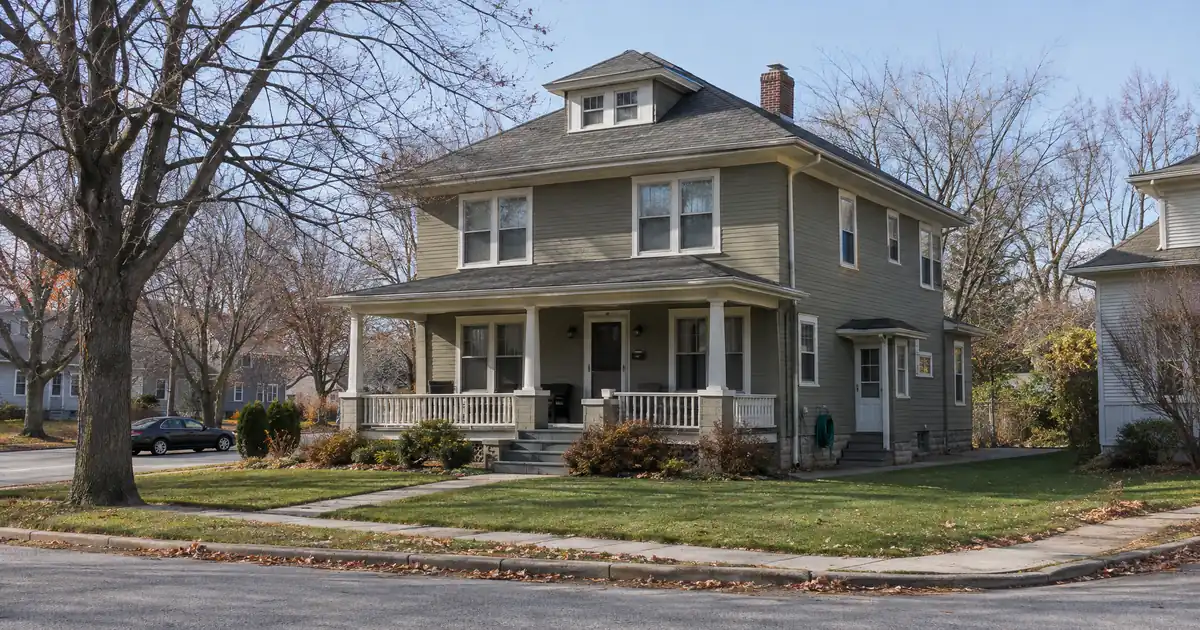
The Quick Read: Yes, in most cases, because a bank-owned property is a property type rather than a loan type, and DSCR underwriting looks at the rent the home can earn, your credit and assets, and whether the property is rentable and appraisable as-is rather than at who the seller is. Three things decide whether a given deal works.
- The property must be rentable and appraisable in its current condition.
- The bank seller’s expectations must fit the loan’s process.
- The numbers must clear both tests: enough equity and enough rental coverage, subject to lender guidelines.
Bank-owned homes that need heavy work usually take a short-term loan first and a DSCR refinance later.
DSCR Calculator
Run the numbers in your market
Rate source: Freddie Mac 30-yr average via FRED® — Federal Reserve Bank of St. Louis · effective Oct 15, 2026
Prefilled with starting assumptions — enter your own rent or nightly figures, taxes, insurance, and HOA for a more accurate picture.
Program parameters update from Lendmire’s centralized guideline source. Taxes and insurance are editable estimates.
As of Oct 15, 2026 · General Freddie Mac market benchmark, not a Lendmire loan offer. Rent, nightly rate, occupancy, taxes, and insurance are editable estimates. Short-term rental figures are estimates only and vary significantly by season, property type, management approach, and local short-term-rental rules — confirm local regulations before relying on them. Qualifying income for short-term rentals varies by program — some use appraisal market rent, others use documented STR history or projections — and is confirmed in underwriting. Not a Loan Estimate, approval, or commitment to lend. Program availability and eligibility are subject to lender guidelines, credit approval, property review, and underwriting.
What Does “Bank-Owned” Actually Mean for a Lender?
A bank-owned property, or REO (real estate owned), is a home that did not sell at foreclosure auction and went back to the lender. It is then listed for sale like many other homes. BiggerPockets explains that investors can typically inspect the home, order an appraisal, and run a full title check before buying a REO. An auction gives you none of that.
That is why a financed purchase fits here. A DSCR lender cares about the collateral and the rent. The seller is a bank, and the bank’s name never enters the underwriting.
Don’t confuse this with a different question. Buying a bank-owned home is not the same as qualifying after a foreclosure on your own record. The second is a credit-history question and gets reviewed separately.
Which Distressed Purchases Fit a DSCR Loan?
Only the REO stage fits well. Auctions and unlivable homes are the usual problems.
| Purchase type | Financing fit | Usual obstacle |
|---|---|---|
| Pre-foreclosure | Possible | Owner’s motivation and title issues |
| Auction | Generally cash | Little time to inspect or finance |
| Bank-owned (REO) | Good fit if rentable | Condition and seller process |
| Government-owned | Often cash | Owner-occupant priority window |
Auction buyers typically bring cash. BiggerPockets notes that REOs move more slowly than auctions, which suits a financed buyer. Government-owned homes, such as HUD listings, add an early window reserved for owner-occupants. Investors there tend to pay cash, according to Mashvisor. The length of that window has been reported differently by secondary sources. Check the current rule on HUD’s own site before you plan around it.
How a DSCR Purchase of an REO Works, Step by Step
The process looks like a normal purchase with a bank on the other side. Here is the sequence that tends to work.
1. Confirm the seller. A bank or servicer REO usually lists through an agent on the MLS. That is the version that suits financing.
2. Run the rent math first. DSCR is the monthly rent divided by the full monthly obligation: principal, interest, taxes, insurance, and any HOA dues. Use the property’s real tax and insurance figures, not the seller’s.
3. Get the lender’s view before you offer. A pre-approval or proof of funds strengthens the offer. Real Estate Skills advises attaching one and offering a short closing period.
4. Submit the REO offer package. Expect a purchase agreement, proof of funds or pre-approval, an earnest money deposit, an as-is acknowledgment, and contingency dates. One publisher, Foreclosure Data Hub, puts typical earnest money at 1% to 3%. Treat that as a loose guide.
5. Expect counteroffers and review layers. Zillow points out that banks must show they sought the best price, and that responses can lag because several parties review each offer.
6. Order the appraisal. The appraiser documents value and market rent. The agency name for the one-unit rent schedule is Form 1007, described in the Fannie Mae Selling Guide. Two-to-four-unit properties use Form 1025. These are only the form names. DSCR loans are not agency loans, and programs in the network set their own rent-evidence methods.
7. Clear title and insure. Banks generally clear title before listing. Owner’s title insurance is still wise.
8. Lease it. Once the property is rented, the rent on paper becomes rent in hand.
The Condition Gate: What Can Block Financing
Condition is the real deciding factor. Banks sell as-is, so no seller repairs are coming. An appraiser’s required-repairs list can become a condition of closing.
Common blockers:
- Utilities that are off, which can stop inspections and prevent an as-is value or rent opinion.
- Missing systems, such as no kitchen fixtures or no working heat.
- Safety or structural issues that make the home unlivable today.
- A vacant home that is hard to insure until it is secured.
- Property types outside the program. Manufactured homes (single- and double-wide), log homes, and barndominiums are not offered through the network’s DSCR programs.
If a house passes those tests, it usually looks like any other rental to the lender. If it fails, The Investors Edge notes that heavily distressed REOs usually can’t get traditional financing, and buyers turn to hard money or cash.
What the Math Looks Like
Run the numbers on two modeled REO single-family rentals. These are assumptions for illustration, not market data.
Passing case: The appraiser’s market rent covers the full monthly obligation at roughly 1.15x on a purchase at 75% LTV. That clears the 1.00 level where many select programs start, so the file is reviewed on its other merits: credit, reserves, and property. Terms depend on the lender’s guidelines, the property type, the leverage, and a full review of the credit profile.
Shortfall case: The same house, but rent covers the obligation at about 0.90x. The investor has options a lender would review:
- A larger down payment, which lowers the monthly obligation and can lift the ratio.
- A sub-1.00 program, available through select lenders in the network, with leverage and terms adjusted.
- A different property, since a shortfall in a neighborhood is often a pricing signal.
That third option deserves honest weight. If you can only reach sub-1.00 by stretching, the better move may be to re-examine the deal rather than the loan.
One more point. Clearing 1.00 is not the same as positive cash flow. DSCR compares rent to the monthly housing obligation only. Repairs, vacancy, management, utilities, and capital reserves sit outside it, and a rehabbed REO can run heavy on repairs in year one.
What Program Terms Typically Apply
Across the wholesale network Lendmire places files with, a few ranges show up again and again. They are typical, not promised, and every file is reviewed individually under lender guidelines.
- Leverage on a purchase: most files land at 75% to 80% LTV on an investment property, which means 20% to 25% down. Select high-leverage programs reach 85% LTV, with a score around 700 or higher.
- Cash-out refinance: tops out around 75% LTV on most programs.
- Credit: a 620 floor exists in parts of the network. Most programs want about 660. A score of 700 or more opens the strongest leverage tiers.
- Reserves: commonly about 6 months of the full monthly obligation. Some conservative files can see reserves waived, and larger loans, above $1,500,000, typically step up to about 9 months.
- Loan size: up to $3,000,000 on standard programs.
A bigger down payment does not erase a credit floor, a reserve requirement, or a property-eligibility rule. The strongest files clear both tests: enough equity and enough rental coverage. For the full picture, see this complete DSCR loans guide. The exact numbers vary by lender and program and follow a full review of property, leverage, and credit.
DSCR loans are designed for non-owner-occupied investment properties. Because they are business-purpose investor loans, they are reviewed differently from a standard owner-occupied mortgage.
When Should You Choose DSCR Over Cash or Hard Money?
Choose by condition, not by habit. A rent-ready REO suits DSCR directly. A rough one usually starts elsewhere.
| Path | Best for | Tradeoff |
|---|---|---|
| DSCR purchase | Rent-ready REO | Needs rent coverage and equity |
| Cash, then refinance | Auction or unlivable homes | Ties up your capital |
| Hard money, then DSCR | Homes needing rehab | Short-term loan to repay |
| Conventional | W-2 owner with one rental | Income documents, limits on count |
The renovate-then-refinance route is the BRRRR pattern (buy, rehab, rent, refinance, repeat). It works when the finished rent and appraised value support a DSCR refinance. Cash-out on that refinance generally tops out around 75% LTV, and about 6 months of seasoning is the common expectation.
The flip point is simple. If the home is rentable the day you close, direct DSCR usually saves a step. If it isn’t, forcing a purchase loan onto an unlivable house wastes time and appraisal fees.
Large bank sellers also tend to prefer clean offers. In practice, strong pre-approval paperwork and a short, firm contingency schedule help a financed buyer sit alongside cash offers. Cash is simpler for a seller, but financed offers can still win.
DSCR vs. conventional financing
There are two common ways to finance an investment property, and they qualify you differently — here’s how investors weigh them.
Why investors choose it
- Qualifies on the property’s rental income — no personal tax returns, W-2s, or pay stubs needed to document income.
- No personal debt-to-income ceiling to clear, so existing mortgages and obligations don’t cap your borrowing the same way.
- Can be closed in an LLC, keeping the property inside a business entity.
- Built for scaling — not held to the limit on number of financed properties that conventional financing applies.
- Underwriting centers on the deal: generally qualifies when the rent covers the payment, a 1.00x coverage ratio being a common baseline (confirmed in underwriting).
- Designed specifically for investment property, including long-term and, where the program allows, short-term rentals.
Where it’s strong
- Often the lowest ongoing financing cost for a buyer who fully qualifies on personal income — a fit for a first property or a cost-first purchase.
Trade-offs for investors
- Requires full personal income documentation and must fit within a debt-to-income limit — salary, existing debts, and other mortgages all count.
- Typically held in your personal name rather than a business entity.
- Caps how many financed properties you can carry, which can become a ceiling as a portfolio grows.
- Evaluates you as a borrower as much as the property, which usually means more paperwork.
How investors usually choose: a first or single property often optimizes for the lowest financing cost; portfolio builders often optimize for leverage, vesting in an LLC, and scaling past conventional caps. The right answer depends on your goals, the property, and current guidelines — both paths run through select lenders in Lendmire’s wholesale network, with eligibility and terms confirmed in underwriting.
Is Now a Good Time to Hunt for REOs?
Supply is rising, though still modest by historical standards. In its July report, ATTOM counted 4,764 lender repossessions nationally, up 23 percent from a year earlier. HousingWire noted activity remained below historic norms. A growing pipeline can mean more motivated bank sellers, but the numbers are national and monthly. Local inventory is what matters for your deal.
Key Terms Defined
REO (real estate owned): A home that failed to sell at foreclosure auction and now belongs to the lender.
DSCR (debt service coverage ratio): Monthly rent divided by the monthly housing obligation; a ratio above 1.00 means rent covers the payment.
PITIA: Principal, interest, taxes, insurance, and association dues, the full monthly obligation used in the ratio.
Form 1007: The appraiser’s one-unit rent schedule, listed on the Fannie Mae forms list, used here only as a form name.
As-is sale: A purchase where the seller makes no repairs.
BRRRR: Buy, rehab, rent, refinance, repeat.
Frequently Asked Questions
Do I need cash to buy a bank-owned property?
No. REOs are sold through ordinary purchase contracts, so financing is common. Cash is often needed at auctions and for unlivable homes, but a rent-ready REO can be bought with a DSCR loan, subject to lender guidelines.
Can I buy a bank-owned home through an LLC?
Often yes, depending on program guidelines. The entity’s documents and the borrower’s credit and assets are reviewed alongside the property. Lenders vary on guarantor and entity requirements, so confirm early.
What if the property has no tenant or lease?
The appraiser’s market-rent opinion typically supports the coverage ratio.
Will a bank-owned property with repairs still qualify?
It depends on severity. Cosmetic work usually doesn’t block financing. Missing systems, safety problems, or no utilities can, and then a short-term loan or cash purchase followed by a DSCR refinance is the usual route.
Is an HUD-owned home treated like a bank REO?
Not quite. HUD homes have an early owner-occupant window and a separate bid process, and investors often pay cash. Confirm current timing on HUD’s official listing site.
Next Step
If you are buying or refinancing a rental property and want to see how the numbers work, Lendmire can help you compare DSCR loan options based on the property income, credit profile, leverage, and investor goals. Tax treatment can depend on how the funds are used and how the property is held; investors should keep clear records and speak with a qualified tax professional before relying on any deduction.
About Lendmire
A DSCR-focused mortgage broker, Lendmire (NMLS# 2371349) places investor financing across 41 markets — 40 states plus Washington, D.C. — with DSCR eligibility generally reviewed by the lender on property cash flow instead of tax returns, subject to lender guidelines. Scotsman Guide named Lendmire a Top Mortgage Workplace in 2025 and 2026.
Get Started
Ready to find the right loan for you?
In about 30 seconds you can review financing options available for your investment property. No commitment required.
Informational only. Not a Loan Estimate, approval, or commitment to lend. Program availability and eligibility are subject to lender guidelines, credit approval, property review, and underwriting.
References
1. BiggerPockets: Bank-Owned Properties Are Up 41% Year Over Year
2. BiggerPockets: Bank-Owned Properties Rise and What the REO Surge Means for Investors
3. Mashvisor
4. Real Estate Skills: REO Properties
6. Zillow: Buying a Bank-Owned Property
9. ATTOM
10. HousingWire
11. Fannie Mae: Selling Servicing Guide Forms
This article is part of Lendmire’s DSCR loan program — full qualification details, guidelines, and scenarios live on the program page.
Related reading: How to Qualify for a 40-Year DSCR Loan on a 2-4 Unit Property · Interest-Only vs Amortizing DSCR Loan on an LLC-Owned Rental · How to Get a DSCR Loan on a Vacant Rental Purchase
Brandon Miller
Founder & CEO, Mortgage Loan Originator, Lendmire LLC
- Mortgage Loan Originator · NMLS# 1129696 · Verify on NMLS Consumer Access
- North Carolina Real Estate Broker · License# 343312 · Verify on NCREC
- North Carolina Insurance Producer · License# 19053198 · Property, Casualty, Life, Health · Verify on NAIC SBS
- Lendmire LLC · Firm NMLS# 2371349 · Verify firm licensure
Required disclosures. Lendmire (NMLS# 2371349) operates as a licensed mortgage broker, not a direct lender or depository. The discussion in this article is general in nature and should not be relied upon as financial, legal, or tax advice — every investment scenario is unique and should be reviewed by a qualified professional. Any loan inquiry is subject to lender underwriting, and this article is not a commitment to lend or a guarantee of approval. Mortgage rates, loan terms, and program guidelines vary by borrower, property, and state, and may change without notice. Equal Housing Opportunity. Verify licensure at NMLS Consumer Access.