
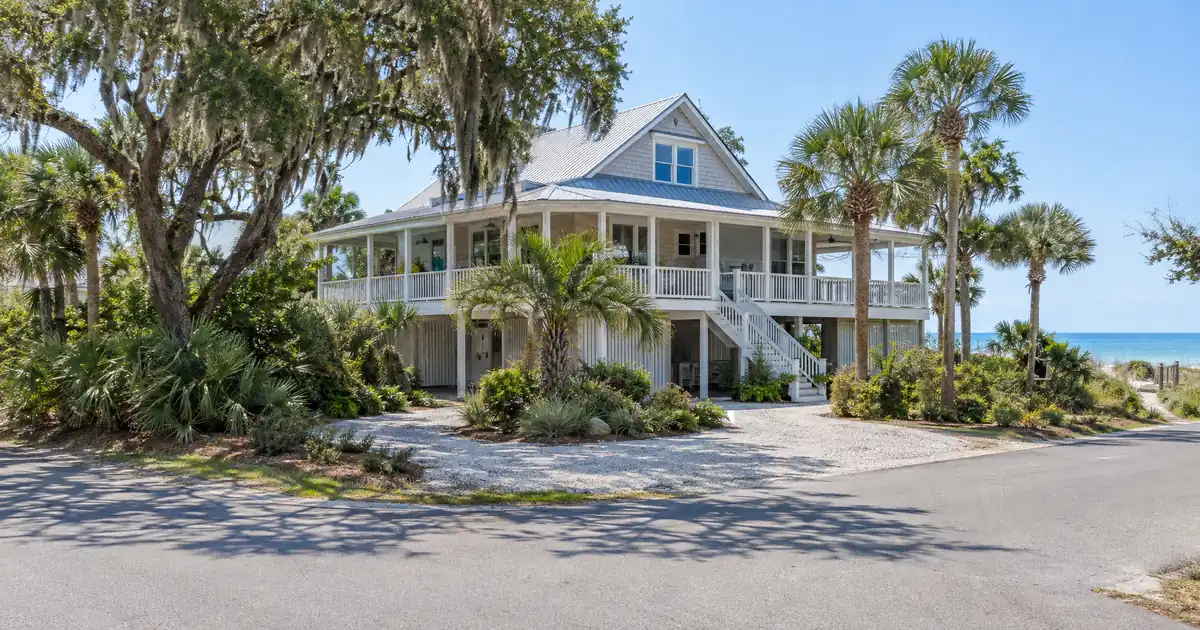
The Quick Read: Yes, a Pensacola Beach rental can qualify for a DSCR loan, but four things decide the file: how the lender treats leased land, how short-term rental income is documented, the condo project’s status if it is a condo, and whether the rental is legal to operate. The loan is reviewed primarily on property-level rental income covering the payment, subject to lender guidelines.
- Pensacola Beach land is leased, not owned outright, so the lease document gets reviewed like a second property.
- Short-term rental income can count, usually through 12 months of documented history or a market-rent appraisal.
- Flood, wind, HOA dues and any ground-lease payment all sit in the payment and pull the coverage ratio down.
- Select programs typically start at 1.00x coverage, and a separate select-lender path takes coverage below 1.00 with leverage and terms adjusted.
What does a DSCR loan test on a beach rental?
A DSCR loan tests one thing first: does the property’s rent cover its full monthly obligation? The formula is rental income divided by PITIA. PITIA means principal, interest, taxes, insurance and any HOA dues. A ratio of 1.00 means rent equals the payment.
DSCR Calculator
Run the numbers in your market
Rate source: Freddie Mac 30-yr average via FRED® — Federal Reserve Bank of St. Louis · effective Oct 29, 2026
Prefilled with starting assumptions — enter your own rent or nightly figures, taxes, insurance, and HOA for a more accurate picture.
Program parameters update from Lendmire’s centralized guideline source. Taxes and insurance are editable estimates.
As of Oct 29, 2026 · General Freddie Mac market benchmark, not a Lendmire loan offer. Rent, nightly rate, occupancy, taxes, and insurance are editable estimates. Short-term rental figures are estimates only and vary significantly by season, property type, management approach, and local short-term-rental rules — confirm local regulations before relying on them. Qualifying income for short-term rentals varies by program — some use appraisal market rent, others use documented STR history or projections — and is confirmed in underwriting. Not a Loan Estimate, approval, or commitment to lend. Program availability and eligibility are subject to lender guidelines, credit approval, property review, and underwriting.
Across the wholesale network Lendmire works with, 1.00 is where many select programs start. A separate select-lender path takes coverage below 1.00, with leverage and terms adjusted. Stronger ratios usually open better pricing and higher leverage.
Clearing 1.00 is not the same as positive cash flow. The ratio ignores repairs, vacancy, management, utilities and capital costs. A beach unit can show 1.20x and still lose money in a slow season.
DSCR loans are designed for non-owner-occupied investment properties. Because they are business-purpose investor loans, they are reviewed differently from a standard owner-occupied mortgage. For the full program overview, see the complete DSCR loans guide.
Why is Pensacola Beach different from a mainland rental?
Pensacola Beach is different because the buyer does not own the land. The land is leased long term, and the buyer owns the improvements plus a leasehold interest. A real-estate education site notes that not every lender writes mortgages on beach leaseholds, and those that do often apply stricter underwriting.
That one fact changes what a lender reviews. Here is the comparison:
| Factor | Mainland fee simple | Pensacola Beach leasehold |
|---|---|---|
| Land | Owned outright | Leased long term |
| Extra document | None | Lease copy and lease terms |
| Lender pool | Wide | Narrower |
| Annual land cost | Property tax only | Ground-lease payment plus tax on improvements |
| Appraisal | Standard | Must address the lease |
The ground-lease payment matters most to the ratio. How a given lender counts it inside PITIA varies, so confirm it before you write an offer.
What do lenders check on a leasehold?
Lenders check whether the lease protects the collateral. The lease document is the file’s center of gravity, and three questions come up on almost every beach leasehold:
1. How much lease term remains compared with the loan term?
2. Can the lease be mortgaged, assigned and sold without a hard consent step?
3. Who approves changes to the improvements, and are any approvals pending?
Agency guidelines show what lenders worry about, even though they do not govern DSCR loans. Freddie Mac’s guide requires that a leasehold allow mortgaging and assignment and that the lease outlast the loan. A DSCR lender sets its own version of those tests, so one program may accept a lease that another declines.
The island’s administering authority also reviews and approves improvements to leasehold property. Any unfinished renovation, addition or dock work should be settled before the file goes in.
Title is the other friction point. Clearing title on a leasehold means the lender sees the recorded lease, any amendments, and proof that the current holder has the right to assign. Missing amendments are a common reason a file stalls.
Do not assume neighboring beaches share this structure. Each beach community has its own land arrangement, so check every parcel on its own papers.
How is short-term rental income measured?
Short-term rental income is measured one of three ways, and the choice changes the ratio. Many standard programs use the appraiser’s long-term market rent unless you document or project STR income.
| Method | What it uses | Typical issue |
|---|---|---|
| Long-term market rent | Appraiser’s rent schedule (Form 1007) | Can understate a high-demand beach unit |
| Trailing history | About 12 months of platform income | Needs a full year of records |
| Third-party projection | Market data model on the address | Lender may discount the output |
On STR files, the network’s select programs generally want a 640+ credit score and about 12 months of hosting history. Purchase leverage tops out at 75% LTV on a short-term rental. The rate-and-term refinance ceiling is around 70%. Cash-out is capped at 70% LTV on short-term-rental collateral, versus 75% on standard long-term rentals. The coverage floor is 1.00 on an STR purchase, and 1.00 on an STR refinance.
Market data is a poor shortcut, because published figures disagree. AirDNA’s Pensacola market page shows 62% occupancy and a $325 average daily rate. AirROI’s Pensacola Beach page shows 34.5% average occupancy. The two cover different geographies and use different models, so pick the one that matches your unit and let the actual statements decide.
Seasonality matters too. A beach unit earns most of its year in summer. A trailing 12-month figure captures that cycle, while a snapshot taken in peak season can overstate it.
A lender’s income calculation is not legal permission to operate. If the unit cannot legally rent short term, STR income will not carry the file.
What does a worked example look like?
A worked example shows how the same unit lands on different sides of 1.00. Run it in ratios, not dollars. Say a Gulf-facing condo carries a heavy payment once flood, wind, HOA and a ground-lease payment are included.
- Long-term appraisal rent only: coverage lands near 0.90x.
- Trailing 12 months of documented STR income: coverage lands near 1.25x.
- Same STR income after the lender applies its own expense haircut: coverage settles near 1.10x.
The first case sits below 1.00. A select-lender path may review it, with LTV and terms adjusted, but expect a lower leverage tier. The second and third cases clear 1.00 and can fit programs that start there, subject to lender guidelines, credit and property review.
A buyer who pencils the deal on the second number and then meets a lender that uses the third has a problem. Underwrite your own deal on the conservative number first.
Which costs move the ratio most on a barrier island?
Insurance and association costs move the ratio most. Each of these sits inside PITIA and cuts coverage:
- Flood insurance. FEMA explains that federally regulated or insured lenders must require flood coverage on buildings in a Special Flood Hazard Area when the loan is federally backed. A DSCR loan from a non-bank lender may fall outside that federal rule. Most programs in the network still require flood coverage on a property in a flood zone, as a lender requirement.
- Wind and hazard coverage. Roof age, construction and distance from the water all affect the quote. A stale quote is the usual surprise, so get a fresh, complete quote before submission.
- HOA dues. Beachfront condos can carry heavy dues, and they count in PITIA.
- The ground-lease payment. Ask each lender how it is treated.
Property taxes and insurance vary by parcel, so use quotes for the specific unit, not area averages.
What about condos on the beach?
Condos add a second review: the project. A condo uses a Form 1073 appraisal, and the lender reviews the association’s questionnaire, budget and reserve position. HOA questionnaire completeness is a common delay. Incomplete answers, outdated budgets and open special assessments all slow a file.
Rental rules inside the building can be stricter than any public rule. A declaration may set minimum stays or ban short stays outright. Read the governing documents before going under contract, not after.
Some projects are non-warrantable, meaning they fall outside standard condo review because of rental concentration, litigation, reserve gaps or similar issues. Select lenders in the network may review non-warrantable condos, usually at lower leverage. Condo-hotel and rental-pool structures get extra scrutiny, and some lenders decline them.
Florida condos also bring milestone inspection and reserve-study questions. Have the latest inspection and reserve documents on hand with the project questionnaire.
What do lenders in the network look for?
Programs in the wholesale network cluster in these ranges. They are typical, not promises, and every file is underwritten individually:
| Item | Typical range |
|---|---|
| Purchase LTV, investment property | 75%–80% |
| Cash-out refinance LTV, standard rental | Up to 75% |
| Credit score | 620 floor in parts of the network; most want about 660; 700+ for the strongest tiers |
| Reserves | About 6 months of PITIA; about 9 months above $1,500,000 |
| Loan size | Up to $3,000,000 on standard programs |
Reserves vary by lender, leverage, loan size and transaction type. Beach properties often land in the larger loan tiers, so plan for the higher reserve step.
A bigger down payment helps. It lowers the payment and can lift the ratio. It does not remove leverage caps, credit floors, reserve rules or property eligibility. The strongest files clear both tests: enough equity and enough rental coverage.
Entity paperwork is routine. If you buy in an LLC, expect the lender to request formation documents, an operating agreement and a signed guarantee, depending on program guidelines. Have these ready before submission.
For borrowers weighing a very large balance, Lendmire has written about what a super jumbo beach rental has to earn and how a luxury rental DSCR loan works in Vero Beach.
DSCR vs. conventional financing
There are two common ways to finance an investment property, and they qualify you differently — here’s how investors weigh them.
Why investors choose it
- Qualifies on the property’s rental income — no personal tax returns, W-2s, or pay stubs needed to document income.
- No personal debt-to-income ceiling to clear, so existing mortgages and obligations don’t cap your borrowing the same way.
- Can be closed in an LLC, keeping the property inside a business entity.
- Built for scaling — not held to the limit on number of financed properties that conventional financing applies.
- Underwriting centers on the deal: generally qualifies when the rent covers the payment, a 1.00x coverage ratio being a common baseline (confirmed in underwriting).
- Designed specifically for investment property, including long-term and, where the program allows, short-term rentals.
Where it’s strong
- Often the lowest ongoing financing cost for a buyer who fully qualifies on personal income — a fit for a first property or a cost-first purchase.
Trade-offs for investors
- Requires full personal income documentation and must fit within a debt-to-income limit — salary, existing debts, and other mortgages all count.
- Typically held in your personal name rather than a business entity.
- Caps how many financed properties you can carry, which can become a ceiling as a portfolio grows.
- Evaluates you as a borrower as much as the property, which usually means more paperwork.
How investors usually choose: a first or single property often optimizes for the lowest financing cost; portfolio builders often optimize for leverage, vesting in an LLC, and scaling past conventional caps. The right answer depends on your goals, the property, and current guidelines — both paths run through select lenders in Lendmire’s wholesale network, with eligibility and terms confirmed in underwriting.
When does it not work?
It does not work when the lease, the building or the income fails review. These are the usual breakers:
- A lease with too little remaining term, or one that cannot be mortgaged or assigned.
- A condo project that fails review or bans short stays.
- STR income with no history and no legal basis to operate.
- A ratio too thin to survive the lender’s insurance quote.
Options then are a lower-leverage structure, a select lender that reviews sub-1.00 coverage with adjusted terms, a different unit in a project with cleaner documents, or a mainland rental on owned land. Manufactured homes, log homes and barndominiums are not offered through the network’s DSCR programs, which rarely matters on the beach but matters if you compare nearby properties.
What should you check before making an offer?
Gather these before going under contract:
1. The full lease, with all amendments, and the remaining term.
2. Confirmation the lease can be mortgaged and assigned.
3. Twelve months of platform statements, or a plan to use appraised market rent.
4. The condo declaration, rental rules, budget, reserve study and questionnaire.
5. Fresh flood and wind quotes for the exact unit.
6. Proof the unit is licensed and legal to rent short term.
7. Entity documents, if buying in an LLC, subject to program terms.
Then ask any lender two questions up front: how do you credit STR income, and do you accept leasehold collateral?
Key Terms Defined
Leasehold: Ownership of the building plus the right to use leased land for a set term.
PITIA: The monthly sum of principal, interest, taxes, insurance and HOA dues.
Form 1007: The appraiser’s market-rent schedule for a single-family rental.
Trailing 12-month income: The actual rental income documented over the most recent full year.
Non-warrantable condo: A condo project that falls outside standard condo review criteria.
Reserves: Liquid funds the borrower holds after closing, measured in months of PITIA.
Frequently Asked Questions
Does leasehold land block a DSCR loan on Pensacola Beach?
Not automatically, but it narrows the lender pool. The lender reviews the lease for remaining term, assignability and mortgageability. A strong lease with ample term can work, while a weak one can end the file.
Do I need rental history to buy a short-term rental?
Many select programs ask for about 12 months of hosting history on STR files. Without it, a lender may fall back on the appraiser’s long-term market rent, which can lower the ratio. Ask each lender how it treats a new purchase.
Does flood insurance affect my DSCR?
Yes. The premium sits inside PITIA, so a higher premium lowers the ratio. Most programs in the network require flood coverage on a flood-zone property, so get the quote before you finalize the numbers.
Can I buy in an LLC?
Often yes, depending on program guidelines. Expect to provide entity documents and a personal guarantee. Bring them with the first submission.
What if my ratio is below 1.00?
Select lenders in the network offer programs below 1.00, with leverage and terms adjusted. Expect lower LTV and different terms than a file that clears 1.00. Every file is underwritten individually.
Next Steps
If you are buying or refinancing a rental property and want to see how the numbers work, Lendmire can help you compare DSCR loan options based on the property income, credit profile, leverage, and investor goals. Programs change, and approval is not a commitment to lend. Tax treatment varies; consult a qualified professional.
About Lendmire
Lendmire is a non-QM mortgage brokerage (NMLS# 2371349) arranging DSCR investor loans in 41 markets, including Washington, D.C., through wholesale and investor-lending channels. DSCR loans are evaluated by the lender on rental income rather than personal income, subject to lender guidelines — a fit for LLC-owned portfolios, self-employed investors, and operators scaling beyond conventional loan caps. Recognized as a Scotsman Guide Top Mortgage Workplace in 2025 and 2026.
Get Started
Ready to find the right loan for you?
See your offer in seconds. No credit pull, no obligation.
Informational only. Not a Loan Estimate, approval, or commitment to lend. Program availability and eligibility are subject to lender guidelines, credit approval, property review, and underwriting.
References
1. PassFloridaRealEstate — leasehold ownership on Pensacola Beach
2. Freddie Mac Guide Section 5704.1 — leasehold requirements
3. AirDNA — Pensacola short-term rental overview
4. AirROI — Pensacola Beach short-term rental data
5. FEMA — flood insurance and lending
This article is part of Lendmire’s DSCR loan program — full qualification details, guidelines, and scenarios live on the program page.
Related reading: Can You Get a DSCR Loan Under 75K on a Small Rental? · Can You Get a DSCR Loan on a Surfside Beach Rental? · Can You Get a Higher LTV on a DSCR Rental Loan?
Brandon Miller
Founder & CEO, Mortgage Loan Originator, Lendmire LLC
- Mortgage Loan Originator · NMLS# 1129696 · Verify on NMLS Consumer Access
- North Carolina Real Estate Broker · License# 343312 · Verify on NCREC
- North Carolina Insurance Producer · License# 19053198 · Property, Casualty, Life, Health · Verify on NAIC SBS
- Lendmire LLC · Firm NMLS# 2371349 · Verify firm licensure
Required disclosures. Lendmire (NMLS# 2371349) operates as a licensed mortgage broker, not a direct lender or depository. The discussion in this article is general in nature and should not be relied upon as financial, legal, or tax advice — every investment scenario is unique and should be reviewed by a qualified professional. Any loan inquiry is subject to lender underwriting, and this article is not a commitment to lend or a guarantee of approval. Mortgage rates, loan terms, and program guidelines vary by borrower, property, and state, and may change without notice. Equal Housing Opportunity. Verify licensure at NMLS Consumer Access.