
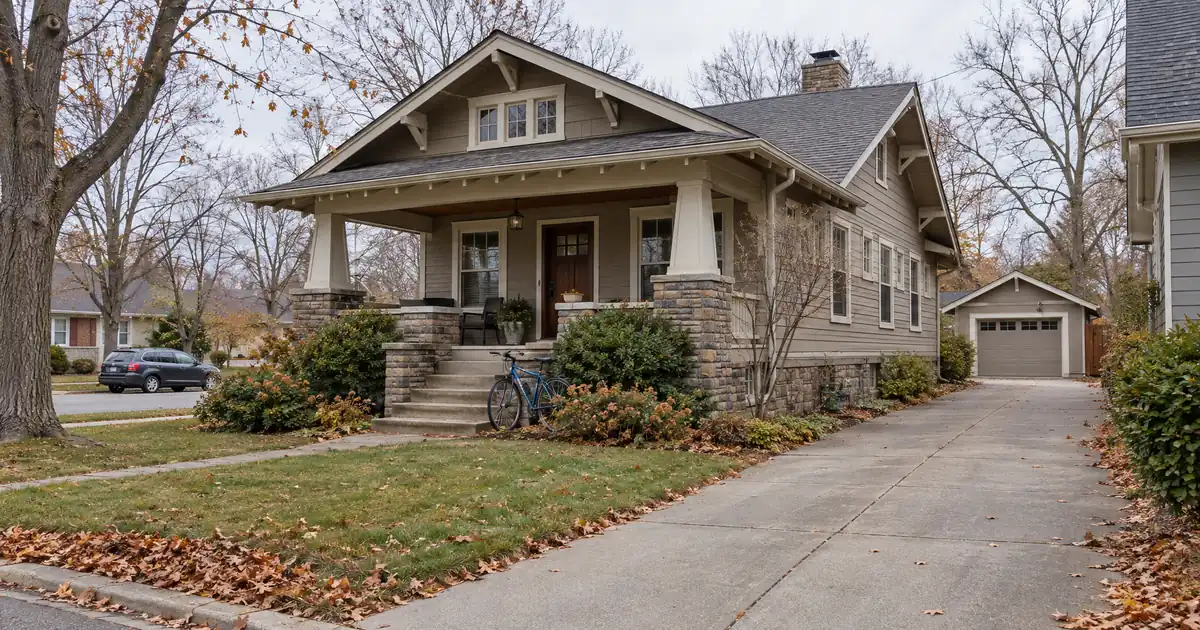
The Quick Read: Usually, yes, as long as the solar lease is dealt with before closing and its payment is modeled honestly. Leased panels do not disqualify a rental, but they add a recorded filing on title, a possible extra monthly obligation, and zero appraisal credit for the equipment. Across the wholesale network Lendmire works with, the treatment of the lease payment varies by lender, so the question belongs at the start of the file, not the end.
- The lease is not a deal-killer, but the filing on title must be cleared, transferred, or subordinated.
- Whether the lease payment counts in the coverage ratio depends on the lender and program.
- Leased panels add no appraised value and no extra leverage.
- A PACE-financed system is the hardest structure to place.
- Clearing 1.00 coverage is not the same as positive cash flow.
DSCR loans are designed for non-owner-occupied investment properties. Because they are business-purpose investor loans, they are reviewed differently from a standard owner-occupied mortgage. The property’s rent is measured against its housing payment, and the borrower’s personal income is not the main test. That is why leased solar is a manageable problem here. The panels do not change the rent. They change what sits on title and, sometimes, what the property owes each month.
DSCR Calculator
Run the numbers in your market
Rate source: Freddie Mac 30-yr average via FRED® — Federal Reserve Bank of St. Louis · effective Oct 15, 2026
Prefilled with starting assumptions — enter your own rent or nightly figures, taxes, insurance, and HOA for a more accurate picture.
Program parameters update from Lendmire’s centralized guideline source. Taxes and insurance are editable estimates.
As of Oct 15, 2026 · General Freddie Mac market benchmark, not a Lendmire loan offer. Rent, nightly rate, occupancy, taxes, and insurance are editable estimates. Short-term rental figures are estimates only and vary significantly by season, property type, management approach, and local short-term-rental rules — confirm local regulations before relying on them. Qualifying income for short-term rentals varies by program — some use appraisal market rent, others use documented STR history or projections — and is confirmed in underwriting. Not a Loan Estimate, approval, or commitment to lend. Program availability and eligibility are subject to lender guidelines, credit approval, property review, and underwriting.
Key Terms Defined
DSCR: the debt service coverage ratio, which divides a property’s monthly rent by its monthly housing payment.
PITIA: principal, interest, taxes, insurance, and any association dues, the payment that rent is measured against.
UCC-1 fixture filing: a public notice that a solar company has a claim on the panels and their hardware, recorded against the property.
UCC-3: the termination form that removes a UCC-1 filing after the debt or lease is paid off.
Subordination: an agreement in which the solar company’s filing agrees to rank behind the new mortgage.
PPA: a power purchase agreement, where the owner pays per unit of electricity produced instead of a flat lease payment.
PACE: a property-assessed clean energy obligation, repaid like a tax assessment.
What Does the Solar Arrangement Change?
The structure decides everything. A lease, a PPA, a financed system, an owned system, and a PACE assessment look alike on the roof and very different on title. A neutral buyer’s guide to homes with solar panels calls ownership structure the deciding question, and that matches what shows up on DSCR files.
| Arrangement | What is typically recorded | Effect on the file |
|---|---|---|
| Lease | UCC-1 fixture filing | Clear, transfer, or subordinate |
| PPA | UCC-1 fixture filing | Same, plus a per-kWh payment to model |
| Solar loan, filing only | UCC-1 fixture filing | Behaves much like a lease |
| Solar loan, recorded lien | Mortgage or deed of trust | True junior lien; pay off or subordinate |
| Owned outright | Nothing | Usually no issue |
| PACE | Tax-style assessment | Hardest to place |
Most investors holding a leased system are in the first two rows. Those files are routine once the paperwork is in order.
Does the Lease Payment Count in the DSCR?
It depends on the lender, and no neutral rule settles it. Some programs add a fixed lease payment to the monthly obligation that rent is measured against. Others look at the property’s standard housing payment and treat the lease as a separate matter, though they may still ask about it. Across the network, the safer assumption is that a fixed monthly lease payment gets modeled, because it is a real obligation tied to the property.
A PPA is slightly different. Instead of a flat payment, the owner pays per kilowatt-hour produced, usually with an escalator. That flows into the math less cleanly, and lenders differ on whether they net it against the tenant’s utility savings. Do not assume they will.
Here is the question to ask any lender up front: does the solar payment go into the coverage calculation, and if so, is it netted against anything? A good answer takes thirty seconds. A vague one tells you to look elsewhere. Because Lendmire arranges files through a wholesale network of lenders, it can compare how different programs treat that payment rather than hoping a single lender’s overlay fits.
What Does the Math Look Like With and Without the Lease?
Think of a rental whose rent covers its standard housing payment at roughly 1.25x. Now add the solar lease to the monthly obligation. Because the denominator grows and the rent does not, coverage drops, possibly into the low 1.1 range or lower, depending on how large the lease payment is relative to the rent. The same property, the same tenant, and a visibly weaker ratio.
Run that again on a thinner deal at roughly 1.05x. Add a meaningful lease payment and coverage can slip below 1.00. Here is the catch: 1.00 is where many select programs start, so a file that clears it with the lease excluded may not clear it with the lease included. A separate select-lender path takes coverage below 1.00 with leverage and terms adjusted, but that is a structural choice, not a workaround.
Two other points matter:
- Clearing 1.00 is not positive cash flow. DSCR compares rent to PITIA only. Repairs, vacancy, management, utilities, and capex sit outside the calculation. A landlord who pays the lease while the tenant pays the electric bill carries a cost with no matching income.
- Utility savings do not raise market rent. Appraisers support rent with market comps, not with the solar system. Do not count on a tenant paying more because the roof produces power.
Some investors build a solar fee into rent or bill the tenant for usage, as one landlord described when structuring solar into a lease. Others see little rent upside from panels on a Texas rental. Underwriters generally follow the second view: they use the market rent and ignore the solar story.
What Does the Recorded Filing Do at Closing?
The filing shows up on the title commitment as a closing requirement. A title-industry explainer on solar UCC fixture filings says a leased or financed system is usually secured by a UCC-1 fixture filing recorded against the property’s legal description. That filing can read as an encumbrance on the whole property and can interfere with the lender’s first-lien position.
Solar installers argue the filing covers only the equipment, not the home. A law-firm explanation of UCC liens and solar agrees that the filing gives the solar company a claim on the panels and hardware, including the right to remove them on default. Both views hold. The claim attaches legally to the equipment, but it still appears in a title search, so the title company and the lender must resolve it.
One practical wrinkle: a state-level UCC-1 may not appear in a county title search, while a fixture filing will. A clean county report alone does not prove there is no solar filing. The title-industry source above recommends a dedicated UCC search alongside the title search, and that is the right habit on any rental with panels. After a payoff, make sure a termination is actually recorded. A stale filing left on title can stall a later sale or refinance.
Keep, Transfer, or Buy Out?
There are three clearing paths, and the right one depends on the transaction.
| Path | What happens | Best fit |
|---|---|---|
| Payoff and termination | Lease or loan is bought out; filing is terminated | Refinance; cash-out |
| Transfer with consent | Provider approves the new owner or entity | Purchase with an existing lease |
| Subordination | Filing agrees to rank behind the new mortgage | Refinance where payoff is costly |
Provider consent and transfer paperwork can add time to escrow, so start the lease conversation as soon as the contract is signed. Treat any day-count you hear as a practitioner estimate, not a rule.
On a purchase, the lease may be assumed, but the provider typically runs the buyer through its own approval and may charge a transfer fee. The lease does not move automatically. If a prior owner already assumed it, confirm that paperwork was done properly.
On a refinance, there is no buyer to take the lease over. Payoff or subordination are the realistic routes. On a cash-out, a buyout reduces the net proceeds, so the investor should compare keeping the lease against paying it off before deciding how much equity to pull.
Where Do the Program Numbers Land?
Leased panels do not change the basic program ranges. They only change the file around them. Across most programs in the network, purchase leverage typically lands at 75% to 80% LTV on an investment property, with select high-leverage programs reaching 85% LTV on a purchase for stronger credit, roughly 700 and up. Cash-out refinances on standard rentals top out around 75% LTV, and about six months of seasoning is the common expectation.
Reserves vary by lender, leverage, loan size, and transaction type. Roughly six months of PITIA is common, and loans above $1,500,000 typically step up to about nine months. Standard programs run up to $3,000,000. All of this is subject to lender guidelines, and a larger down payment can help the ratio but never erases leverage caps, credit floors, or property eligibility. The full picture sits in Lendmire’s complete DSCR loans guide.
One practitioner observation: files with leased solar usually stumble on the paperwork, not the property. The investors who move smoothly gather the solar agreement, the filing, and a title report before applying, rather than discovering the lease halfway through escrow.
What About the Agency Contrast?
DSCR loans are not agency products, and agency rules do not govern them. Still, the contrast is useful because it shows how the broader market treats leased solar. The Fannie Mae Selling Guide section on special property considerations excludes the value of leased or PPA panels from the appraisal and makes the lender responsible for confirming ownership and lien position. Non-QM lenders have their own guidelines, but the same two concerns, value and lien position, drive their questions.
DSCR vs. conventional financing
There are two common ways to finance an investment property, and they qualify you differently — here’s how investors weigh them.
Why investors choose it
- Qualifies on the property’s rental income — no personal tax returns, W-2s, or pay stubs needed to document income.
- No personal debt-to-income ceiling to clear, so existing mortgages and obligations don’t cap your borrowing the same way.
- Can be closed in an LLC, keeping the property inside a business entity.
- Built for scaling — not held to the limit on number of financed properties that conventional financing applies.
- Underwriting centers on the deal: generally qualifies when the rent covers the payment, a 1.00x coverage ratio being a common baseline (confirmed in underwriting).
- Designed specifically for investment property, including long-term and, where the program allows, short-term rentals.
Where it’s strong
- Often the lowest ongoing financing cost for a buyer who fully qualifies on personal income — a fit for a first property or a cost-first purchase.
Trade-offs for investors
- Requires full personal income documentation and must fit within a debt-to-income limit — salary, existing debts, and other mortgages all count.
- Typically held in your personal name rather than a business entity.
- Caps how many financed properties you can carry, which can become a ceiling as a portfolio grows.
- Evaluates you as a borrower as much as the property, which usually means more paperwork.
How investors usually choose: a first or single property often optimizes for the lowest financing cost; portfolio builders often optimize for leverage, vesting in an LLC, and scaling past conventional caps. The right answer depends on your goals, the property, and current guidelines — both paths run through select lenders in Lendmire’s wholesale network, with eligibility and terms confirmed in underwriting.
The Hard Case: PACE
PACE is the structure that causes the most trouble. A PACE assessment is a tax-style lien that sits ahead of the first mortgage. The FHFA testimony on PACE describes it as a super-lien and says the two housing agencies should not buy or refinance mortgages with PACE loans attached. Non-QM lenders are not bound by that directive, but they can still treat it as a priority-lien problem, so expect questions and plan to pay it off or confirm the lender’s stance before you commit to a contract.
LLC, Tenant, and Roof Wrinkles
- LLC borrowers. DSCR loans are often held in an LLC, subject to lender program eligibility. The lease holder is usually the original homeowner, so assigning the lease into an entity may need the provider’s consent. Check the provider’s rules before the contract deadline.
- Tenant mechanics. Decide who pays the lease and who pays the power bill, and set rent accordingly. A long lease with an escalator can erode coverage over time.
- Roof work. The landlord may bear the cost of removing and reinstalling panels during a re-roof. In one investor thread on a leased solar roof, the suggestion was to ask the seller for a credit. That is a negotiating point, not a lending rule.
- Exit. A future buyer must assume or buy out the lease, which narrows the buyer pool.
Also remember the property-type limits: manufactured homes, log homes, and barndominiums are not offered in the network’s DSCR programs, with or without solar.
Pre-Application Checklist
1. Identify the instrument: lease, PPA, solar loan, owned, or PACE.
2. Gather the solar agreement, the UCC-1 and any fixture addendum, and a title report.
3. Order a UCC search alongside the county title search.
4. Ask the provider about consent, transfer fees, and entity assignment.
5. Decide on payoff, transfer, or subordination before the contract deadline.
6. Ask the lender whether the lease payment goes into coverage and whether it is netted.
7. Model coverage both ways, with the lease included and excluded.
Common Mistakes
- Treating the UCC-1 as harmless paperwork when it must usually be addressed before a new lien records.
- Assuming a clean county title report means no solar filing.
- Counting the panels as value or as extra leverage.
- Reading a passing coverage ratio as proof of positive cash flow.
- Lumping PACE in with an ordinary solar loan.
- Waiting until escrow to contact the solar provider.
Frequently Asked Questions
Does the lease payment count in the DSCR?
Sometimes. Some programs add a fixed lease payment to the obligation that rent is measured against, and others do not, though they may still ask about it. The treatment varies by lender and program, so ask before applying and ask whether the payment is netted against tenant utility savings.
Is the solar filing a lien on my whole house?
Legally it attaches to the panels and their hardware, not the home. In practice it appears in a title search and can interfere with the lender’s first-lien position, so it usually has to be cleared, transferred, or subordinated before a new mortgage records.
Can I refinance a rental without buying out the lease?
Possibly. Subordination, where the solar company’s filing agrees to rank behind the new mortgage, is the alternative to payoff. Whether a lender accepts it depends on the program and the provider’s willingness, so raise it early.
Does solar raise my rent or my appraised value?
Not when the system is leased or under a PPA. The panels earn no appraised value, and market rent is supported by comparable rentals, not by the solar system. Any rent premium is a negotiation with the tenant, not an underwriting credit.
What if a lender says no?
Ask whether the issue is the filing, the payment, or the property. A buyout can remove the filing, and a different program in the network may model the payment differently. If coverage is the problem, a select-lender path below 1.00 exists, with leverage and terms adjusted. Tax treatment varies by how funds are used and how the property is held, so consult a qualified professional.
Next Step
If you are buying or refinancing a rental property and want to see how the numbers work, Lendmire can help you compare DSCR loan options based on the property income, credit profile, leverage, and investor goals. Investors weighing equity access can also read Lendmire’s guide How to Get a Rental HELOC Approved With Leased Solar Panels. Leased solar rarely stops a deal; the investors who run into trouble are usually the ones who learn about the lease after the contract deadline has already started.
About Lendmire
Lendmire is a non-QM mortgage brokerage (NMLS# 2371349) arranging DSCR investor loans in 41 markets, including Washington, D.C. DSCR eligibility is generally reviewed around property-level rental income rather than personal income, subject to lender and program guidelines, a fit for self-employed investors and LLC-owned portfolios. Lendmire was recognized as a Scotsman Guide Top Mortgage Workplace in 2025 and 2026.
Get Started
Ready to find the right loan for you?
In about 30 seconds you can review financing options available for your investment property. No commitment required.
Informational only. Not a Loan Estimate, approval, or commitment to lend. Program availability and eligibility are subject to lender guidelines, credit approval, property review, and underwriting.
References
1. Home buyer’s guide, solar homes
2. BiggerPockets: structuring solar into the lease
3. BiggerPockets, solar on a rental in TX
4. Skyline Title Support on solar UCC fixture filings
5. Pender & Coward on UCC liens and solar
6. Fannie Mae Selling Guide B2-3-04
8. BiggerPockets, solar roof with lease
This article is part of Lendmire’s DSCR loan program — full qualification details, guidelines, and scenarios live on the program page.
Related reading: How to Buy a First Rental With a DSCR Loan Before Owning a Home · How to Fix a Low 1007 Rent on a DSCR Loan · How to Get a DSCR Loan on a Vacant Rental Purchase
Brandon Miller
Founder & CEO, Mortgage Loan Originator, Lendmire LLC
- Mortgage Loan Originator · NMLS# 1129696 · Verify on NMLS Consumer Access
- North Carolina Real Estate Broker · License# 343312 · Verify on NCREC
- North Carolina Insurance Producer · License# 19053198 · Property, Casualty, Life, Health · Verify on NAIC SBS
- Lendmire LLC · Firm NMLS# 2371349 · Verify firm licensure
Compliance and disclosures. Lendmire (NMLS# 2371349) is a licensed mortgage broker and is not a direct lender, depository institution, financial advisor, or tax professional. Content in this article is general market analysis and educational information — not financial, legal, or tax advice for any specific situation. Lendmire does not guarantee loan approval; every transaction is subject to underwriting by the funding lender. Mortgage pricing and loan program guidelines are subject to change at any time without notice and vary by borrower characteristics, property type, and state regulations. Lendmire complies with Equal Housing Opportunity. Licensure verification: NMLS Consumer Access.