
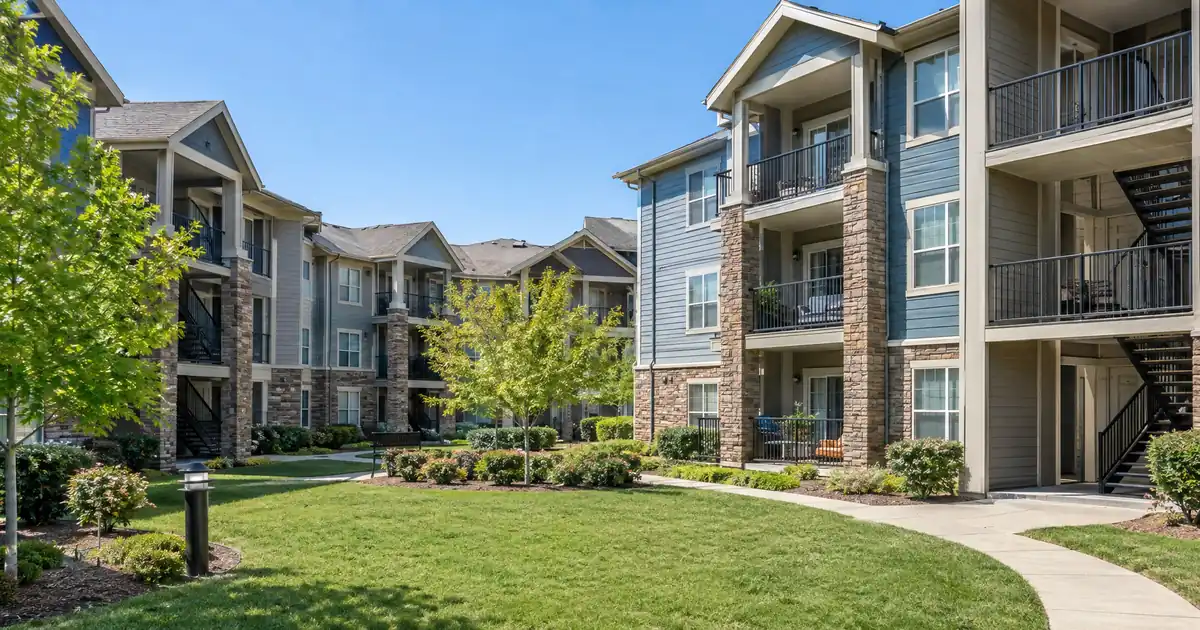
The Quick Read: Yes, hard money (short-term, asset-based lending secured by the property) is widely used on 5-to-10-unit buildings across the market, because lenders at this size judge the building’s income and the exit plan rather than your paycheck. Lendmire’s own hard money program is narrower, so the details below matter.
- Five units is where lending moves from residential to commercial, so underwriting shifts to the building’s income and condition.
- On Lendmire’s hard money sheet, collateral is non-owner-occupied residential property with 1-4 units. Ground-up construction can go to 10 units. Existing 5-to-10-unit buildings are not offered there.
- Hard money terms are short, interest-only and built around an exit, so the plan for getting out matters as much as the purchase.
- Many stabilized 5-to-10-unit buildings fit long-term DSCR financing better, through select lenders in the network.
- Everything varies by lender, property, and experience, and nothing here is a commitment to lend.
Why Five Units Changes the Loan
Five units is the line where a building stops being treated as residential and starts being treated as commercial. That single change reshapes the questions a lender asks, the paperwork you hand over, and how the exit works.
What this loan actually costs to carry.
Hard money is sized against the project and priced by time. Enter the deal and see how much the program will lend, the cash required at closing, the carry while you hold it, and what is left at the exit.
Leverage tiers on the current program: 85% with fewer than 2, 90% with 2 or more, 93% with 5 or more completed projects — every tier capped at 75% of after-repair value. Loan amounts up to $5,000,000, larger by exception; terms of 6 to 18 months, interest-only, no prepayment penalty. The rehab portion funds in draws against completed work, not at closing.
Program parameters shown update from Lendmire’s centralized guideline source. Rate, points, and months are editable assumptions, not quoted terms.
Cost cap sets the loan · positive spread
Illustrative estimate only — not a quote, Loan Estimate, approval, or commitment to lend. Rate, points, and months are editable assumptions. Hard money is business-purpose financing for real estate investors, not a consumer mortgage. Leverage on the current program tops out at 93% of project cost for investors with a documented track record, capped at 75% of after-repair value, with rehab funding up to 100% of the documented budget released in draws; actual terms vary by lender, borrower experience, property, and exit. Lendmire is a mortgage broker, not a lender.
LoopNet explains that multifamily with five or more units is classified as commercial, while two to four units is residential. It also notes that zoning, intended use, and local assessor methods can override the five-unit threshold. A mixed-use building with a storefront under apartments is the classic case where the label gets fuzzy. Ask a lender about your exact building before you make an offer.
The practical differences look like this:
| Factor | 2-4 Units | 5-10 Units |
|---|---|---|
| Classification | Residential | Commercial multifamily |
| Underwriting focus | Borrower and property | Property income first |
| Income review | Simple rent analysis | Full income and expense review |
| Typical paperwork | Leases, application | Rent roll, operating statements |
| Home-mortgage programs | Can apply | Do not apply |
The five-unit line is a market convention, not a law of nature. That is why the same building can be financed through very different channels depending on who is lending.
What Hard Money Means on a Building This Size
Hard money lending means a lender funds a loan based mainly on the collateral and the business plan, not on the borrower’s income history. The loan runs for a short term and is repaid by selling the property or refinancing into long-term debt. Some lenders now say private lending, bridge lending, or transitional lending for the same thing, so those search terms lead to the same product.
Hard money is not underwriting-free. A lender still looks at the property, your plan, your experience, and how the loan gets repaid. The collateral just carries more weight than your traditional personal-income documentation does.
On a 5-to-10-unit building, that suits a specific kind of deal:
- A building with vacant or poorly managed units that permanent lenders will not touch yet.
- A purchase that needs a short-fuse close, because a seller will not wait on a slow commercial bank process.
- A renovation project where the value comes after the work is done.
It suits a stabilized, fully rented building much less. Short-term money costs more than long-term money, so holding it for years is an expensive mistake.
What Lendmire’s Hard Money Program Covers
Lendmire is a broker. It arranges hard money through lenders in its network, and the lenders review each file. Here is the honest picture of what the network’s hard money sheet covers.
Collateral. The program is built for non-owner-occupied residential property with 1-4 units. Ground-up construction is the exception, and it can reach 10 units. Commercial, industrial, land or lots, hospitality, and owner-occupied properties are not offered. An existing 8-unit apartment building is therefore not on this particular sheet.
Leverage. The sheet is tiered by how many projects you have completed, and the figures are loan-to-cost (a share of what the project costs you), not a plain loan-to-value ceiling:
- Fix-and-flip: 93% of project cost at 5 or more completed projects, 90% of project cost at 2 or more, and 85% of project cost with fewer than 2. Every tier is capped at 75% of after-repair value.
- Bridge purchase with no rehab: up to 80% of purchase price.
- Cash-out and rate/term refinance: up to 65% of value.
- Ground-up construction: up to 90% of cost and 75% of completed value at 3 or more completed projects.
The rehab budget can be funded up to 100% in draws, released against completed work. That is a rehab-budget figure, not a purchase figure. There is no true 100% purchase program.
Terms and size. Loans run 6 to 18 months, interest-only, with no prepayment penalty. Loan amounts go up to $5,000,000, with larger balances by exception. There are no multi-year options on the current program.
Credit. The minimum score is 620, with additional conditions below 660. First-time investors qualify at the lower leverage tiers, and the top tier is reserved for experienced investors. Underwriting stays asset-based, meaning it looks at the property, the plan, and the exit.
All of this varies by lender, property, and experience. If your building is an existing 5-to-10-unit property, the better question is usually which long-term or commercial path fits it, which the next sections cover.
How a Lender Reads a 5-to-10-Unit File
Lenders underwrite a 5-to-10-unit file from the building outward. They want to know what the property earns, what shape it is in, who runs it, and how the loan gets repaid.
Net operating income (NOI) is rental income after operating expenses and before debt payments. Lenders use it to size loans on commercial multifamily. The debt service coverage ratio (DSCR) then compares that income to the loan payment. A ratio of 1.00 means income exactly covers the payment.
The usual package for a bridge or commercial file includes:
- Rent roll. Each unit’s rent, lease terms, and occupancy. Lenders use it to see whether the income is real.
- Trailing operating statements. A year of actual income and expenses, which shows what the building truly nets.
- Schedule of real estate owned. It shows your experience and your other obligations.
- Proof of insurance. The building has to be insurable as it stands.
- Repair budget. It matters on any value-add deal and sets the draw schedule.
- Purchase contract or payoff statement. It documents the transaction itself.
- Entity documents and ID. Many investors hold buildings in an LLC, which is accepted subject to lender program eligibility.
Small buildings have their own pressure points. One vacant unit in a five-unit building is a 20% occupancy hit, while a vacancy in a ten-unit building moves the numbers far less. A single large commercial tenant on the ground floor can also dominate the income picture. Clean up the rent roll before submitting, because lenders compare it against bank deposits and leases.
A Worked Example: The Hypothetical 7-Unit Value-Add
Picture an investor eyeing a 7-unit building where three units sit vacant and need work. Every figure here is a modeled assumption, not a quote or a sourced market fact.
A permanent lender will not size a loan on today’s income, because the building is under-occupied. A market bridge lender will look at the purchase price, the rehab plan, the after-repair value, and the sponsor’s track record. The loan is sized on cost and the business plan, with the rehab portion released in draws as work is completed.
The investor then fills the units. Say the stabilized rent roll supports a coverage ratio around 1.2x on a long-term loan. That is a modeled outcome, and it ignores repairs, vacancy, management, utilities, and capital spending, which sit outside the ratio. Clearing 1.00 is not the same as positive cash flow.
Now the “what if it goes wrong” version. Renovations run late, two units stay empty, and the coverage ratio lands below 1.00. The investor has a few options:
- Extend the bridge loan if the lender allows it.
- Look at a long-term program for below-1.00 coverage, available through select lenders in the network with leverage and terms adjusted.
- Sell the building.
None of those is automatic. Each depends on lender guidelines and property review, which is why the exit plan comes before the purchase offer, not after.
Which Loan Fits Which 5-to-10-Unit Building?
Match the loan to the building’s condition, not to the loan you have heard of most. Hard money is the right tool for transitional buildings, and it is the wrong tool for ones that already perform.
| Building situation | Likely fit | Why |
|---|---|---|
| Vacant or distressed | Bridge or hard money | Income not yet bankable |
| Light rehab, mostly leased | Bridge, then long-term | Short plan, clear exit |
| Stabilized, well leased | DSCR or commercial loan | Income supports long-term debt |
| Mixed-use with storefront | Commercial lender | Use type drives eligibility |
| New construction up to 10 units | Ground-up construction loan | On the hard money sheet |
For stabilized buildings, long-term DSCR investor loans are often the practical answer. Across Lendmire’s wholesale network, DSCR purchase loans typically land at 75%-80% LTV on an investment property. Select high-leverage programs reach 85% LTV with roughly a 700+ score. Cash-out refinances top out around 75% LTV on standard rentals, with about 6 months of seasoning as the common expectation. Most programs want a credit score near 660, and 700+ unlocks the strongest leverage tiers.
Coverage works the same way. A 1.00 ratio is where many select programs start. A separate select-lender path goes below 1.00, with leverage and terms adjusted. Stronger coverage opens better leverage and pricing.
Eligibility for 5-to-10-unit buildings thins out compared with 1-4 units, because fewer lenders take the larger property type. Occupancy rules, leverage, and credit standards tighten as unit count rises. Lendmire’s piece How to Meet DSCR Occupancy Standards on a 5-10 Unit Building covers that side in detail. A larger down payment can lower the payment and lift the ratio, but it never erases leverage caps, credit floors, reserve rules, or property eligibility. The full picture is in Lendmire’s complete DSCR loans guide, and the equity side is covered in how to meet DSCR loan down payment requirements for a 5 to 10 unit property.
The Exit: Plan It Before You Borrow
Hard money is only the first half of the deal. A short-term loan exists to be paid off, so the plan for paying it off has to be credible on day one.
There are four common exits:
1. Refinance into long-term debt. This is the standard path once the building is stabilized. Many investors refinance out of hard money into long-term DSCR financing, and Lendmire brokers that path through select lenders.
2. Sell. It works when the renovation creates a clear gap between your all-in cost and the market value.
3. Extend. Some lenders allow it, but it adds cost and is never guaranteed.
4. Plan B. A backup lender or a lower-leverage structure protects you if a refinance does not land.
Commercial loans can also carry terms shorter than their amortization schedule, which leaves a balloon (a large remaining balance due at maturity). If your takeout is a commercial loan, treat that maturity date as another exit you have to plan for. Tax treatment varies; consult a qualified professional before relying on any deduction.
One Business-Purpose Note
Hard money on a 5-to-10-unit building is a business-purpose investor loan, so it is reviewed differently from an owner-occupied mortgage. The CFPB’s Regulation Z exempts credit extended primarily for a business or commercial purpose. The RESPA rule at 12 CFR 1024.5 carries a similar business-purpose exemption. The lender still decides the primary purpose of each loan, so the file has to show a real investment plan.
Key Terms Defined
- Rent roll: a list of every unit with its rent, lease terms, and occupancy.
- Net operating income (NOI): rental income minus operating expenses, before any loan payment.
- Loan-to-cost: the loan amount as a share of what the project costs, rather than what it is worth.
- After-repair value: the estimated value of the property once the planned work is finished.
- Draw: a release of renovation funds after a portion of the work is completed.
- Balloon: a large balance due at the end of a loan whose payments were not enough to pay it off.
- Stabilized: a building that is leased up and operating at normal occupancy.
Frequently Asked Questions
Can I use hard money on a fourplex but not a fiveplex?
On Lendmire’s hard money sheet, the answer leans that way. Collateral covers 1-4 unit non-owner-occupied residential property, so a fourplex fits and an existing fiveplex does not. Ground-up construction is the exception, and it can go up to 10 units. Lenders in the wider market do lend on five-plus units, with their own terms.
Do I need good credit?
Credit matters less than the property and the plan, but it still counts. The sheet’s minimum score is 620, with additional conditions below 660.
Is a hard money loan on five or more units a commercial loan?
In practice, yes. Five or more units is classed as commercial multifamily, which is why underwriting looks at the building’s income and operations. Zoning and use can shift that label, so confirm the classification before you make an offer.
What happens if I cannot refinance when the term ends?
You have to have a Plan B, because the loan is short and interest-only. Options include an extension if the lender allows it, a lower-leverage long-term program, or selling the building. None is automatic, so build the backup into the deal before you borrow.
Can hard money fund the renovation on an existing building?
Up to 100% of the rehab budget can be funded in draws against completed work. It applies on the collateral the sheet covers, and the draws release as work is finished.
Next Step
If you are buying, rehabbing or refinancing an investment property on a short timeline and want to see how the numbers work, Lendmire can help you compare hard money options based on the project, the exit plan, leverage, and your goals. Lendmire arranges investor financing through select lenders in its wholesale network across 41 markets, including Washington, D.C. Whether a 5-to-10-unit building fits a short-term bridge or a long-term rental loan comes down to how much of the income is already on the rent roll.
About Lendmire
As a non-QM mortgage broker (NMLS# 2371349), Lendmire facilitates DSCR investor loans across 41 markets, including Washington, D.C. DSCR eligibility is generally reviewed around property-level rental income instead of personal income documentation, subject to lender guidelines, serving LLC-structured portfolios and self-employed borrowers who don’t fit conventional boxes. A two-time Scotsman Guide Top Mortgage Workplace (2025, 2026).
Get Started
Ready to find the right loan for you?
In about 30 seconds you can review financing options available for your investment property. No commitment required.
Informational only. Not a Loan Estimate, approval, or commitment to lend. Program availability and eligibility are subject to lender guidelines, credit approval, property review, and underwriting.
References
1. LoopNet — Is Multifamily Commercial or Residential?
2. CFPB — Regulation Z, 12 CFR 1026.3
3. Cornell LII — 12 CFR 1024.5
This article is part of Lendmire’s hard money loan program — full qualification details, guidelines, and scenarios live on the program page.
Related reading: How Much Hard Money Lenders Lend on a Small Apartment Building · How to Handle a Servicing Transfer on a Hard Money Loan · Cash vs Gap Loan vs Hard Money Modification for a Scaling Flipper
Brandon Miller
Founder & CEO, Mortgage Loan Originator, Lendmire LLC
- Mortgage Loan Originator · NMLS# 1129696 · Verify on NMLS Consumer Access
- North Carolina Real Estate Broker · License# 343312 · Verify on NCREC
- North Carolina Insurance Producer · License# 19053198 · Property, Casualty, Life, Health · Verify on NAIC SBS
- Lendmire LLC · Firm NMLS# 2371349 · Verify firm licensure
Disclosure information. Lendmire is a state-licensed mortgage brokerage under NMLS# 2371349. Lendmire is not a depository institution, direct lender, or financial advisor — all loans referenced are placed through wholesale lender partners and are subject to each lender's underwriting standards. This article is provided for general informational purposes and is not a commitment to lend, nor does it constitute financial, legal, or tax advice. Loan programs, terms, rates, and qualification standards change without notice and depend on borrower profile, property type, and the state in which the subject property is located. Equal Housing Opportunity provider. NMLS Consumer Access: nmlsconsumeraccess.org.