
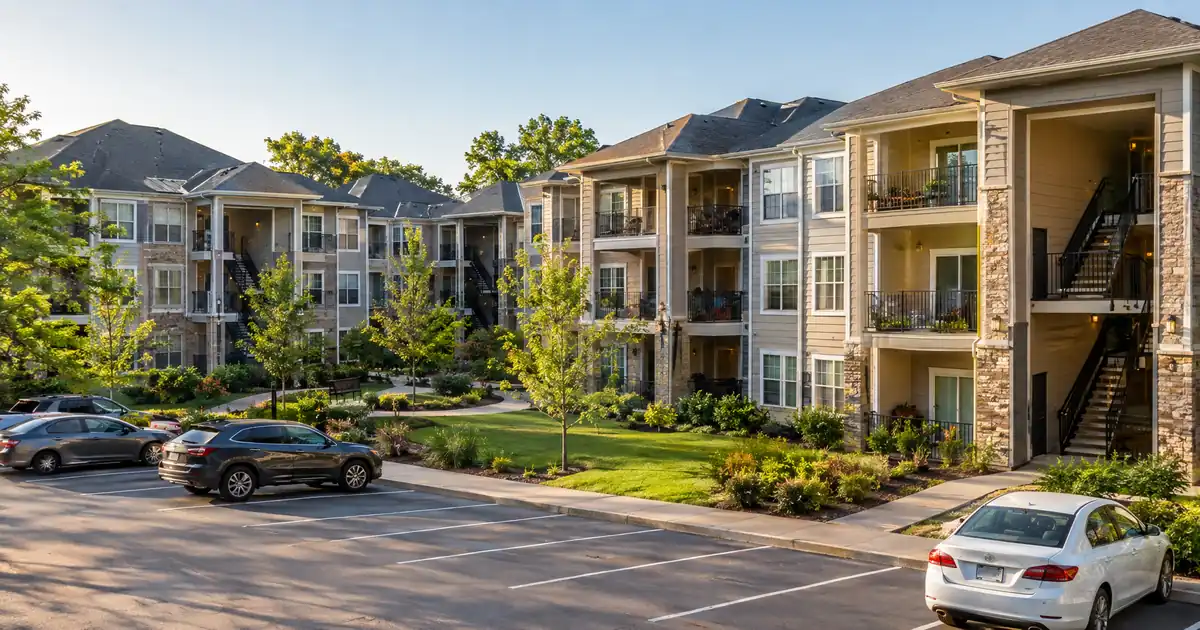
The Quick Read: Basement rent counts toward a DSCR cash-out refinance when the unit is legal, matches the local record, and is documented with a lease or an appraiser’s market-rent opinion. If the unit is unpermitted or not recognized as a unit, most lenders credit nothing for it. Setting up the file before the appraisal is ordered is what makes the difference.
- A legal basement unit can help twice: it may support a higher appraised value, and its rent can raise your coverage ratio.
- Permits, a final inspection, and a certificate of occupancy (where your jurisdiction issues one) are the usual proof of legality.
- Cash-out on a standard rental tops out around 75% LTV, and the amount you can pull is capped by the lowest of seasoning, rent coverage, and the LTV tier.
- A vacant legal unit is usually credited at the appraiser’s market rent, not at your own projection.
- Clearing the coverage ratio does not mean the property cash flows, because repairs, vacancy, and management sit outside the math.
What a Rental Cash-Out Refinance Is, and Where the Basement Fits
A DSCR version qualifies primarily on property-level rental income covering the payment, subject to lender guidelines. DSCR stands for debt service coverage ratio: the property’s monthly rent divided by its monthly PITIA. PITIA is principal, interest, taxes, insurance, and any HOA dues.
DSCR Cash-Out Calculator
Run the cash-out numbers in your market
Rate source: Freddie Mac 30-yr average via FRED® — Federal Reserve Bank of St. Louis · effective Oct 29, 2026
Prefilled with starting assumptions — enter your property’s value, balance, taxes, and insurance for a more accurate picture.
Program parameters update from Lendmire’s centralized guideline source. Taxes and insurance are editable estimates.
As of Oct 29, 2026 · General Freddie Mac market benchmark, not a Lendmire loan offer. Property value, balance, taxes, and insurance are editable estimates. Maximum loan-to-value varies by lender, program, property type, and seasoning. Not a Loan Estimate, approval, or commitment to lend. Program availability and eligibility are subject to lender guidelines, credit approval, property review, and underwriting.
DSCR loans are designed for non-owner-occupied investment properties. Because they are business-purpose investor loans, they are reviewed differently from a standard owner-occupied mortgage. That distinction matters for basements. If you live upstairs and rent the basement, the building is owner-occupied, and it is not a DSCR file.
Basement rent enters the picture as part of the numerator. Add counted rent and the ratio rises. Add rent the lender will not count and nothing changes. The entire question is which basement rent gets counted.
No single national rule decides this. DSCR loans are non-QM, meaning they sit outside the standard agency mortgage box, and each program sets its own treatment of a lower-level unit. Across the lenders we place files with, though, the pattern is consistent. Legal and documented rent is credited. Unpermitted or unrecognized rent is ignored. For the full background on how these loans work, see our complete DSCR loans guide.
Two Ways a Legal Basement Unit Helps
A legal basement unit can lift your cash-out through value and through coverage. These are separate levers, and an investor often gets only one of them. Knowing which is working tells you where to spend your effort.
| Lever | What it affects | What it depends on |
|---|---|---|
| Appraised value | The LTV ceiling on the loan | Comps and underwriter review |
| Counted rent | The coverage ratio | Legal status and documentation |
The value lever is softer than owners expect. A finished basement does not add to above-grade living area, so the appraiser may not credit square footage the way they would for a main-level addition. A legal, finished unit may support a higher appraised value, depending on comps and underwriter review. It never adds a fixed percentage.
The rent lever is more mechanical. If the unit is counted, its monthly rent goes into the ratio. Because cash-out raises the new payment, coverage often becomes the binding limit on proceeds before equity does. That makes the rent lever the more valuable one on many files.
How Underwriting Treats Basement Rent, Step by Step
Underwriting moves in a fixed order: classify the property, prove the unit is legal, order the appraisal with a rent schedule, document the rent, run the ratio, then apply the cash-out limits. A mistake early in the chain carries through every later step.
1. Classify the property. Unit count sets the path. A one-to-four unit rental goes through residential-style DSCR underwriting. Five or more units moves into commercial or small-balance lending, so the line for DSCR is five units, not two.
2. Establish legal status. The typical proof is the building permit, the final inspection sign-off, and a certificate of occupancy where one is issued. The unit count on your paperwork should match the local record. A building marketed as a fourplex but legally a triplex gets valued and tested as a triplex.
3. Order the appraisal with a rent schedule. A single-family appraisal pairs with Form 1007, the comparable rent schedule. A two-to-four unit property uses Form 1025, the small residential income report, where the appraiser gives a market-rent opinion for each unit.
How the basement is classified decides which form applies. A basement with its own entrance, its own utility meters, and its own postal address leans toward a two-unit conclusion. A basement that shares utilities and entry with the main house leans toward one unit with an accessory space. Ask about this before the appraiser visits, not after.
4. Document the rent. An occupied unit needs a lease. A multi-unit property usually also needs a rent roll. A vacant unit generally uses the appraiser’s market-rent estimate in place of a lease, so a tenant does not have to be in place at the refinance.
Lenders use the lease or the appraiser’s market rent, not your own pro forma. They typically look at the lower of the two. A below-market lease can drag rent used for lender review down, so renewing at market before you apply may help.
5. Run the ratio. Divide qualifying monthly rent by PITIA. Counted basement rent raises the top number. The ratio itself is only a test; it does not tell you what the property earns.
6. Apply the cash-out limits. On a cash-out refinance of a standard rental, most programs in our wholesale network top out around 75% LTV. About six months of ownership is the common seasoning expectation, measured from title recording rather than from the end of a rehab. Your actual proceeds equal the lowest result of three checks: seasoning, rent coverage, and the LTV tier.
At the program level, a 1.00 DSCR is where many select programs start. A separate select-lender path takes coverage below 1.00, with leverage and terms adjusted. Stronger ratios generally open better pricing and leverage.
Three Scenarios, One Table
Legal and leased, legal and vacant, and unpermitted are the three situations you will meet most often. Each treats the basement rent differently, and each calls for a different next move.
| Scenario | How the rent is treated | Support document | Next step |
|---|---|---|---|
| Legal and leased | Credited at lease or market, whichever is lower | Lease, rent roll | Renew at market before applying |
| Legal and vacant | Credited at appraiser’s market rent | Appraisal rent schedule | Prepare legal proof, no tenant required |
| Unpermitted | Usually not credited | None that counts | Legalize, or qualify on the main unit alone |
A signed lease does not change the third row. A lease proves a tenant exists, not that the space is a legal dwelling.
A Worked Example: Same House, Two Outcomes
Consider a small rental with a finished basement unit. These coverage figures are illustrative and modeled, not a promise for any file. With the basement excluded, the property tests at roughly 0.95x. That is below the 1.00 level where many select programs start.
Now suppose the unit is legal, documented, and counted. The same property tests at roughly 1.15x. Nothing about the building changed. Only the counted rent did.
At 0.95x you have options, but each one adjusts something. A select-lender path takes coverage below 1.00 with leverage and terms adjusted. A larger down payment on a purchase, or lower leverage on a refinance, can lift the ratio by lowering the payment. Each route is reviewed subject to lender guidelines, credit approval, and property review.
At 1.15x you are inside the range where more programs and tiers become reachable. Your credit score and reserves still apply. A 620 floor exists in parts of the network, most programs want around 660, and 700 or higher opens the strongest leverage tiers. Reserves commonly run around six months of PITIA, stepping up to about nine months on loans above $1,500,000. They vary by lender, leverage, loan size, and transaction type.
Equity alone never settles this. The strongest files clear both tests: enough equity and enough rental coverage.
If Your Basement Isn’t Legal
Unpermitted rent is a dead end only if you stop there. You have three realistic paths, and they are worth comparing before you apply.
Legalize first. Bring the unit up to code, get the permit and the inspection sign-off, then refinance. On a file where coverage is the limiting factor, legalizing can be worth more than the cost. Local rules decide what a legal basement unit requires, so confirm egress, ceiling height, and fire-safety standards with your local building department.
Ask for case-by-case review. Some lenders in the network will look at the whole file, but treatment varies by program. Do not plan around it.
Qualify on the main unit alone. Treat the basement as a bonus, not part of the math. If the property clears coverage without it, the unpermitted unit simply does not matter to the loan. If it does not clear, this path will not work.
Whichever path you take, avoid pushing a basement into the file as something it is not. A unit count that disagrees with the local record tends to surface at appraisal or underwriting, and it can sink the whole file.
Where the General Rule Breaks
Five situations bend the standard pattern. Each needs a check before you count on the basement rent.
Grandfathered units. A legal non-conforming unit is one that was allowed when built but no longer matches current code. Agency policy accepts these if the unit is still legally rentable, per Freddie Mac’s ADU fact sheet, which also bars income from an illegal ADU. DSCR treatment varies by program, so proof of grandfathered status matters and a broker should confirm the lender’s view before you order the appraisal.
Unit count versus appraisal classification. A one-unit-plus-ADU conclusion uses the rent schedule on Form 1007. A two-unit conclusion uses Form 1025. The same basement can land on either side depending on entrance, meters, and address.
Short-term rental use. Basement income from nightly guests is documented differently from long-term rent. For short-term rental collateral, cash-out tops out around 70% LTV, versus about 75% on standard long-term rentals. Expect a 640 or higher score and about 12 months of hosting history. The exact numbers vary by lender and program and follow a full review of property, leverage, and credit.
Owner-occupied buildings. Here the agency treatment runs the opposite way from DSCR. For an owner-occupied one-unit home, Fannie Mae’s Selling Guide caps accessory-unit income at 30% of total qualifying income. A DSCR investor loan has no such cap because the rent is property income, but it requires that you do not live in the building. This is contrast only. Agency rules do not govern DSCR files.
Ineligible structures. Manufactured homes, log homes, and barndominiums are not offered in the network’s DSCR programs, so a basement unit in one of those cannot be part of a file.
Coverage Is Not Cash Flow
Clearing 1.00 does not mean the property makes money. DSCR compares rent to PITIA only. Repairs, vacancy, property management, utilities you pay, and capital expenses all sit outside the calculation.
A basement unit can push coverage over a threshold and still leave a thin real margin. That is especially true if the unit needs a bigger insulation or egress upgrade, or if it turns over often. Judge the deal on your own operating budget, not only on the ratio the lender tests.
A second point to understand is how much a small bump in counted rent can matter to proceeds. Where coverage is the binding limit, a small increase in counted rent can move the loan amount noticeably. That is a reason to document carefully. It is not a reason to stretch the rent assumption, since the lender uses the lower of lease and market anyway.
Operator-level pattern: in the files we place, basement units rarely fail because the rent was too low. They fail because the paperwork, the unit count, and the appraisal classification did not agree with each other. Sorting that out before the appraisal is ordered prevents most surprises, and it is far cheaper than fixing it afterward.
Your Pre-Application Checklist
Work through this list before you ask for a quote.
- Confirm you do not live in the building, since DSCR is for non-owner-occupied property.
- Pull the permit, final inspection, and certificate of occupancy for the basement.
- Check that the unit count on your paperwork matches the local record.
- Note whether the basement has its own entrance, meters, and address.
- Gather a lease for each occupied unit, and renew any below-market lease at market.
- Confirm you have owned the property about six months from the recording date.
- Check your credit tier against the 620, 660, and 700 breakpoints.
- Plan for reserves, commonly around six months of PITIA, and more on loans above $1,500,000.
- Decide whether you are comfortable if the basement is excluded and the main unit must carry the file.
Loan amounts run up to about $3,000,000 on standard programs, and above $2,500,000 the network generally holds to 30-year fixed structures. Extended terms, interest-only periods, and ARMs are available through select lenders in the network. Every file is underwritten individually, and nothing here is a commitment to lend.
Key Terms Defined
DSCR (debt service coverage ratio): the property’s qualifying monthly rent divided by its monthly PITIA.
PITIA: principal, interest, taxes, insurance, and any HOA dues, which together make up the monthly obligation the rent must cover.
Cash-out refinance: a new, larger loan that pays off the old one and gives you the difference in cash.
Seasoning: the waiting period a lender wants after you buy a property before it will allow cash-out, commonly about six months from title recording.
Legal unit: a dwelling that is permitted, inspected, and recognized in the local record as a separate unit.
ADU (accessory dwelling unit): a smaller second dwelling on the same property, such as a basement apartment or garage studio.
Market rent: the appraiser’s opinion of what a unit would rent for, used when there is no lease or when the lease is below market.
Non-QM: a loan outside the standard agency mortgage box, qualified on alternative measures such as property income.
Frequently Asked Questions
Can unpermitted basement rent be used on a DSCR cash-out refinance?
Usually not. Most programs credit only legal, documented units, so rent from an unpermitted apartment typically adds nothing to the ratio. You can legalize the unit first, ask for case-by-case review, or qualify on the main unit alone.
Does a signed lease make the basement rent count?
No. The lender looks for the permit, inspection, and certificate of occupancy, and the unit count must match the local record.
Does the basement need a tenant in place when I refinance?
Generally no. For a legal vacant unit, the appraiser’s market-rent opinion typically stands in for a lease. The lender uses that estimate rather than your own projection.
How much cash can I take out?
It depends on the lowest of three checks: seasoning, rent coverage, and the LTV tier. On a cash-out refinance of a standard rental, most programs top out around 75% LTV. Because the new loan raises the payment, coverage can cap proceeds before equity does.
Does passing the coverage test mean the property cash flows?
No. DSCR counts rent against PITIA only. Vacancy, repairs, management, utilities, and capital expenses are outside the calculation, so judge the deal on your own operating budget too.
Next Step
If you are buying or refinancing a rental property and want to see how the numbers work, Lendmire can help you compare DSCR loan options based on the property income, credit profile, leverage, and investor goals. As a mortgage broker, Lendmire arranges financing through select lenders in its wholesale network, across 41 markets, including Washington, D.C. You can reach the team at 828-256-2183.
A deeper walk-through of investment-property equity extraction lives in Lendmire’s guide to cash-out refinance on an investment property.
About Lendmire
Lendmire is a non-QM mortgage brokerage (NMLS# 2371349) arranging DSCR investor loans in 41 markets, including Washington, D.C. DSCR eligibility is generally reviewed around property-level rental income rather than personal income, subject to lender and program guidelines, a fit for self-employed investors and LLC-owned portfolios. Lendmire was recognized as a Scotsman Guide Top Mortgage Workplace in 2025 and 2026.
Get Started
Ready to find the right loan for you?
See your offer in seconds. No credit pull, no obligation.
Informational only. Not a Loan Estimate, approval, or commitment to lend. Program availability and eligibility are subject to lender guidelines, credit approval, property review, and underwriting.
References
2. Fannie Mae Selling Guide B3-3.8-02
This article is part of Lendmire’s investment property cash-out refinance program — full qualification details, guidelines, and scenarios live on the program page.
Related reading: How Lenders Underwrite a Short-Term Rental Cash-Out Refinance After One Payment · How a Lender Counts Reserves on a BRRRR Cash-Out Refinance
Brandon Miller
Founder & CEO, Mortgage Loan Originator, Lendmire LLC
- Mortgage Loan Originator · NMLS# 1129696 · Verify on NMLS Consumer Access
- North Carolina Real Estate Broker · License# 343312 · Verify on NCREC
- North Carolina Insurance Producer · License# 19053198 · Property, Casualty, Life, Health · Verify on NAIC SBS
- Lendmire LLC · Firm NMLS# 2371349 · Verify firm licensure
Compliance and disclosures. Lendmire (NMLS# 2371349) is a licensed mortgage broker and is not a direct lender, depository institution, financial advisor, or tax professional. Content in this article is general market analysis and educational information — not financial, legal, or tax advice for any specific situation. Lendmire does not guarantee loan approval; every transaction is subject to underwriting by the funding lender. Mortgage pricing and loan program guidelines are subject to change at any time without notice and vary by borrower characteristics, property type, and state regulations. Lendmire complies with Equal Housing Opportunity. Licensure verification: NMLS Consumer Access.