
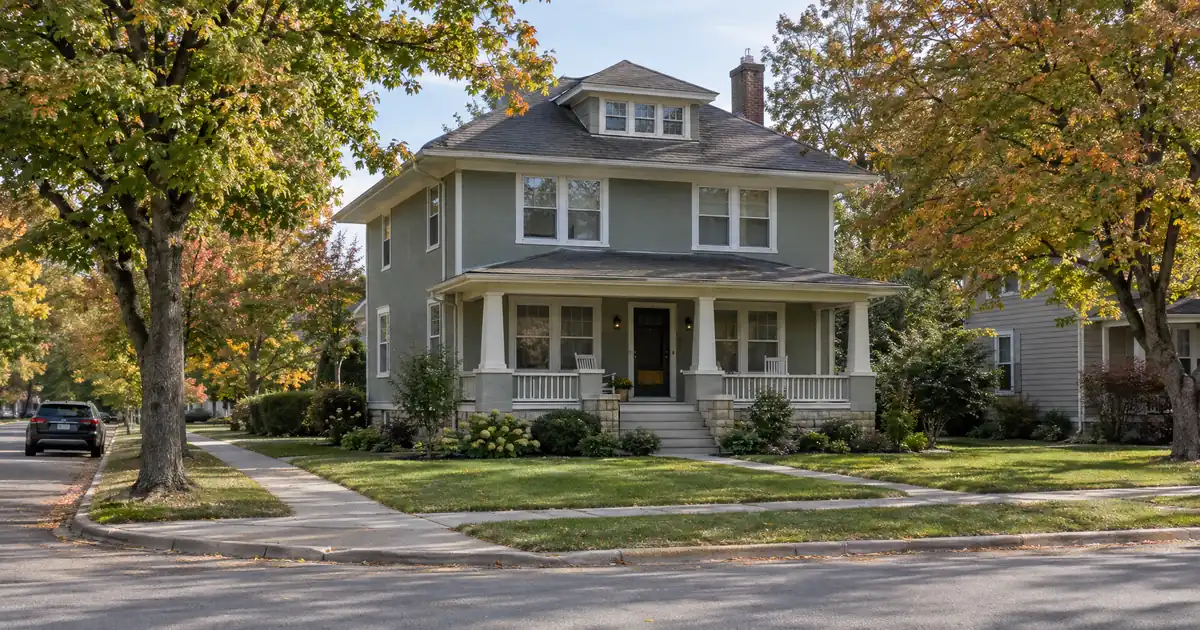
The Quick Read: Buy the rental with your own cash, keep a clean paper trail, and ask a lender that offers the exception to refinance before the usual six months of ownership pass. The lender sizes the new loan to what you documented putting in, not to a full appraisal-based payout.
- It is an exception to the waiting period, not a separate loan. Rent coverage, credit, reserves, and the appraisal still apply.
- The purchase must be all cash, with no loan secured by the property itself, and every dollar must be traceable.
- On a standard rental, cash-out tops out around 75% LTV across most of the network. The loan can also be capped by your documented cost.
- Not every lender offers the exception. Confirm it in the program guideline before you buy.
- Hard-money purchases, entity mismatches, and gifted funds are the usual ways these files fail. Final terms depend on the lender’s guidelines, the property type, and the borrower’s complete credit picture.
Key Terms Defined
Delayed financing: a lender exception that lets you take cash out of a property you bought with cash, without waiting out the normal seasoning period.
Seasoning: the waiting period a lender wants between buying a property and refinancing it with cash back. Across most of the network, that is about six months, measured from title recording.
Cash-out refinance: a new loan that pays off any existing debt and hands you the leftover cash. A refinance that returns cash is priced and capped as cash-out, even on a property with no mortgage.
LTV (loan-to-value): the loan amount divided by the property’s appraised value.
DSCR (debt service coverage ratio): monthly rent divided by the full monthly payment, meaning principal, interest, taxes, insurance, and any HOA dues. That payment is called PITIA.
Cost basis: the documented money you put into the purchase, plus eligible closing costs.
DSCR Cash-Out Calculator
Run the cash-out numbers in your market
Rate source: Freddie Mac 30-yr average via FRED® — Federal Reserve Bank of St. Louis · effective Oct 29, 2026
Prefilled with starting assumptions — enter your property’s value, balance, taxes, and insurance for a more accurate picture.
Program parameters update from Lendmire’s centralized guideline source. Taxes and insurance are editable estimates.
As of Oct 29, 2026 · General Freddie Mac market benchmark, not a Lendmire loan offer. Property value, balance, taxes, and insurance are editable estimates. Maximum loan-to-value varies by lender, program, property type, and seasoning. Not a Loan Estimate, approval, or commitment to lend. Program availability and eligibility are subject to lender guidelines, credit approval, property review, and underwriting.
What Delayed Financing Actually Is
Delayed financing is a carve-out inside the cash-out rules. It is not a product you shop for by name.
Here is the problem it solves. Say you pay cash for a rental. You own it free and clear, and the lender sees a “refinance” that returns cash. Under a standard cash-out program, that refinance has to wait for seasoning. If you want your capital back for the next deal, you would normally sit tight for about six months.
Delayed financing says the waiting period is unnecessary when you can prove you bought with your own money. The lender is not worried about a flipper’s quick resale. The lender wants evidence that this was a genuine cash purchase and that you are not borrowing the same money twice.
The exception waives timing. It does not waive underwriting. That single idea answers most of the questions investors ask about it.
Does Your Purchase Qualify?
Your purchase qualifies when you bought at arm’s length, with cash, and can document where every dollar came from. Anything that put a loan on the subject property at purchase breaks the test. Across the lenders Lendmire works with, the guideline text varies, so the table below shows the general pattern.
| Your situation | Usually works? | What to do |
|---|---|---|
| Bought with savings | Yes | Keep statements |
| Bought with a loan on another asset | Often | Document it; expect payoff |
| Hard-money or bridge loan on the property | No | Standard seasoning applies |
| Seller is a relative or related party | No | Not arm’s-length |
| Gifted purchase funds | No | You must be the source |
| Bought in a different name than the refinance | Risky | Match buyer and borrower |
Property type matters too. The network does not offer DSCR loans on manufactured homes (single- and double-wide), log homes, or barndominiums. A cash purchase of one of those cannot be refinanced here, however clean the paper trail.
Step by Step: From Cash Closing to Refinance
The process runs in a set order, and the work that matters most happens before you buy.
1. Buy with your own cash. Savings and retirement money are common sources. A loan secured by a different asset can also work, but that money has to be repaid from the refinance proceeds.
2. Collect the documents. Keep the settlement statement from your purchase, the purchase contract, the recorded deed, and title evidence. Add bank or brokerage statements covering every dollar that went into the deal.
3. Confirm the lender offers the exception. Many loan officers do not know it exists. Under DSCR rules, each lender writes its own version or has none.
4. Apply for the cash-out refinance. Ownership can be well short of the standard six months, subject to the program guideline.
5. Underwriting runs as a cash-out. The lender orders an appraisal, checks the source of funds, tests the rent against the payment, and looks at credit and reserves.
6. Close and settle. Because DSCR loans are business-purpose, they are exempt from TRID disclosure rules under Reg Z 1026.3, so expect a settlement statement rather than a consumer Closing Disclosure. If you used a loan secured by another asset, that statement should show the proceeds paying it off or down.
A tip from the broker’s side: put the paper trail in one folder on purchase day. Files that fail on documentation usually fail because someone is hunting for a statement months later.
How the Loan Amount Gets Sized
Where a lender applies the exception, the new loan is limited by two tests at once. The first is the cash-out LTV ceiling applied to the current appraised value, which is about 75% on a standard rental. The second is your documented cost basis. The loan comes out as the lesser of the two.
That is why delayed financing is not a way to borrow against after-repair value or a bargain you negotiated. It returns the money you put in. If the property appraises far above cost, the cost basis is usually the tighter limit.
Run the numbers on a modeled cash purchase. The table expresses everything as a share of what you paid.
| Appraisal vs. price paid | 75% of appraisal | Cost cap | What binds |
|---|---|---|---|
| 10% below | 67.5% of price | About 100% | LTV |
| Equal | 75% of price | About 100% | LTV |
| 20% above | 90% of price | About 100% | LTV |
| 40% above | 105% of price | About 100% | Cost basis |
These are modeled assumptions, not a quote. A lender that sizes differently, or a file with a thin appraisal, will land elsewhere. Notice the pattern: in most real files, the 75% ceiling is what limits you, so you keep roughly a quarter of the property’s value in the deal. If you want maximum leverage, the exception works against you.
Remember that the cash-out program prices as cash-out. Two sets of closing costs apply as well, one at purchase and one at the refinance.
How DSCR Underwriting Treats the Refinance
Underwriting treats it like any other DSCR cash-out. The loan is reviewed primarily on property-level rental income covering the payment, subject to lender guidelines.
- Coverage. 1.00 is where many select programs start. A separate select-lender path takes coverage below 1.00, with leverage and terms adjusted. Stronger ratios open better pricing and leverage.
- Credit. A 620 floor exists in parts of the network. Most programs want around 660, and 700 or higher unlocks the strongest leverage tiers.
- Reserves. These vary by lender, leverage, loan size, and transaction type. About 6 months of PITIA is common, and loans above $1,500,000 typically step up to about 9 months.
- Loan size. Standard programs run up to $3,000,000.
Clearing 1.00 does not mean the property cash flows. DSCR compares rent to PITIA only. Repairs, vacancy, management, utilities, and capex sit outside the calculation, so budget for them separately.
These loans are designed for non-owner-occupied investment properties. Because they are business-purpose investor loans, they are reviewed differently from a standard owner-occupied mortgage.
A larger equity cushion lowers the payment and can lift coverage. It never erases leverage caps, credit floors, reserve rules, or property eligibility. The strongest files clear both tests: enough equity and enough rental coverage.
Short-term rentals follow their own limits. Cash-out on short-term-rental collateral generally tops out around 70% LTV, versus 75% on standard rentals. Expect a 640+ score and about 12 months of hosting history. Short-term rental rules can vary by city, county, HOA, and property type, so investors should confirm local rules before relying on projected rental income.
Delayed Financing vs. Waiting Six Months
The honest comparison comes down to what you gain by refinancing early and what you give up. Lendmire’s comparison of delayed financing and seasoning goes deeper, but the structure looks like this.
| Factor | Delayed financing | Wait out seasoning |
|---|---|---|
| Timing | Before six months | After about six months |
| Appraisal basis | Current value, capped by cost | Current value |
| Cash returned | Capped by documented cost | Up to the 75% LTV ceiling |
| Best when | Capital is needed for the next deal | The property has appreciated or been improved |
A quick break-even test helps. Compare the extra cost of refinancing now against what that capital earns on the next deal. Then check whether waiting would return noticeably more cash because the property has gained value.
If the property is worth about what you paid, delayed financing is nearly always the better use of time. If you bought at a steep discount, waiting can return more.
Where the Agency Version Comes From
Delayed financing began as an agency concept. Fannie Mae’s Selling Guide lists it under cash-out transactions, and its archived cash-out section shows the six-month ineligibility the exception carves out.
The agency conditions are a useful picture of the logic: an arm’s-length purchase, a settlement statement showing no financing, documented funds, gifts excluded, and a loan cap tied to the documented investment.
That is contrast, not the DSCR rulebook. DSCR loans are non-agency, and each lender in the network writes its own terms. For your file, the program guideline controls.
Where the Rule Breaks
Most failed files trace back to one of these edge cases.
Hard-money or bridge purchase. A lien on the subject property breaks the no-financing test. You can usually still refinance that loan, but you will not pull extra cash out until standard seasoning passes.
Entity mismatch. Say you buy through an LLC but refinance in your own name, or the purchase money sat in a partnership account. The buyer, the account, and the refinance borrower should match. LLC borrowers are accepted subject to lender program eligibility, and entity handling differs by lender. Lendmire’s piece Can a Trust-Held Rental Use Delayed Financing for a Cash-Out Refinance? covers the trust version.
Gift or family money. Lenders want the borrower to be the source of the cash. Gifted funds generally cannot be reimbursed through the refinance.
Related-party seller. A sale between relatives or related entities fails the arm’s-length test.
Rehab. The loan is tied to documented investment, not to after-repair value. Renovation costs generally cannot come out until seasoning passes. Some investors escrow rehab funds at purchase so they count toward acquisition cost, but whether a lender accepts that depends on the lender.
Borrowed purchase funds. If you borrowed against a different asset, the proceeds usually must repay that debt. Whatever remains is yours.
Plan Before You Buy
The decision is easier made before closing than after. Ask yourself these questions in order.
1. Will I really buy with only my own cash, with no lien on this property?
2. Does my lender actually offer the exception, in writing?
3. Will the buyer, the money, and the refinance borrower all be the same name?
4. Does the property fall under an eligible type?
5. Will the rent comfortably cover the payment on a new loan at up to 75% LTV?
6. Am I fine leaving roughly a quarter of the value in the deal? Each figure is subject to lender guidelines and a complete review of property type, leverage, and credit.
If every answer is yes, the exception fits. If question 6 is a no, buying with a standard financed purchase may suit you better. Most purchase files land at 75% to 80% LTV on an investment property, and select high-leverage programs reach 85% LTV with roughly a 700+ score. Leverage, reserves, and pricing vary by lender and program; the final terms follow the full file review.
For the end-to-end picture of how these loans work — qualification, structures, and the full process — see Lendmire’s complete DSCR loans guide.
Frequently Asked Questions
Can I use delayed financing if I bought the rental with a hard-money loan?
Usually not. The exception is built for cash purchases, and a lien on the property at purchase breaks that test. You can often refinance the hard-money loan itself, but extra cash back waits until the standard seasoning period ends.
Does delayed financing let me borrow against the property’s after-repair value?
No. The loan is tied to your documented investment and to the cash-out LTV ceiling on the current appraisal. Improvements may support a higher appraised value, depending on comps and underwriter review, but the cost basis still limits the exception.
Do I still need to show the rent covers the payment?
Yes. The refinance underwrites as a DSCR cash-out, so the rent test, reserves, credit, and appraisal all apply. The label only changes the waiting period.
What happens if I borrowed part of the purchase money?
A loan secured by a different asset can be acceptable if you document it. The refinance proceeds generally have to repay it, and any remaining payments count against you. Gifted money generally does not qualify.
What if my lender does not offer it?
Wait out seasoning, which is about six months from title recording, then apply for a standard cash-out. A broker who places files with many lenders can often find one that writes the exception.
Next Steps
If you are buying or refinancing a rental property and want to see how the numbers work, Lendmire can help you compare DSCR loan options based on the property income, credit profile, leverage, and investor goals. Lendmire arranges these loans through select lenders in its wholesale network, spanning 41 markets, including Washington, D.C. You can reach the team at 828-256-2183. Programs change, every file is underwritten individually, and nothing here is a commitment to lend.
Buying a rental for cash and refinancing it soon after is a plan, not a loophole, and the investors who do it well document everything before they ever call a lender.
For how equity extraction works on an investment property, see Lendmire’s guide to cash-out refinance on an investment property.
About Lendmire
Lendmire — NMLS# 2371349 — is a DSCR and non-QM mortgage brokerage with investor loan programs in 41 markets, including Washington, D.C. DSCR eligibility is commonly reviewed by the lender around property-level rent rather than personal income documentation, subject to lender guidelines, and the brokerage helps arrange financing for LLC-owned portfolios beyond conventional financed-property limits. Recognized by Scotsman Guide as a Top Mortgage Workplace in 2025 and 2026.
Get Started
Ready to find the right loan for you?
See your offer in seconds. No credit pull, no obligation.
Informational only. Not a Loan Estimate, approval, or commitment to lend. Program availability and eligibility are subject to lender guidelines, credit approval, property review, and underwriting.
References
1. Fannie Mae Selling Guide, Cash-Out Refinance Transactions (B2-1.3-03)
This article is part of Lendmire’s investment property cash-out refinance program — full qualification details, guidelines, and scenarios live on the program page.
Related reading: How to Plan and Use a Short-Term Rental Cash-Out Refinance to Recover Your Investment · How Lenders Underwrite a Short-Term Rental Cash-Out Refinance After One Payment · How to Qualify and Apply for a Short-Term Rental Cash-Out Refinance on a Two-to-Four Unit
Brandon Miller
Founder & CEO, Mortgage Loan Originator, Lendmire LLC
- Mortgage Loan Originator · NMLS# 1129696 · Verify on NMLS Consumer Access
- North Carolina Real Estate Broker · License# 343312 · Verify on NCREC
- North Carolina Insurance Producer · License# 19053198 · Property, Casualty, Life, Health · Verify on NAIC SBS
- Lendmire LLC · Firm NMLS# 2371349 · Verify firm licensure
Legal disclosures. Lendmire (NMLS# 2371349) is a state-licensed mortgage brokerage that arranges financing through wholesale lender relationships. Lendmire is not a direct lender, depository institution, or registered financial advisor. The discussion above is general informational content about real estate financing — it is not financial, legal, or tax advice, and readers should consult licensed professionals for guidance on their individual circumstances. Loan inquiries are subject to lender underwriting; this article does not represent a commitment to lend. Loan terms, rates, and qualification standards vary by borrower, property, and state, and are subject to change at any time. Equal Housing Opportunity. NMLS Consumer Access: nmlsconsumeraccess.org.