
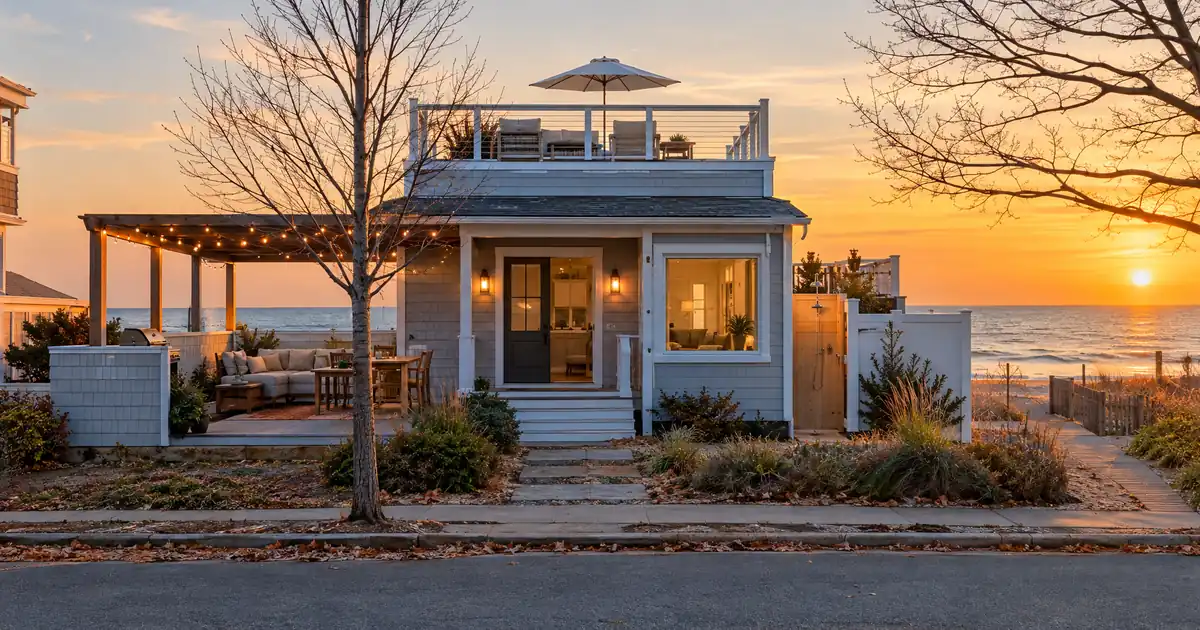
The Quick Read: To get an elevation certificate for a coastal rental, start by asking the local floodplain office and the seller whether one already exists, then hire a state-licensed surveyor, engineer, or architect to measure the building, and hand the finished form to your insurance agent before the DSCR file goes to underwriting. The certificate does not decide whether flood insurance is required. It helps price the flood premium, and that premium is part of the monthly payment your rent has to cover.
- Check for an existing certificate first. It is often free or close to it.
- Only a licensed surveyor, engineer, or architect can sign the measurement section.
- A certificate is no longer a condition of buying federal flood coverage, so the decision is about money, not paperwork.
- A lower flood premium can lift your coverage ratio. A higher one can pull it down.
- Order it during due diligence, before the contract deadline, not after.
What an Elevation Certificate Actually Is
An elevation certificate is a standard form that records how high a building sits compared with the flood level expected in that location. A surveyor measures the lowest floor, the ground next to the building, and any equipment or enclosures below the main living level. The results are compared with the property’s flood zone and its Base Flood Elevation, the height floodwater is expected to reach in a major event.
DSCR Calculator
Run the numbers in your market
Rate source: Freddie Mac 30-yr average via FRED® — Federal Reserve Bank of St. Louis · effective Oct 15, 2026
Prefilled with starting assumptions — enter your own rent or nightly figures, taxes, insurance, and HOA for a more accurate picture.
Program parameters update from Lendmire’s centralized guideline source. Taxes and insurance are editable estimates.
As of Oct 15, 2026 · General Freddie Mac market benchmark, not a Lendmire loan offer. Rent, nightly rate, occupancy, taxes, and insurance are editable estimates. Short-term rental figures are estimates only and vary significantly by season, property type, management approach, and local short-term-rental rules — confirm local regulations before relying on them. Qualifying income for short-term rentals varies by program — some use appraisal market rent, others use documented STR history or projections — and is confirmed in underwriting. Not a Loan Estimate, approval, or commitment to lend. Program availability and eligibility are subject to lender guidelines, credit approval, property review, and underwriting.
The form is published by the federal flood-insurance program. FEMA’s NFIP Elevation Certificate and instructions show the layout. The survey-based building measurements sit in Section C. Section D must be signed and sealed by a land surveyor, engineer, or architect authorized by state law to certify elevation data.
The same form lets an owner or the owner’s representative complete some sections, including the first-floor height section used for insurance rating. That is a lighter path than a full survey, and some investors use it. Ask your insurance agent whether it will be accepted before you rely on it.
Form editions get refreshed over time. Tell the surveyor to use the current edition rather than whatever version they have saved.
Do You Need One? It Depends on Who Is Asking
For most coastal rentals, no document is mandatory on its own. The flood zone drives the insurance requirement, and the certificate helps you price that insurance accurately. Here is how the pieces fit.
| Situation | Is a certificate needed? |
|---|---|
| Buying federal flood coverage | Not required; can lower cost |
| Private flood policy | Usually not required |
| Lender flood check | Zone comes from the flood determination |
| Map change request (LOMA) | Yes, as supporting data |
| New construction or permits | Often required locally |
Bankrate’s explainer notes that the certificate is no longer required for federal coverage under the newer rating system, and that private flood insurers typically do not require one either. Older advice, especially on Florida-focused pages, still says otherwise. Ignore it.
The flood determination is a separate document. The lender orders it, and it places the building in a zone. The certificate comes from a surveyor, not the lender, and it cannot overrule the determination by itself.
Across the wholesale network we place DSCR files with, the common pattern is simple. When the determination puts the building in a high-risk flood zone, flood insurance is expected. In a lower-risk zone it often is not. Exact documents and coverage amounts vary by lender, so confirm them on your specific file.
How to Get an Elevation Certificate for a Coastal DSCR Rental, Step by Step
Step 1: Look for an existing certificate. The Association of State Floodplain Managers says to contact the local floodplain manager first, because one may already be on file. Every community in the federal program has one, though the job title varies. If the local office is hard to reach, try the state floodplain management office.
Also ask the seller, the current flood insurer, the title or closing package, and the local building department. Newer construction often has a certificate from the permit stage.
Step 2: Judge whether an old one still works. An older certificate often still holds up if the building has not been altered and the flood map has not changed. A renovation, a new addition, or a remap can make it stale. Your insurance agent and lender have the final say on whether they will accept it.
Step 3: Hire a licensed professional if none exists. Look for a state-licensed surveyor, engineer, or architect with coastal experience. No contractor or home inspector can sign it. Ask what the fee covers, whether they use the current form edition, and whether the price changes for rush work.
Step 4: Let the crew do the field work. They run levels from a known benchmark and record the lowest floor, the lowest adjacent ground, and other features against the flood zone and Base Flood Elevation. Dense vegetation, tough terrain, and long distances from a benchmark can add time and cost.
Step 5: Send copies to the right people. Give the certificate to your insurance agent so the flood premium can be re-quoted. Keep a copy in your loan file so the lender and the broker can see what the premium is based on.
What it costs. Angi puts the average near $600, with most homeowners paying roughly $400 to $750. Complex coastal lots can run higher. Think several hundred to a couple thousand dollars, depending on the market. Angi also advises contacting surveyors at least a month before you need the paperwork, because delays can push back a closing.
Check the Certificate Before You Accept It
A certificate with an error can be worse than none. Before you pass it along, confirm these items:
- Licensed signature. Section D carries a seal from a surveyor, engineer, or architect authorized in your state.
- Current form. The edition is the current one, not an old version.
- Zone match. The flood zone on the certificate lines up with the lender’s flood determination. A mismatch needs to be sorted out before underwriting.
- Vertical datum. The measurements and the Base Flood Elevation use the same reference system.
- Right building. The address and parcel details match the property you are buying.
- Construction status. If the building was under construction or measured from drawings, a new certificate is needed once it is finished.
How the Certificate Feeds the DSCR Math
DSCR compares monthly rent with PITIA: principal, interest, taxes, insurance, and any HOA dues. On a coastal rental, insurance can be several separate lines, including wind and flood. The flood premium depends on the zone, the building’s elevation, its age, and mitigation features.
A certificate can help in one specific way. If the insurer’s modeled estimate of your building’s height is too low, a measured elevation can lower the premium. If the survey simply confirms the estimate, nothing changes. If it comes in worse, you learn that before you own the problem.
Run the numbers this way, using modeled assumptions rather than market data. Say a coastal duplex covers its full monthly obligation at about 1.04x using the insurer’s default flood estimate. A surveyor measures the lowest floor above the modeled height. The flood line is re-quoted lower, and coverage moves to roughly 1.10x. The same exercise can run the other way, with a worse measurement pulling the ratio toward 0.97x.
That is why timing matters. A re-quote near closing can change the ratio on a file that looked settled.
Remember what the ratio does not measure. Clearing 1.00 is not the same as positive cash flow. Repairs, vacancy, management, utilities, and capital expenses sit outside the calculation.
On the minimum coverage amount, the FDIC’s compliance manual describes the federal baseline for regulated lenders. It is the lesser of the loan balance, the maximum federal coverage available for that building type, or the building’s insurable value. Land is excluded, and condo units follow a separate calculation. Whether a given DSCR program applies the same baseline or a stricter one is a program question. Ask before you assume.
Where the General Rule Breaks
VE versus AE zones. Coastal VE zones face wave action, and the certificate records features that matter more there, such as pilings and enclosures below the lowest floor. AE zones are more common inland from the beach. Both are high-risk zones, but the elevation story and the cost impact can differ.
Flood openings and enclosures. A ground-level garage or storage area can count against the building if it is enclosed. The certificate records these spaces. Read that section, not just the headline elevation number.
Map changes. A certificate also supports requests to amend or revise a flood map. FEMA’s form says to complete Section C when it supports a Letter of Map Amendment or a fill-based revision. If the zone changes, the insurance requirement may change with it.
New construction. Local permitting often requires a certificate for new or proposed construction. USDA’s rural housing program does too, but that is a different loan product. For DSCR, the question is whether the file needs one to price flood insurance.
Storm damage and rebuilds. After a storm, a repair or rebuild can change the building’s elevation data.
Condos. Condo flood coverage usually runs through the association’s policy. That is a different mechanic from a single-family certificate.
Short-term rentals. Coastal vacation rentals have extra moving parts. Lendmire’s article Coastal Short-Term Rental DSCR Loans: Insurance and the Coverage Test goes deeper.
Order It Before You Make an Offer
Put the certificate in your due-diligence plan, not your closing checklist. Here is a workable order:
1. Before you offer, ask the seller and the local floodplain office whether a certificate exists.
2. In the contract, ask for any existing certificate and set an option period long enough to commission a new one.
3. Have the insurance agent quote flood coverage using the certificate, and ask for the wind quote at the same time.
4. Run the coverage ratio with the real insurance lines, not an estimate.
5. Send the certificate and quotes to your broker so the file reflects the actual monthly obligation.
Surveyors need lead time, and a delayed survey can hold up a closing. Build room into your contract deadlines rather than hoping the crew is available.
DSCR vs. conventional financing
There are two common ways to finance an investment property, and they qualify you differently — here’s how investors weigh them.
Why investors choose it
- Qualifies on the property’s rental income — no personal tax returns, W-2s, or pay stubs needed to document income.
- No personal debt-to-income ceiling to clear, so existing mortgages and obligations don’t cap your borrowing the same way.
- Can be closed in an LLC, keeping the property inside a business entity.
- Built for scaling — not held to the limit on number of financed properties that conventional financing applies.
- Underwriting centers on the deal: generally qualifies when the rent covers the payment, a 1.00x coverage ratio being a common baseline (confirmed in underwriting).
- Designed specifically for investment property, including long-term and, where the program allows, short-term rentals.
Where it’s strong
- Often the lowest ongoing financing cost for a buyer who fully qualifies on personal income — a fit for a first property or a cost-first purchase.
Trade-offs for investors
- Requires full personal income documentation and must fit within a debt-to-income limit — salary, existing debts, and other mortgages all count.
- Typically held in your personal name rather than a business entity.
- Caps how many financed properties you can carry, which can become a ceiling as a portfolio grows.
- Evaluates you as a borrower as much as the property, which usually means more paperwork.
How investors usually choose: a first or single property often optimizes for the lowest financing cost; portfolio builders often optimize for leverage, vesting in an LLC, and scaling past conventional caps. The right answer depends on your goals, the property, and current guidelines — both paths run through select lenders in Lendmire’s wholesale network, with eligibility and terms confirmed in underwriting.
Common Mistakes
- Assuming the certificate is required for flood insurance. Under the current rating system, it is optional.
- Assuming it always lowers the premium. It helps only when your measured elevation beats the modeled one.
- Treating it as a flood zone determination. They are different documents from different sources.
- Using an unlicensed preparer or an outdated form.
- Waiting until the loan file is in underwriting, then re-quoting insurance.
- Looking only at the flood line and forgetting that wind coverage is part of the same monthly obligation.
Survey fees are a property expense, but tax treatment varies; consult a qualified professional.
What the Loan Side Looks Like
Elevation data is about the property. Loan eligibility is a separate test, and the strongest files clear both: enough equity and enough rental coverage.
On a purchase, most programs we place files with land at 75% to 80% loan-to-value, which means 20% to 25% down. Select high-leverage programs can reach 85% on a purchase with a score around 700 or better. On a cash-out refinance, leverage tops out around 75% across most of the network, and many programs expect about six months of seasoning.
On coverage, 1.00 is where many select programs start. A separate select-lender path goes below 1.00, with leverage and terms adjusted. Stronger ratios generally open better leverage and pricing.
A credit floor of 620 exists in parts of the network. Most programs want about 660, and 700 or higher unlocks the strongest leverage tiers. Reserves commonly run about six months of PITIA, stepping up to around nine months on loans above $1,500,000. Standard programs cover loans up to $3,000,000, and every file is underwritten individually, subject to lender guidelines. This is not a commitment to lend.
A larger down payment can lower the monthly obligation and lift the ratio. It does not erase leverage caps, credit floors, reserve rules, or property eligibility. Manufactured homes, log homes, and barndominiums are not offered.
For the full picture, read Lendmire’s complete DSCR loans guide.
Key Terms Defined
Elevation certificate: A form completed by a licensed surveyor, engineer, or architect that records a building’s height relative to its flood zone.
Base Flood Elevation (BFE): The height floodwater is expected to reach in a major flood event at that location.
Lowest adjacent grade: The lowest ground level touching the building, which the surveyor measures against the flood level.
Special flood hazard area (SFHA): A high-risk flood zone, including A zones and coastal V zones, where flood insurance is typically expected on a financed property.
Flood determination: A lender-ordered report that places the property in a flood zone. It is separate from the certificate.
PITIA: Principal, interest, taxes, insurance, and any association dues. It is the monthly obligation used in the DSCR calculation.
Frequently Asked Questions
Is an elevation certificate required for a DSCR loan?
Not by itself. The flood zone, set by the lender’s flood determination, drives the insurance requirement. Some lenders may ask for a certificate to support the flood quote, so confirm what your file needs.
Can I use the seller’s old certificate?
Often, yes, if the building has not changed and the flood map has not been revised. Your insurance agent and lender decide whether they will accept it. If there has been a renovation, a remap, or storm repair, expect to need a new one.
Who can sign an elevation certificate?
Only a land surveyor, engineer, or architect authorized by state law to certify elevation information. A general contractor or home inspector cannot sign the measurement section.
Does a good certificate guarantee a lower flood premium?
No. It helps only if your measured elevation beats the insurer’s modeled estimate. If the two match, the premium stays the same.
What if the certificate shows the building below the flood level?
You will likely see a higher flood premium, which can lower your coverage ratio. Re-run the DSCR with the new quote. If coverage falls below 1.00, a select-lender path is available with leverage and terms adjusted, subject to lender guidelines and property review.
Next Steps
If you are buying or refinancing a rental property and want to see how the numbers work, Lendmire can help you compare DSCR loan options based on the property income, credit profile, leverage, and investor goals. Lendmire is a broker arranging DSCR financing through select lenders in its wholesale network, across 41 markets including Washington, D.C. For a coastal file, bring the flood quote, the wind quote, and the certificate together. The ratio is only as good as the insurance lines behind it. For broader context on the off-season side of coastal rentals, see Lendmire’s article How to Fund the Off-Season Gap on a Coastal Short-Term Rental Loan.
For current guidelines and terms, see Lendmire’s DSCR loan programs page.
About Lendmire
A DSCR-focused mortgage broker, Lendmire (NMLS# 2371349) places investor financing across 41 markets — 40 states plus Washington, D.C. — with DSCR eligibility generally reviewed by the lender on property cash flow instead of tax returns, subject to lender guidelines. Scotsman Guide named Lendmire a Top Mortgage Workplace in 2025 and 2026.
Get Started
Ready to find the right loan for you?
In about 30 seconds you can review financing options available for your investment property. No commitment required.
Informational only. Not a Loan Estimate, approval, or commitment to lend. Program availability and eligibility are subject to lender guidelines, credit approval, property review, and underwriting.
References
1. FEMA NFIP Elevation Certificate and Instructions
2. Bankrate: Elevation Certificate Explainer
3. Association of State Floodplain Managers: Elevation Certificate
4. Angi: What Is Elevation Certification?
5. FDIC Compliance Manual: Flood Disaster Protection Act
This article is part of Lendmire’s DSCR loan program — full qualification details, guidelines, and scenarios live on the program page.
Related reading: Can a New Rental Community Get a DSCR Loan Before Every Home Is Leased? · How to Shop and Document Rental Insurance Before a DSCR Loan · How to Take an Ex-Spouse Off a Rental Mortgage With a DSCR Refinance
Brandon Miller
Founder & CEO, Mortgage Loan Originator, Lendmire LLC
- Mortgage Loan Originator · NMLS# 1129696 · Verify on NMLS Consumer Access
- North Carolina Real Estate Broker · License# 343312 · Verify on NCREC
- North Carolina Insurance Producer · License# 19053198 · Property, Casualty, Life, Health · Verify on NAIC SBS
- Lendmire LLC · Firm NMLS# 2371349 · Verify firm licensure
Legal disclosures. Lendmire (NMLS# 2371349) is a state-licensed mortgage brokerage that arranges financing through wholesale lender relationships. Lendmire is not a direct lender, depository institution, or registered financial advisor. The discussion above is general informational content about real estate financing — it is not financial, legal, or tax advice, and readers should consult licensed professionals for guidance on their individual circumstances. Loan inquiries are subject to lender underwriting; this article does not represent a commitment to lend. Loan terms, rates, and qualification standards vary by borrower, property, and state, and are subject to change at any time. Equal Housing Opportunity. NMLS Consumer Access: nmlsconsumeraccess.org.