
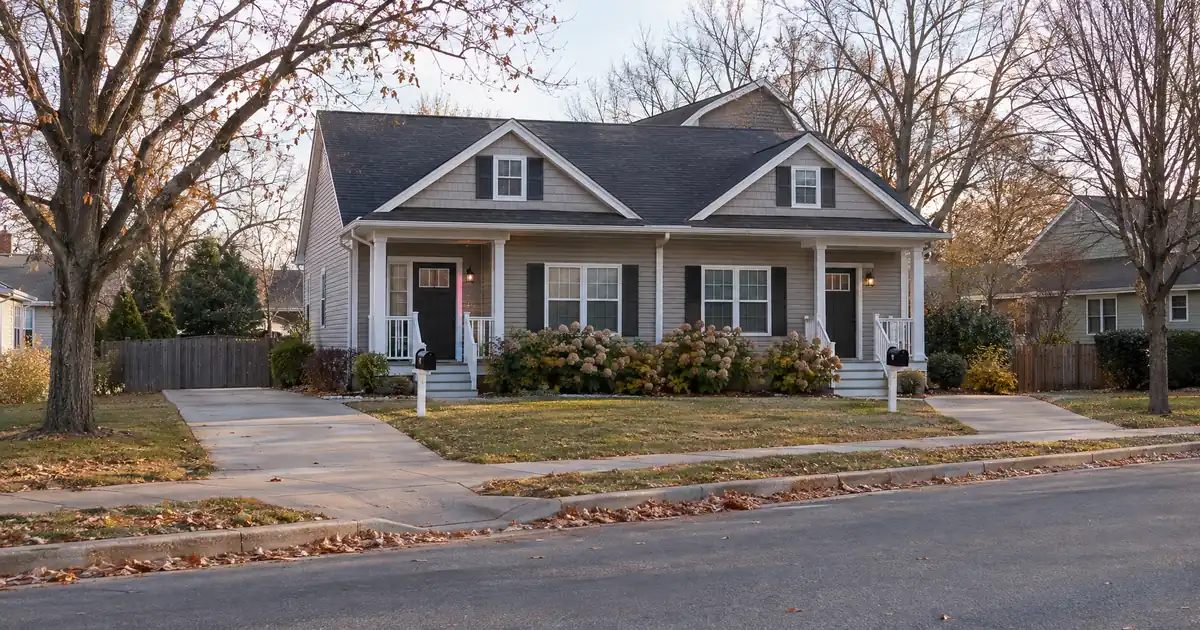
The Quick Read: To get DSCR cash-out instead of agency on a 2–4 unit rental, the property must be non-owner-occupied. You then refinance into a loan sized on the building’s rent against the new payment, not on your personal income. The file qualifies primarily on property-level rental income covering the payment, subject to lender guidelines.
- Cash-out through select lenders in Lendmire’s wholesale network tops out around 75% LTV on a standard rental.
- Ownership seasoning is typically about 6 months, measured from title recording.
- Coverage of 1.00 is where select programs start. Stronger ratios open better terms.
- Reserves are commonly around 6 months of PITIA, and more on larger loans.
- Clearing the ratio does not mean the property cash flows.
Why Do Investors Move Off the Agency Path on 2–4 Units?
Investors usually leave the agency path because their personal numbers, not the building, block the file. High debt-to-income, write-off-heavy tax returns, LLC title, and a full count of financed properties are the common causes. A DSCR loan tests the building instead.
DSCR Cash-Out Calculator
Run the cash-out numbers in your market
Rate source: Freddie Mac 30-yr average via FRED® — Federal Reserve Bank of St. Louis · effective Oct 29, 2026
Prefilled with starting assumptions — enter your property’s value, balance, taxes, and insurance for a more accurate picture.
Program parameters update from Lendmire’s centralized guideline source. Taxes and insurance are editable estimates.
As of Oct 29, 2026 · General Freddie Mac market benchmark, not a Lendmire loan offer. Property value, balance, taxes, and insurance are editable estimates. Maximum loan-to-value varies by lender, program, property type, and seasoning. Not a Loan Estimate, approval, or commitment to lend. Program availability and eligibility are subject to lender guidelines, credit approval, property review, and underwriting.
Run a quick diagnostic. Which of these is stopping you?
- Income and DTI. Agency files are built on your documented income and debts. Self-employed owners with heavy write-offs often show too little taxable income.
- Property count. The agency track caps how many financed properties one borrower can carry. A duplex or fourplex counts as one property, but it still uses a slot.
- Title. Agency cash-out generally expects the property in your personal name. If it sits in an LLC, you face a deed-out step before you can apply.
- Seasoning and loan age. The Fannie Mae Selling Guide requires a borrower to be on title for six months before a cash-out is disbursed. It has a narrow delayed-financing exception for recent cash purchases.
- Leverage. Agency leverage on investment property is more restrictive than on a primary home, and the Fannie Mae eligibility matrix is the place to read the current caps by unit count.
If none of these apply, agency may be the cheaper tool. More on that below.
How Does DSCR Cash-Out Underwriting Work Step by Step?
A DSCR cash-out is a refinance of a non-owner-occupied rental where the new loan exceeds the payoff and you receive the difference. The lender sizes it from appraised value, rent used for lender review, and the new payment. Here is the sequence.
1. Confirm occupancy. The property must be a pure rental. If you live in one unit, the file is owner-occupied and sits outside this lane. Once you move out and the building is fully tenant-occupied, DSCR becomes available.
2. Confirm title and entity. Title can be personal or in an LLC, subject to lender program eligibility. Entity documents, operating agreement and good-standing evidence should be ready before the file goes in.
3. Check seasoning. Most programs in the network expect about 6 months of ownership, measured from the title recording date, not the contract date. Pull your settlement statement and recorded deed.
4. Gather rent evidence. For a 2–4 unit you need a lease and rent roll for each unit. Vacant units are generally credited at the appraiser’s market rent.
5. Order the appraisal. The report gives both value and unit-by-unit market rent. Fannie Mae’s Form 1025 is the standard small residential income report for 2–4 units. Form 1007 is the one-unit rent schedule, which is why a duplex does not use it.
6. Run coverage. Divide rent used for lender review by PITIA (principal, interest, taxes, insurance, and association dues if any). Many programs start at 1.00. A separate select-lender path takes coverage below 1.00, with leverage and terms adjusted.
7. Size the draw. Maximum loan is appraised value times the LTV cap. Cash to you is that loan minus the payoff, closing costs, required reserves, and any prepayment charge on the old loan.
8. Close and pay off. The old loan is retired. If it carries a prepayment penalty and you are inside the window, that cost comes out of your proceeds.
Lendmire’s complete DSCR loans guide covers the base program in more depth.
How Is Rent Counted Across Two to Four Units?
Rent is counted unit by unit, and the common convention is the lower of the signed lease or the appraiser’s market rent. A tenant paying under market is credited at the lease. A lease above market is capped at the appraiser’s figure.
| Unit situation | Typical treatment |
|---|---|
| Leased at market | Lease rent used |
| Leased below market | Lease rent used |
| Leased above market | Market rent used |
| Vacant | Market rent from appraisal |
| Ground-floor commercial space | Generally not blended in |
This varies by program. Short-term rental income follows different documentation, and rent-control rules can limit supportable rent. For a 2–4 unit, the rent evidence is the file. A messy rent roll is the most common preventable gap.
What Does a Worked Example Look Like?
Picture a fourplex held in an LLC, owned for more than 6 months, with all four units leased near market. The appraisal supports a value, and you target the 75% LTV ceiling for a cash-out on a standard rental. Terms depend on the lender’s guidelines, the property type, the leverage, and a full review of the credit profile.
At that leverage the new payment is larger than your old one, because the loan balance is larger. Say the old loan was modest and the new one sits at the cap. Coverage that looked comfortable before the draw might fall to roughly 1.1x afterward. It still clears 1.00 for programs that start there.
Now the reality check. A 1.1x ratio says rent covers PITIA. It says nothing about vacancy, repairs, management, utilities, or capex. A building can pass the ratio and still lose money month to month.
The fix is to size the draw down. Pull less cash and PITIA falls, coverage improves, and your real cash flow gets a cushion. The strongest files clear both tests: enough equity and enough rental coverage.
When Is Agency Still the Better Choice?
Agency is often the better choice when your income is strong and easy to document, your property count is low, and the property sits in your personal name. In that case you may avoid the pricing premium that DSCR typically carries.
Stay with agency if:
- Your DTI is comfortable with the new payment included.
- Your tax returns show the income you actually earn.
- You are well under the financed-property cap.
- You do not need or want the building in an LLC.
DSCR earns its place when one of those fails. It also fits a hybrid plan: use agency while it works, then move to DSCR when you hit the cap or your documentation stops fitting.
| Factor | Agency cash-out | DSCR cash-out |
|---|---|---|
| What is underwritten | Your income and debts | The property’s rent |
| Title | Usually personal | Personal or LLC, per program |
| Property count | Capped | Not driven by count |
| Pricing | Generally lower | Typically higher |
| Prepayment terms | Usually none | Often applies |
What If Your Agency File Stalls Midway?
You can switch. The appraisal and title work may or may not carry over, depending on the lender, so assume you will reorder. Gather the lease and rent roll, entity documents, insurance, and proof of ownership date, then submit the same property to the DSCR channel.
Check three things before you withdraw. First, whether the old loan has a prepayment penalty. A refinance is a payoff, so the penalty applies as it would on a sale. Second, whether any junior lien must be paid or subordinated. Third, whether your seasoning clock has run.
Where Does the General Rule Break?
Several edge cases change the answer.
- Owner-occupied 2–4 unit. DSCR is not available. DSCR loans are designed for non-owner-occupied investment properties, and because they are business-purpose investor loans, they are reviewed differently from a standard owner-occupied mortgage. The CFPB’s TILA exam procedures treat credit to acquire or improve non-owner-occupied rental property as business-purpose credit.
- Five or more units. The deal works to commercial-style NOI underwriting rather than gross-rent DSCR.
- Recent cash buyers. Agency has a delayed-financing exception. Whether a DSCR program waives seasoning is a program-level question, and most expect about 6 months.
- Short-term rentals. Cash-out on short-term rental collateral caps at 70%, versus 75% on a standard rental. Expect a 640+ score and about 12 months of hosting history. Short-term rental rules can vary by city, county, HOA, and property type, so investors should confirm local rules before relying on projected rental income.
- Ineligible property types. Manufactured homes, log homes, and barndominiums are not offered in the network’s DSCR programs.
- Old loan has a penalty. A hard-money bridge often carries none, which makes a bridge-then-refinance plan clean. A prior DSCR loan may carry a stepdown that eats into proceeds.
DSCR vs. conventional financing
There are two common ways to finance an investment property, and they qualify you differently — here’s how investors weigh them.
Why investors choose it
- Qualifies on the property’s rental income — no personal tax returns, W-2s, or pay stubs needed to document income.
- No personal debt-to-income ceiling to clear, so existing mortgages and obligations don’t cap your borrowing the same way.
- Can be closed in an LLC, keeping the property inside a business entity.
- Built for scaling — not held to the limit on number of financed properties that conventional financing applies.
- Underwriting centers on the deal: generally qualifies when the rent covers the payment, a 1.00x coverage ratio being a common baseline (confirmed in underwriting).
- Designed specifically for investment property, including long-term and, where the program allows, short-term rentals.
Where it’s strong
- Often the lowest ongoing financing cost for a buyer who fully qualifies on personal income — a fit for a first property or a cost-first purchase.
Trade-offs for investors
- Requires full personal income documentation and must fit within a debt-to-income limit — salary, existing debts, and other mortgages all count.
- Typically held in your personal name rather than a business entity.
- Caps how many financed properties you can carry, which can become a ceiling as a portfolio grows.
- Evaluates you as a borrower as much as the property, which usually means more paperwork.
How investors usually choose: a first or single property often optimizes for the lowest financing cost; portfolio builders often optimize for leverage, vesting in an LLC, and scaling past conventional caps. The right answer depends on your goals, the property, and current guidelines — both paths run through select lenders in Lendmire’s wholesale network, with eligibility and terms confirmed in underwriting.
What Credit, Reserves, and Loan Size Should You Expect?
Credit tiers run from a 620 floor in parts of the network, to around 660 for most programs, with 700+ unlocking the strongest leverage. Reserves commonly run around 6 months of PITIA, and loans above $1,500,000 typically step up to about 9 months. Standard programs size up to $3,000,000, and smaller balances route through select lenders in the network.
Reserves documentation is where files slow down. Statements must show the funds are yours and seasoned in the account. Cash you expect to receive from this very refinance generally does not count.
Term structure is mostly a 30-year fixed. Extended terms, interest-only periods, and ARMs are available through select lenders. Above $2,500,000 the network generally holds to 30-year fixed.
All of this is subject to lender guidelines, credit approval, and property review. Nothing here is a commitment to lend.
What Documents Should You Gather?
Clean paper means fewer preventable gaps. Gather these before submission:
- Leases and a current rent roll for every unit
- Recorded deed and settlement statement showing ownership date
- Entity documents, if vested in an LLC
- Current payoff statement and note terms, including any prepayment clause
- Insurance declarations for the full building
- Bank statements documenting reserves
- Government ID and a business-purpose attestation
The personal-income paperwork drops out. The property paperwork does not. DSCR is reviewed on documented rental income under the applicable program, subject to lender guidelines.
Key Terms Defined
DSCR (debt service coverage ratio): Qualifying monthly rent divided by the full monthly housing payment.
PITIA: Principal, interest, taxes, insurance, and association dues, if any.
Seasoning: The minimum time you must have held title before a cash-out is allowed.
LTV (loan-to-value): The loan balance as a percentage of the appraised value.
Cash-out refinance: A new loan larger than the payoff, with the difference paid to you.
Form 1025: The appraisal report that captures value and unit-by-unit rent on 2–4 unit properties.
Frequently Asked Questions
Can I do a DSCR cash-out if I live in one unit?
Not while you live there. The loan must be non-owner-occupied and business-purpose. Once you move out and every unit is tenant-occupied, the building can move into the DSCR lane, subject to lender guidelines.
Do I have to use an LLC?
No. Title can be personal or in an LLC, depending on program guidelines. If you do use an entity, expect to provide formation documents and good-standing evidence. Agency cash-out generally expects personal title, so moving between the two can mean a deed change.
Will my coverage still pass after the cash-out?
It depends on how much you pull. A larger loan raises PITIA and lowers the ratio. Many programs start at 1.00, so sizing the draw against both the 75% LTV cap and the coverage floor is the practical test. Passing the ratio still does not mean positive cash flow. The exact numbers vary by lender and program and follow a full review of property, leverage, and credit.
How does seasoning compare to agency?
Network programs typically want about 6 months from title recording. The Fannie Mae Selling Guide uses a similar six-month title clock, though agency also adds loan-age tests that do not govern DSCR files.
Is DSCR always more expensive?
Usually, yes. DSCR typically costs more than agency financing, and many files carry a prepayment penalty. The trade is flexibility: no personal-income test, no financed-property count, and entity title. Tax treatment varies; consult a qualified professional.
If you are buying or refinancing a rental property and want to see how the numbers work, Lendmire can help you compare DSCR loan options based on the property income, credit profile, leverage, and investor goals. Call 828-256-2183 or request a quote.
A deeper walk-through of investment-property equity extraction lives in Lendmire’s guide to cash-out refinance on an investment property.
About Lendmire
As a DSCR and non-QM mortgage broker, Lendmire — NMLS# 2371349 — connects investors with wholesale lending channels across 41 markets, including Washington, D.C. The property’s rental income, not the borrower’s tax returns, is central to lender review, which works for self-employed operators and portfolios beyond four financed properties. Scotsman Guide named Lendmire a Top Mortgage Workplace in both 2025 and 2026.
Get Started
Ready to find the right loan for you?
See your offer in seconds. No credit pull, no obligation.
Informational only. Not a Loan Estimate, approval, or commitment to lend. Program availability and eligibility are subject to lender guidelines, credit approval, property review, and underwriting.
References
1. Fannie Mae Selling Guide B2-1.3-03
2. Fannie Mae Eligibility Matrix
This article is part of Lendmire’s investment property cash-out refinance program — full qualification details, guidelines, and scenarios live on the program page.
Related reading: How Much a DSCR Cash-Out Lends on a Duplex With Expired Leases · How to Get a DSCR Loan With Only One Rental Under Your Name · How to Get a DSCR Cash-Out Refinance With One Credit Pull
Brandon Miller
Founder & CEO, Mortgage Loan Originator, Lendmire LLC
- Mortgage Loan Originator · NMLS# 1129696 · Verify on NMLS Consumer Access
- North Carolina Real Estate Broker · License# 343312 · Verify on NCREC
- North Carolina Insurance Producer · License# 19053198 · Property, Casualty, Life, Health · Verify on NAIC SBS
- Lendmire LLC · Firm NMLS# 2371349 · Verify firm licensure
Disclosures. The information presented in this article is general market commentary, not financial, legal, or tax advice. Lendmire is a mortgage brokerage (NMLS# 2371349) — not a direct lender or depository institution — and loan placement is subject to lender underwriting. Nothing in this content represents a commitment to lend. Loan terms, pricing, and program availability vary based on borrower qualifications, property characteristics, and state of subject property, and are subject to change at any time. Lendmire complies with Equal Housing Opportunity requirements. Consumer access: nmlsconsumeraccess.org.