
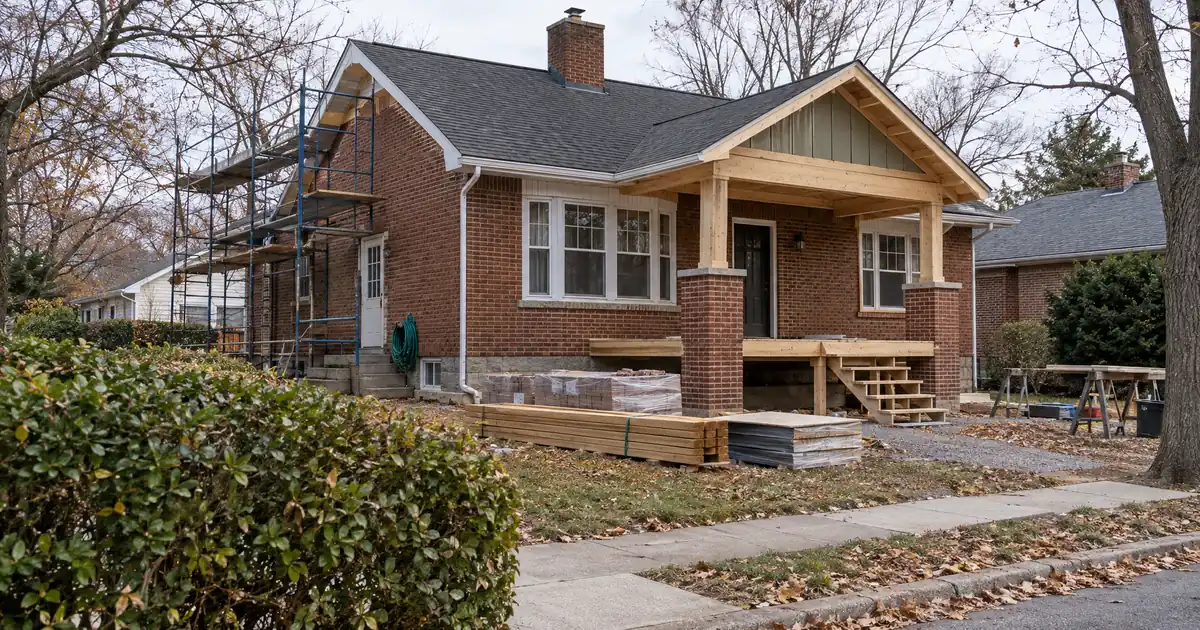
The Quick Read: A short-term hard money bridge holds the position on a group of rentals while the pooled DSCR lender orders a value opinion and a market-rent opinion on every property, and the pooled loan then pays the bridge off at the end. The plan works only when two tests clear, and the lender’s appraisals decide both. Your own estimate of value is a planning number, not an underwriting input.
- A pooled DSCR loan is one note secured by several rentals, and pooling does not skip per-property valuation.
- The value test sizes the loan. The rent test checks coverage. The lower result governs.
- The bridge’s interest and fees keep growing while valuations are pending, so delay becomes carry cost.
- A low appraisal shrinks the new loan while the bridge balance stays put. That gap is a cash call at payoff.
- A bridge sized to its maximum leaves no cushion for a miss.
Key Terms Defined
Hard money bridge: a short-term, interest-only loan secured by the property, used to hold or buy it until long-term financing takes over. Across the network, terms typically run 6 to 18 months with no prepayment penalty, and leverage varies by lender, property, and experience.
DSCR (debt service coverage ratio): monthly rent divided by the full monthly housing payment. Qualification runs primarily on property-level rental income covering the payment, subject to lender guidelines.
PITIA: principal, interest, taxes, insurance, and association dues. It is the payment figure that rent is measured against.
Pooled (blanket, cross-collateralized) DSCR loan: one note secured by liens on several rentals. These three names describe the same structure.
Seasoning: the ownership period a lender wants before it lends on appraised value instead of what you paid. It is lender policy, not law.
Cross-collateralization: every property secures the whole loan, so trouble on one door can affect the pool.
Release clause: the loan term that says what it takes to sell one property out of the pool.
Why Does a Pool Get Stuck Waiting on Valuations?
A pool waits because every property gets its own appraisal, and the slowest or lowest one sets the pace and the size of the whole loan. The lender orders the valuations. Nothing you supply replaces them.
Each appraisal does two jobs. The value opinion sets leverage. The market-rent opinion sets coverage. A pool of four rentals therefore produces eight numbers that must all line up before the lender can size one note.
Say you are buying four rentals from one seller, and you plan a pooled DSCR loan at closing. The pooled lender cannot size the loan until all four reports are in. A hard money bridge lets you buy now and wait for the reports. Without it, the contract deadline would arrive before the appraisals did.
This is a timing tool, not a leverage upgrade. The bridge buys time. It does not change what the pooled lender will lend against.
How Does a Hard Money Bridge Cover a DSCR Pool During Valuations?
The bridge funds the purchase or holds the existing debt, interest accrues, and the pooled loan retires it once values and rents are confirmed. The sequence matters because each phase has its own stall point.
| Phase | What happens | What can stall it |
|---|---|---|
| Bridge funds | Properties acquired or held | Title or entity issues |
| Valuations ordered | Lender orders value and rent opinions | One late report |
| Underwriting | Pool sized on lower of value and rent tests | Low value, weak coverage |
| Takeout | Pooled loan pays bridge off | Payoff exceeds loan |
| Payoff | Title closes out the bridge liens | Missing payoff statement |
On a bridge purchase without rehab, the network’s hard money programs commonly lend up to 80% of the purchase price, varying by lender, property, and experience. Loans run up to $5,000,000, with larger amounts by exception. The collateral is non-owner-occupied residential property with one to four units.
On the takeout side, the 30-year portfolio DSCR loan places two to twenty properties under one note. It typically runs from $300,000 to $5,000,000 and reaches up to 80% of value on a purchase or rate-and-term refinance of investment rentals. Interest-only periods are available. A larger option, the rental portfolio term loan, serves five or more rentals or units. It has its own terms and is capped at 75% of value.
Both leverage ceilings sit near the same number, but they apply to different bases. The bridge lends against price. The pooled loan lends against appraised value. When the appraisal lands under the price, the bases separate.
What Are the Two Tests at Pool Level?
The value test sizes the loan, and the rent test checks whether the pooled rent covers pooled PITIA. Both must clear, and the weaker result governs.
On the 30-year portfolio DSCR loan, the coverage floor is 1.00, measured on the pool. Stronger properties can offset weaker ones, because the lender compares pooled rent against pooled debt service. A single rental below 1.00 can sit in the pool, though underwriting tests the pooled coverage, the leverage and the terms.
Every property still needs a lease or an appraiser-supported market rent. For single-family investment properties, appraisers document that rent on Form 1007, the rent schedule the appraiser attaches to the appraisal. Fannie Mae’s appraiser update describes the same form as documenting estimated monthly market rent for a one-unit investment property. DSCR loans are not agency products, so each lender sets its own appraisal rules. The agency forms are simply the templates the market borrows.
Two-to-four-unit properties typically use a small residential income report instead. Some lenders credit the lower of the lease rent and the appraiser’s rent. That varies by lender.
Clearing 1.00 is not the same as positive cash flow. The ratio compares rent to PITIA only. Repairs, vacancy, management, utilities, and capital spending sit outside it.
Worked Example: Three Outcomes in Index Units
This table uses index units, not dollars, and it is a modeled assumption rather than market data. Set the pool’s contract price at 100. The pooled ceiling is 80% of appraised value. The payoff line holds the bridge principal plus accrued interest, fees, and exit costs.
| Case | Appraised pool value | Pooled loan ceiling | Bridge payoff | Gap |
|---|---|---|---|---|
| On plan | 100 | 80.0 | 78.0 | +2.0 cushion |
| One door misses | 97 | 77.6 | 78.0 | -0.4 shortfall |
| Broad miss, longer wait | 92 | 73.6 | 79.0 | -5.4 shortfall |
Notice what changed. In the middle case, a small value miss on a single property erased the whole cushion. In the last case, the payoff also rose because the wait lasted longer, so the shortfall grew from both sides.
The break-even test is simple: appraised pool value times the leverage ceiling must be at least the full payoff. Run it before you commit to the bridge, then rerun it with a lower value and one extra stretch of carry.
The same squeeze is why a hard money payoff can exceed what a DSCR refinance covers. Lendmire’s piece The Leverage Gap: Why a Hard Money Payoff Can Exceed What a DSCR Refinance Covers walks through the mechanism on a single property. A pool compounds it across several.
How Do You Size the Bridge Backward From the Exit?
Start with the pooled loan you can realistically expect, then size the bridge underneath it with room to spare. A bridge pushed to its ceiling leaves nothing for a low appraisal.
Work through these steps:
1. Estimate pooled value conservatively, using a haircut on your own numbers.
2. Apply the pooled leverage ceiling to get the expected takeout.
3. Subtract exit costs and a full allowance for accrued carry.
4. Size the bridge so its payoff sits clearly under that figure.
Seasoning adds a second cap. Inside the first six months of ownership, the pooled loan is also capped at 90% of total cost, meaning purchase price plus documented improvements. From six to twelve months, the cap is 100% of total cost. The leverage ceiling still applies, and the loan is the lower of the two. After twelve months, appraised value alone is the basis. A rate-and-term refinance is not subject to the cost-basis cap.
For a bridge purchase, this means a rapid takeout is judged partly on what you paid, not only on what the appraiser says. A property bought below its appraised value gains little from a high appraisal until seasoning runs.
Cash-out on a portfolio loan never exceeds 75% of pooled value on seasoned properties. A cash-out refinance inside the first six months is capped by the same cost-basis rule.
Timeline and Maturity: Which Clock Runs Out First?
The bridge term is the clock that cannot move, while the appraisal and underwriting clocks can. Bridge terms commonly run 6 to 18 months, interest-only, so a short term leaves less room for a late report.
Plan backward from maturity. Leave a cushion for appraisal and underwriting surprises. Ask about extension options before you sign, and file the pooled application in parallel with the bridge, not after it.
Treat any promised appraisal timeline with caution, since turn times can shift with the property, the appraiser’s schedule and the lender’s process. Ask the pooled lender how it handles a late report on one property, and whether the other properties can proceed.
What If Valuations Come In Short?
Choose the response by the size and shape of the miss. Many investors can solve a modest shortfall with cash. A broad miss usually requires restructuring.
| Problem | Symptom | Options |
|---|---|---|
| One weak door | Pool short by a small amount | Bring cash, or carve the door out |
| Broad value miss | Loan well under payoff | Smaller payoff-only loan, or extend the bridge |
| Weak pooled rent | Coverage under the floor | Lower leverage, or sell one asset |
| Bridge maturing | No room left | Extension, or split into separate loans |
Splitting into separate loans changes the risk. A true blanket is one note with a lien on every property. A batch of separate loans closed together does not cross-collateralize. Confirm in writing which structure a lender means.
In a pool, partial releases, substitutions, and the sale of one property follow the loan documents. The remaining portfolio must still cover its debt service, and the release price runs above the property’s allocated balance.
Edge Cases Where the General Rule Breaks
- Subject-to appraisals. If a report comes back conditioned on repairs, most lenders want the work finished before the pooled loan funds.
- Short-term rentals. Appraiser rent documents monthly market rent, so short-term rental files use separate income documentation. Short-term rental rules can vary by city, county, HOA, and property type, so investors should confirm local rules before relying on projected rental income.
- Mixed pools. Mixed-use and commercial property are not eligible in the pool. Manufactured and mobile homes are not reviewable on these programs.
- Cross-default. A pooled bridge can carry the same cross-collateral terms as the takeout, so one problem can pull down the others before payoff.
- Small multifamily. Five or more units are eligible only inside the rental portfolio term loan, not on the 30-year portfolio structure.
Who Should Skip the Bridge?
A stabilized, leased pool that can go straight to long-term financing does not need a bridge. It would only add carry and a second set of closing costs. Many investors refinance out of hard money into long-term DSCR financing once the properties are stabilized, and Lendmire brokers that path. That is the right use of a bridge, not a default.
The bridge fits when the timing gap is real: a contract deadline, a seller who will not wait, or a pool still being assembled. If the gap is only inconvenient, test the numbers without it first. The complete DSCR loans guide explains how the long-term side works on a single rental.
Pre-Takeout Checklist
- Entity documents, with the pooled borrower in place (a special-purpose entity is typical, subject to program terms).
- Leases or rent evidence for every door.
- A current payoff statement and draw history from the bridge lender.
- The credit floor for the pool, which is 640, or 680 or 720 on some portfolio structures.
- An exit plan that survives a lower appraisal.
DSCR loans are designed for non-owner-occupied investment properties. Because they are business-purpose investor loans, they are reviewed differently from a standard owner-occupied mortgage. Tax treatment varies; consult a qualified professional.
Frequently Asked Questions
Can a hard money bridge be refinanced into a pooled DSCR loan?
Yes, when the appraised values and pooled rent support a loan large enough to pay off the bridge plus costs. Many investors use this path. Eligibility depends on lender guidelines, the property, and the borrower.
Does the pooled lender use my after-repair value or my own estimate?
No. The lender’s own appraisal sets value and market rent. Your estimate helps you plan, but it does not size the loan.
Does DSCR mean no appraisal?
No. It means qualification runs primarily on property-level rental income instead of personal income. The appraisal still sets value and market rent for each property.
Can strong doors offset a weak one?
On the 30-year portfolio DSCR loan, coverage is measured on the pool, so stronger rentals can offset weaker ones. Value works differently, because each property’s appraisal feeds the loan size.
What happens if the bridge matures first?
You need an extension, cash to pay down the balance, or a smaller takeout. Ask about extension terms before you sign the bridge, since the term cannot flex later.
Plan the Exit Before You Need It
If you are buying, rehabbing or refinancing an investment property on a short timeline and want to see how the numbers work, Lendmire can help you compare hard money options based on the project, the exit plan, leverage, and your goals. Every program parameter varies by lender, property, and experience, and nothing here is a commitment to lend.
About Lendmire
Lendmire is a DSCR-focused mortgage brokerage, NMLS# 2371349, placing investor loans across 41 markets, including Washington, D.C. DSCR eligibility is generally reviewed by the lender around a property’s rental income rather than personal income documentation, which fits LLC-held rentals, self-employed investors, and portfolios scaling past conventional financed-property limits. Scotsman Guide named Lendmire a Top Mortgage Workplace in both 2025 and 2026.
Get Started
Ready to find the right loan for you?
In about 30 seconds you can review financing options available for your investment property. No commitment required.
Informational only. Not a Loan Estimate, approval, or commitment to lend. Program availability and eligibility are subject to lender guidelines, credit approval, property review, and underwriting.
References
1. Freddie Mac Form 1007/1000, Single-Family Comparable Rent Schedule
2. Fannie Mae appraiser update on Form 1007 and market rent
This article is part of Lendmire’s hard money loan program — full qualification details, guidelines, and scenarios live on the program page.
Related reading: How to Size a DSCR Loan for a Newly Assembled Rental Pool · Refinance vs Paydown vs Sale for a DSCR Pool With New Vacancies · Can Out-of-State Investors Pool Low-Value Rentals in One DSCR Loan?
Brandon Miller
Founder & CEO, Mortgage Loan Originator, Lendmire LLC
- Mortgage Loan Originator · NMLS# 1129696 · Verify on NMLS Consumer Access
- North Carolina Real Estate Broker · License# 343312 · Verify on NCREC
- North Carolina Insurance Producer · License# 19053198 · Property, Casualty, Life, Health · Verify on NAIC SBS
- Lendmire LLC · Firm NMLS# 2371349 · Verify firm licensure
Disclosure information. Lendmire is a state-licensed mortgage brokerage under NMLS# 2371349. Lendmire is not a depository institution, direct lender, or financial advisor — all loans referenced are placed through wholesale lender partners and are subject to each lender's underwriting standards. This article is provided for general informational purposes and is not a commitment to lend, nor does it constitute financial, legal, or tax advice. Loan programs, terms, rates, and qualification standards change without notice and depend on borrower profile, property type, and the state in which the subject property is located. Equal Housing Opportunity provider. NMLS Consumer Access: nmlsconsumeraccess.org.