
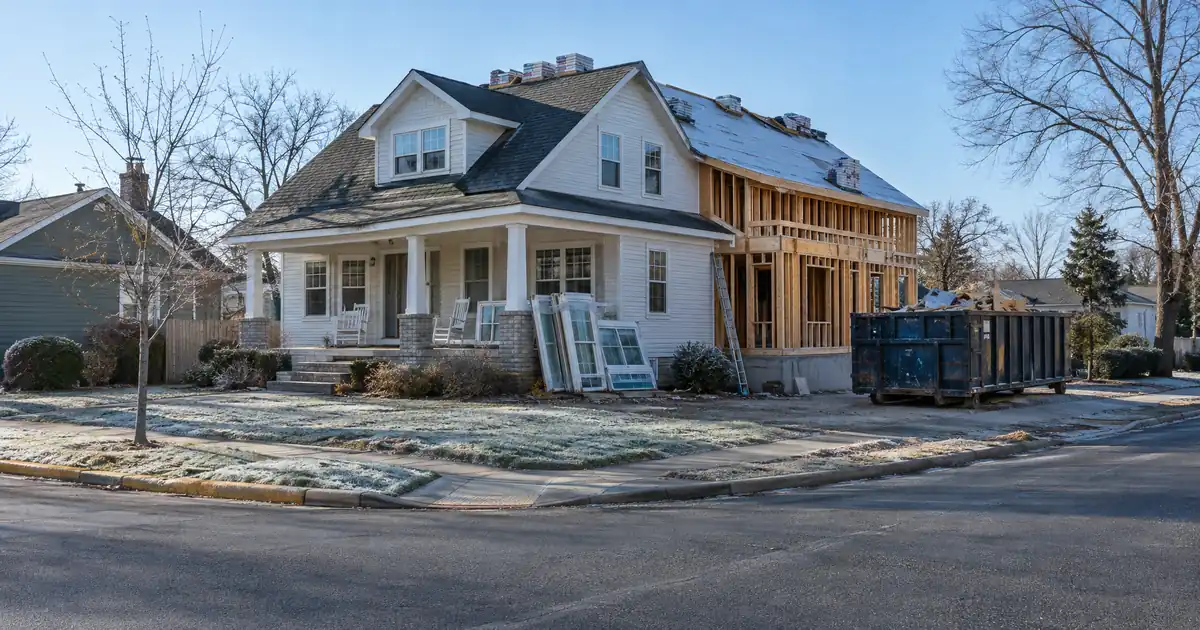
The Quick Read: Lenders approve a flip bridge loan on the property, the rehab plan, and your exit, so the paperwork falls into six groups: borrower identity, entity records, the property file, the rehab budget, proof of funds, and a written exit strategy, each tied to a lender decision about value, risk, or repayment. Requirements vary by lender, property, and experience, and every file is underwritten individually.
- Fix-and-flip leverage typically runs 85%, 90%, or 93% of project cost, depending on completed projects, with every tier capped at 75% of after-repair value.
- Up to 100% of the rehab budget funds in draws against completed work, so you carry the project between draws.
- Terms typically run 6 to 18 months, interest-only, with no prepayment penalty.
- A 620 minimum score is typical, with additional conditions below 660.
- Entity records, a line-item scope of work, and proof of funds cause the most delays when they arrive late.
A hard money bridge loan is a short-term, asset-based loan that carries a flip from purchase to sale or refinance. The lender cares less about your paycheck and more about the house you are buying. That shapes every document on the list below.
What this loan actually costs to carry.
Hard money is sized against the project and priced by time. Enter the deal and see how much the program will lend, the cash required at closing, the carry while you hold it, and what is left at the exit.
Leverage tiers on the current program: 85% with fewer than 2, 90% with 2 or more, 93% with 5 or more completed projects — every tier capped at 75% of after-repair value. Loan amounts up to $5,000,000, larger by exception; terms of 6 to 18 months, interest-only, no prepayment penalty. The rehab portion funds in draws against completed work, not at closing.
Program parameters shown update from Lendmire’s centralized guideline source. Rate, points, and months are editable assumptions, not quoted terms.
Cost cap sets the loan · positive spread
Illustrative estimate only — not a quote, Loan Estimate, approval, or commitment to lend. Rate, points, and months are editable assumptions. Hard money is business-purpose financing for real estate investors, not a consumer mortgage. Leverage on the current program tops out at 93% of project cost for investors with a documented track record, capped at 75% of after-repair value, with rehab funding up to 100% of the documented budget released in draws; actual terms vary by lender, borrower experience, property, and exit. Lendmire is a mortgage broker, not a lender.
What Is the Lender Actually Checking?
The lender is checking three things: what the property is worth after the work, whether your budget is realistic, and how the loan gets repaid. Your personal paperwork is lighter than a standard mortgage file, but it still exists. The lender still needs to know who you are and what cash you hold.
Think of the file as answering three questions. Is the collateral real? Is the plan believable? Is the exit credible?
Hard money loans are designed for non-owner-occupied investment properties. Because they are business-purpose investor loans, they are reviewed differently from a standard owner-occupied mortgage. That is why you will rarely see a request for pay stubs or a debt-to-income worksheet. You will see requests for a contract, a budget, comps, entity records, and bank statements.
One checklist guide from a software vendor, Crequity, organizes a flip application into six components. This article uses six groups too, and adds the stage-by-stage view that shows when each document is due and who has to supply it.
For paperwork purposes, what matters most is whether the file includes a rehab. A purchase with no rehab drops several items. A purchase with a rehab adds them.
Key Terms Defined
After-repair value (ARV): The estimated market value of the property once the planned renovation is finished. Lenders test it against recent comparable sales.
Loan-to-cost: The loan amount as a share of your total project cost, meaning purchase price plus rehab budget. Hard money fix-and-flip leverage is usually quoted this way.
Scope of work: A line-item list of every repair, with a cost for each. It is the backbone of the rehab budget.
Draw: A release of held-back rehab money after a stage of work is finished and verified. Draws are reimbursements, not advances.
Proof of funds: Bank or brokerage statements that show you hold the cash for your down payment, closing costs, and carry costs.
Real estate owned (REO) schedule: A list of the properties you own, with values, loan balances, and rents where they apply.
Personal guaranty: Your signed promise to repay the loan personally, even if an LLC is the borrower.
Exit strategy: Your written plan for repaying the loan, either by selling the property or refinancing it.
The Master Checklist
Every lender tweaks this list, so treat it as the core set that appears on most files. Across Lendmire’s wholesale network of lenders, the biggest differences show up in how much entity detail, liquidity history, and contractor documentation each one wants.
Borrower and entity documents
| Document | Why the lender asks | Who supplies it |
|---|---|---|
| Government ID, credit authorization | Confirms identity and runs the score | You |
| Entity articles and operating agreement | Shows who owns and signs | You or your attorney |
| EIN letter and good standing certificate | Proves the entity is real and active | You or the state |
| Personal financial statement | Shows your overall financial position | You |
| REO schedule | Shows your experience and exposure | You |
A personal guaranty is typical on these loans, so the lender looks at you even when an LLC holds title. If you plan to close in an LLC, eligibility is subject to lender program requirements, so confirm before you form the entity.
Property, rehab, and exit documents
| Document | Why the lender asks | Who supplies it |
|---|---|---|
| Executed purchase contract | Fixes price and terms | You, agent, or seller |
| Line-item scope of work and budget | Tests whether the plan is realistic | You and contractor |
| Contractor bids | Supports each budget line | Contractor |
| ARV comparable sales | Supports after-repair value | You, agent, or lender |
| Photos of current condition | Shows the starting point | You |
| Title commitment and insurance | Clears ownership and protects collateral | Title company, insurance agent |
| Written exit strategy | Shows how the loan is repaid | You |
Rehab files typically add builder’s-risk coverage on top of standard property insurance. Ask your insurance agent early, because rehab policies often take more back-and-forth than a standard policy.
How the Paperwork Flows, Stage by Stage
The documents arrive in stages, and knowing the stages keeps you from scrambling. Each stage has a different owner, so a missing item usually traces to one person.
Before you make an offer. Get your entity formed, your statements together, and your REO schedule current. Build a one-page deal summary with purchase price, rehab budget, ARV, and your exit plan. A lender can react to that summary in minutes, and it tells you early whether the deal fits.
At application. Submit your ID, credit authorization, entity documents, the purchase contract, and the deal summary. Add the scope of work and any bids you have. A complete first submission means fewer follow-up requests.
Between term sheet and closing. After a term sheet, the lender opens a list of conditions. Some belong to you, such as bank statements or an updated budget. Others belong to the title company, the insurance agent, or the appraiser. Sort the list by owner so every request goes to the right person.
At closing. You sign the core loan documents: the note, the mortgage or deed of trust, the loan agreement, and the personal guaranty. A rehab loan adds a draw agreement, a scope-of-work exhibit, and completion provisions. A vendor guide cited above notes that using plain bridge documents on a construction project ignores the construction risk. Reading the draw agreement before you sign matters for that reason.
During the rehab. Each draw needs a package. A typical one includes a draw request, contractor invoices, proof of payment, lien waivers, progress photos, and an updated budget. Yieldstack’s explainer on draw schedules describes the FHA 203(k) draw form as a public benchmark for the principle. That form will not pay for materials sitting on site until they are installed, and it holds back a percentage of each draw until the work is complete and lien-free. FHA’s program is a different product from hard money, so use it only as a picture of the logic. Hard money draw rules come from each lender, but the reimbursement principle is the same.
At payoff. You repay the loan by selling the property or refinancing it. Your payoff package is a settlement statement from the sale or a new loan closing.
The Rehab Budget Is the Document Lenders Read Hardest
A scope of work lists every repair as its own line, with a cost. A vague budget is the quickest way to get a file sent back for revision. “Kitchen remodel” is a category. “Replace cabinets, countertops, sink, and backsplash” is a line item.
Bids should match the budget. If the budget says one number and the contractor bid says another, the lender will ask which is right. Contractors who are licensed and who pull permits also give the lender more comfort.
Most lenders also look for a contingency line. Renovations hit surprises, and a budget with no cushion looks naive. The lender is also checking whether you can afford the overrun, since you fund the gap.
The network’s draw structure matters here. Up to 100% of the rehab budget funds in draws against completed work, subject to lender guidelines. That figure is a share of the rehab budget, not a purchase loan-to-value figure. You pay the contractor first, then the lender reimburses after verification. Plan your cash around that float.
ARV Comps: Where Most Underwriting Lives
The ARV is the number the whole structure rests on. Fix-and-flip leverage on most files in the network is capped at 75% of after-repair value, so an inflated ARV does not help you. It makes the lender question your judgment.
Good comps are recent, close by, and similar in size, bedroom count, and finish level. Use sales of renovated homes, not distressed sales. Be conservative. If the comps show a range, build the plan around the low end.
Lenders usually pair your comps with an appraisal or valuation of their own. That valuation covers the as-is value and the after-repair value. If it comes in below your ARV, the loan amount can shrink, and you cover the gap.
Proof of Funds and Reserves
Statements prove that you can fund the down payment, closing costs, and the carry on the project. Lenders commonly ask for recent statements, and the number of months varies by lender. Large or unexplained deposits tend to draw questions, so keep a paper trail for any transfer.
Liquidity also covers what you need after closing. You will front contractor costs before each draw reimburses. Interest-only payments, insurance, utilities, and taxes keep running during the rehab. Lenders know this, which is why they look at whether your cash covers more than the bare down payment.
Not all funds count the same way. Whether borrowed money or home equity proceeds count as liquidity varies by lender. Ask before you rely on them. Retirement accounts and funds held in someone else’s name can also create questions, and lenders handle them differently.
Entity Documents by Borrower Type
| Borrower type | Typical documents |
|---|---|
| Individual | ID, credit authorization, personal financials |
| LLC | Articles, operating agreement, EIN letter, good standing |
| Multiple owners | Entity documents plus each guarantor’s ID and credit |
| Trust | Trust certificate, proof of trustee authority |
This table shows typical items only. Each lender sets its own overlays, so confirm which version applies before you form or retitle anything.
The most common entity problem is a mismatch. The name on the contract, the operating agreement, the bank account, and the insurance policy should all be the same entity. When they differ, the lender stops the file until you fix it.
What Changes by Loan Structure
Here is the leverage picture on the network, as typical ranges that vary by lender, property, and experience.
- Fix-and-flip: up to 93% of project cost at 5 or more completed projects, up to 90% at 2 or more, and 85% with fewer than 2. Every tier is capped at 75% of after-repair value.
- Bridge purchase without rehab: up to 80% of the purchase price.
- Cash-out or rate-and-term refinance: up to 65% of value.
The top tier is reserved for experienced investors. First-time investors qualify at the lower leverage tiers. There is no true 100% purchase program, so expect to bring cash to the deal.
Purchase-only versus rehab. A purchase-only bridge file drops the scope of work, the draw schedule, and the builder’s-risk requirement. That means fewer conditions. A rehab file keeps all of them.
First-time versus experienced. Experience helps, but it is rarely a hard requirement at the lower tiers. A first-time flipper should expect more scrutiny of the contractor, the budget, and the cash on hand. A track record summary, with prior projects and photos, helps experienced borrowers move up a tier.
Credit. A 620 minimum score is typical, with additional conditions below 660. The loan stays asset-based, so the property, the plan, and the exit still drive the decision.
Property type. Collateral is non-owner-occupied residential property of one to four units.
Loan size. Loan amounts run up to $5,000,000, and larger by exception. Smaller balances vary by lender.
What If You Don’t Have the Document?
| Missing item | What to do instead |
|---|---|
| New LLC with no history | Provide formation papers, EIN, and personal statements |
| No flip track record | Show contractor experience and a conservative budget |
| No contractor bid yet | Build a line-item budget and get bids before applying |
| Funds held elsewhere | Move and season them in your name or the entity’s |
| No good standing certificate | Request one from the state before application |
A brokerage sees these gaps constantly. The files that move best are not the ones with perfect paperwork. They are the ones where the borrower flags the gap up front and shows how it gets fixed.
Why Files Get Sent Back
Based on how these files typically behave across the network, here are the usual stall points, roughly in the order they appear.
1. Entity mismatch. Names differ across the contract, bank account, and insurance. Fix: use one entity name everywhere.
2. Vague scope of work. Categories replace line items. Fix: itemize every repair and match it to a bid.
3. Unsupported ARV. Comps are stale or unlike the subject. Fix: pull recent renovated sales nearby.
4. Thin liquidity. Statements cover the down payment but not the carry. Fix: show cash for the project, not only the purchase.
5. Unexplained deposits. Large transfers have no trail. Fix: document the source before you apply.
6. Insurance gaps. A standard policy is in place, but builder’s-risk coverage is missing. Fix: ask your agent for rehab coverage early.
7. Missing exit plan. The file never says how the loan is repaid. Fix: write one page covering sale, refinance, or both.
A Sample Flip File, Start to Finish
Picture a first-time investor buying a three-bedroom house as a fix-and-flip. This is an illustration, not a real transaction, and it uses no figures. The investor builds one labeled folder with numbered subfolders, so every document has a home.
- 01_Borrower: ID, credit authorization, personal financial statement, REO schedule.
- 02_Entity: articles, operating agreement, EIN letter, good standing certificate.
- 03_Property: executed contract, photos, title commitment, insurance quote.
- 04_Rehab: line-item scope of work, contractor bids, permit list.
- 05_Value: ARV comps with a short note on why each was chosen.
- 06_Funds: recent statements, plus a note explaining any large deposit.
- 07_Exit: one page covering the planned sale and a backup plan.
The incomplete version of this file has the same contract and statements, but the scope of work is three lines long, the entity name differs on the insurance quote, and there is no exit page. Both files describe the same deal. Only the first lets the lender react right away.
Keep clear records of what you spend and how you fund it, and speak with a qualified tax professional before relying on any deduction.
How Long Do Documents Stay Good?
Some items go stale. Bank statements age out, so refresh them if the file sits. Good standing certificates and insurance quotes expire. Contractor bids can change if material costs move, so confirm they still hold before closing. Check every date-sensitive item when the lender issues conditions, not after.
Plan the Exit Paperwork on Day One
Many investors refinance out of hard money into long-term DSCR financing once the property is stabilized and rented. Lendmire brokers that path. A rental takeout needs a different set of documents than a flip: a lease or rent evidence, a rent-ready property, and the same entity records. Lendmire’s complete DSCR loans guide explains how that second loan is evaluated.
If you plan to sell, your exit documents are a listing agreement and a payoff estimate. If you plan to refinance, start the entity and records work now. A clean entity file built for the flip carries straight into the takeout.
Frequently Asked Questions
Do I need traditional personal-income documentation or W-2s for a hard money flip loan?
Some lenders request traditional personal-income documentation or bank statements, while others lean on the property, the plan, and your liquidity. Because these are asset-based business-purpose loans, income documents carry less weight than on a standard mortgage. Ask each lender up front, since the request varies by lender, property, and experience.
Can a first-time flipper get approved?
First-time investors qualify at the lower leverage tiers on the network, which is 85% of project cost with fewer than 2 completed projects. Expect more scrutiny of your contractor, budget, and cash on hand. Approval is subject to lender guidelines, credit review, and property review.
Do I need an LLC?
Not always. Many investors close in an LLC, subject to lender program eligibility, but individual ownership is also common. The key is to decide before you sign the contract, because the name on the contract should match the entity on the loan.
What happens if my contractor’s bid changes?
Send the lender the revised bid and an updated budget right away. A changed bid can alter the rehab budget, the draw schedule, or the leverage. Keeping the scope of work and the bids in sync prevents a re-review.
Is the document list the same for a purchase-only bridge loan?
No. A purchase-only file drops the scope of work, draw agreement, and builder’s-risk requirement. It keeps the borrower, entity, property, funds, and exit documents.
Putting the Package Together
If you are buying, rehabbing, or refinancing an investment property on a short timeline and want to see how the numbers work, Lendmire can help you compare hard money options based on the project, the exit plan, leverage, and your goals. As a broker, Lendmire arranges financing through select lenders in its wholesale network across 41 markets, including Washington, D.C. Nothing here is a commitment to lend, and every file is underwritten individually.
About Lendmire
Lendmire (NMLS# 2371349) is a mortgage brokerage focused on DSCR investor financing, helping arrange programs through wholesale and investor-lending channels in 41 markets, including Washington, D.C. DSCR loans are evaluated by the lender on property cash flow rather than personal income, subject to lender guidelines, supporting LLC closings and accommodating investors with four or more financed properties. Scotsman Guide Top Mortgage Workplace in both 2025 and 2026.
The exit plan matters as much as the purchase price on short-term financing – see the hard money loan overview.
Get Started
Ready to find the right loan for you?
In about 30 seconds you can review financing options available for your investment property. No commitment required.
Informational only. Not a Loan Estimate, approval, or commitment to lend. Program availability and eligibility are subject to lender guidelines, credit approval, property review, and underwriting.
References
1. Crequity, Fix and Flip Loan Requirements Checklist
2. Yieldstack, Fix and Flip Draw Schedules
This article is part of Lendmire’s hard money loan program — full qualification details, guidelines, and scenarios live on the program page.
Related reading: Is a Hard Money Fix and Flip Loan Worth It for a Business Owner? · Can You Buy a Flip in an LLC With a Hard Money Loan? · Does a Hard Money Bridge Loan on a 2-4 Unit Need a Down Payment?
Brandon Miller
Founder & CEO, Mortgage Loan Originator, Lendmire LLC
- Mortgage Loan Originator · NMLS# 1129696 · Verify on NMLS Consumer Access
- North Carolina Real Estate Broker · License# 343312 · Verify on NCREC
- North Carolina Insurance Producer · License# 19053198 · Property, Casualty, Life, Health · Verify on NAIC SBS
- Lendmire LLC · Firm NMLS# 2371349 · Verify firm licensure
Required disclosures. Lendmire (NMLS# 2371349) operates as a licensed mortgage broker, not a direct lender or depository. The discussion in this article is general in nature and should not be relied upon as financial, legal, or tax advice — every investment scenario is unique and should be reviewed by a qualified professional. Any loan inquiry is subject to lender underwriting, and this article is not a commitment to lend or a guarantee of approval. Mortgage rates, loan terms, and program guidelines vary by borrower, property, and state, and may change without notice. Equal Housing Opportunity. Verify licensure at NMLS Consumer Access.