
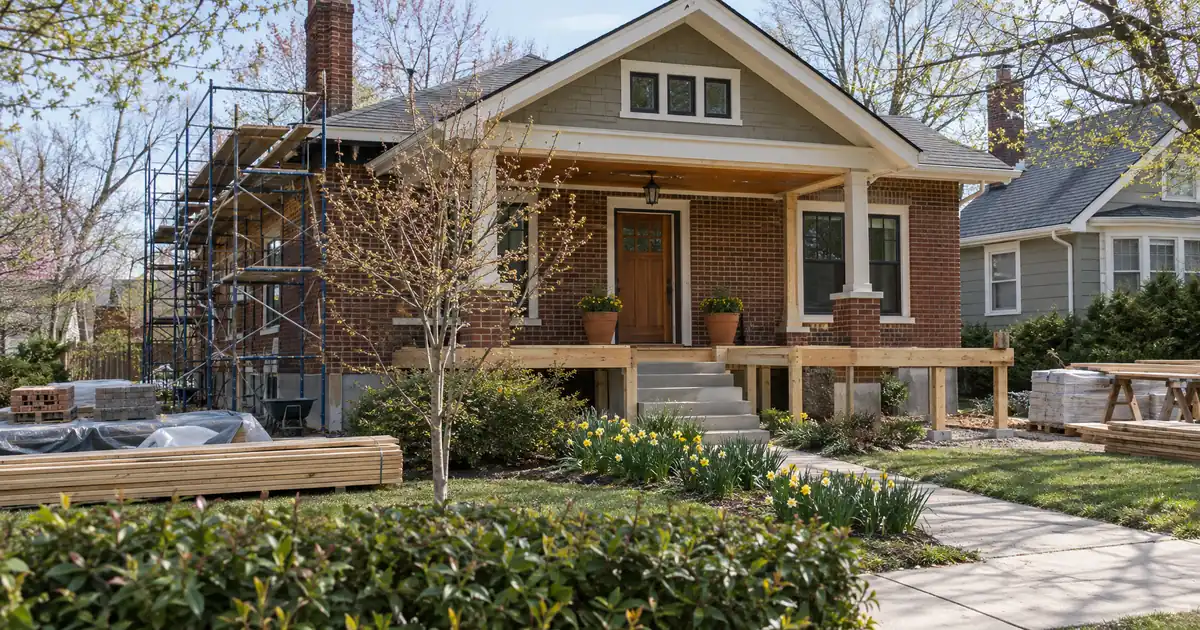
The Quick Read: A hard money bridge loan funds a property that isn’t ready for long-term financing. A DSCR purchase loan funds a rental that can already carry itself on paper. The choice follows the property’s condition today, not your zip code.
- A hard money bridge is short, interest-only, and built on the property, your plan, and your exit. Terms typically run 6 to 18 months and vary by lender, property, and experience.
- A DSCR purchase loan is long-term. It qualifies primarily on property-level rental income covering the payment, subject to lender guidelines.
- Most DSCR purchase files land at 75%-80% LTV on an investment property. Select high-leverage programs reach 85% with roughly a 700+ score.
- Living out of state changes logistics, such as appraisals, rent proof, and signing. It does not change what either loan asks of the property.
- A bridge solves a timing problem, not a capital problem. You still need real equity in the deal.
Here is the honest answer. A hard money bridge is for the buyer whose property needs work, sits vacant, or can’t pass a rent test yet. A DSCR purchase loan is for the buyer whose property is rentable now and whose rent covers the full monthly obligation. Plenty of out-of-state investors reach for a bridge out of habit when the property never needed one. Others push a half-finished property into a rent-coverage loan and watch the numbers fail. Match the tool to the property’s state. Everything else is detail.
What this loan actually costs to carry.
Hard money is sized against the project and priced by time. Enter the deal and see how much the program will lend, the cash required at closing, the carry while you hold it, and what is left at the exit.
Leverage tiers on the current program: 85% with fewer than 2, 90% with 2 or more, 93% with 5 or more completed projects — every tier capped at 75% of after-repair value. Loan amounts up to $5,000,000, larger by exception; terms of 6 to 18 months, interest-only, no prepayment penalty. The rehab portion funds in draws against completed work, not at closing.
Program parameters shown update from Lendmire’s centralized guideline source. Rate, points, and months are editable assumptions, not quoted terms.
Cost cap sets the loan · positive spread
Illustrative estimate only — not a quote, Loan Estimate, approval, or commitment to lend. Rate, points, and months are editable assumptions. Hard money is business-purpose financing for real estate investors, not a consumer mortgage. Leverage on the current program tops out at 93% of project cost for investors with a documented track record, capped at 75% of after-repair value, with rehab funding up to 100% of the documented budget released in draws; actual terms vary by lender, borrower experience, property, and exit. Lendmire is a mortgage broker, not a lender.
Side-by-Side
The table below uses published industry norms alongside the parameters Lendmire sees across its wholesale network. Both products are placed through that network. Every figure varies by lender, property, and experience, and nothing here is a commitment to lend.
| Factor | Hard Money Bridge | DSCR Purchase Loan |
|---|---|---|
| Review basis | Property value, plan, and exit | Rent vs. PITIA, plus credit and assets |
| Documentation | Contract, scope of work, exit plan | Lease or rent schedule, assets, entity papers |
| Property condition | Vacant, dated, or mid-rehab | Rentable and able to pass a rent test |
| Property types | 1-4 units; ground-up to 10 units | Residential rentals; manufactured, log, barndominium not offered |
| Entity vesting | Often allowed; varies by lender | LLC common, with a personal guaranty |
| Time horizon | Short, interest-only, 6-18 months | Long-term; 30-year fixed is the spine |
| Credit | 620 minimum; extra conditions under 660 | 620 floor in parts; most want about 660 |
| Leverage | Up to 80% of price on a no-rehab bridge | 75%-80% LTV on an investment purchase |
| Reserves | Cash for equity and carry; varies | Commonly about 6 months of PITIA; varies |
| Exit | Payoff at maturity | Hold for the long term |
Property types and states served also differ by lender, so confirm the property’s location is eligible before you build a plan around either product.
Key Terms Defined
DSCR (debt service coverage ratio): the property’s monthly rent divided by its monthly housing obligation. A result of 1.00 means rent equals the obligation.
PITIA: principal, interest, taxes, insurance, and any HOA dues. It is the full monthly obligation the rent gets measured against.
LTV (loan-to-value): the loan amount as a percentage of the property’s value or price.
Loan-to-cost: the loan as a percentage of the total project cost, meaning purchase plus rehab. Hard money lenders often size fix-and-flip loans this way.
Balloon: a lump-sum payoff due when a short loan matures. Hard money is typically structured with interest-only payments and a balloon, as SmartAsset’s hard money explainer describes.
Personal guaranty: your personal promise to repay, even when an LLC holds title.
Seasoning: the ownership period a lender wants before a refinance counts as cash-out.
How Does Distance Change the Choice?
Distance changes your to-do list. It does not change the underwriting question. Qualification rests on the property, your credit, and your assets, not on where you live.
Here is what actually shifts when you invest from afar.
- Appraisal access. Someone has to let the appraiser in. A local property manager or agent usually handles this.
- Rent proof. DSCR files need a lease or a market-rent schedule. Your manager’s paperwork is often the strongest evidence you can hand over.
- Rehab oversight. Bridge loans with rehab money release funds in draws against completed work. Remote draws depend on a contractor you trust and an inspection process you can verify.
- Entity papers. Lenders expect formation documents, an operating agreement, and proof of signing authority. Having these ready matters more than your travel schedule.
- Closing logistics. Remote signing is common, but sort out who handles title and insurance on the ground.
Files from out-of-state buyers tend to stall on rent evidence and entity paperwork, not on the investor’s address. A manager letter and a clean operating agreement fix more problems than a plane ticket does.
When a Hard Money Bridge Is the Better Fit
A bridge is the better fit when the property can’t pass a rent test today. That means vacant, unfinished, dated, or awaiting a lease. Corporate Finance Institute describes hard money as short-term and collateral-based. That matches how the lending decision works: property, plan, exit.
A bridge fits these situations:
- A rehab is the plan. Fix-and-flip files are often sized on loan-to-cost. Leverage typically runs 85% of project cost with fewer than 2 completed projects, 90% with 2 or more, and 93% with 5 or more. Every tier is capped at 75% of after-repair value. Rehab budgets can fund up to 100% in draws against completed work. The top tier is reserved for experienced investors.
- A no-rehab bridge purchase. Leverage on these can reach up to 80% of purchase price.
- Credit is thin but workable. A 620 minimum applies, with added conditions below 660. First-time investors qualify at the lower leverage tiers.
- The loan is large. Amounts reach up to $5,000,000, and larger by exception.
The bridge has a real cost: it must be repaid. Terms typically run 6 to 18 months, interest-only, with no prepayment penalty. Everything depends on a defined exit. If the exit slips, the balloon doesn’t wait.
Honestly, a bridge is a poor match for a first remote purchase with no manager and no rehab team. You’d be stacking maturity pressure on top of distance. Not ideal.
When a DSCR Purchase Loan Is the Better Fit
A DSCR purchase loan is the better fit when the property is rentable now and the rent covers the full monthly obligation. You buy once, with long-term financing, and skip a second set of closing costs.
Across Lendmire’s wholesale network, the picture looks like this on an investment purchase:
- Leverage: most files land at 75%-80% LTV, or 20%-25% down. Select high-leverage programs reach 85% LTV with roughly a 700+ score.
- Coverage: 1.00 is where many select programs start. A separate select-lender path takes coverage below 1.00, with leverage and terms adjusted. Stronger ratios open better pricing and leverage.
- Credit: a 620 floor exists in parts of the network. Most programs want around 660, and 700+ unlocks the strongest tiers.
- Loan size: up to $3,000,000 on standard programs (smaller balances available through select lenders). Above $2,500,000 the network generally holds to 30-year fixed structures.
- Reserves: commonly around 6 months of PITIA. They vary by lender, leverage, loan size, and transaction type. Conservative files at modest leverage under $1,500,000 can see reserves waived. Larger loans typically step up to about 9 months.
- Structure: the spine is the 30-year fixed. Extended 40-year terms and interest-only periods are available through select lenders. ARM structures exist too.
Entity vesting is common, with closing in an LLC subject to lender program eligibility. Expect a personal guaranty. An LLC does not remove personal exposure.
Rent evidence is the heart of the file. It comes from a lease or an appraiser’s market-rent schedule. Many programs use the lower of the two, so a great lease does not rescue a thin rent schedule. A vacant property can still be underwritten on market rent. Condition matters, though. It has to be rentable.
A larger down payment lowers the monthly obligation and can lift the coverage number. It never erases leverage caps, credit floors, reserve rules, or property eligibility. The strongest files clear both tests: enough equity and enough rental coverage.
One warning. Clearing 1.00 is not the same as positive cash flow. DSCR compares rent to PITIA only. Repairs, vacancy, management, utilities, and capex all sit outside the calculation. (Remote owners feel the management line more than anyone.) For the full mechanics, see the complete DSCR loans guide.
Why Neither Loan Asks for Your Paycheck
DSCR loans are designed for non-owner-occupied investment properties. Because they are business-purpose investor loans, they are reviewed differently from a standard owner-occupied mortgage. The Federal Register’s ability-to-repay rule commentary treats investment-purpose loans as business-purpose. The CFPB’s Truth in Lending summary says credit to acquire non-owner-occupied rental property is business-purpose credit.
That is why you won’t see a debt-to-income test on either product. It does not mean the borrower is ignored. Both products still review credit and assets, and DSCR files qualify primarily, not exclusively, on the property.
Can You Use Both?
Yes, many investors do. Many refinance out of hard money into long-term DSCR financing once the property is stabilized, and Lendmire brokers that path. The bridge buys time. The DSCR loan becomes the permanent home.
Plan the exit before you sign the bridge. Three questions decide whether it works:
1. Will the rent schedule support the coverage you need? Size the bridge backward from the takeout.
2. Will the appraisal hold up? If it comes in low, you bring cash to close the gap.
3. Does seasoning apply? A refinance that pays off the bridge is usually treated as cash-out, and about 6 months of ownership is a common expectation. A payoff-only refinance can avoid that wait, but policy varies by lender.
Two loans mean two sets of closing costs. That is the price of the two-step. Lendmire’s article on how an out-of-state investor vets hard money for a DSCR exit walks through the checks.
The stronger play for a rent-ready property is often a single DSCR purchase. For a vacant or dated one, the two-step might be the only door, though investors who can wait and renovate with cash could argue for skipping the bridge entirely.
What Can Go Wrong With Each?
Every loan fails in its own way. Plan for the failure, not the brochure.
Bridge risks:
- Maturity pressure. The balloon arrives on schedule. If the permanent loan falls through, you face a payoff with no plan.
- Low appraisal. A softer value than expected can shrink what a takeout lender will fund.
- Rent shortfall. The rent schedule comes in under what the coverage test needs.
- Equity gap. The bridge covers part of the project cost. It does not cover the rest.
DSCR risks:
- Thin rent schedule. A strong lease with weak market rent can still leave coverage short.
- Wrong property type. Manufactured homes, log homes, and barndominiums are not offered.
- Reserve surprises. Reserve rules shift with loan size and leverage, so budget for them early.
- False comfort. A passing ratio can hide a property that loses money after repairs and vacancy.
Verdict: Which Loan Fits Which Deal
Think of it as a decision about the property’s state, then a check on your own readiness.
| Your situation | Likely fit |
|---|---|
| Rent-ready, leased or leasable | DSCR purchase loan |
| Vacant, dated, or needs a rehab | Hard money bridge |
| Needs work, then long-term hold | Bridge, then DSCR refinance |
| Thin equity, rent-ready property | DSCR, if leverage caps allow |
Neither product beats the other. They do different jobs. The DSCR loan wins when the property is ready and you want one loan and one closing. The bridge wins when readiness is the whole problem and you have a credible exit. Out-of-state investors do best when they pick by condition first, then build the local team the choice requires. Programs change and every file is underwritten individually.
Frequently Asked Questions
Does being out of state change whether I qualify?
No evidence suggests it changes the underwriting question for either product. Qualification rests on the property, your credit, and your assets. What changes is execution: appraisal access, rent documentation, remote signing, and entity paperwork. A local manager makes most of those easier.
Can a DSCR purchase loan fund a vacant property?
Often yes, if the property is rentable. A vacant property is underwritten on market rent, so a tenant does not have to be in place. A property that needs major work or can’t pass a rent test is a different story. That is bridge territory.
Does a DSCR of 1.00 mean the property makes money?
No. DSCR compares rent to PITIA only. Repairs, vacancy, management, utilities, and capex sit outside the calculation. A property can clear 1.00 and still lose money after those costs.
Does an LLC remove my personal liability?
No. Most DSCR loans carry a personal guaranty from the owners, so an LLC does not remove personal exposure. The entity still matters for organization and asset separation. Hard money entity vesting is often allowed but varies by lender.
What happens if my bridge matures before the takeout loan is ready?
You face a balloon payoff with no permanent financing behind it. That is the central bridge risk. Validate the exit before you accept the loan, and size the bridge backward from the takeout. Extension options vary by lender and are not guaranteed.
Next Step
If you are buying, rehabbing or refinancing an investment property on a short timeline and want to see how the numbers work, Lendmire can help you compare hard money options based on the project, the exit plan, leverage, and your goals. Reach the team at 828-256-2183 or request a quote. Lendmire arranges DSCR programs across 41 markets, including Washington, D.C., through select lenders in its wholesale network.
About Lendmire
As a DSCR and non-QM mortgage broker, Lendmire — NMLS# 2371349 — connects investors with wholesale lending channels across 41 markets, including Washington, D.C. The property’s rental income, not the borrower’s tax returns, is central to lender review, which works for self-employed operators and portfolios beyond four financed properties. Scotsman Guide named Lendmire a Top Mortgage Workplace in both 2025 and 2026.
Get Started
Ready to find the right loan for you?
In about 30 seconds you can review financing options available for your investment property. No commitment required.
Informational only. Not a Loan Estimate, approval, or commitment to lend. Program availability and eligibility are subject to lender guidelines, credit approval, property review, and underwriting.
References
1. SmartAsset: Hard Money Loans
2. Corporate Finance Institute: Hard Money Loan
3. Federal Register: Ability-to-Repay and Qualified Mortgage Standards
4. CFPB: Truth in Lending Act summary
This article is part of Lendmire’s hard money loan program — full qualification details, guidelines, and scenarios live on the program page.
Related reading: Can a DSCR Loan Take Out a Twelve-Month Hard Money Note Early? · Is a DSCR Loan Smarter Than Hard Money for a Rental Investor? · Can a Single-Family Hard Money Bridge Loan Exit Into a DSCR Loan?
Brandon Miller
Founder & CEO, Mortgage Loan Originator, Lendmire LLC
- Mortgage Loan Originator · NMLS# 1129696 · Verify on NMLS Consumer Access
- North Carolina Real Estate Broker · License# 343312 · Verify on NCREC
- North Carolina Insurance Producer · License# 19053198 · Property, Casualty, Life, Health · Verify on NAIC SBS
- Lendmire LLC · Firm NMLS# 2371349 · Verify firm licensure
Required disclosures. Lendmire (NMLS# 2371349) operates as a licensed mortgage broker, not a direct lender or depository. The discussion in this article is general in nature and should not be relied upon as financial, legal, or tax advice — every investment scenario is unique and should be reviewed by a qualified professional. Any loan inquiry is subject to lender underwriting, and this article is not a commitment to lend or a guarantee of approval. Mortgage rates, loan terms, and program guidelines vary by borrower, property, and state, and may change without notice. Equal Housing Opportunity. Verify licensure at NMLS Consumer Access.