
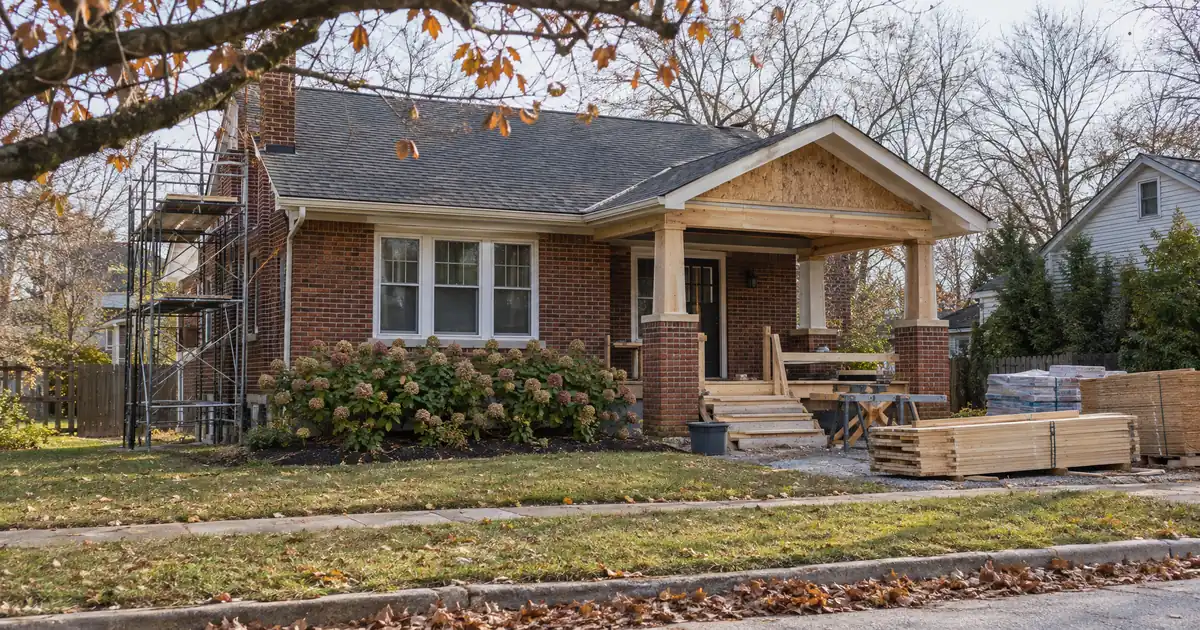
The Quick Read: Hard money carries a vacant BRRRR house because it lends against the property, the rehab plan, and the after-repair value, while a DSCR loan wants a finished, rentable house with a rent opinion it can test against the full monthly payment. The bridge holds the house until it is ready for that second test.
- Hard money is underwritten on the deal: the property, the scope of work, and the exit. A DSCR loan is underwritten on rent against the full housing payment.
- A vacant, finished house can be credited at appraiser-supported market rent. A house that is still mid-rehab has no rent opinion worth testing.
- The bridge term has to outlast rehab, lease-up, seasoning, appraisal, and underwriting. If it does not, the investor pays for an extension or brings cash to the payoff.
- Clearing 1.00 coverage on the exit loan is not the same as positive cash flow.
Why a DSCR Pool Skips the Unfinished House
A DSCR pool skips an unfinished house because the loan has nothing to test yet. Rent is the whole underwriting story, and a house under renovation has no finished condition, no lease, and no market-rent opinion that reflects the finished product.
A “DSCR pool” here means a portfolio DSCR loan, sometimes called a blanket or cross-collateralized loan. It is one note secured by several rentals. Across the wholesale network Lendmire works with, the 30-year portfolio DSCR loan covers 2 to 20 properties, with coverage measured on the pool. Pooled rent is set against pooled debt service, so stronger houses can offset weaker ones, subject to lender guidelines.
The pool still treats each house one at a time. Every property needs either a lease or an appraiser-supported market rent. It also has to be in rentable condition. A mid-rehab house adds risk without adding rent, so lenders commonly leave it out until the work is done. A rental that sits below 1.00 by itself can still sit in a pool, but underwriting tests the pooled coverage, the leverage and the terms.
Cost basis matters too. On the portfolio structure, inside the first six months of ownership the loan is also capped at 90% of total cost (purchase price plus documented improvements). From six to twelve months the cap is 100% of total cost. The leverage ceiling still applies, and the loan is the lower of the two. After twelve months, the appraised value alone is the basis. A rate-and-term refinance is not subject to the cost-basis cap.
A fresh BRRRR purchase therefore lands in an awkward spot. It is too new and too unfinished for the pool, so the investor needs a loan that does not ask for rent yet.
How Hard Money Carries Vacant BRRRR Houses Through the Gap
Hard money fits this gap because it is short-term, interest-only, and sized on the asset. The lender looks at the property, the budget, the after-repair value (ARV), and your plan to get out of the loan. It does not need a tenant, and it does not test rent against payment.
The figures below are program ceilings that vary by lender, property, and experience. They are not quotes, and nothing here is a commitment to lend.
- Fix-and-flip leverage: typically up to 93% of project cost at five or more completed projects, 90% of project cost at two or more, and 85% of project cost with fewer than two. Every tier is capped at 75% of after-repair value.
- Bridge purchase without rehab: up to 80% of purchase price.
- Rehab budget: up to 100% of the rehab budget funds in draws against completed work. That is a budget figure, not a purchase LTV. No true 100% purchase program exists.
- Refinance of an existing property: up to 65% of value on a cash-out or rate-and-term hard money refinance.
- Loan size and term: up to $5,000,000 (larger by exception), with terms of 6 to 18 months, interest-only, and no prepayment penalty.
- Credit and collateral: a 620 minimum score, with added conditions below 660. Collateral is non-owner-occupied residential property of 1 to 4 units.
The draw structure shapes the carry. The lender holds the rehab budget, inspects completed work, and releases funds on a schedule agreed in advance. A borrower may need to front some costs and be reimbursed, so read the draw schedule for that before closing. Cash planning here matters as much as the leverage number.
Three Property States, Three Loan Paths
Where the house stands in the rehab decides which loan fits. The table maps the three states an investor actually faces.
| House state | Likely loan path | Rent basis | Main risk |
|---|---|---|---|
| Mid-rehab, vacant | Hard money with draws | None yet | Overruns and a short term |
| Finished, vacant | DSCR on market rent | Appraiser’s market rent | Condition and lender overlays |
| Finished, leased | DSCR on lease or market rent | Lower of lease and market | Weak or below-market lease |
A vacant house is not an automatic DSCR denial. A finished, vacant house is credited at appraiser-supported market rent, not at zero. The appraiser builds that opinion from comparable rentals. The standard Form 1007 (single-family) and Form 1025 (2 to 4 units) are agency-created forms, but they are simply the tools appraisers use. Freddie Mac’s form instructions describe the lender getting market rent from the appraiser. The comment section covers the range of rents, an area vacancy estimate, and rent trends. DSCR loans are not agency products, so the form is only the document that supplies the number.
On a leased house, the usual convention is to credit the lower of the lease and market rent. A lease above market does not lift coverage.
Key Terms Defined
BRRRR: Buy, rehab, rent, refinance, repeat, with the refinance pulling money back out of the property.
Hard money: Short-term, interest-only, asset-based financing used to buy and rehab a property.
DSCR: The debt service coverage ratio, which is monthly rent divided by the full housing payment (principal, interest, taxes, insurance, and any HOA dues).
Market rent: The monthly rent an appraiser estimates from comparable rentals when no lease is in place.
Seasoning: The period a lender wants you to own the property before it will refinance on appraised value.
ARV: The after-repair value, which is a planning estimate and not the exit lender’s number.
Carry cost: Everything the vacant house costs each month while it waits, including interest, taxes, insurance, utilities, and upkeep.
What the Vacant Months Really Cost
The carry is the cost that surprises most investors. Interest on the bridge runs whether the house is empty, half-finished, or waiting for an appraisal. Taxes, insurance, and utilities run on top of it, and the vacant house also needs maintenance.
No competing rent offsets any of this, so every added month is a pure cost. The question is not whether the bridge is expensive per month. It is how many months the whole sequence takes. That sequence has five parts.
1. Finish the rehab and clear final inspections.
2. Lease up, or order a market-rent appraisal if the house will stay vacant.
3. Wait out the seasoning window.
4. Wait for the exit lender’s appraisal.
5. Work through underwriting and payoff.
Each step adds carry. Build a month-by-month cost sheet with the interest-only obligation, taxes, insurance, utilities, and a maintenance cushion. Then add a buffer for the steps most likely to slip. Lendmire’s piece How a BRRRR Rehabber Stress-Tests the DSCR Exit at Hard Money Close walks through that exercise in more detail.
Lease First or Refinance Vacant?
Lease first when the cost of waiting is smaller than the risk of a weak exit. Refinance vacant when the bridge clock is short and the market-rent appraisal looks solid. This is a genuine tradeoff, and the right answer depends on the house.
| Choice | Upside | Downside |
|---|---|---|
| Lease first | Lease supports rent; fewer questions | Extra carry while the tenant search runs |
| Refinance vacant | Exit starts sooner | Rent rests on the appraiser’s opinion |
| Rush a weak tenant | Occupied house | Below-market lease can cap coverage |
A rushed tenant is not a free fix. Because the usual convention credits the lower of lease and market rent, signing a below-market lease can pull coverage down. A tenant signed to beat the clock can cost more than a few more weeks of carry.
Some lenders prefer occupancy on a refinance, while others will lend on market rent alone for a finished house. Because lender overlays differ, a broker with access to many lenders can steer the file to a program that accepts a vacant, rent-ready house before the bridge closes.
Plan the Bridge Backward From the Exit
Start with the exit, then size the bridge to it. A DSCR loan that pays off hard money has requirements, and each one sets part of the bridge timeline.
Seasoning. Market surveys report that most lenders want roughly 6 to 12 months before a cash-out refinance, per US Realty Training. For a cash-out refinance on a standard investment property, the DSCR loan in Lendmire’s wholesale network typically expects about 6 months of ownership, measured from title recording. Finishing the rehab does not start that clock, and the recorded deed does. Moving title between entities mid-stream can reset it, so confirm with the lender first.
Appraisal. The exit lender orders its own appraisal, which sets both the loan size and the market rent. US Realty Training calls a low appraisal the biggest BRRRR risk, because the new loan is a percentage of appraised value. Your ARV figure is a planning number only, and a low appraisal shrinks the loan by the same percentage.
Leverage. A cash-out refinance on an investment property through the DSCR loan tops out around 75% LTV across most of the network. A rate-and-term DSCR refinance on an investment property carries a higher ceiling, up to 85% LTV, but returns no cash at closing. Hard money differs here, since it sizes on cost and ARV (up to 93% of project cost at the top tier, capped at 75% of ARV). The DSCR loan sizes on appraised value and rent. Terms vary by lender guidelines, property type, leverage, credit profile, and full file review.
Coverage. The DSCR loan compares rent to the full payment. The new loan is fully amortizing, so it usually asks more of the rent than an interest-only bridge did. 1.00 is where many select programs start, and stronger ratios open better pricing and leverage. A separate select-lender path takes coverage below 1.00, with leverage and terms adjusted.
Credit, reserves, and size. A 620 floor exists in parts of the network, most DSCR programs want around 660, and 700 or higher unlocks the strongest leverage tiers. Reserves commonly run about 6 months of PITIA and can step up to about 9 months above $1,500,000. Standard programs run up to $3,000,000.
Then pick a bridge term that covers rehab, lease-up, seasoning, appraisal, and underwriting with room to spare. Most hard money terms run 6 to 18 months. If the sequence looks tight, price an extension fee against the extra cash it lets you recover. Negotiate it before maturity, not after. When the property is stabilized, a hard money exit refinance into long-term rental financing is a common next step, and Lendmire arranges that path through its hard money exit refinance program.
Where the General Rule Breaks
Several edge cases bend the usual path. Each deserves a check before the bridge closes.
Delayed financing does not rescue a hard money purchase. Delayed financing is a conventional exception built for cash buyers. It needs a purchase that was not secured by the subject property, and the cash-out is capped near acquisition cost. A hard money loan secures the property, so the exception generally does not apply.
Payoff-only versus cash-out. If proceeds only cover the bridge payoff and costs, the file reads lighter than a cash-out. It may fit a rate-and-term refinance after the work is done and a tenant is in place. Lender treatment varies.
Inside the seasoning window. Sizing often follows cost basis, meaning purchase price plus documented rehab, instead of appraised value. Run rehab spend through a single account so it can be documented.
Short-term rentals. A nightly rate times 30 days is not valid rent support, and Form 1007 documents monthly market rent, per Fannie Mae’s appraiser update. Network programs for short-term rentals allow up to 75% LTV on a purchase, while a short-term-rental refinance runs around 70%, and short-term-rental cash-out is 70%. Programs expect a 640 or higher score and about 12 months of hosting history, with a 1.00 coverage floor on purchases and on refinances. Short-term rental rules can vary by city, county, HOA, and property type, so investors should confirm local rules before relying on projected rental income. Exact terms depend on the lender’s guidelines, property type, leverage, and a full review of the borrower’s file.
2 to 4 units. These use Form 1025, which reports per-unit rent and value together.
Property types. Manufactured homes (single- and double-wide), log homes, and barndominiums are not offered through the network’s DSCR programs. Hard money collateral is likewise limited to 1 to 4 unit residential rentals. Land, commercial, and owner-occupied property are not on the sheet.
Batches. Several houses finishing at different times can fit one pool, but each needs its own condition and rent support. Plan the pool entry for the slowest house, or exit the early ones separately.
Plan B If the Exit Falls Short
Even a careful plan can slip. The table shows common failure points and the options an investor can review with a lender.
| Problem | Symptom | Options to review |
|---|---|---|
| Low appraisal | Loan size shrinks | Smaller cash-out, rate-and-term, or a second look |
| Thin coverage | Rent under the payment | Lower leverage, more cash, or a select sub-1.00 path |
| No lease yet | Vacant at underwriting | Market-rent program or lease first |
| Seasoning not met | Cost-basis cap applies | Wait, extend the bridge, or size to cost |
| Bridge nearing maturity | Term nearly spent | Extension before maturity |
Coverage below 1.00 is available through select lenders in the network, with leverage and terms adjusted, and qualification is subject to credit approval, property review, and lender guidelines. Treat it as a fallback. If a deal only works through a sub-1.00 structure, re-examine the purchase price or rent assumption before leaning on the loan type.
An overrun on the rehab can also mean bringing cash to the exit. A contingency line in the budget is cheaper than a surprise.
Coverage Is Not Profit
A DSCR ratio compares rent to PITIA only. Clearing 1.00 does not mean the house produces positive cash flow, since repairs, vacancy, management, utilities, and capex all sit outside the calculation. A larger down payment lowers the payment and can lift the ratio, but it never erases leverage caps, credit floors, reserve rules, or property eligibility. The strongest files clear both tests: enough equity and enough rental coverage.
A BRRRR also carries two rounds of financing, and a later refinance adds a third. Closing-cost drag adds up, so run the whole stack. For a refresher on how the exit loan is built, see the complete DSCR loans guide. Tax treatment varies; consult a qualified professional.
Readiness Checklist for the Exit
- Payoff letter from the bridge lender, with any extension or exit fees
- Lease or appraiser-supported rent schedule
- Rehab proof and final inspection
- Insurance in force and entity documents
- Reserve statements
- Recorded deed, so seasoning is measured from the right date
Frequently Asked Questions
Can I refinance a vacant house into a DSCR loan?
It can work on a finished house. The appraiser’s market rent stands in for a lease, and the lender reviews condition house by house.
Which rent do lenders use when there is no lease?
The appraiser’s market-rent estimate, built from comparable rentals on Form 1007 for single-family or Form 1025 for 2 to 4 units. On a leased house, the usual convention credits the lower of the lease and market rent.
How long can hard money carry a vacant house?
Terms typically run 6 to 18 months, interest-only, and vary by lender, property, and experience. Longer runway usually comes from refinancing into long-term rental financing, not from multi-year hard money.
Does a half-finished rehab qualify for DSCR?
Generally not. A DSCR loan is not a construction product, and a house under renovation has no rent opinion that reflects finished condition. Finish the work first, or keep the house on the bridge.
What if the appraisal comes in low?
Loan size falls with the value, since the loan is a percentage of appraised value. Options include a smaller cash-out, a rate-and-term refinance, bringing cash to the payoff, or extending the bridge while the file is re-reviewed.
Next Step
If you are buying, rehabbing, or refinancing an investment property and want to see how the numbers work, Lendmire can help you compare hard money options based on the project, the exit plan, leverage, and your goals. Lendmire is a broker arranging financing through select lenders across 41 markets, including Washington, D.C. Every program is subject to lender guidelines and is not a commitment to lend.
The investors who get the most from hard money are the ones who plan the exit before the purchase closes, because the bridge is only as good as the loan that pays it off.
About Lendmire
Lendmire — NMLS# 2371349 — is a DSCR and non-QM mortgage brokerage with investor loan programs in 41 markets, including Washington, D.C. DSCR eligibility is commonly reviewed by the lender around property-level rent rather than personal income documentation, subject to lender guidelines, and the brokerage helps arrange financing for LLC-owned portfolios beyond conventional financed-property limits. Recognized by Scotsman Guide as a Top Mortgage Workplace in 2025 and 2026.
Get Started
Ready to find the right loan for you?
In about 30 seconds you can review financing options available for your investment property. No commitment required.
Informational only. Not a Loan Estimate, approval, or commitment to lend. Program availability and eligibility are subject to lender guidelines, credit approval, property review, and underwriting.
References
1. Freddie Mac Form 1000 / Fannie Mae Form 1007 instructions
2. US Realty Training: The BRRRR Method
3. Fannie Mae Appraiser Update
This article is part of Lendmire’s hard money loan program — full qualification details, guidelines, and scenarios live on the program page.
Related reading: How to Build a Vacancy Buffer in a DSCR Pool With One Employer · Portfolio Loan vs DSCR Loan Terms for a BRRRR Batch · Can 25 Scattered Houses Go Under One 30-Year DSCR Loan?
Brandon Miller
Founder & CEO, Mortgage Loan Originator, Lendmire LLC
- Mortgage Loan Originator · NMLS# 1129696 · Verify on NMLS Consumer Access
- North Carolina Real Estate Broker · License# 343312 · Verify on NCREC
- North Carolina Insurance Producer · License# 19053198 · Property, Casualty, Life, Health · Verify on NAIC SBS
- Lendmire LLC · Firm NMLS# 2371349 · Verify firm licensure
Compliance and disclosures. Lendmire (NMLS# 2371349) is a licensed mortgage broker and is not a direct lender, depository institution, financial advisor, or tax professional. Content in this article is general market analysis and educational information — not financial, legal, or tax advice for any specific situation. Lendmire does not guarantee loan approval; every transaction is subject to underwriting by the funding lender. Mortgage pricing and loan program guidelines are subject to change at any time without notice and vary by borrower characteristics, property type, and state regulations. Lendmire complies with Equal Housing Opportunity. Licensure verification: NMLS Consumer Access.