
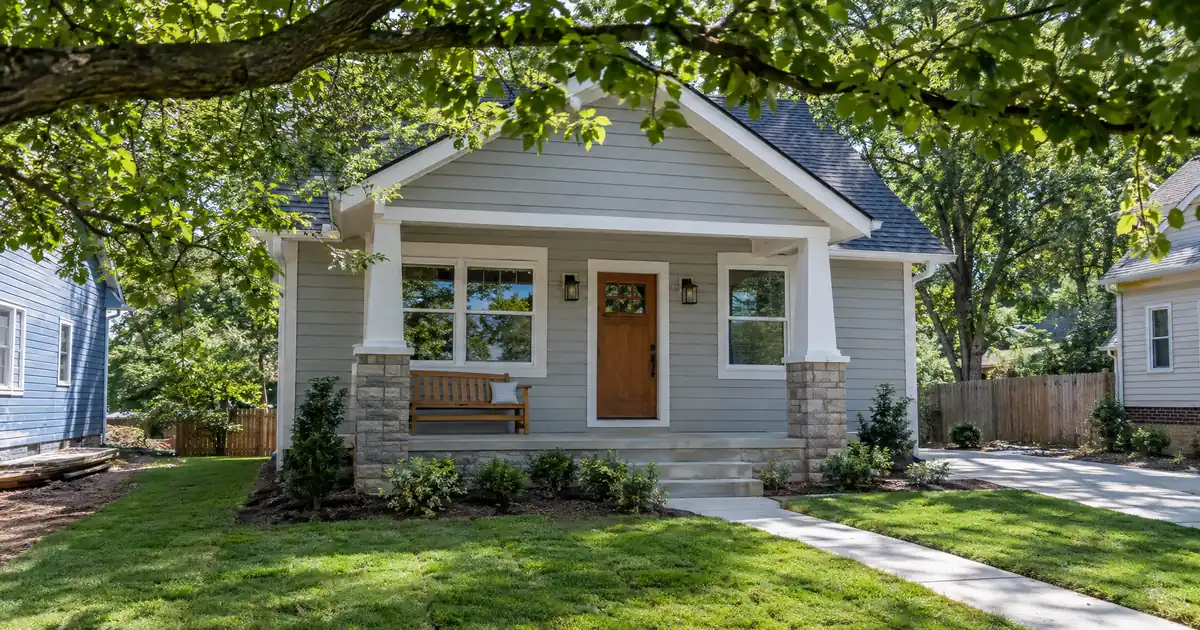
The Quick Read: Hard money lenders size a cash-out loan on the property’s value and your exit plan, not on booking records, so an Airbnb with no history can be considered for a short bridge. The long-term loan that usually replaces that bridge is where history, projections, and coverage get tested, and those rules vary by program.
- A hard money cash-out refinance on this kind of property runs up to 65% of value, with terms of 6 to 18 months, subject to lender guidelines.
- The permanent loan that pays it off is usually a DSCR loan. Short-term-rental cash-outs there top out around 70% and typically expect about 12 months of hosting history.
- Seasoning (time on title) and hosting history (time operating as a rental) are two separate clocks.
- The appraisal rarely proves Airbnb income, so the evidence package matters.
- The best program for your situation depends on your timeline, your exit, and how the property was acquired.
Key Terms Defined
Hard money loan: a short-term, interest-only loan secured by the property and sized mainly on the asset, the plan, and the exit rather than on your personal income.
Cash-out refinance: a new loan that pays off the old one and gives you the extra equity as cash.
Takeout loan: the longer-term loan that replaces a bridge or hard money loan when the short term ends.
DSCR (debt service coverage ratio): the property’s monthly rent divided by its full monthly payment of principal, interest, taxes, insurance, and any HOA dues.
Seasoning: how long the property has been on title in your name.
Hosting history: how long the property has operated as a short-term rental, usually shown by platform payout records.
Form 1007 and Form 1025: appraisal forms that report market rent from monthly leases. The 1007 covers single-family homes and the 1025 covers two to four units.
Why “Hard Money” and “No History” Pull in Opposite Directions
Hard money is usually the loan you are leaving, not the loan that gives you the cash-out. A hard money lender is a private, asset-based lender, so the property and the exit carry the file. A DSCR lender is the opposite, because it qualifies primarily on property-level rental income covering the payment, subject to lender guidelines. An Airbnb with no history has no documented income, which is the one thing a DSCR file wants to see.
That creates two jobs. The first is getting cash out of the property now, which is the hard money question. The second is getting out of the hard money loan later, which is the DSCR question. Most investors who ask this question are really planning both.
Both loan types are business-purpose investor loans. They are reviewed differently from a standard owner-occupied mortgage.
How a Hard Money Cash-Out Works on This Property
Across the wholesale network Lendmire works with, the parameters look like this, though they vary by lender, property, and experience:
- Cash-out and rate-and-term refinances go up to 65% of value.
- Loan amounts run up to $5,000,000, with larger amounts by exception.
- Terms run 6 to 18 months, interest-only, with no prepayment penalty.
- The minimum credit score is 620, with additional conditions below 660.
- Eligible collateral is non-owner-occupied residential property, one to four units.
Notice what is missing: any request for booking history. The lender is underwriting the property, the plan, and how you will repay. That is why an unbooked Airbnb can be considered here.
The tradeoff is leverage and runway. Up to 65% of value is a lower ceiling than the roughly 70% a short-term-rental cash-out reaches on a DSCR loan. The term is short, so you are buying time, not a permanent solution.
How the Takeout Loan Treats an Airbnb With No History
The takeout is where underwriting gets strict. A DSCR lender wants a documented income figure to divide by the full payment, and a new Airbnb has nothing to divide. Here is how that plays out step by step.
1. The payoff sets the baseline. The hard money payoff statement is the amount being replaced. Anything above payoff plus costs is cash-out.
2. Seasoning is checked. About 6 months on title is the common expectation for a cash-out across most of the network.
3. The program picks an income method. Programs differ on what they accept for a refinance.
4. The appraisal sets value. Value drives the leverage cap and how much cash is available.
5. The lender applies its own haircut and tests coverage. Cash-out raises the payment, so coverage drops even when bookings do not change.
6. The file is assembled. That means entity documents, reserves, a payoff statement, and insurance written for short-term rental use.
On the strictest files, short-term-rental programs expect about 12 months of hosting history. Refinance coverage on those programs starts at 1.00, and cash-out leverage tops out around 70% on short-term-rental collateral. Coverage below 1.00 is a separate path, available through select lenders in the network with leverage and terms adjusted. Expect a credit score of about 640 or higher for short-term-rental programs.
Four Ways Lenders Count Airbnb Income
The table shows how each works.
| Method | What it needs | Weak spot |
|---|---|---|
| Actual platform history | Payout records matched to bank deposits | Needs months of bookings |
| Market projection | Third-party earnings report | Not every refinance program accepts it |
| Appraiser income analysis | Narrative addendum from the appraiser | Quality varies by appraiser |
| Long-term rent fallback | Form 1007 or 1025 | Often understates nightly income |
Scotsman Guide reports that some lenders use AirDNA data to gauge earning potential on homes rented through Airbnb or Vrbo. It says the data is most useful for properties converting to short-term rentals for the first time, and that it suits DSCR loans because they rest on a property’s earning potential. That reporting is mostly about purchases. On a refinance, the “no history” question gets stricter.
The same property can look very different depending on which method the lender accepts. A file that falls back to long-term rent can miss the coverage floor even when the bookings are strong.
What the Appraisal Can and Cannot Prove
An appraisal sets value, but it does not prove your Airbnb income. Fannie Mae’s appraiser update says Form 1007 was not designed to appraise single-family homes used as short-term rentals. It calls for monthly-lease comparables and says multiplying a nightly fee by 30 is incorrect. DSCR loans are not agency loans, so this matters only for what the forms can and cannot show.
McKissock, an appraiser-education provider, says the form documents monthly rent, not nightly or business income. It adds that the lender, not the appraiser, makes the final income call. An opinion piece in HousingWire argues that using the 1007 on short-term rentals often produces artificially low coverage ratios. It also notes that a coming appraisal data standard, UAD 3.6, is slated to retire the form. The form names may change, but the gap between monthly rent and nightly income will remain.
Class Valuation, an appraisal firm, says competent short-term-rental appraisers add a narrative addendum called a Short-Term Rental Projected Income Analysis. If your file has no history, asking for that addendum up front can save you a repricing later.
The Two Clocks (and Why They Get Mixed Up)
Seasoning and hosting history run separately, and confusing them is the most common planning mistake. Seasoning starts at the recorded title date. Hosting history starts when the first guest stays. A property can be seasoned for a year and still have no hosting history if it sat empty or served as a long-term rental.
The 12 months of history a short-term-rental program expects is not a cash-out waiting period. It is an evidence requirement. If you own the property, have no bookings, and want cash-out on a DSCR loan, the exceptions are few, and they come with adjusted leverage.
A bridge or hard money purchase also does not count as a cash purchase for any waiver that depends on buying with cash. Treat the bridge as debt, because that is how takeout lenders treat it.
Your Three Routes Compared
A no-history Airbnb has three realistic paths. The right one depends on how long your bridge runs and what you need the cash for.
| Route | What it needs | Main tradeoff |
|---|---|---|
| Hard money cash-out | Value, plan, exit; 620+ score | Up to 65% of value, short term |
| Projection-based DSCR refinance | A program that accepts projections | Fewer programs, tighter leverage |
| Wait and season, then DSCR cash-out | About 12 months of hosting history | Bridge carry while you wait |
Many investors refinance out of hard money into long-term DSCR financing once the property is stabilized, and Lendmire brokers that path. The strongest files plan that exit before the bridge funds.
What “No History” Really Means to an Underwriter
Underwriters read “no history” four different ways, and each gets different treatment.
- Never listed. There is no listing and no bookings. Expect to rely on a market projection or an appraiser’s analysis, and expect tighter leverage.
- Listed but unbooked. A live listing shows intent and pricing. It still produces no payouts.
- A few months of bookings. Partial history helps, but programs that want 12 months generally will not accept three.
- Converted long-term rental. This is often underwritten on long-term rent until hosting history builds. Lease records and a rent opinion carry the file.
For two-to-four-unit properties, the rent opinion comes from Form 1025 instead of Form 1007. The network does not offer DSCR on manufactured homes (single- and double-wide), log homes, or barndominiums.
A Modeled Example
Say you bought a single-family Airbnb four months ago with a bridge loan and finished the furnishing. You have no bookings. The bridge matures in a few more months.
Option one is a hard money cash-out at up to 65% of appraised value. That gives you runway and some cash, but the loan is still short-term debt. Option two is waiting. At about 12 months of hosting, a short-term-rental DSCR cash-out becomes possible at roughly 70% of value, assuming coverage clears 1.00 on the new payment.
Run the coverage on the post-refinance payment, not the old one. Take a modeled file that covers the old payment at around 1.25x. After a cash-out raises the balance, that same rent may land closer to 1.0x. Bookings did not change, but the payment did.
These are modeled assumptions, not sourced market data. Every file is underwritten individually.
The Evidence Package for a No-History File
A thin history means the rest of the file has to be thick. Pull these items together before you apply:
- A live listing with pricing and photos.
- A market projection report for the property.
- An appraiser’s short-term-rental income analysis, if the program accepts one.
- Proof of reserves, which commonly run around 6 months of PITIA but vary by lender, leverage, and loan size.
- Insurance written for short-term rental use.
- A payoff statement for the loan being replaced.
- Entity documents, if the property is vested in an LLC, subject to lender program eligibility.
Short-term rental rules can vary by city, county, HOA, and property type, so investors should confirm local rules before relying on projected rental income. A permanent lender will want that confirmation too.
Risks, and When Not to Do This
The biggest risk is a bridge that matures before the takeout is ready. If the takeout needs 12 months of hosting history and you have owned for four, you carry the bridge while you wait. Extensions can exist, but they vary by lender and cost money. No prepayment penalty helps if you refinance early, but it does nothing for a missed maturity.
Do not use this structure if the plan depends on income that has never been tested. A projection is an estimate, not a booking. Treat it as the lender’s way of sizing the loan and not as proof the property will perform.
Clearing 1.00 coverage also does not mean the property makes money. DSCR compares rent to PITIA only. Repairs, vacancy, management, utilities, and capital expenses sit outside the calculation. A short-term rental in particular can clear coverage in a strong season and still lose money in a slow one.
How to Vet the Right Fit
Which lenders can write this scenario depends on your timeline, credit profile, property type, and exit. Lendmire is a mortgage broker, not a lender, and it works with a multi-state network of wholesale lenders across 41 markets, including Washington, D.C. The brokerage shops multiple programs and matches your scenario to the one that fits, rather than steering you to a single product.
When you talk to any lender or broker about this file, ask:
1. Does the program accept projected income on a refinance, or only on a purchase?
2. How many months of hosting history does the cash-out require, and what leverage applies if history is thin?
3. How does the takeout program treat a hard money payoff, and what seasoning does it count?
4. Which appraisal form or addendum does it rely on for income?
5. What happens at maturity if the takeout is not ready?
For the broader picture of how these programs fit together, see Lendmire’s complete DSCR loans guide.
If You Are Ready to Run the Numbers
If you are buying, rehabbing or refinancing an investment property on a short timeline and want to see how the numbers work, Lendmire can help you compare hard money options based on the project, the exit plan, leverage, and your goals.
Frequently Asked Questions
Can I get a cash-out refinance on an Airbnb with no rental history?
A hard money cash-out can be considered on the property’s value and your exit plan, up to 65% of value on a refinance, subject to lender guidelines. A DSCR cash-out on short-term rental collateral typically expects about 12 months of hosting history. The few exceptions come with adjusted leverage.
Do I need a lease on a short-term rental?
Not for a hard money loan, which looks at the asset and the exit. A DSCR lender needs some income evidence, which can be platform payouts, an accepted projection, or a long-term rent opinion. A live listing alone does not count as income.
How long until I can cash out after buying?
Across most of the network, about 6 months of seasoning is the common expectation for a DSCR cash-out. Hosting history is a separate clock and typically runs about 12 months on short-term-rental programs. Hard money cash-outs set their own seasoning rules by lender.
Can I refinance out of hard money into long-term financing?
Yes, and that is the standard exit. The takeout lender applies its own rules on value, seasoning, income evidence, and coverage. Plan the takeout before the bridge funds.
Do I need tax returns or W-2s for the takeout?
DSCR loans qualify primarily on property-level rental income covering the payment, subject to lender guidelines. Credit, reserves, and property eligibility still apply, and requirements vary by program.
About Lendmire
Lendmire — NMLS# 2371349 — is a mortgage brokerage specializing in DSCR investor loans, helping arrange financing across 41 markets, including Washington, D.C., through wholesale and investor-lending channels. The model centers on property-level rental income reviewed by the lender rather than W-2 documentation, subject to lender guidelines, suiting entity-owned and multi-property investors. Lendmire holds Scotsman Guide Top Mortgage Workplace recognition for 2025 and 2026.
Get Started
Ready to find the right loan for you?
See your offer in seconds. No credit pull, no obligation.
Informational only. Not a Loan Estimate, approval, or commitment to lend. Program availability and eligibility are subject to lender guidelines, credit approval, property review, and underwriting.
References
1. Scotsman Guide on lenders using outside data for short-term rentals
2. Fannie Mae appraiser update
3. McKissock on Form 1007 and short-term-rental appraisals
4. HousingWire on short-term rentals and the appraisal playbook
5. Class Valuation on Form 1007 and short-term rentals
This article is part of Lendmire’s hard money loan program — full qualification details, guidelines, and scenarios live on the program page.
Related reading: Short-Term Rental Cash-Out Refinance Requirements When Your Mortgage Is Almost Paid Off · How a Lender Counts Reserves on a BRRRR Cash-Out Refinance · Top Hard Money Cash-Out Refinance Providers to Tap Equity From a Rental Property
Brandon Miller
Founder & CEO, Mortgage Loan Originator, Lendmire LLC
- Mortgage Loan Originator · NMLS# 1129696 · Verify on NMLS Consumer Access
- North Carolina Real Estate Broker · License# 343312 · Verify on NCREC
- North Carolina Insurance Producer · License# 19053198 · Property, Casualty, Life, Health · Verify on NAIC SBS
- Lendmire LLC · Firm NMLS# 2371349 · Verify firm licensure
Required disclosures. Lendmire (NMLS# 2371349) operates as a licensed mortgage broker, not a direct lender or depository. The discussion in this article is general in nature and should not be relied upon as financial, legal, or tax advice — every investment scenario is unique and should be reviewed by a qualified professional. Any loan inquiry is subject to lender underwriting, and this article is not a commitment to lend or a guarantee of approval. Mortgage rates, loan terms, and program guidelines vary by borrower, property, and state, and may change without notice. Equal Housing Opportunity. Verify licensure at NMLS Consumer Access.