
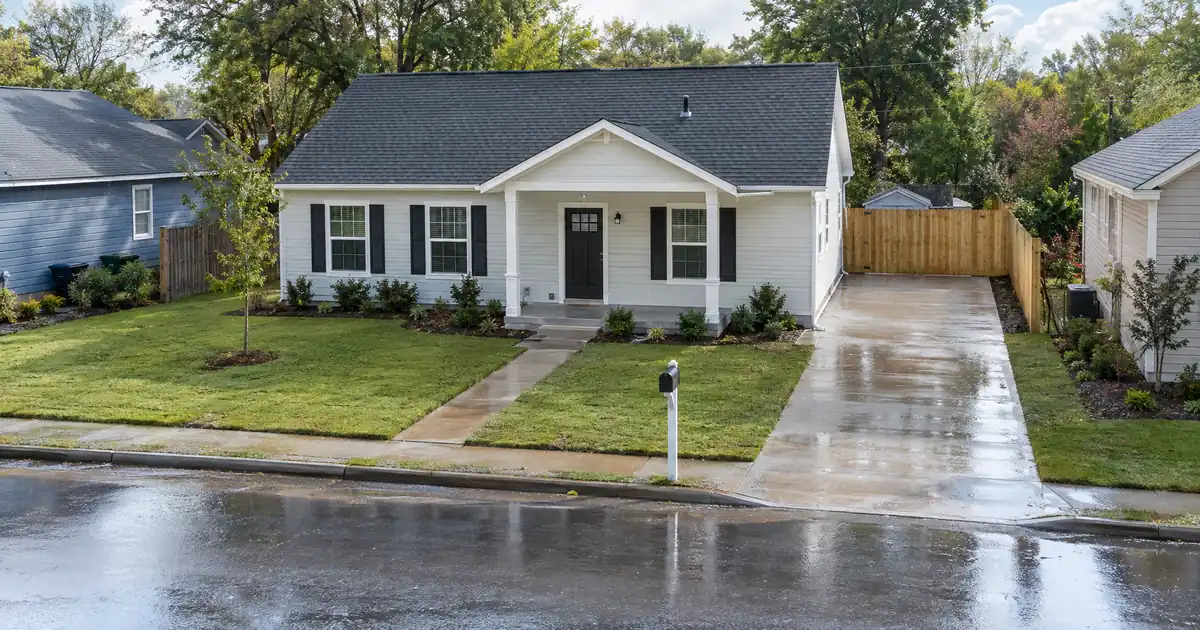
The Quick Read: A cash down payment keeps the loan secured by the flip alone, while cross-collateral pledges a second property you already own to stand in for some of that cash. Cash is simpler and keeps your other assets out of the deal, and pledged equity preserves liquidity at the cost of tying properties together. Which one fits depends on how much cash you hold, how much equity sits elsewhere, and how much risk you will carry on the other property.
- Across the wholesale network, fix-and-flip leverage is tiered by documented completed projects and measured against project cost, with a cap tied to after-repair value.
- Cross-collateral can reduce the cash due at closing, but it puts a second property at risk if the flip stalls.
- Neither option is a true 100% purchase program. Lenders still weigh the property, the plan, and the exit.
- Cash held back for rehab overruns and carrying costs is often what separates a clean flip from a stressed one.
- The release terms on the pledged property matter as much as the structure itself.
The Honest Answer on Who Each Option Is For
A cash down payment suits the flipper who has the liquidity and wants one property securing one loan. It is also the cleaner path for newer investors, because the lender underwrites a single asset.
Cross-collateral suits the flipper with real equity in an existing property and a strong reason to keep cash for rehab and reserves. It works best for experienced operators who understand how to be released from the pledge. If your cash is thin and your equity is also thin, neither structure fixes that.
The two options are not rivals in every deal. Some flippers use cash on one project and a pledge on the next, depending on what else is happening in their portfolio.
How Each Structure Works
In the cash path, the lender sizes the loan against the subject property: purchase price, rehab budget, and after-repair value (ARV). You bring the difference at closing. Rehab funds are released in draws against completed work, and the lien comes off when the loan is repaid at sale or refinance.
Cross-collateralization means the collateral for one loan also secures another obligation. A law-firm glossary describes the common pattern as pledging the new asset plus a second property already owned to support a single loan. The term gets used loosely. A blanket mortgage, where several properties sit under one loan, is one form. A flipper can also finance one acquisition and pledge an existing property purely as extra security.
The usual steps run like this. The lender values the existing property and calculates the equity, which a trust company’s explainer identifies as the first step. Liens are then recorded on both properties, often under one deed of trust or mortgage. When the flip is sold, the payoff is meant to release both. Those release terms are what you want to read before you sign.
Side-by-Side
| Factor | Cash Down Payment (network program parameters) | Cross-Collateral (published industry norms) |
|---|---|---|
| Review basis | Asset-based: property, plan, exit | Subject property plus pledged-property equity |
| Documentation | Project budget, ARV support, experience | Adds valuation and lien payoff on pledged asset |
| Property types | Non-owner-occupied 1-4 units | Pledged property eligibility set by lender |
| Entity vesting | Varies by lender and property | Often must match or be guaranteed; varies |
| Leverage framing | Loan-to-cost, capped at 75% of ARV | Lender-specific; combined LTV usually matters |
| Reserve expectations | Cash for draws and carry; varies by lender | Cash preserved, but lenders may still want liquidity |
| Collateral at risk | The flip only | The flip plus the pledged property |
| Exit | Lien releases at payoff | Both liens release; terms in the loan documents |
The left column reflects the leverage and eligibility parameters Lendmire’s wholesale network uses for hard money. The right column shows published industry norms, which vary by lender. All of it is subject to lender guidelines, and none of it is a commitment to lend.
What the Network’s Leverage Tiers Actually Look Like
Across the wholesale network, fix-and-flip leverage is tiered by documented completed projects. It runs up to 93% of project cost at five or more completed projects, up to 90% of project cost at two or more, and 85% of project cost with fewer than two. Every tier is capped at 75% of ARV. Bridge purchases without a rehab scope run up to 80% of purchase price. Up to 100% of the rehab budget can fund in draws against completed work, and that is a rehab-budget figure, not a purchase ceiling. All of this varies by lender, property, and experience.
Loan sizes run up to $5,000,000, with larger balances by exception. Terms are 6 to 18 months, interest-only, with no prepayment penalty. The credit floor is 620, with additional conditions below 660. Collateral is non-owner-occupied residential property of one to four units.
Read those tiers carefully. The gap between the loan and the full project cost is the cash down payment. Pledged equity is a way some lenders may address that gap, and it does not change what the subject property supports on its own. There is no true 100% purchase program here, and a pledge does not create one.
When a Cash Down Payment Is the Better Fit
Cash is the better fit when simplicity and containment matter most. Here are the situations where it usually wins.
You are newer to flipping. First-time investors qualify at the lower leverage tiers, and the lender wants to understand the deal without layering in a second asset. A cleaner file is easier to review. It also leaves you with one number to watch instead of two.
Your other properties are performing rentals you want left alone. Under a blanket structure, a property tied up in the pledge can be harder to refinance or sell until it is released. That is a general consequence of how release clauses work. If a rental is anchoring your monthly cash flow, keeping it out of a flip is often worth the extra cash.
Your equity is thin or sits in a junior position. Lenders look at combined loan-to-value and lien position on the pledged property. If the equity is modest, or a second lien already sits ahead of the new one, the pledge may add friction and little else.
You want a clear downside. With cash, the worst case is losing the money in the flip. With a pledge, a stalled flip puts a second property in the line of fire. ConsumerAffairs frames the underlying mechanism plainly: lenders like these arrangements because, if the borrower defaults, the lender can sell the asset to recover the debt.
Picture a flipper with four completed projects who has the cash for the gap and owns two stabilized rentals. Putting cash into the deal costs liquidity, but it keeps the rentals clean. If the rehab runs long, only the flip is exposed.
When Cross-Collateral Is the Better Fit
Cross-collateral earns its place when your equity is strong and your cash is the scarce resource.
Cash is better spent on the rehab than on the closing table. Pledged equity works like cash without a cash-out refinance on the other property. A flipper who leaves cash in reserve can handle draw delays, cost overruns, and carrying costs without scrambling.
You have a large, seasoned equity position in a property with a clean lien. Lenders generally want sizable equity and a modest combined loan-to-value across the pledged assets. A property with real cushion makes the conversation easier. Some lenders also want first position on the pledged property, so existing debt can complicate things.
You are experienced and own your exit. The strongest cross-collateral candidates tend to be repeat borrowers with a track record, a tight budget, and a resale plan they can defend. That is a lender-policy question, not a rule, and it varies.
You understand the release mechanics. The pledge only helps if both properties come free when the flip pays off. Ask about the release clause, partial releases, what happens if you want to sell the pledged property mid-flip, and any balloon or maturity date if the same lender holds multiple loans.
An experienced flipper, say, has a free-and-clear rental with substantial equity and a deal that needs more cash than the lender will leave in. A pledge on the rental covers the gap, and the flipper keeps working capital for the rehab. That is a sound trade. It stops being sound if the flip is the only thing paying down the debt and the rental is also needed as a refinance candidate next quarter.
Here is the part that many investors miss. Borrowers who use this structure often could have qualified for other financing, so the question is less whether a lender will do it and more whether you should. A pledge is a tool for flexibility. It is not extra capacity.
What Happens If the Flip Goes Sideways
With cash down, a stalled flip hurts the flip. Interest keeps accruing on an interest-only loan, the term clock runs, and you either sell below plan, extend if the lender allows it, or refinance out. The loss stays on one property.
With cross-collateral, the same stall reaches the pledged property. Properties become tied together, flexibility to exit one is limited, and trouble on one deal can spread to the other. Investors sometimes describe it as a house of cards, which is stronger language than needed, but the concentration risk is real.
Personal guarantees often sit alongside the pledge, depending on the lender. A pledge is not a substitute for a guarantee, so assume you may owe both.
There is also a third risk that is easy to overlook. If the pledged property is needed for something else mid-flip, such as a sale or a refinance, you cannot move it freely until the lender agrees to release it.
Practitioner View: Where the Files Get Tight
Across the wholesale network, the files that run into trouble are usually not the ones with too little equity. They are the ones where the budget was optimistic and the investor spent the cushion early. A flipper who leaves the table with no cash reserve is exposed to the first change order.
The files that go smoothly tend to share two traits. The borrower sized the budget with room for overruns, and the exit was supported by comps rather than hope. Whether the down payment came from cash or a pledge mattered less than whether either one left breathing room. Many investors who finish a flip then refinance into long-term DSCR investor loans once the property is stabilized as a rental, and Lendmire brokers that path. Keep in mind that DSCR compares rent to the full monthly obligation, so pledged equity does not replace the coverage test on a rental loan.
The complete DSCR loans guide explains how that exit financing is evaluated.
Mistakes That Cost Flippers
- Pledging a property with a thin equity cushion and assuming the lender will not care about combined leverage.
- Treating the pledge as free money. The pledged property is at risk, and you still need cash for draws, costs, and carry.
- Skipping the release clause. The label on the loan does not tell you how it releases, so read the documents.
- Confusing a true blanket loan with several separate loans closed together. One note secured by multiple properties behaves differently from separate notes.
- Pledging a rental you are counting on for a refinance or sale before the flip finishes.
- Ignoring entity and title issues. Whether an LLC-owned property can support a loan for a different borrower varies, so ask before assuming.
The Balanced Verdict
Choose cash if you are early in your flipping history, if your other properties are doing important work, or if you want one property and one loan. Choose cross-collateral if you hold strong, clean equity, you have the experience to manage a release, and preserving cash for rehab is the better use of your capital.
If you are leaning toward a pledge mainly because the cash is not there, pause. Reduced cash is not the same as reduced risk. A smaller project, a partner, or a lower-leverage tier may be the safer answer. If you are leaning toward cash mainly out of caution and your equity is idle, a pledge could make the deal more resilient. Either way, the lender reviews the file on its own merits, and nothing here is a commitment to lend.
If you are buying, rehabbing or refinancing an investment property on a short timeline and want to see how the numbers work, Lendmire can help you compare hard money options based on the project, the exit plan, leverage, and your goals.
Frequently Asked Questions
Can the lender go after both properties if the flip fails?
Yes, that is the point of the structure. The lender holds liens on every pledged property, so default can reach each of them. ConsumerAffairs describes the lender’s recourse in general terms. Personal guarantees may add exposure beyond the collateral.
Does the pledged property need to be free and clear?
Not always, but lenders care about lien position and combined leverage. Some want first position on the pledged property, while others will consider equity in second position if the cushion is large. Existing lender consent can also come into play. It varies by lender.
Can I sell the pledged property while the flip is still open?
Usually only with the lender’s agreement. The pledge holds until the loan documents say it releases, so a mid-flip sale generally requires a partial release or substitution of collateral. Ask about this before you sign.
Is there a hard money program that funds 100% of a purchase?
Not as a true purchase program in the network. Leverage is tiered by completed projects, measured against project cost, and capped at 75% of ARV. Rehab budgets can fund up to 100% in draws against completed work, which is a different figure from purchase leverage.
How much cash do I need beyond the down payment?
Plan for rehab overruns, interest-only carry during the 6-to-18-month term, and closing costs. Reserve expectations vary by lender, property, and experience. Preserving that cash is often the reason flippers consider a pledge in the first place.
About Lendmire
Lendmire — NMLS# 2371349 — is a DSCR and non-QM mortgage brokerage with investor loan programs in 41 markets, including Washington, D.C. DSCR eligibility is commonly reviewed by the lender around property-level rent rather than personal income documentation, subject to lender guidelines, and the brokerage helps arrange financing for LLC-owned portfolios beyond conventional financed-property limits. Recognized by Scotsman Guide as a Top Mortgage Workplace in 2025 and 2026.
Get Started
Ready to find the right loan for you?
In about 30 seconds you can review financing options available for your investment property. No commitment required.
Informational only. Not a Loan Estimate, approval, or commitment to lend. Program availability and eligibility are subject to lender guidelines, credit approval, property review, and underwriting.
References
1. Barnes Walker – Cross-Collateralization (legal glossary)
2. Boston Trust Corp. – The Importance of Cross-Collateralization
3. ConsumerAffairs – What Is Cross-Collateralization?
This article is part of Lendmire’s hard money loan program — full qualification details, guidelines, and scenarios live on the program page.
Related reading: Should You Pay Down Hard Money Principal Before a DSCR Refinance? · Can a First-Time Flipper Change Title Before Closing a Hard Money Loan? · Can You Use Hard Money to Flip a Triplex or Fourplex?
Brandon Miller
Founder & CEO, Mortgage Loan Originator, Lendmire LLC
- Mortgage Loan Originator · NMLS# 1129696 · Verify on NMLS Consumer Access
- North Carolina Real Estate Broker · License# 343312 · Verify on NCREC
- North Carolina Insurance Producer · License# 19053198 · Property, Casualty, Life, Health · Verify on NAIC SBS
- Lendmire LLC · Firm NMLS# 2371349 · Verify firm licensure
Required disclosures. Lendmire (NMLS# 2371349) operates as a licensed mortgage broker, not a direct lender or depository. The discussion in this article is general in nature and should not be relied upon as financial, legal, or tax advice — every investment scenario is unique and should be reviewed by a qualified professional. Any loan inquiry is subject to lender underwriting, and this article is not a commitment to lend or a guarantee of approval. Mortgage rates, loan terms, and program guidelines vary by borrower, property, and state, and may change without notice. Equal Housing Opportunity. Verify licensure at NMLS Consumer Access.