
The Quick Read: A hard money flip loan on a duplex, triplex, or fourplex is underwritten to the deal: a non-owner-occupied property, a documented renovation plan, a supportable after-repair value, and a borrower with enough credit, cash, and experience to carry it. Personal income is not the focus. Leverage depends on your track record, and every tier is capped by the value after repairs. Everything below varies by lender, property, and experience, and nothing here is a commitment to lend.
- Eligible collateral: non-owner-occupied residential property with one to four units.
- Leverage: 85% to 93% of project cost depending on completed projects, always capped at 75% of after-repair value.
- Rehab money: up to 100% of the rehab budget, released in draws after completed work.
- Credit: a 620 minimum score, with added conditions below 660.
- Term: 6 to 18 months, interest-only, no prepayment penalty.
Key Terms Defined
Hard money is short-term, asset-based financing from private lenders, secured by the property. The trade increasingly says private, bridge, or transitional lending, and the National Private Lenders Association passed a resolution in March 2022 encouraging members to use those terms, as Wikipedia’s entry on commercial hard money notes. Investors still search for hard money, so this article uses both.
ARV (after-repair value) is what the property should be worth once the work is done.
Loan-to-cost (LTC) is the loan as a percentage of purchase price plus rehab budget.
Loan-to-ARV is the loan as a percentage of the after-repair value.
Draw is a release of rehab funds after the lender confirms completed work.
Interest-only means you pay interest during the term, and the full principal comes due at maturity.
PITIA is principal, interest, taxes, insurance, and association dues. It matters later, if you refinance into a rental loan.
What this loan actually costs to carry.
Hard money is sized against the project and priced by time. Enter the deal and see how much the program will lend, the cash required at closing, the carry while you hold it, and what is left at the exit.
Leverage tiers on the current program: 85% with fewer than 2, 90% with 2 or more, 93% with 5 or more completed projects — every tier capped at 75% of after-repair value. Loan amounts up to $5,000,000, larger by exception; terms of 6 to 18 months, interest-only, no prepayment penalty. The rehab portion funds in draws against completed work, not at closing.
Program parameters shown update from Lendmire’s centralized guideline source. Rate, points, and months are editable assumptions, not quoted terms.
Cost cap sets the loan · positive spread
Illustrative estimate only — not a quote, Loan Estimate, approval, or commitment to lend. Rate, points, and months are editable assumptions. Hard money is business-purpose financing for real estate investors, not a consumer mortgage. Leverage on the current program tops out at 93% of project cost for investors with a documented track record, capped at 75% of after-repair value, with rehab funding up to 100% of the documented budget released in draws; actual terms vary by lender, borrower experience, property, and exit. Lendmire is a mortgage broker, not a lender.
What Counts as a 2-4 Unit Property?
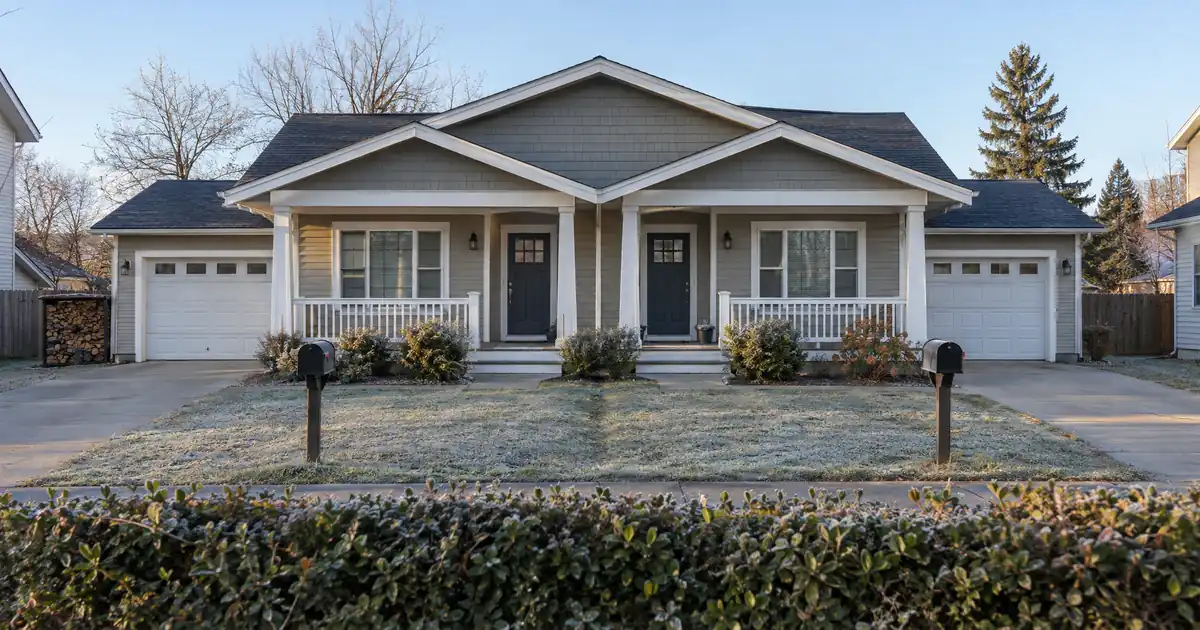
A 2-4 unit property is a duplex, triplex, or fourplex. Lenders treat these as residential investment property, not commercial. The appraisal tells you why. Fannie Mae’s Selling Guide names Form 1025 as the small residential income property appraisal report for two- to four-unit properties. That is not an agency loan program. Private flip lenders and rental lenders borrow the same form because it captures both sales comps and rent.
The hard money sheet Lendmire works from covers non-owner-occupied residential property with one to four units. Commercial, industrial, land, hospitality, and owner-occupied properties are not offered. Five or more units moves you into a different product. Mixed-use and manufactured housing are usually excluded as well, so confirm the property type before you write an offer.
Lendmire is a broker. It arranges these loans through select lenders in its wholesale network across 41 markets, including Washington, D.C. A few areas are not served, so availability is worth confirming early.
The Numbers at a Glance
These are typical ranges across the wholesale network Lendmire places files with. Each varies by lender, property, and experience.
| Item | Typical range |
|---|---|
| Fix-and-flip, 5+ completed projects | 93% of project cost |
| Fix-and-flip, 2+ completed projects | 90% of project cost |
| Fix-and-flip, fewer than 2 | 85% of project cost |
| Cap on every flip tier | 75% of ARV |
| Bridge purchase, no rehab | Up to 80% of purchase price |
| Refinance (cash-out or rate/term) | Up to 65% of value |
| Rehab funding | Up to 100% of rehab budget, in draws |
| Loan size | Up to $5,000,000, larger by exception |
| Credit | 620 minimum; added conditions below 660 |
Two cautions. The 100% figure is a rehab-budget figure. There is no true 100% purchase program. And the top tier is reserved for experienced investors.
How Does Underwriting Actually Treat a 2-4 Unit Flip?
The lender reviews the property, the plan, and the exit. Personal income and debt-to-income ratios are not the center of the file. Here is the sequence, step by step.
Step 1: Eligibility screen. The lender confirms the property is non-owner-occupied and has one to four units. It also confirms the type is acceptable and that the state is served. Many borrowers buy through an LLC, depending on program guidelines, so entity documents get requested.
Step 2: Borrower review. Credit, liquidity, and experience still matter. Credit sets a floor and affects terms. Liquidity proves you can cover closing costs, the gap between draws, and carrying costs. Experience sets your leverage tier. A hard money loan is asset-based, not borrower-blind.
Step 3: Appraisal. The appraiser gives an as-is value and an after-repair value. On a 2-4 unit the report typically follows the Form 1025 structure, which includes a rent schedule and rental comparables. Because the lender caps the loan against ARV, the appraiser’s comps drive how much you can borrow.
Step 4: Sizing. The lender runs several tests at once and the loan is the lowest result. More on that below.
Step 5: Two-part funding. The purchase advance funds at closing. The rehab money sits in a lender-controlled holdback. You do the work, the lender inspects, and funds are released in draws. The rehab money is not cash in your pocket on day one.
Step 6: Interest treatment. On an interest-only loan, ask which basis applies. Interest on the drawn balance grows as you draw. Some lenders charge interest on the full commitment from the start. The second basis raises your carrying cost, so read it before you sign.
Step 7: Payoff. You repay at sale, or you refinance into long-term rental financing.
How Is the Loan Sized?
The loan is the lowest of three outputs: the cost-based limit, the ARV cap, and your experience tier. The ARV cap is 75% of after-repair value on every tier. The cost-based limit is 85%, 90%, or 93% of project cost, depending on completed projects.
Run two cases in percentages.
- Cost is 80% of ARV. At the 90% tier, 90% of cost equals 72% of ARV. That sits under the 75% cap, so the cost test controls.
- Cost is 85% of ARV. At the 90% tier, 90% of cost equals 76.5% of ARV. That breaks the cap, so the ARV cap controls and you bring more cash.
Thin deals hit the ARV cap. Fat deals hit the cost limit. Either way, you must fund the gap yourself.
Investors often screen deals with the 70% rule. BiggerPockets gives the formula as ARV times 0.7, minus rehab. Its example uses a $100,000 ARV and $20,000 of rehab, which leaves a $50,000 maximum purchase price. A BiggerPockets contributor clarifies that the remaining 30% of ARV is meant to cover closing costs, carrying costs, and profit. It is 70% of ARV minus repairs, not 70% off ARV.
The rule also bends. It tends to leave too little profit on cheaper houses and can stretch in stronger markets. Treat it as a screen, not a law.
One more trap: the word LTV. A BiggerPockets thread shows borrowers confused over whether it means as-is value or after-repair value, with a lender basing it on the value after rehab. Ask every lender to name the base. Cost-based leverage is always stated as a share of project cost, never as a bare LTV.
What Documents Do Lenders Want?
Lenders review a flip file roughly in this order. Property first, then plan, then borrower.
| Document | Why it matters | 2-4 unit note |
|---|---|---|
| Purchase contract | Proves price and parties | Entity must match the contract |
| Scope of work and budget | Sizes the rehab holdback | Break out by unit and common areas |
| Construction schedule | Shows the plan fits the term | Phase around tenants if occupied |
| Comps and ARV support | Sets the 75% cap | Sales comps plus rent data |
| Bank statements | Proves liquidity | Cover gaps between draws |
| Entity documents | Confirms who borrows | Depends on program guidelines |
| Track record schedule | Sets leverage tier | Count completed projects |
| Insurance | Protects the collateral | Must reflect unit count |
| Exit plan | Shows how you repay | Sale or rental refinance |
Lenders may also add contingency to your repair budget and ask for more than one contractor bid. Thin budgets get questioned.
How Is a 2-4 Unit Different From a Single-Family Flip?
The core loan structure is the same. The differences sit in valuation, scope, and exit.
| Factor | Single-family | 2-4 unit |
|---|---|---|
| Appraisal | Sales comps | Sales plus rent schedule |
| Budget layout | One kitchen, one set of systems | Per unit plus shared systems |
| Occupancy | Usually vacant | Vacant or tenant-occupied |
| Legal status | Rarely questioned | Unit count must be provable |
| Exit buyers | Owner-occupants, investors | Investors, house-hackers, rental holders |
Where the General Rule Breaks
Occupied units. A building with tenants brings leases, a rent roll, and relocation questions. The Form 1025 itself asks about rent control and physical deficiencies, a sign appraisers look at both. Lenders may treat occupied properties differently, so disclose occupancy up front. You may need to phase the work around residents.
Legal unit count. The lender underwrites a specific number of units. If the third unit is unpermitted, the collateral may be valued as a duplex. Verify it before you buy.
Loose terminology. Some lenders call generic collateral-only loans hard money and reserve fix-and-flip for programs with built-in rehab draws. Ask what each lender means.
Upfront rehab money. A few lenders advance part of the rehab at closing. That is an exception, not the norm.
Condos in a building. A condo unit is not a 2-4 unit property and may be excluded or treated differently.
Unit-size and acreage limits. Some lenders set minimum square footage per unit and maximum lot size. These vary by lender.
Heavy budgets. A large share of the loan is released only against completed work. You need working capital to pay contractors before each draw lands.
Here is a pattern worth knowing. In files like these, lenders rarely balk at the unit count itself. Files stall on a vague per-unit scope, unclear occupancy, or comps that do not match the building. The strongest files arrive with a one-page deal summary and a scope broken out by unit.
What Is the Exit?
You exit by sale or by refinance. A sale goes to an investor, to an owner-occupant, or to a buyer who plans to live in one unit and rent the others. On a 2-4 unit, that last buyer pool often widens your resale options.
The other exit is to keep the building. Many investors refinance out of hard money into long-term DSCR financing once the property is stabilized, and Lendmire brokers that path. A DSCR loan is reviewed primarily on property-level rental income covering the payment, subject to lender guidelines. DSCR compares rent to PITIA. Many select programs start at 1.00 coverage, and a separate select-lender path goes below 1.00 with leverage and terms adjusted. Clearing 1.00 is not positive cash flow. Repairs, vacancy, management, and utilities sit outside the ratio. The rental lender will want the rent schedule and the property’s condition to match the story. The complete DSCR loans guide walks through that side.
Plan the rehab with the rental lender’s rent schedule in mind.
The payoff plan matters more than the interest-only payment. A sale that slips, or a refinance that misses, is where flips lose money. Terms run 6 to 18 months, so there is no multi-year runway. Investors who need longer terms can refinance into long-term rental financing.
Is This the Same as the Owner-Occupied House-Hack Path?
No. Owner-occupied financing for a 2-4 unit is a different product, built for someone who will live in one unit. This article covers business-purpose investor loans on non-owner-occupied property. Investor loans are reviewed differently from a standard owner-occupied mortgage. The two do connect in one place. Your buyer on the resale may use owner-occupied financing, which affects what condition and finishes they expect.
What Does the Investor Decision Look Like?
Start with the exit, then work backward. Pick the sale or refinance plan. Check that ARV supports the 75% cap. Figure your experience tier. Then count the cash you bring: the gap between cost-based leverage and the ARV cap, plus carrying costs and draw lag.
A larger cash contribution makes a thin deal workable. It does not erase leverage caps, credit floors, or property eligibility.
If you are buying, rehabbing, or refinancing an investment property on a short timeline and want to see how the numbers work, Lendmire can help you compare hard money options based on the project, the exit plan, leverage, and your goals.
Frequently Asked Questions
Can a first-time investor get a hard money loan on a duplex?
Often, yes, at the lower leverage tier. Fewer than two completed projects typically means 85% of project cost, still capped at 75% of ARV. A 620 credit minimum applies, with added conditions below 660. Terms vary by lender, property, and experience.
Does a triplex or fourplex change the requirements?
The structure stays the same, but the file gets heavier. Expect a rent schedule in the appraisal, a per-unit budget, and closer attention to the legal unit count. Collateral up to four units is eligible. Five or more units is not part of this program.
Can the units be occupied during the rehab?
Sometimes, but it depends on the lender and the property. Tenants add leases, a rent roll, and scheduling constraints. Disclose occupancy before you apply, and build the scope around residents.
Do I need an LLC?
Many borrowers close in an LLC, depending on program guidelines. The borrowing entity should match the purchase contract. Entity documents are a standard part of the file.
What if I want to keep the building as a rental?
Plan a refinance into long-term DSCR financing. It qualifies primarily on the property’s rental income covering the payment, subject to lender guidelines. Because the hard money term is 6 to 18 months, line up the refinance before the maturity date.
For current guidelines and terms, see Lendmire’s DSCR loan programs page.
About Lendmire
A DSCR-focused mortgage broker, Lendmire (NMLS# 2371349) places investor financing across 41 markets — 40 states plus Washington, D.C. — with DSCR eligibility generally reviewed by the lender on property cash flow instead of traditional personal-income documentation, subject to lender guidelines. Scotsman Guide named Lendmire a Top Mortgage Workplace in 2025 and 2026.
Many investors treat hard money as the acquisition tool and plan the exit up front.
Get Started
Ready to find the right loan for you?
In about 30 seconds you can review financing options available for your investment property. No commitment required.
Informational only. Not a Loan Estimate, approval, or commitment to lend. Program availability and eligibility are subject to lender guidelines, credit approval, property review, and underwriting.
References
1. Wikipedia, Commercial hard money
3. BiggerPockets, the 70% rule
4. BiggerPockets, using the 70% rule on a flip
5. BiggerPockets, hard money lender strategy and LTV
6. Fannie Mae Form 1025 (reginfo.gov copy)
This article is part of Lendmire’s hard money loan program — full qualification details, guidelines, and scenarios live on the program page.
Related reading: Hard Money Loan Terms and Extension Rules for a Fix-and-Flip · Small Balance Hard Money Loan Requirements for Fix and Flip Investors · Does a Hard Money Fix-and-Flip Loan Need Full Documentation?
Brandon Miller
Founder & CEO, Mortgage Loan Originator, Lendmire LLC
- Mortgage Loan Originator · NMLS# 1129696 · Verify on NMLS Consumer Access
- North Carolina Real Estate Broker · License# 343312 · Verify on NCREC
- North Carolina Insurance Producer · License# 19053198 · Property, Casualty, Life, Health · Verify on NAIC SBS
- Lendmire LLC · Firm NMLS# 2371349 · Verify firm licensure
Disclosure information. Lendmire is a state-licensed mortgage brokerage under NMLS# 2371349. Lendmire is not a depository institution, direct lender, or financial advisor — all loans referenced are placed through wholesale lender partners and are subject to each lender's underwriting standards. This article is provided for general informational purposes and is not a commitment to lend, nor does it constitute financial, legal, or tax advice. Loan programs, terms, rates, and qualification standards change without notice and depend on borrower profile, property type, and the state in which the subject property is located. Equal Housing Opportunity provider. NMLS Consumer Access: nmlsconsumeraccess.org.