
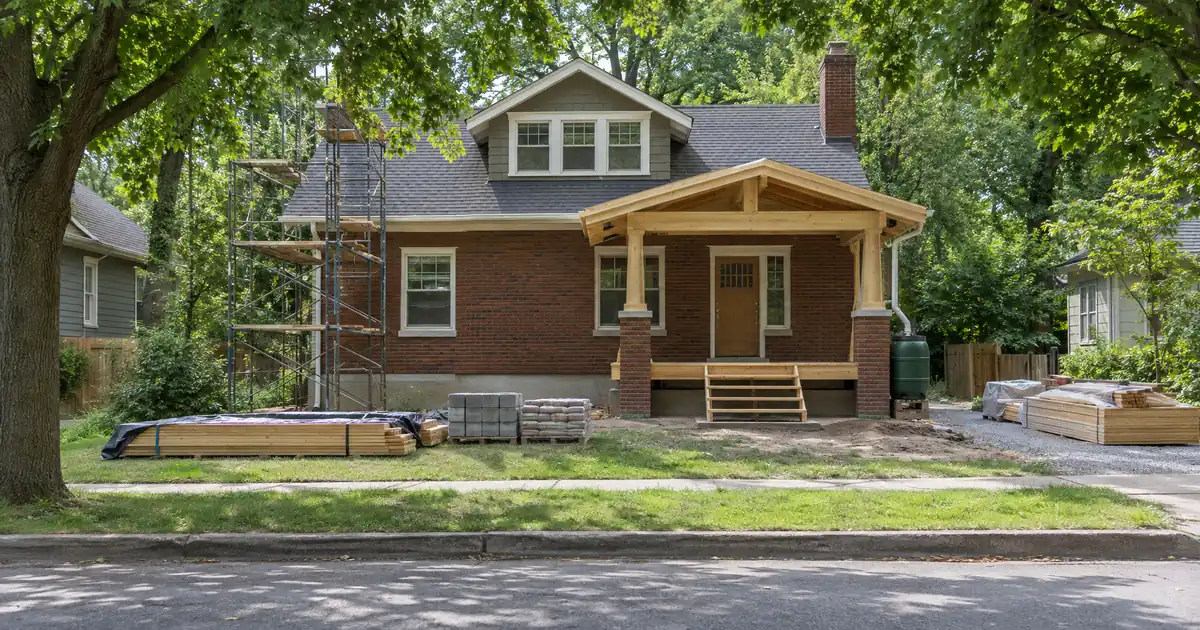
The Quick Read: Size the budget backward from what the lender’s appraisal can return, not forward from a contractor’s bid or your own after-repair value. A DSCR loan does not fund the rehab, so the work has to earn a clean condition rating and a supportable rent opinion on its own. Appraisers rate the property as-is, and cosmetic spend only pays off when no major system is in question.
- Most programs want the property at a C4 condition rating or better, with roof, HVAC, electrical and plumbing free of flagged problems.
- The appraisal returns two numbers: value, which drives leverage, and market rent, which drives coverage.
- Purchases typically run 75%-80% LTV and cash-out refinances top out around 75% LTV, so spend above the appraised value is your own cash.
- Clearing 1.00 coverage is not the same as positive cash flow, so budget repairs, vacancy and capex outside the ratio.
Cosmetic budgets often fail because of a mismatch in timing. The investor plans the rehab around the finished look, and the appraiser rates the house on what stands there when the report is written. This guide walks through how that rating works, what the appraisal will and won’t credit, and how to back into a spending ceiling that survives a low appraisal.
DSCR Calculator
Run the numbers in your market
Rate source: Freddie Mac 30-yr average via FRED® — Federal Reserve Bank of St. Louis · effective Oct 22, 2026
Prefilled with starting assumptions — enter your own rent or nightly figures, taxes, insurance, and HOA for a more accurate picture.
Program parameters update from Lendmire’s centralized guideline source. Taxes and insurance are editable estimates.
As of Oct 22, 2026 · General Freddie Mac market benchmark, not a Lendmire loan offer. Rent, nightly rate, occupancy, taxes, and insurance are editable estimates. Short-term rental figures are estimates only and vary significantly by season, property type, management approach, and local short-term-rental rules — confirm local regulations before relying on them. Qualifying income for short-term rentals varies by program — some use appraisal market rent, others use documented STR history or projections — and is confirmed in underwriting. Not a Loan Estimate, approval, or commitment to lend. Program availability and eligibility are subject to lender guidelines, credit approval, property review, and underwriting.
What Does “Cosmetic” Mean to an Appraiser?
Cosmetic means work that leaves the property in C4 condition or better: surface updates and minor repairs with every major component working. The appraisal industry’s condition scale runs from C1 to C6. It belongs to appraisers, not to DSCR lenders, and non-QM programs generally borrow it.
HUD’s appraisal report guide describes C4 as a home with some minor deferred maintenance and normal wear, adequately maintained, needing only minimal repairs to components or mechanical systems plus cosmetic repairs. Fannie Mae’s Selling Guide gives examples of minor deferred maintenance: worn floor finishes or carpet, minor plumbing leaks, torn window screens, missing handrails. These agency sources are cited for comparison only, since agency rules do not govern DSCR loans. The examples simply show what the industry means by minor.
The line that matters sits between cosmetic and functional. Paint, flooring, fixtures, hardware and landscaping are cosmetic. A questionable roof, an aging HVAC system, outdated electrical or a plumbing problem is functional, and it can hold the whole property below C4 no matter how good the kitchen looks. Failure of a major component, such as a collapsed roof or a foundation defect, is more serious still and moves the property toward C5 or C6.
| Tier | Typical examples | Appraisal treatment | Budget implication |
|---|---|---|---|
| Cosmetic | Paint, flooring, fixtures, landscaping | Supports C4 or better | Budget first |
| Functional | Questionable roof, aging HVAC, plumbing leaks | Can drag the rating down | Fix before cosmetics |
| Severe | Failed major systems, foundation defects | C5/C6 territory | Bridge or rehab loan first |
How Does the DSCR Appraisal Actually Treat Your Rehab?
The appraiser rates the property as it stands, and the rating feeds both value and rent. The lender, not you, orders the appraisal, so your own after-repair value is a planning number only.
Here is how the process runs, step by step.
1. The appraiser rates condition as-is. McKissock’s appraiser education explains that modern appraisal reports show an as-is overall condition rating, plus a separate rating when repairs are still needed. Both must be backed by the specific defects and repair estimates in the report.
2. Interior and exterior both count. An updated kitchen can earn a better interior read, yet an exterior with problems can still hold the overall rating at C4, as KW Appraisal Group notes.
3. One weak component drags the rest. If a major system is questionable, cosmetic spend does not rescue the rating.
4. Value is set from comparable sales. That value feeds the leverage test, typically 75%-80% LTV on a purchase.
5. Market rent is set separately. The appraiser completes a rent schedule on Form 1007 for single-family homes or Form 1025 for two-to-four-unit properties, adjusting comparable rentals for size, condition, bedrooms and location. How the lender uses the figure is the lender’s call.
6. Coverage is calculated. The rent opinion is divided by the full monthly obligation: principal, interest, taxes, insurance and any association dues. That is PITIA.
No neutral source quantifies how much rent moves per condition tier, so treat the rent effect as directional. Better finishes that match the rental comps support a market-rent figure. Finishes above the comps rarely add rent.
When Does “Subject To” Change the Plan?
A “subject to repairs” appraisal reflects the property as if the work were finished, but the lender then needs proof of completion. The HUD guide says the condition rating and adjustments in that case assume the repairs are done.
That is the lever for budgeting. If you can finish visible work before the appraisal, the appraiser sees a completed property and rates it as-is. If not, expect a condition on the report and a completion step. Across our wholesale network, programs differ on what satisfies that step. Some want photos, some want a completion form, and some use a repair escrow. Which applies depends on the lender and the file, so ask early.
There is a practical rule here: finish the cosmetic work before the appraisal is ordered whenever the lender allows it and the work will be visible. Ordering first and finishing later invites a conditioned report, a re-order, or a delayed closing.
Which Cosmetic Spending Will the Appraisal Return?
Spending returns value only where the appraiser can see it and the comps support it. Set expectations accordingly: an improvement may support a higher appraised value, depending on comps and underwriter review.
| Spending category | Effect on condition | Effect on rent opinion | Effect on value |
|---|---|---|---|
| Paint, flooring, fixtures | Supports C4 or better | Supports market rent | Depends on comps |
| Kitchen and bath refresh | Can lift interior read | Matches comps, rarely exceeds | Depends on comps |
| Curb appeal, exterior paint | Helps if exterior held the rating down | Modest | Depends on comps |
| Staging or décor | None | None | None |
| Luxury upgrades above comps | None extra | Rarely adds rent | Rarely recognized |
| Major systems | Can restore a failing rating | Indirect | Often required, not additive |
A receipt is not a value. The appraiser does not total your invoices. The report reflects what the property looks like against comparable sales. Investors who budget on cost basis, assuming every dollar returns a dollar, tend to overspend on finishes the comps never rewarded.
In rental work the priorities differ from a flip. Durable, neutral, turnover-ready finishes that match the rental comps do more for a rent opinion than showpiece upgrades. Skip the staging.
How Do You Back-Solve the Spending Ceiling?
Start from the exit loan and work backward. The ceiling is what you can spend while the file still clears leverage, coverage and reserves on the lender’s numbers, not yours.
Run it in this order:
1. Set a conservative appraised value. Assume the appraisal lands below your ARV, not at it.
2. Apply the leverage cap. Purchases typically land at 75%-80% LTV. A cash-out refinance tops out around 75% LTV, with about six months of seasoning the common expectation. Select high-leverage programs reach higher on purchases for stronger credit.
3. Compare to cost. Anything you spend beyond what the loan returns against that conservative value is cash left in the deal.
4. Test the rent. Take a low-end market rent and divide it by the full obligation. If coverage drops below 1.00, you are outside where many select programs start. A separate select-lender path takes coverage below 1.00, with leverage and terms adjusted. Stronger ratios generally open better pricing and leverage.
5. Reserve cash outside the rehab line. Reserves commonly run around six months of PITIA, and about nine months on loans above $1,500,000. Conservative rate-term files at modest leverage can see reserves waived. That cash is not available for the rehab.
Use the same logic when evaluating a cash-out thesis. Lendmire’s piece Does a Strong Return Mean a Rental Will Pass a DSCR Loan? covers why return metrics and coverage are two different tests.
What Does the Plan Look Like Tested Three Ways?
Test any budget against a base case, a low-appraisal case and an overrun case. Picture an investor buying a tired single-family rental at 75% LTV, planning paint, flooring and fixtures, with every major system in working order. Final terms depend on the lender’s guidelines, the property type, and the borrower’s complete credit picture.
- Base case. Appraisal matches the plan and the rent opinion matches the comps. Coverage clears roughly 1.2x. The work is done before the appraisal, so the report rates the home as-is at C4 or better. The file proceeds normally.
- Low-appraisal case. Value comes in lower than planned. Leverage is capped against the lower number, so the gap between your cost and the loan widens. Coverage holds only if the rent opinion held. Here the decision is what to cut: remaining scope first, contingency second, and only then more cash.
- Overrun case. Hidden problems surface mid-work. Cosmetic work often uncovers functional issues, such as a soft subfloor or a leak. If those touch a major system, the property can fail the condition test no matter how the finishes look. Contingency here protects the loan outcome, not just the construction schedule.
Notice the pattern. Contingency on a financed rental is not a construction buffer alone. It is the money that keeps a conditioned report from turning into a bridge loan.
A practical insight from the broker side: when a file comes in light on coverage, the cause is usually the rent opinion, not the purchase price. Investors who treat the appraisal’s rent schedule as an afterthought tend to be the ones surprised. A tenant already in place at market rent gives the file a real number to point to, though many programs underwrite to the lower of lease and market rent.
Where the General Rule Breaks
Several situations change the plan, and each is worth naming.
C5 and C6 properties. Appraiser guidance says these generally must be repaired to C4 before closing. The usual route is a bridge or hard-money loan first, then a DSCR refinance or a sale.
Rehab financed inside the loan. DSCR loans generally do not fund renovations. Keep total cost, purchase plus work, under the leverage cap applied to appraised value.
Renovating after closing. Light post-close work with your own funds is a different question from needing work at origination. Programs vary, and what one lender allows another may not. Confirm terms before assuming either.
BRRRR refinances. Lenders often ask for rehab receipts, invoices and work orders on a quick refinance after renovation. The lender obtains the appraisal, not you.
Short-term rentals. The rent schedule documents monthly rent, not nightly rates, so lenders treat STR income separately. In our network, STR purchases go to 75% LTV with a 1.00 coverage floor, while STR cash-out tops out at 70%. Expect a 640+ score and about 12 months of hosting history. Short-term rental rules can vary by city, county, HOA, and property type, so investors should confirm local rules before relying on projected rental income. Each figure is subject to lender guidelines and a complete review of property type, leverage, and credit.
Ineligible property types. Manufactured homes, log homes and barndominiums are not offered in these programs, whatever the rehab plan.
DSCR vs. conventional financing
There are two common ways to finance an investment property, and they qualify you differently — here’s how investors weigh them.
Why investors choose it
- Qualifies on the property’s rental income — no personal tax returns, W-2s, or pay stubs needed to document income.
- No personal debt-to-income ceiling to clear, so existing mortgages and obligations don’t cap your borrowing the same way.
- Can be closed in an LLC, keeping the property inside a business entity.
- Built for scaling — not held to the limit on number of financed properties that conventional financing applies.
- Underwriting centers on the deal: generally qualifies when the rent covers the payment, a 1.00x coverage ratio being a common baseline (confirmed in underwriting).
- Designed specifically for investment property, including long-term and, where the program allows, short-term rentals.
Where it’s strong
- Often the lowest ongoing financing cost for a buyer who fully qualifies on personal income — a fit for a first property or a cost-first purchase.
Trade-offs for investors
- Requires full personal income documentation and must fit within a debt-to-income limit — salary, existing debts, and other mortgages all count.
- Typically held in your personal name rather than a business entity.
- Caps how many financed properties you can carry, which can become a ceiling as a portfolio grows.
- Evaluates you as a borrower as much as the property, which usually means more paperwork.
How investors usually choose: a first or single property often optimizes for the lowest financing cost; portfolio builders often optimize for leverage, vesting in an LLC, and scaling past conventional caps. The right answer depends on your goals, the property, and current guidelines — both paths run through select lenders in Lendmire’s wholesale network, with eligibility and terms confirmed in underwriting.
What Documents Should You Keep?
Keep a written scope of work, dated invoices, before-and-after photos and any change orders, organized by line item. These support a completion step and any refinance review.
- Scope of work listing each item and its price.
- Invoices and receipts matched to that scope.
- Dated photos showing the property finished, with utilities on and no work in progress.
- Change orders when the scope moves.
Time the appraisal for after the punch list is complete. An appraiser walking through active work sees an unfinished house.
Common Mistakes
- Budgeting on your own ARV. The lender’s appraisal sets value.
- Spending on cosmetics while a major system is in question. Fix the roof, HVAC, electrical or plumbing issue first.
- Overbuilding past the comps. Finishes above neighborhood rentals rarely lift rent.
- Skipping contingency. A cosmetic job that uncovers a leak can sink the file.
- Confusing coverage with cash flow. DSCR compares rent to PITIA only. Repairs, vacancy, management and capex sit outside it, so a file that clears 1.00 can still lose money.
- Ordering the appraisal too early. Finish visible work first when the program permits.
If you want the full picture of how these programs fit together, the complete DSCR loans guide covers credit tiers, leverage and reserves.
Key Terms Defined
ARV (after-repair value): Your estimate of what the property is worth once renovation is done; for planning only.
Appraised value: The figure the lender’s appraiser reports, which sets the leverage cap.
Cost basis: What you paid for the property plus what you spent improving it.
Seasoning: The time you must hold a property before a lender will refinance against its new value.
Market rent: The appraiser’s opinion of what comparable rentals earn, reported on Form 1007 or 1025.
Contingency: Money set aside for surprises, which on a financed rental protects the loan outcome.
PITIA: Principal, interest, taxes, insurance and association dues, the payment that coverage is measured against.
Frequently Asked Questions
Does the appraisal count my renovation receipts?
Not directly. The appraiser rates condition and sets value from comparable sales, so receipts matter mainly as proof of completion or for a refinance review. Spending more does not guarantee a higher value.
Can a DSCR loan fund the cosmetic rehab itself?
Generally no. Plan to pay for the work with your own cash or a bridge loan, then size the DSCR loan against the appraised value.
How much contingency belongs in a cosmetic budget?
Enough to absorb a hidden repair without touching your reserves. Cosmetic work often uncovers functional problems, so contingency on a financed rental protects the file. The right level depends on the property’s age and the inspection findings.
What if the rent opinion comes in low?
Coverage moves with it. You can ask the lender about an appraisal review, supply lease support where the program allows it, or reduce leverage to improve the ratio.
Is a property that needs paint and flooring eligible?
Usually, if it rates C4 or better and the major systems are sound. A property in C5 or C6 condition generally needs repair first. Qualification stays subject to lender guidelines, credit review and property inspection.
If you are buying or refinancing a rental property and want to see how the numbers work, Lendmire can help you compare DSCR loan options based on the property income, credit profile, leverage, and investor goals. Reach the team at 828-256-2183 or request a quote.
Rehab budgets that survive the appraisal tend to share one habit: they treat the lender’s report, not the contractor’s bid, as the number everything else has to fit.
For current guidelines and terms, see Lendmire’s DSCR loan programs page.
About Lendmire
A DSCR-focused mortgage broker, Lendmire (NMLS# 2371349) places investor financing across 41 markets, 40 states plus Washington, D.C., with DSCR eligibility generally reviewed by the lender on property cash flow instead of traditional personal-income documentation, subject to lender guidelines. Scotsman Guide named Lendmire a Top Mortgage Workplace in 2025 and 2026.
Get Started
Ready to find the right loan for you?
In about 30 seconds you can review financing options available for your investment property. No commitment required.
Informational only. Not a Loan Estimate, approval, or commitment to lend. Program availability and eligibility are subject to lender guidelines, credit approval, property review, and underwriting.
References
2. Fannie Mae Selling Guide B4-1.3-06
3. McKissock Learning, condition ratings under UAD 3.6
4. KW Appraisal Group, condition ratings guide
This article is part of Lendmire’s DSCR loan program — full qualification details, guidelines, and scenarios live on the program page.
Related reading: Hard Money Then DSCR Requirements for a Light-Rehab Short-Term Rental · Own Loan vs Portfolio DSCR Loan for Airbnbs in Three or More Markets · DSCR Refinance Payoff Requirements for Hard Money and Rehab Debt
Brandon Miller
Founder & CEO, Mortgage Loan Originator, Lendmire LLC
- Mortgage Loan Originator · NMLS# 1129696 · Verify on NMLS Consumer Access
- North Carolina Real Estate Broker · License# 343312 · Verify on NCREC
- North Carolina Insurance Producer · License# 19053198 · Property, Casualty, Life, Health · Verify on NAIC SBS
- Lendmire LLC · Firm NMLS# 2371349 · Verify firm licensure
Compliance and disclosures. Lendmire (NMLS# 2371349) is a licensed mortgage broker and is not a direct lender, depository institution, financial advisor, or tax professional. Content in this article is general market analysis and educational information — not financial, legal, or tax advice for any specific situation. Lendmire does not guarantee loan approval; every transaction is subject to underwriting by the funding lender. Mortgage pricing and loan program guidelines are subject to change at any time without notice and vary by borrower characteristics, property type, and state regulations. Lendmire complies with Equal Housing Opportunity. Licensure verification: NMLS Consumer Access.