
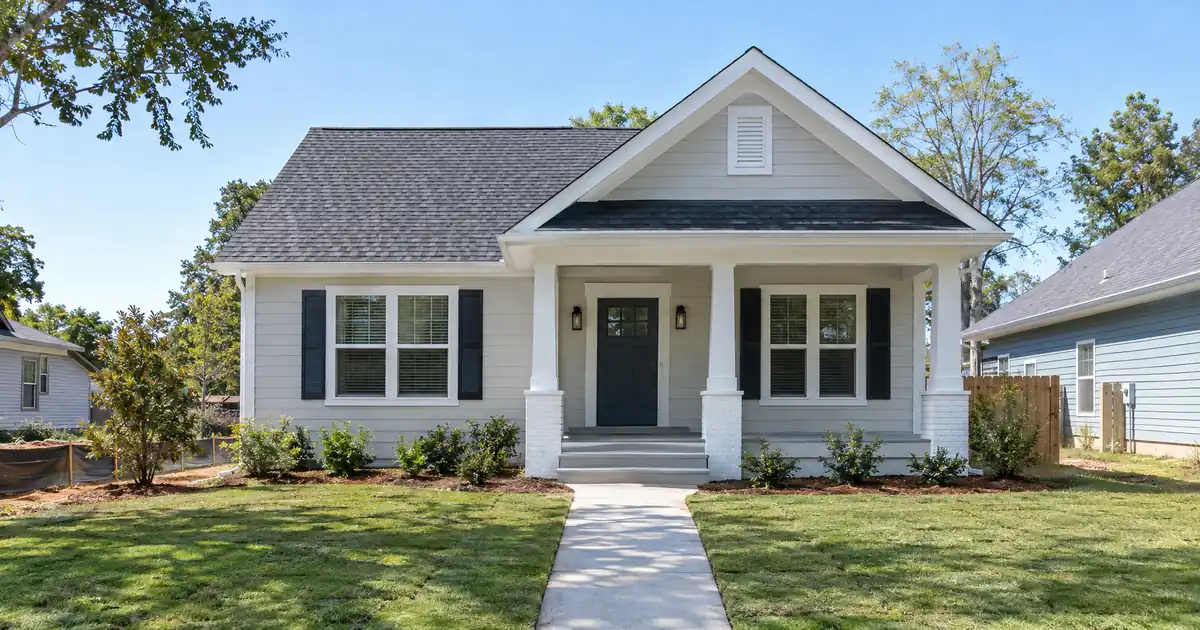
The Quick Read: A Texas LLC that already holds a leased rental usually belongs in a DSCR cash-out loan. Hard money fits when the property needs work, sits vacant, or needs a short bridge. Many investors use both in sequence, with hard money first and long-term financing after.
- DSCR cash-out qualifies primarily on property-level rental income covering the payment, subject to lender guidelines. It is permanent financing for a stabilized rental.
- Hard money is asset-based and short-term. It is built for acquisition, rehab, or a bridge, and it ends with a payoff or refinance.
- Leverage differs. Cash-out DSCR tops out around 75% LTV on standard rentals. Hard money refinances typically stop near 65% of value, and both vary by lender.
- The LLC does not remove the guarantor. On both products, a person usually signs a personal guaranty. Their credit and reserves still matter.
Here is the honest answer on who each option serves. If the rental has a lease, the roof is sound, and you plan to keep it, DSCR cash-out is the tool. If the property cannot be rented today, or you need a bridge to something else, hard money is the tool. Neither one is better in the abstract. Each fits a stage of the asset.
Lendmire is a mortgage broker. It arranges both products through select lenders in its wholesale network, across 41 markets including Washington, D.C. That means this comparison comes from files on both sides.
Side-by-Side
The table below compares the two on structure, not cost. The DSCR column reflects typical files across the network. The hard money column shows published industry norms, which vary by lender, property, and experience.
| Factor | DSCR Cash-Out | Hard Money (industry norms) |
|---|---|---|
| Review basis | Rent vs. full payment, plus guarantor | Property value, plan, and exit |
| Documentation | Lease or rent schedule, appraisal, entity papers | Valuation, scope, entity papers, exit plan |
| Property condition | Rent-ready, with rent support | Distressed or transitional is common |
| Entity vesting | LLC can usually stay on title | LLC borrower commonly accepted |
| Hold horizon | Long-term, 30-year fixed is the spine | Short bridge, interest-only, balloon |
| Leverage | Around 75% LTV on standard rentals | Refinances often near 65% of value |
| Reserves | Commonly around 6 months of PITIA | Liquidity proof is common; varies |
| Guaranty | Personal guaranty is typical | Personal guaranty is common |
| Exit | Hold, sell, or refinance later | Sale or refinance at maturity |
Two rows deserve a closer look. Review basis is the real dividing line. Exit is the one people underrate.
How Each Loan Decides Yes or No
DSCR stands for debt service coverage ratio. It divides monthly rent by the full monthly housing payment: principal, interest, taxes, insurance, and any HOA dues. That payment is called PITIA. Rent that matches PITIA lands at 1.00x. Rent that exceeds it lands higher.
Most files we place want a ratio at or above 1.00x, because that is where many select programs start. A separate select-lender path takes coverage below 1.00x, with leverage and terms adjusted. Stronger ratios generally open stronger leverage.
The lender also reviews the guarantor. Credit floors vary: 620 exists in parts of the network, most programs want around 660, and 700+ unlocks the strongest leverage tiers. Loan sizes run up to $3,000,000 on standard programs (smaller balances available through select lenders), subject to lender guidelines.
Hard money asks a different question. Can the lender recover its money from the property if the plan fails? So the lender looks hard at value, the scope of work, and a believable exit. Credit still counts. On the program parameters we work with, 620 is the minimum score, with added conditions below 660. First-time investors qualify at the lower leverage tiers. Loan amounts reach $5,000,000, and everything varies by lender, property, and experience.
One more point. Hard money is not “hard” because approval is hard. The word describes the hard asset backing the loan.
When DSCR Cash-Out Is the Better Fit
DSCR cash-out fits a stabilized rental you intend to keep. If the LLC holds the property, a tenant is in place, and you want equity out without selling, this is the natural structure. The loan amortizes over a long term instead of ending in a balloon payoff.
Time horizon. You are holding for years, not months. A 30-year fixed structure is the spine of the product. Extended terms and interest-only periods exist through select lenders in the network.
Seasoning. Cash-out generally has an ownership clock, commonly about 6 months. Seasoning is the waiting period between acquiring a property and refinancing it. Once you clear it, the door opens.
Documentation. The file centers on the lease or a market-rent opinion, an appraisal with rent support, and the entity package. For a single-family rental, lenders typically want the full interior appraisal plus a rent schedule. Small multifamily uses a different appraisal form. Qualification runs on the property’s income, not your personal income documents.
Vesting. Many investors assume they must deed the property out of the LLC to refinance. That is a conventional-lending habit. On DSCR files the LLC generally stays on title, subject to lender program eligibility. Names should still match across the note, title, insurance, and lease.
Run the numbers on a modeled example. Picture an LLC holding a leased single-family rental. Assume rent covers the full payment at about 1.25x at modest leverage. Now push the new loan toward the 75% cash-out ceiling. The bigger loan raises PITIA while rent stays flat, so coverage slides toward the 1.00x mark. A property can have plenty of equity and still not carry the debt. If coverage lands below 1.00x, a select-lender path with adjusted leverage and terms may be reviewed.
Short-term rentals work differently. Cash-out on short-term-rental collateral is capped at 70%, and lenders expect about 12 months of hosting history. Local short-term rental rules can vary by city, county, HOA, and property type, so investors should confirm local rules before relying on projected rental income.
Clearing 1.00x is not the same as positive cash flow. DSCR compares rent to PITIA only. Repairs, vacancy, management, utilities, and capex sit outside the ratio. Budget for them separately.
Some property types are not offered at all. The network does not place DSCR loans on manufactured homes (single- or double-wide), log homes, or barndominiums.
Lendmire’s how to cash out an LLC rental after refinancing out of hard money covers the exit side in more detail. For program basics, the complete DSCR loans guide is the place to start.
When Hard Money Is the Better Fit
Hard money wins when the property cannot qualify on rent yet. It is a short-term tool built around a plan and an exit. If DSCR is the permanent home, hard money is the temporary one.
The property is vacant or not rent-ready. A DSCR file needs rent evidence. A unit with no lease and a torn-up kitchen has none. A bridge or rehab loan carries the project until the property can be rented.
You are buying and renovating. On the program parameters we work with, fix-and-flip leverage is measured against project cost and capped relative to after-repair value (ARV), meaning the projected value once the work is done. Leverage tiers rise with documented completed projects, and the top tier is reserved for experienced investors. Rehab budgets fund in draws against completed work. Bridge purchases without rehab are also available, with leverage measured against purchase price. All of it varies by lender, property, and experience.
You are pulling equity from a property that is not ready for DSCR. Refinances on hard money typically top out around 65% of value. That is lower than DSCR cash-out. It is a reasonable trade only if the asset cannot qualify on rent today.
Collateral and term. Hard money applies to non-owner-occupied residential property, 1-4 units. Terms generally run 6 to 18 months, interest-only, with no prepayment penalty on the programs we place. Ground-up construction extends to 10 units.
The exit is the whole game. Interest-only means the principal is still due at the end. That balloon payoff arrives on a set date. Many investors refinance out of hard money into long-term DSCR financing once the property is stabilized, and Lendmire brokers that path. Lendmire’s piece Seasoned vs Unseasoned Cash-Out on a Rental for an LLC Portfolio Investor explains how the ownership clock affects that handoff.
Here is the catch. A balloon on a short clock has real refinance risk. If the property appraises short, the rent comes in low, or the entity paperwork is not ready, the maturity date does not move.
Which Stage Is Your Rental In?
Match the loan to the asset’s condition, not to your preference.
- Leased and stable. DSCR cash-out. The rent is documented and the hold is long.
- Needs light work, then a lease. Hard money bridge, then DSCR once the unit is rentable.
- Vacant and unleasable today. Hard money. DSCR has nothing to measure yet.
- Heavy rehab. Hard money sized to ARV and your project record.
- Hard money maturity approaching. Start the DSCR file well before the payoff date. Seasoning, appraisal, and entity papers all take time to assemble.
This one is a toss-up in a few cases. A rental with a lease but deferred repairs could go either way. The stronger play is often a hard money bridge if the work is large. If the repairs are cosmetic, DSCR may work as is.
What a Texas LLC Changes
Texas adds three practical wrinkles: entity paperwork, the guaranty, and the foreclosure timeline. None of them changes which product fits. They change how you prepare.
The entity package. Expect to provide the certificate of formation (articles of organization), the operating agreement, the EIN letter, and proof the LLC is in good standing. Texas has no document literally titled Certificate of Good Standing. The Secretary of State issues a Certificate of Fact – Status, and the Comptroller issues a Certificate of Account Status. A Texas filing-service guide notes that both depend on franchise tax and the Public Information Report being current. Lenders usually ask for the Secretary of State certificate. Order it early. (A lapsed franchise tax filing can stall an otherwise clean file.)
The guaranty. An LLC does not make the loan non-recourse. A guarantor is typically a natural person who signs personally, and credit and reserves attach to that person. Recourse means the lender can pursue the guarantor if the loan is not repaid. This holds on DSCR and is common on hard money. Multi-member LLCs vary: some programs want one member to sign, others want several.
Reserves. DSCR reserves vary by lender, leverage, loan size, and transaction type. About 6 months of PITIA is common. Conservative rate-and-term files at modest leverage under $1,500,000 can see reserves waived. Larger loans typically step up to about 9 months. Hard money lenders commonly want proof of liquidity as well.
Foreclosure clock. Texas uses a non-judicial process. Under Texas Property Code § 51.002, the notice of sale must be given at least 21 days before the sale. The separate 20-day cure notice is tied to real property used as the debtor’s residence, so it may not apply to an LLC-owned rental. Counsel should confirm. For a short-maturity hard money loan, that means a missed payoff can move to a trustee’s sale on a tight clock.
Homestead rules generally do not enter the picture for an LLC-owned, non-homestead rental. A title company or Texas attorney can confirm that on your property.
DSCR loans are designed for non-owner-occupied investment properties. Because they are business-purpose investor loans, they are reviewed differently from a standard owner-occupied mortgage. The CFPB’s Regulation Z provision exempts credit extended primarily for a business purpose, and credit to someone other than a natural person. The label is not what counts. As Compliance Alliance notes, the focus is generally the purpose of the loan, not the property securing it. If you or a family member lives in the property, that matters.
DSCR vs. conventional financing
There are two common ways to finance an investment property, and they qualify you differently — here’s how investors weigh them.
Why investors choose it
- Qualifies on the property’s rental income — no personal tax returns, W-2s, or pay stubs needed to document income.
- No personal debt-to-income ceiling to clear, so existing mortgages and obligations don’t cap your borrowing the same way.
- Can be closed in an LLC, keeping the property inside a business entity.
- Built for scaling — not held to the limit on number of financed properties that conventional financing applies.
- Underwriting centers on the deal: generally qualifies when the rent covers the payment, a 1.00x coverage ratio being a common baseline (confirmed in underwriting).
- Designed specifically for investment property, including long-term and, where the program allows, short-term rentals.
Where it’s strong
- Often the lowest ongoing financing cost for a buyer who fully qualifies on personal income — a fit for a first property or a cost-first purchase.
Trade-offs for investors
- Requires full personal income documentation and must fit within a debt-to-income limit — salary, existing debts, and other mortgages all count.
- Typically held in your personal name rather than a business entity.
- Caps how many financed properties you can carry, which can become a ceiling as a portfolio grows.
- Evaluates you as a borrower as much as the property, which usually means more paperwork.
How investors usually choose: a first or single property often optimizes for the lowest financing cost; portfolio builders often optimize for leverage, vesting in an LLC, and scaling past conventional caps. The right answer depends on your goals, the property, and current guidelines — both paths run through select lenders in Lendmire’s wholesale network, with eligibility and terms confirmed in underwriting.
Where Investors Get It Wrong
Treating hard money as a shortcut around paperwork. It is asset-based, but lenders still review title, valuation, entity documents, and the exit plan. Expect a guaranty request too.
Pulling every dollar of cash-out. Maximum leverage lowers coverage. Leave room under the ceiling.
Assuming DSCR above 1.00x means the rental cash flows. It does not. The ratio ignores operating costs.
Ignoring the clock on a bridge. Investors often plan the refinance late. Plan it at the start.
Letting the names drift. The LLC on the note should match title, insurance, and lease. Mismatches cause avoidable delays at review.
Forgetting prepayment terms. DSCR loans often carry a prepayment period. The hard money programs we place carry none. If you plan to sell soon, read that clause first.
The Verdict
Pick DSCR cash-out when the property is leased, stable, and a keeper. Pick hard money when the property is transitional or you need a bridge with a defined exit. Pick both, in order, when you buy something that needs work and plan to hold it.
Credit, reserves, and property eligibility apply on either path. A bigger down payment can lift DSCR coverage, but it does not erase leverage caps, credit floors, or reserve rules. The strongest files clear two tests: enough equity and enough rental coverage.
If you are buying, rehabbing or refinancing an investment property on a short timeline and want to see how the numbers work, Lendmire can help you compare hard money options based on the project, the exit plan, leverage, and your goals. Programs change, every file is underwritten individually by the lender, and nothing here is a commitment to lend.
Key Terms Defined
DSCR (debt service coverage ratio): Monthly rent divided by the full monthly payment on the loan.
PITIA: Principal, interest, taxes, insurance, and HOA dues, which together make up the payment DSCR measures against.
LTV (loan-to-value): The loan amount as a percentage of the property’s appraised value.
Loan-to-cost: The loan amount as a percentage of what the project costs, used on hard money purchases and rehabs.
ARV (after-repair value): The estimated value of a property once renovations are finished.
Seasoning: The waiting period between acquiring a property and refinancing it.
Balloon payment: The full remaining principal due at the end of a short loan term.
Personal guaranty: A signed promise by a person to repay the loan if the LLC does not.
Recourse: The lender’s right to pursue the guarantor personally if the loan is not repaid.
This article is general information, not legal or tax advice. Tax treatment can depend on how the funds are used and how the property is held; investors should keep clear records and speak with a qualified tax professional before relying on any deduction. Consult a qualified attorney or CPA about your own situation.
Frequently Asked Questions
Can I use hard money to buy a rental and then refinance into a DSCR loan?
Yes, and it is a common sequence. The hard money loan carries the purchase and any rehab. Once the property is leased and stabilized, a DSCR refinance becomes the long-term loan. Plan around the ownership clock, which is commonly about 6 months for cash-out, and around your hard money maturity date.
Do I need an LLC to get either loan?
Not always, though investors often prefer to hold rentals in one. Both products are business-purpose loans on non-owner-occupied property. Where the LLC is the borrower, vesting is handled subject to lender program eligibility. A personal guaranty usually sits behind the entity either way.
Does an LLC protect me from the lender if I miss a payoff?
Not on these loans. A guaranty typically makes you personally responsible if the LLC defaults. That is why the guarantor’s credit and reserves are underwritten, not just the entity.
Which one allows more leverage on an existing rental?
DSCR cash-out generally does. It tops out around 75% LTV on standard rentals, and 70% on short-term-rental collateral. Hard money refinances typically stop near 65% of value. Actual limits vary by lender, property, and experience.
Is a DSCR of 1.00x enough to say the rental is profitable?
No. The ratio compares rent to the housing payment only. Repairs, vacancy, management, and capex sit outside it. A rental can clear 1.00x and still run thin once operating costs are counted.
About Lendmire
Lendmire, NMLS# 2371349, is a mortgage brokerage focused on investor financing, arranging DSCR loans in 40 states plus Washington, D.C. — 41 markets total. Qualification is based on the property’s income rather than personal income documentation, subject to lender guidelines, making it a fit for LLC-held rentals and scaling portfolios. Scotsman Guide named Lendmire a Top Mortgage Workplace in both 2025 and 2026.
Get Started
Ready to find the right loan for you?
In about 30 seconds you can review financing options available for your investment property. No commitment required.
Informational only. Not a Loan Estimate, approval, or commitment to lend. Program availability and eligibility are subject to lender guidelines, credit approval, property review, and underwriting.
References
1. Texas Certificate of Good Standing guide
2. Texas Property Code § 51.002
3. CFPB, Regulation Z § 1026.3
4. Compliance Alliance, Regulation Z and Investment Properties
This article is part of Lendmire’s hard money loan program — full qualification details, guidelines, and scenarios live on the program page.
Related reading: Rental HELOC vs Cash-Out Refinance for a Rental in an LLC or Trust · DSCR Cash-Out Income Requirements to Buy Another Airbnb · Conventional Investor Loan vs DSCR Loan for a Rental Bought Years Ago
Guides: Hard Money Loans in Texas
Brandon Miller
Founder & CEO, Mortgage Loan Originator, Lendmire LLC
- Mortgage Loan Originator · NMLS# 1129696 · Verify on NMLS Consumer Access
- North Carolina Real Estate Broker · License# 343312 · Verify on NCREC
- North Carolina Insurance Producer · License# 19053198 · Property, Casualty, Life, Health · Verify on NAIC SBS
- Lendmire LLC · Firm NMLS# 2371349 · Verify firm licensure
Important disclosures. Lendmire (NMLS# 2371349) is a licensed mortgage brokerage. Lendmire is not a direct lender, depository institution, or financial advisor. All loan inquiries are subject to lender underwriting; this article does not constitute a commitment to lend. Rates, terms, and program guidelines are subject to change without notice and vary by borrower profile, property type, and state. Information in this article is general in nature and is not financial, legal, or tax advice. Equal Housing Opportunity. NMLS Consumer Access: nmlsconsumeraccess.org.