
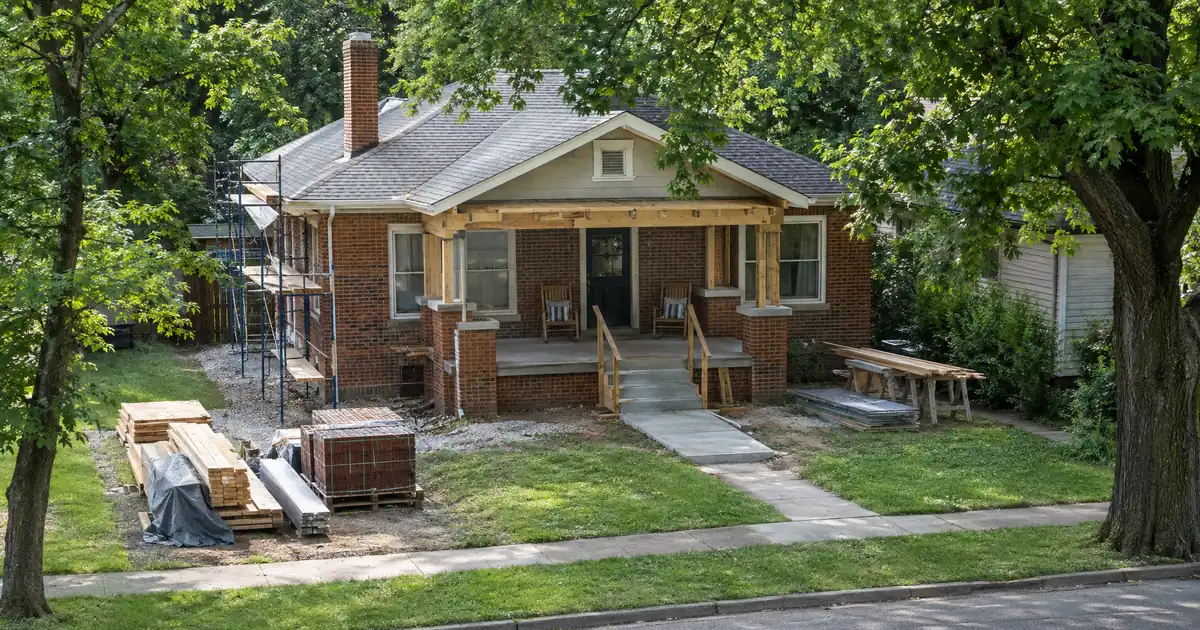
The Quick Read: Rehab dollars count twice in a flip offer: the approved budget is added to the purchase price to form project cost, the combined loan must then pass an after-repair value cap, the lender funds the lower of the two results, and the rehab portion is released in draws after work is done.
- Rehab money is a budget line, not cash at closing. You pay for each phase first, and the lender reimburses after review.
- Leverage on a flip is tiered by completed projects: 85% of project cost with fewer than 2, 90% at 2 or more, 93% at 5 or more. Every tier is capped at 75% of after-repair value, and all of it varies by lender, property, and experience.
- Either test can be the one that limits the loan. Which one binds depends on how far the finished value sits above total cost, so a bigger rehab budget does not always mean a bigger loan.
- Overruns, unapproved scope changes, and contingency are on you unless they sit inside the approved budget.
Key Terms Defined
Rehab budget: the itemized list of repairs and upgrades, with a cost for each line, that the lender approves at underwriting.
Scope of work: the written description of what gets done, area by area and trade by trade. The budget is built from it.
Project cost: the purchase price plus the approved rehab budget.
After-repair value (ARV): what the finished property should be worth, based on recent sales of comparable renovated homes.
ARV cap: the maximum share of ARV the combined loan can reach. On flips it is 75% across the tiers described here.
Holdback: the part of the loan held at closing and paid out later as renovation progresses.
Draw: one release of held-back rehab money after a phase of work is completed and reviewed.
Loan-to-cost: the loan as a share of project cost, as opposed to a share of the property’s value.
What this loan actually costs to carry.
Hard money is sized against the project and priced by time. Enter the deal and see how much the program will lend, the cash required at closing, the carry while you hold it, and what is left at the exit.
Leverage tiers on the current program: 85% with fewer than 2, 90% with 2 or more, 93% with 5 or more completed projects — every tier capped at 75% of after-repair value. Loan amounts up to $5,000,000, larger by exception; terms of 6 to 18 months, interest-only, no prepayment penalty. The rehab portion funds in draws against completed work, not at closing.
Program parameters shown update from Lendmire’s centralized guideline source. Rate, points, and months are editable assumptions, not quoted terms.
Cost cap sets the loan · positive spread
Illustrative estimate only — not a quote, Loan Estimate, approval, or commitment to lend. Rate, points, and months are editable assumptions. Hard money is business-purpose financing for real estate investors, not a consumer mortgage. Leverage on the current program tops out at 93% of project cost for investors with a documented track record, capped at 75% of after-repair value, with rehab funding up to 100% of the documented budget released in draws; actual terms vary by lender, borrower experience, property, and exit. Lendmire is a mortgage broker, not a lender.
Step by Step: How the Lender Counts Your Rehab
The lender does not take your rehab number at face value. It turns the number into an approved budget, tests it twice, and then controls when the money moves. Here is the sequence as it plays out on a typical file.
1. You submit a scope and budget. Lenders want an itemized worksheet by area and trade, with a short description on each line. A single lump-sum contractor quote is the weak example. A poorly written scope is one of the most common reasons an approval stalls and draws get delayed.
2. The lender sets ARV. An appraiser compares the house to sold homes. The appraiser does not compare it to your invoices. If nearby sales lack the improvements you plan, the value can land well below the number in your spreadsheet.
3. The cost test runs. Project cost is purchase price plus approved rehab, multiplied by your tier percentage.
4. The value test runs. The supported ARV is multiplied by the 75% cap.
5. The lower number wins. That is the loan ceiling.
6. Closing holds the rehab back. You bring your share of the purchase, fees, closing costs, reserves, and the money for the first phase of work.
7. Draws reimburse completed work. You pay for the phase, submit a package, the lender reviews and inspects, and funds are released.
8. A final inspection closes out the budget. Heavy rehabs may also need a certificate of occupancy before the last release.
Lendmire is a broker, so the wholesale network of lenders it places files with makes the final call on each step. The logic above is how most of them behave.
Worked Example: Two Tests, Lower Number Wins
Two tests produce two ceilings, and the lender uses the smaller one. The table below uses modeled index values, not market data. It sets project cost at 100 and uses the 85% tier, with the 75% ARV cap.
| ARV | Cost test (85%) | ARV test (75%) | Loan |
|---|---|---|---|
| 130 | 85.0 | 97.5 | 85.0 |
| 110 | 85.0 | 82.5 | 82.5 |
| 100 | 85.0 | 75.0 | 75.0 |
Read it row by row. When the finished value is well above total cost, the cost test binds and the tier percentage sets your leverage. When the finished value is close to total cost, the value cap binds and the loan shrinks, even though the budget has not changed.
Now look at what you bring. In the middle row, the loan is 82.5 against a project cost of 100, so you cover the remaining 17.5 plus fees and reserves. In the bottom row, you cover 25. Same budget, same purchase price, very different cash needs. That is why investors who focus only on the tier percentage get surprised.
The same logic explains a common mislabel. A lender may advertise financing of up to 100% of the rehab budget. That means the renovation line can be funded in draws against completed work, subject to the caps above. It does not mean the lender funds the whole project. There is no true 100% purchase program, and the top 93% tier is reserved for investors with five or more completed projects.
Which Rehab Costs Count (and Which Usually Don’t)
Itemized hard costs count most readily. Everything else depends on the lender, so ask before you assume.
| Cost category | Typical treatment |
|---|---|
| Itemized repairs (roof, kitchen, systems) | Typically counted |
| Permits and contractor fees | Varies by lender |
| Contingency line | Varies; funds only if in approved budget |
| Your own labor | Varies; often limited |
| Holding costs, closing costs, staging | Usually outside the rehab budget |
The pattern is simple. A cost counts when it is written down, tied to the property’s condition, and approved before work starts. A cost you add later, even a legitimate one, may not be credited at the next draw.
How the Lender Checks Your Number
Lenders test whether your rehab budget is realistic, because a budget that is too thin leads to a half-finished house. Expect them to compare the scope to the property’s condition, look at the contractor’s track record, and flag vague lines. Anything labeled miscellaneous draws attention.
Underwriters also ask a bigger question: does this work support the finished value? A kitchen and two baths are easy to link to a higher appraisal. Heavy spending on something the neighborhood doesn’t reward is harder. An improvement may support a higher appraised value, depending on comps and underwriter review, and the value cap is where that review turns into loan dollars.
A four-line budget invites trouble. The more specific the document, the fewer questions come back.
Draws in Practice (and the Cash Gap)
Draws are reimbursements, not advances. That single fact drives most of your liquidity planning. You front the cost of each phase, submit invoices, an updated budget, progress photos, and often lien waivers, then wait for review and release.
Lenders differ on how they verify. Some send a third-party inspector. Others use photo or video review. Turnaround, inspection fees, and wire fees also vary. The inspector confirms the work exists. It is not a code or permit sign-off.
Partial completion is often credited in proportion, so a half-built line earns about half of that line’s amount. That is why contractors who want deposits up front can strain a flip. Terms like net-30 are uncommon in this setup, so line up your payment plan before the first phase starts. Lendmire’s piece How Rehab Draw Releases Work on a Hard Money Fix-and-Flip walks through that cycle in more depth.
Interest is the other draw-related question. On many files interest runs on funds actually drawn. Some lenders charge on the full commitment instead, and that changes your carry cost. Loans in this space are interest-only for 6-18 months, so ask which basis applies before you compare offers.
How Rehab Changes the Price You Can Offer
Rehab budgets shape your offer as much as your loan. The 70% rule is the common shortcut: maximum offer equals ARV times 70% minus repair costs. It is an investor filter, not a lender requirement. FlipperForce points out that the remaining 30% is not all profit, because it also covers buying, holding, selling, and financing costs.
Because repairs sit inside the formula, a bad estimate moves your offer in the wrong direction. Innago stresses that accurate ARV and repair figures matter for exactly that reason. Too low a repair number and you overpay. Too high and you lose deals you could have won. RealEstateSkills adds that cheaper, slower-selling houses often need a lower percentage and higher-priced, faster-selling houses can support more, so list every cost before going past 70%.
Now run it through the lender’s tests. Say ARV is 100 and repairs are 15 (modeled index values). The 70% rule gives a maximum offer of 55. Project cost is then 70. At the 85% tier, the cost test gives 59.5, and the value test gives 75. The cost test binds, so the loan is 59.5 and you cover the other 10.5 plus fees and reserves. The rule of thumb and the lender’s math agree here, but only because the numbers leave room under the value cap.
When the Budget Changes
The loan does not grow because your costs did. The draw schedule funds only the approved budget, so an overrun lands on you. If the overrun also pushes total cost past what the ARV cap supports, you carry it dollar for dollar.
Take the bottom row of the table above, where the value cap binds at 75. Let rehab overrun so project cost rises from 100 to 110 with ARV unchanged. The loan stays at 75, and your own cash rises from 25 to 35. The lender did nothing wrong. The cap simply never moved.
Mid-project scope changes cause a subtler problem. If your inspector finds repairs that were not in the submitted scope, those repairs may not be credited at the next draw, and the draw comes up short. The fix is a contingency line inside the approved budget and a clear process for shifting unspent amounts between lines. Many investors pad their rehab estimates, and the padding only helps if the lender approved it as part of the budget. Cash-funded contingency is the safer plan. Each lender writes draw rules into the loan agreement, so confirm the terms in writing.
Two more edge cases are worth knowing:
- Bridge purchase with no rehab. There is no rehab draw and no cost-based sizing. The loan is sized as a percentage of purchase price, up to 80%.
- Owner-occupant renovation loans. Products like FHA 203(k) are built for owner-occupants with their own escrow process. They do not apply to investor flips, so do not use them as a model for what a hard money lender will do.
The Exit Plan Also Reads Your Rehab File
Rehab affects how you leave the loan, too. If you plan to hold the property, many investors refinance out of hard money into long-term DSCR financing once the property is stabilized, and Lendmire brokers that path. The lender on the refinance does not read the draw schedule. It reads invoices, proof of payment, the appraisal, and the ownership clock. Each draw raises the bridge balance, so your payoff is a moving number. A bridge note that matures before the seasoning clock runs out is the most common structural mistake. For the long-term side, Lendmire’s complete DSCR loans guide covers how coverage and leverage work.
What to Send and Ask Before You Compare Offers
Send the lender an itemized scope by trade, a contractor bid or two, purchase documents, and your project history. Then ask these questions of every offer:
- Is the rehab budget funded in full, and on what terms?
- Does interest run on drawn funds or on the whole commitment?
- Are origination fees based on purchase price only or on the total loan?
- What do draw inspections and wires cost, and who inspects?
- Is a contingency line allowed inside the budget?
- What happens to underspent rehab money at payoff?
Frequently Asked Questions
Does 100% financing mean the lender pays for the whole flip?
No. It usually means the rehab budget can be funded in draws, while the purchase is financed at a lower percentage. The combined loan is still capped at 75% of after-repair value. All terms vary by lender, property, and experience, and nothing here is a commitment to lend.
Do I get the rehab money at closing?
No. The rehab portion is held back and released in stages after completed work is reviewed. At closing you bring your share of the purchase, fees, closing costs, reserves, and the money to start the first phase.
What happens if my rehab runs over budget?
You pay the difference. The lender funds only the approved budget. If the overrun pushes cost past what the value cap supports, each unfunded dollar comes straight out of your pocket. A contingency line approved inside the budget, or cash set aside for it, is the practical answer.
Is the 70% rule something lenders require?
No. It is an investor shortcut for setting a maximum offer: ARV times 70%, minus repairs. Lenders size loans with their own cost and value tests, which can produce a different answer from the rule.
Does the draw inspection check code compliance?
No. The inspector confirms the work was done and matches the budget line. Permits and code compliance are separate responsibilities that stay with you and your contractor.
Next Step
If you are buying, rehabbing or refinancing an investment property and want to see how the numbers work, Lendmire can help you compare hard money options based on the project, the exit plan, leverage, and your goals.
Rehab money is only as good as the scope that backs it, and the best-priced offer is the one whose budget your own spreadsheet can survive.
About Lendmire
Lendmire is a DSCR-focused mortgage brokerage, NMLS# 2371349, placing investor loans across 41 markets, including Washington, D.C. DSCR eligibility is generally reviewed by the lender around a property’s rental income rather than personal income documentation, which fits LLC-held rentals, self-employed investors, and portfolios scaling past conventional financed-property limits. Scotsman Guide named Lendmire a Top Mortgage Workplace in both 2025 and 2026.
Get Started
Ready to find the right loan for you?
In about 30 seconds you can review financing options available for your investment property. No commitment required.
Informational only. Not a Loan Estimate, approval, or commitment to lend. Program availability and eligibility are subject to lender guidelines, credit approval, property review, and underwriting.
References
1. PropStream: What Is the 70% Rule for Fix and Flippers
2. FlipperForce: 70% Rule Formula
3. Innago
4. RealEstateSkills: Fix and Flip Formula
This article is part of Lendmire’s hard money loan program — full qualification details, guidelines, and scenarios live on the program page.
Related reading: How a Hard Money Lender Counts Equity as a Flip Down Payment · How to Meet Hard Money Requirements on Your First Fix-and-Flip · How a Hard Money Lender Counts Days to Close a Fix and Flip Loan
Brandon Miller
Founder & CEO, Mortgage Loan Originator, Lendmire LLC
- Mortgage Loan Originator · NMLS# 1129696 · Verify on NMLS Consumer Access
- North Carolina Real Estate Broker · License# 343312 · Verify on NCREC
- North Carolina Insurance Producer · License# 19053198 · Property, Casualty, Life, Health · Verify on NAIC SBS
- Lendmire LLC · Firm NMLS# 2371349 · Verify firm licensure
Legal disclosures. Lendmire (NMLS# 2371349) is a state-licensed mortgage brokerage that arranges financing through wholesale lender relationships. Lendmire is not a direct lender, depository institution, or registered financial advisor. The discussion above is general informational content about real estate financing — it is not financial, legal, or tax advice, and readers should consult licensed professionals for guidance on their individual circumstances. Loan inquiries are subject to lender underwriting; this article does not represent a commitment to lend. Loan terms, rates, and qualification standards vary by borrower, property, and state, and are subject to change at any time. Equal Housing Opportunity. NMLS Consumer Access: nmlsconsumeraccess.org.