
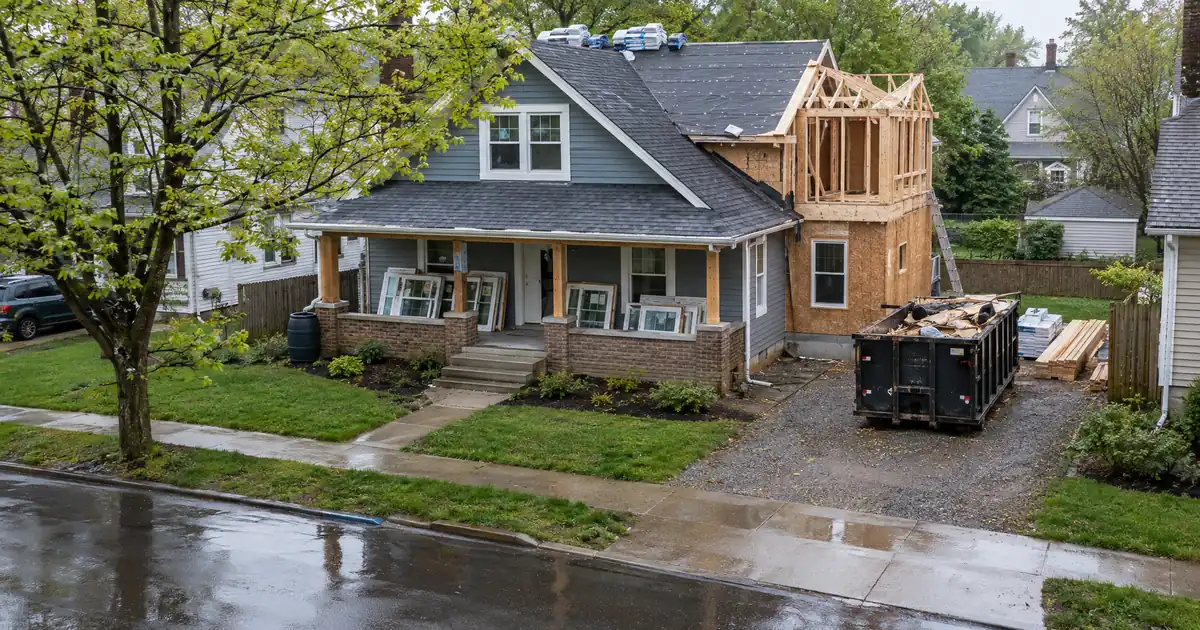
The Quick Read: On a hard money flip, the lender holds the renovation money back at closing and pays it out in stages. Each release reimburses work that is finished, verified, and usually already paid for. You front the cost of each phase, and the money comes back after an inspection and a paperwork check.
- The rehab budget is not wired to you at closing. It sits in a lender-controlled holdback.
- You pay contractors first, then request reimbursement for completed work.
- An inspection gates every release, and it checks progress, not code compliance.
- Missing lien waivers and unapproved scope changes cause most stalled releases.
- Your cash float, meaning the money you can front between releases, decides how smoothly the job runs.
What Is a Rehab Draw, and Where Does the Money Sit?
A rehab draw is a staged payout from the renovation portion of your loan. At closing, the lender funds the purchase. The rest of the approved rehab budget goes into a holdback, which is money the lender controls until work is proven.
What this loan actually costs to carry.
Hard money is sized against the project and priced by time. Enter the deal and see how much the program will lend, the cash required at closing, the carry while you hold it, and what is left at the exit.
Leverage tiers on the current program: 85% with fewer than 2, 90% with 2 or more, 93% with 5 or more completed projects — every tier capped at 75% of after-repair value. Loan amounts up to $5,000,000, larger by exception; terms of 6 to 18 months, interest-only, no prepayment penalty. The rehab portion funds in draws against completed work, not at closing.
Program parameters shown update from Lendmire’s centralized guideline source. Rate, points, and months are editable assumptions, not quoted terms.
Cost cap sets the loan · positive spread
Illustrative estimate only — not a quote, Loan Estimate, approval, or commitment to lend. Rate, points, and months are editable assumptions. Hard money is business-purpose financing for real estate investors, not a consumer mortgage. Leverage on the current program tops out at 93% of project cost for investors with a documented track record, capped at 75% of after-repair value, with rehab funding up to 100% of the documented budget released in draws; actual terms vary by lender, borrower experience, property, and exit. Lendmire is a mortgage broker, not a lender.
Lenders call this holdback by several names: escrow holdback, repair escrow, or rehab reserve. They all describe the same idea. The money exists, but it moves only against completed work.
No federal rulebook sets these terms. Draw rules live in your loan agreement, your rehab budget, and the lender’s draw policy. That is why two hard money lenders can run the same project very differently.
Here is how leverage fits in. Across the network of select lenders Lendmire works with, fix-and-flip leverage on a non-owner-occupied investment property typically runs 85% of project cost with fewer than two completed projects. It runs 90% at two or more, and 93% at five or more. Every tier is capped at 75% of after-repair value, which is what the finished property should be worth. Up to 100% of the rehab budget itself can fund through draws against completed work. That is a rehab-budget figure, not a purchase LTV. All of it varies by lender, property, and experience, and nothing here is a commitment to lend.
The Draw Cycle, Step by Step
The cycle is the same in most files, even when the details differ.
1. Closing and holdback. The lender funds the purchase portion. The rehab budget moves into the holdback.
2. Scope of work and budget. Your scope becomes a set of budget lines. Draws are measured against those lines, usually in several milestone installments such as demo, rough-ins, drywall, finishes, and a final draw.
3. You pay for the phase. Your contractor does the work, and you pay for it. A draw reimburses; it does not advance.
4. You submit the request. The package usually has invoices, receipts, an updated budget, change orders, lien waivers, and photos.
5. Inspection. An inspector confirms the work exists and estimates how far along it is.
6. Title and lien check. On larger draws, the title company updates the title to confirm no mechanics liens have been recorded. This is often called a date-down.
7. Approval. The lender approves, partially approves, or holds the draw.
8. Funding. Money goes to you, to the contractor, or through a title company.
Hard money draw fees and inspection fees vary by lender. Count them in your total cost.
A Worked Example With Percentages
Run the numbers on a modeled flip. These phase shares are illustrative assumptions, not market data. Say the rehab budget splits across four phases like this.
| Phase | Share of rehab budget | Gate before release |
|---|---|---|
| Demo and rough-ins | 30% | Inspection, invoices, waivers |
| Drywall and mechanicals | 25% | Inspection, updated budget |
| Finishes | 30% | Inspection, waivers |
| Final punch list | 15% | Final inspection, final waivers |
You fund the first phase yourself. That means you are carrying 30% of the rehab budget out of pocket until the first release arrives. If the lender keeps back a slice of each draw, your float grows a little more.
The pattern repeats. Your peak exposure is roughly one phase plus any retainage. This is why lenders and experienced investors talk about working capital as much as leverage. Your cash needs include the down payment, reserves, and a float for contractors.
How Inspectors Turn Progress Into Dollars
Inspectors do not guess at the whole job. They assign a percent complete to each budget line, and the release follows from that.
Picture a line item that makes up 20% of the rehab budget. The inspector finds it 50% complete. That line supports a release of 10% of the total budget, minus any retainage the lender holds back.
This is why partial credit works the way it does. Finished work earns money. Materials stacked in the garage usually do not, because most lenders pay for installed work. A line that is 90% done but missing its last detail may pay out only part of its value.
What Goes in a Draw Request
A clean package gets approved. A messy one gets held. Most lenders want some version of these items:
- Invoices and receipts show what was done and what it cost.
- Proof of payment shows you paid, which matters because draws reimburse.
- An updated budget shows where each line stands.
- Change orders document approved changes to scope.
- Photos or a progress overview support the inspector’s findings.
- Lien waivers show that the people who did the work will not claim the property.
Lien waivers cause the most confusion, so they deserve a plain explanation. A lien waiver is a document in which a contractor, subcontractor, or supplier gives up the right to file a mechanics lien for the amount paid. A lien waiver guide from Mastt describes it as working like a receipt.
There are two kinds, and the difference matters. A mechanics lien waiver glossary from Prodeal explains that a conditional waiver takes effect only when payment clears, while an unconditional waiver takes effect immediately. Signing an unconditional waiver before the funds clear leaves the contractor exposed.
Waivers matter because lien priority can relate back to when work began. That is why lenders order a title check before work starts and collect waivers at every draw. One construction-lending explainer from Virginia United Methodist Development Co. says the title company requires partial lien waivers and an interim contractor affidavit at each draw. Once the update confirms no liens are on record, the title coverage can increase to the outstanding loan amount. A title-industry page from Gravel2Gavel describes the ALTA 33-06 endorsement, which works as that same date-down.
Verification Methods Compared
Lenders verify work three main ways. Policies are lender-specific, so ask which one applies to your file.
| Method | How it works | Where it fits |
|---|---|---|
| In-person inspection | An inspector visits the property | Larger draws, higher-risk scopes |
| Photo review | You submit dated photos | Smaller draws, cosmetic work |
| Video walkthrough | You record the work area by area | Remote or out-of-state borrowers |
Some lenders inspect once near the midpoint and rely on photos otherwise. Others inspect every draw. Get the cadence in writing, because a promised inspection that never gets scheduled stalls your money and your project.
Where the General Rule Breaks
The cycle above is the norm. These edge cases are where files diverge.
Money at closing. Some lenders release an initial slice of the rehab budget at closing. Treat that as a feature of specific programs, not a market norm, and confirm it against your term sheet.
Interest on undrawn funds. Some notes charge interest on the full loan from closing. Others charge interest only on money actually disbursed. That choice swings your carry cost, so ask how interest is calculated before you sign. The programs Lendmire places are interest-only, with terms of 6 to 18 months and no prepayment penalty, subject to lender guidelines.
Retainage. Some lenders hold back a share of each draw, or of the final amount, until completion. A final inspection, final lien waivers, and a final affidavit close out the project.
Paying through title. Some structures pay subcontractors through a title company. Others wire the borrower.
Scope changes. If you discover new repairs after submitting your scope, the inspector may not credit them. Your next draw can come in short. A contingency line in the budget, and an agreed way to shift unspent money between lines, protect you here.
Partial reimbursement. Some investors report lenders that reimburse only part of each cost. Ask whether your lender pays the full approved amount per line.
Why Draws Get Delayed or Cut
Most problems trace back to a short list.
| Cause | What you see | Fix |
|---|---|---|
| Missing lien waivers | Draw held at title review | Collect waivers when you pay each contractor |
| Unapproved change order | Work not credited | Get lender sign-off before the work |
| Work does not match scope | Reduced release | Update the budget before submitting |
| Loan not current | Draw paused | Keep interest payments current |
| Incomplete package | Request sent back | Use a checklist for every request |
Liens, missed loan payments, permit issues, and incomplete documentation are the usual triggers.
Three misconceptions are worth clearing up.
A draw inspection is a permit or code sign-off. It is not. It verifies physical progress only.
Paying your general contractor protects you from liens. Not necessarily. GoBuildYourHouse explains that if the contractor does not pay subcontractors or suppliers, they can often lien the property. That is why waivers are collected down the chain, and the rules vary by state.
A recorded lien means a lawsuit tomorrow. It does not. The same source notes that a recorded lien preserves rights, and a separate foreclosure suit is needed to enforce it. It is still a title problem that can stall your draws and your exit.
Managing the Cash Float
Slow draws are a carry-cost problem. Every stretch of waiting adds holding time, and holding time adds interest and other costs. An undercapitalized borrower feels this most.
Plan the float before closing. Know how much you can front for the largest phase, plus retainage. Then match your contractor’s payment terms to the draw cycle. Contractors who wait for you to be reimbursed before they are paid may slow down or walk off the job, so agree on a payment schedule up front.
Hard money also does not mean no money down. Across the network, leverage tops out at the tiers above, and the highest tier is reserved for experienced investors. Credit minimums start around 620, with additional conditions below 660, and underwriting stays asset-based, looking at the property, the plan, and the exit. All of this varies by lender, property, and experience.
Your exit shapes how you think about draws. Many investors refinance out of hard money into long-term rental financing once the property is stabilized. Lendmire brokers that path, and the complete DSCR loans guide explains how property-rent-based lender review works. A DSCR loan funds in full at closing, so it is a different structure from a draw-based flip loan. Your rehab budget and after-repair value both feed that exit.
Questions to Ask Before You Close
Put these to every lender and get the answers in writing.
- Is the rehab money reimbursed or advanced?
- Who inspects, how often, and what does each inspection cost?
- Is there a fee per draw?
- Does the lender hold retainage, and how much?
- Does interest accrue on the full loan or only on disbursed funds?
- Which documents must be in each draw request?
- Are materials on site credited, or only installed work?
- How are scope changes and contingency handled?
- Is the contractor paid directly, or do funds come to you?
Key Terms Defined
Holdback: The part of the loan reserved for renovation and released in stages against completed work.
Draw: One staged payout from the holdback, usually a reimbursement for finished work.
Retainage: A share of each draw, or of the final amount, that the lender keeps until the project is complete.
Lien waiver: A document in which a contractor or supplier gives up the right to lien the property for amounts paid.
Date-down: A title update confirming no new liens have been recorded since the last check.
After-repair value: The estimated worth of the property once the renovation is finished.
Frequently Asked Questions
Do I get the rehab money at closing?
No. The lender funds the purchase portion and holds the rehab budget in a holdback. Some programs release a small initial slice, but that varies by lender. Ask what your term sheet says.
Does the lender pay for materials I bought but have not installed?
Usually not. Most lenders credit installed, verified work. If you buy materials early, you carry that cost until the work is in place.
Can a line item be partially reimbursed?
Often yes. The inspector assigns a percent complete, and the release follows. A line that is mostly done may earn most of its value, less any retainage.
Does a draw inspection mean my work meets code?
No. A draw inspection confirms progress against the scope. Permits and code approvals are separate and run through your local building authority.
How is a flip draw different from a DSCR loan?
A flip loan with draws is a short-term loan that pays out the rehab budget in stages. A DSCR loan funds in full at closing and qualifies primarily on property-level rental income covering the payment, subject to lender guidelines. Many investors finish the rehab on a draw loan and then refinance into DSCR financing.
Next Step
If you are buying, rehabbing or refinancing an investment property on a short timeline and want to see how the numbers work, Lendmire can help you compare hard money options based on the project, the exit plan, leverage, and your goals. Lendmire is a broker that arranges financing through select lenders in its wholesale network, across 41 markets including Washington, D.C.
About Lendmire
Lendmire — NMLS# 2371349 — is a DSCR and non-QM mortgage brokerage with investor loan programs in 41 markets, including Washington, D.C. DSCR eligibility is commonly reviewed by the lender around property-level rent rather than personal income documentation, subject to lender guidelines, and the brokerage helps arrange financing for LLC-owned portfolios beyond conventional financed-property limits. Recognized by Scotsman Guide as a Top Mortgage Workplace in 2025 and 2026.
The exit plan matters as much as the purchase price on short-term financing – see the hard money loan overview.
Get Started
Ready to find the right loan for you?
In about 30 seconds you can review financing options available for your investment property. No commitment required.
Informational only. Not a Loan Estimate, approval, or commitment to lend. Program availability and eligibility are subject to lender guidelines, credit approval, property review, and underwriting.
References
2. Prodeal — mechanics lien waiver glossary
4. Gravel2Gavel — title insurance and construction loan disbursements
5. GoBuildYourHouse — mechanics liens, lien waivers, and draws
This article is part of Lendmire’s hard money loan program — full qualification details, guidelines, and scenarios live on the program page.
Related reading: Small Balance Hard Money Loan Requirements for Fix and Flip Investors · Hard Money vs Bank Financing Requirements for a Fix and Flip · Can a Business Owner Qualify for a Hard Money Fix and Flip Loan?
Brandon Miller
Founder & CEO, Mortgage Loan Originator, Lendmire LLC
- Mortgage Loan Originator · NMLS# 1129696 · Verify on NMLS Consumer Access
- North Carolina Real Estate Broker · License# 343312 · Verify on NCREC
- North Carolina Insurance Producer · License# 19053198 · Property, Casualty, Life, Health · Verify on NAIC SBS
- Lendmire LLC · Firm NMLS# 2371349 · Verify firm licensure
Compliance and disclosures. Lendmire (NMLS# 2371349) is a licensed mortgage broker and is not a direct lender, depository institution, financial advisor, or tax professional. Content in this article is general market analysis and educational information — not financial, legal, or tax advice for any specific situation. Lendmire does not guarantee loan approval; every transaction is subject to underwriting by the funding lender. Mortgage pricing and loan program guidelines are subject to change at any time without notice and vary by borrower characteristics, property type, and state regulations. Lendmire complies with Equal Housing Opportunity. Licensure verification: NMLS Consumer Access.