
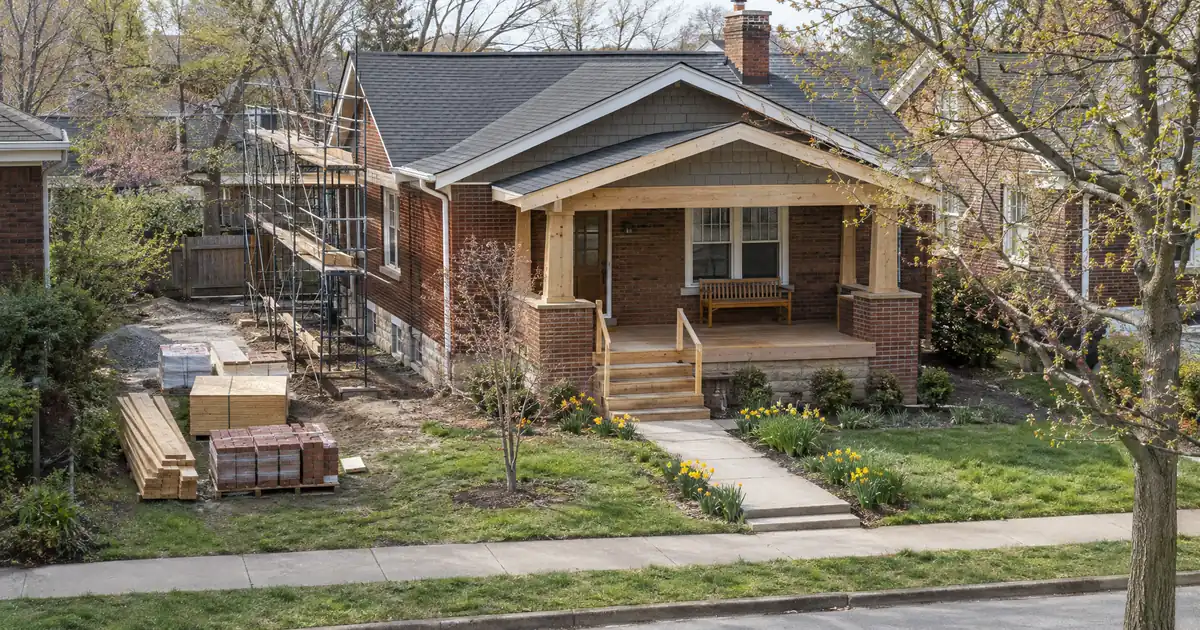
The Quick Read: Re-run the entire deal with a lower resale value, a higher rehab bill, and a longer hold, all at the same time, and move forward only if the numbers still work and you still hold cash in reserve once the loan’s draws and carry are paid. A best-case spreadsheet tells you what you hope happens. A stress test tells you what you can survive. Hard money loans are short and interest-only, so there is little room to recover from a bad assumption.
- Set the after-repair value (ARV) from sold comps, not from your best single comp.
- Treat the 70% rule as a screen, not a profit number.
- Test the shocks together, because late projects tend to run over budget and over schedule at once.
- Check the loan itself: draw timing, an appraisal that comes in low, and the maturity date.
- Plan your exit before you borrow, and set a walk-away line before you make an offer.
Why Does Hard Money Raise the Stakes?
Hard money raises the stakes because the loan is short, sized on cost and resale value, and paid back from one event: your sale or refinance. When the project slips, interest keeps running and the lender’s term keeps shrinking. A cash-rich buyer can wait out a bad quarter. A hard money borrower usually cannot.
What this loan actually costs to carry.
Hard money is sized against the project and priced by time. Enter the deal and see how much the program will lend, the cash required at closing, the carry while you hold it, and what is left at the exit.
Leverage tiers on the current program: 85% with fewer than 2, 90% with 2 or more, 93% with 5 or more completed projects — every tier capped at 75% of after-repair value. Loan amounts up to $5,000,000, larger by exception; terms of 6 to 18 months, interest-only, no prepayment penalty. The rehab portion funds in draws against completed work, not at closing.
Program parameters shown update from Lendmire’s centralized guideline source. Rate, points, and months are editable assumptions, not quoted terms.
Cost cap sets the loan · positive spread
Illustrative estimate only — not a quote, Loan Estimate, approval, or commitment to lend. Rate, points, and months are editable assumptions. Hard money is business-purpose financing for real estate investors, not a consumer mortgage. Leverage on the current program tops out at 93% of project cost for investors with a documented track record, capped at 75% of after-repair value, with rehab funding up to 100% of the documented budget released in draws; actual terms vary by lender, borrower experience, property, and exit. Lendmire is a mortgage broker, not a lender.
The market gives you little cushion either. ATTOM’s quarterly home flipping report shows typical flip margins falling to 21.5% on 77,991 flips, or 6.2% of all home sales. Margins and gross profits both declined from the prior quarter and from a year earlier.
Read that margin carefully. Per a trade-press recap of the ATTOM data, ATTOM measures gross profit as resale price minus purchase price. It subtracts no rehab, financing, taxes, insurance, or selling costs. The same recap notes that experienced flippers often put those costs at 20% to 33% of a property’s ARV. A 21.5% gross margin can therefore shrink to almost nothing, or turn negative, once real costs land.
Duration matters too. HousingWire’s coverage of ATTOM data reports a median of 165 days to complete a flip. It also reports that homes bought under $50,000 posted a 14% loss, while purchases between $100,000 and $200,000 produced the strongest typical returns. A national average hides a wide spread, so your own deal needs its own test.
Key Terms Defined
ARV (after-repair value): the price the finished property should sell for, based on recent sold comparables.
Loan-to-cost (LTC): the share of your total project cost, purchase plus rehab, that the lender will fund.
Loan-to-ARV: the loan as a share of the after-repair value. Lenders commonly apply both ratios and lend to the lower result.
Draw: a release of rehab money after you finish work and an inspector confirms it.
Carry (holding costs): interest, taxes, insurance, and utilities that keep running while you own the property.
Contingency: a reserve inside the rehab budget for hard-cost surprises such as rot, wiring, or plumbing found behind walls.
Break-even ARV: the lowest sale price at which you recover every dollar spent.
Step 1: Build a Base Case You Can Defend
Start with the value, because every other number depends on it. A hard money lender begins with what the house should be worth after renovation. If the lender does not believe your ARV, the loan sizing falls apart.
Use sold comps that match the finished product in size, condition, and location. Do not use the best single sale, and do not use your own scope of work as the benchmark. An appraiser compares your house to what has sold, not to what you spent. Over-improving for the neighborhood is a common way to lose money.
Next, apply the 70% screen. The formula is maximum offer = (ARV × 0.70) − rehab. Say your ARV is 100 units and rehab is 15 units. The screen suggests an offer at or below 55 units, which is 55% of ARV.
That 30% gap is not your profit. It is the space where financing, holding costs, selling costs, and profit all have to fit. RealEstateSkills notes the rule is roughly right in the middle of the market and wrong at both ends. On a cheap house it can let you pay more than your profit target allows. On an expensive one it can price you out of deals that would have paid well.
Keep one distinction straight. The 70% rule is your offer discipline. A lender’s leverage cap is a different ratio, set by the lender and applied to your project.
How Much Contingency Is Enough?
Contingency commonly runs 10% to 20% of the rehab budget, depending on the property. PropertyWiz suggests adding 10% to 15%. An investor Substack on flip budgets puts it at 15% to 20%, set aside before you start. Older homes with unknowns belong at the high end. A light cosmetic rehab can sit lower.
Contingency covers hard-cost surprises only. It does not cover delays. BiggerPockets points out that holding costs are among the most overlooked items, because investors often assume the project will run without delays. Its list of causes includes a contractor who cannot start on time or has to be replaced, and permit holdups.
Carry is therefore a separate line in your model. It grows with every month the rehab runs long, and contingency does not touch it.
How Does Hard Money Size the Loan?
Hard money lenders underwrite the asset, the plan, and the exit rather than your personal income. They size the loan against your purchase price, your renovation budget, and your projected ARV, then lend to the lower of the cost-based and value-based limits.
Across the wholesale network Lendmire places hard money files with, fix-and-flip leverage is tiered by documented completed projects. Typical programs fund up to 93% of project cost at 5 or more completed projects, 90% of project cost at 2 or more, and 85% of project cost with fewer than 2. Every tier is capped at 75% of ARV. Rehab money funds in draws against completed work, up to 100% of the rehab budget. Leverage varies by lender, property, and experience.
Other practical parameters matter for your test:
- Terms typically run 6 to 18 months, interest-only, with no prepayment penalty.
- A 620 credit score is a typical minimum, with additional conditions below 660.
- Loan amounts go up to $5,000,000, with larger loans by exception.
- Collateral is non-owner-occupied residential property of 1 to 4 units.
Notice what is not here: a true 100% purchase program. Even a top-tier file covers part of the project cost, and the ARV cap can bind first. Cash for the gap, fees, carry, and reserves comes from you.
Here is where the lender’s math hurts. Return to the 100-unit example with a 58-unit purchase and 15 units of rehab, so project cost is 73 units. At 90% of project cost, the loan is about 65.7 units. The 75% ARV cap is 75 units, so the cost limit governs. Now suppose the lender’s appraisal comes in at 85 units. The cap falls to about 63.75 units, which is below the cost-based amount. The loan shrinks, and you fund the difference of roughly two points of your original ARV in cash. A low appraisal does not just cut your sale price. It can also cut your loan.
Which Shocks Should You Run?
Run four shocks: a lower ARV, a higher rehab cost, a longer hold, and higher selling costs. Commonly used test values are ARV down 10% and rehab up 20%. These are rules of thumb, not standards, so scale them to the property. A heavy rehab on an older house deserves harsher inputs than a cosmetic refresh.
The example below uses modeled assumptions, not market data. Everything is expressed as a share of the base ARV of 100 units:
- Purchase: 58% of ARV.
- Rehab: 15% of ARV.
- Carry: 1.5% of ARV per month, over a 4-month hold.
- Selling costs: 8% of the sale price.
The base case profit is 13% of ARV. Here is how each shock changes it.
| Scenario | What changes | Profit (% of base ARV) |
|---|---|---|
| Base case | Nothing | 13.0% |
| ARV down 10% | Sale price 90 | 3.8% |
| Rehab up 20% | Rehab 18 | 10.0% |
| Hold of 7 months | Carry 10.5 | 8.5% |
| All three together | Sale 90, rehab 18, carry 10.5 | −3.7% |
Run alone, each shock leaves the deal alive. Stacked, the deal loses money. This is why you test shocks together. A project that overruns its budget usually overruns its schedule too, and a slow, messy project rarely sells at the top of the range.
The stacked result also gives you a break-even. With rehab at 18 and carry at 10.5, you recover your costs at a sale price of about 94% of the original ARV. That is your real margin of safety: a 6% drop in value before you start losing money. For many deals, that number is more useful than the headline profit.
Stress the Loan Itself
Most flip stress tests stop at the property. Add four loan-level checks.
Draw timing. You pay for work first, then request a draw against completed line items. An inspector verifies, and the lender releases funds less any retained holdback. Each draw cycle creates a gap that your cash has to cover. Model the cash you need between draws, not just the total rehab budget.
Appraisal gap. Run the loan at a lender ARV that is 10% to 15% below yours, as shown above. Know how much extra cash you would need before you close.
Maturity risk. With terms of 6 to 18 months, the loan’s end date is a hard wall. Test the case where your stressed hold runs close to it. Ask what an extension would cost, and underwrite that extension case first. In the example, the base profit could absorb roughly eight extra months of carry on paper, but the loan’s term would run out long before the profit did.
Interest on drawn versus approved funds. Ask whether interest accrues on the full approved balance from day one or only on money actually disbursed. The difference changes your carry, and lenders differ on it.
Then run a reserves test. After closing, you need enough cash left to carry the project through your stressed case without selling a personal asset or borrowing elsewhere. A flip that passes on paper but leaves you with no cash is a fragile deal.
On the files we see across the network, the borrowers who run into trouble are rarely the ones who misjudged the headline numbers. They are the ones who assumed the rehab money would be available on day one, or who never priced the extension case. Both mistakes show up in a loan-level test long before they show up in a P&L.
Where the Rules Break
Every general rule here has exceptions, and the main ones are worth naming.
- Price bands and markets. ATTOM-based recaps show margins varying widely by price tier and by metro. A national average tells you little about your block, so rebuild the numbers from your own comps.
- The 70% rule at the extremes. As noted, it overpays on cheap houses and underbids on expensive ones. In a fast-moving market with a light rehab, a looser screen may be reasonable. For an older home with unknowns, a tighter one fits.
- Contingency scaling. Flippers.live suggests 10% to 15% of hard costs for moderate rehabs, and more where foundation or moisture problems are possible. A single percentage cannot fit every house.
- Over-improving. Spending past what the neighborhood’s sold comps support does not raise the appraisal to match. An improvement may support a higher appraised value, depending on comps and underwriter review, but never by a guaranteed amount.
- Cheap homes. Low-priced purchases carried the heaviest losses in the HousingWire data cited above, partly because fixed costs weigh more on a small sale price.
- First-time flippers. Lower leverage tiers apply with fewer completed projects, so the cash you need is larger than the top-tier math suggests.
What If Your Exit Is a Rental Refinance?
If the flip might become a rental, test that exit as carefully as the sale. Many investors refinance out of hard money into long-term DSCR investor loans once the property is stabilized, and Lendmire brokers that path. DSCR is the debt service coverage ratio: monthly rent divided by the full monthly housing payment, including principal, interest, taxes, insurance, and any HOA dues.
Two points apply. First, the refinance lender sizes the loan on its own appraisal, not on your projected ARV, so run the exit at a lower value. Second, clearing a 1.00 coverage ratio is not the same as positive cash flow. The ratio compares rent to the housing payment only, so repairs, vacancy, management, utilities, and capital expenses sit outside it. Select programs start at 1.00, and stronger ratios can open better terms and leverage, subject to lender guidelines.
For the full mechanics, see Lendmire’s complete DSCR loans guide. For the inputs to test while the hard money loan is still open, read Lendmire’s piece BRRRR Takeout Inputs to Stress-Test Before Hard Money Closes.
Score the Result: Pass, Thin, or Fail
Judge the deal by its stacked case and by its single shocks. The bands below are practical rules of thumb, not lender requirements.
| Result | What you see | What to do |
|---|---|---|
| Pass | Stacked case still profitable, reserves intact | Proceed |
| Thin | Base profit holds, stacked case loses a little | Renegotiate |
| Fail | One shock alone erases profit | Walk away |
If the deal lands in the thin band, pull the levers you control. Lower the offer, trim scope, add equity, or change the exit. If it fails, walk away. Set that walk-away line before you make an offer, when you are still thinking clearly and have not yet fallen for the house.
Frequently Asked Questions
How much contingency should a flip carry?
Commonly 10% to 20% of the rehab budget. Light cosmetic work can sit near the low end, and older homes with possible structural, moisture, or electrical surprises belong near the high end. Remember that contingency covers hard-cost surprises only. Budget delay costs, such as interest, taxes, and insurance, in a separate carry line.
What happens if the lender’s appraisal comes in below my ARV?
Your loan can shrink, because most lenders size to the lower of a cost-based limit and a value-based limit. On typical programs, leverage is capped at 75% of ARV, so a low appraisal can make that cap the binding one. You then cover the difference in cash. Test this case before you commit.
What if the project runs past the loan’s maturity date?
You would typically need an extension, which carries its own fees, or a payoff through a sale or refinance. Terms on typical programs run 6 to 18 months, so run your stressed hold against that window. Underwrite the extension case first, since that is where thin flip margins tend to break.
Is there a 100% financing option for flips?
Not as a true purchase program. Top-tier files can reach 93% of project cost for experienced investors with 5 or more completed projects, always capped at 75% of ARV. Rehab money funds in draws, up to 100% of the rehab budget. You still need cash for the gap, carry, fees, and reserves. Terms vary by lender, property, and experience.
Does a stress test replace the lender’s review?
No. Your stress test protects your own capital, while the lender separately reviews the property, the plan, your experience, and the exit. Nothing here is a commitment to lend. A solid stress test does give you a cleaner, more credible file to bring to that review.
Next Step
If you are buying, rehabbing or refinancing an investment property on a short timeline and want to see how the numbers work, Lendmire, a mortgage broker arranging financing across 41 markets including Washington, D.C., can help you compare hard money options based on the project, the exit plan, leverage, and your goals. Programs, leverage, and eligibility vary by lender, property, and experience.
About Lendmire
Lendmire is a non-QM mortgage brokerage (NMLS# 2371349) arranging DSCR investor loans in 41 markets, including Washington, D.C., through wholesale and investor-lending channels. DSCR loans are evaluated by the lender on rental income rather than personal income, subject to lender guidelines — a fit for LLC-owned portfolios, self-employed investors, and operators scaling beyond conventional loan caps. Recognized as a Scotsman Guide Top Mortgage Workplace in 2025 and 2026.
Get Started
Ready to find the right loan for you?
In about 30 seconds you can review financing options available for your investment property. No commitment required.
Informational only. Not a Loan Estimate, approval, or commitment to lend. Program availability and eligibility are subject to lender guidelines, credit approval, property review, and underwriting.
References
1. attomdata.com: Home Flipping Profits Continue Gradual Two Year Decline
2. WRE News recap of ATTOM flipping data
3. HousingWire coverage of ATTOM flipping data
4. RealEstateSkills on the fix-and-flip formula
5. PropertyWiz fix-and-flip playbook
7. BiggerPockets on rehab contingency
This article is part of Lendmire’s hard money loan program — full qualification details, guidelines, and scenarios live on the program page.
Related reading: Hard Money Loan Documents Required for a Fix and Flip · Hard Money to DSCR Seasoning Rules After a Flip · Hard Money Loan Qualification Documents for a Flip Investor
Brandon Miller
Founder & CEO, Mortgage Loan Originator, Lendmire LLC
- Mortgage Loan Originator · NMLS# 1129696 · Verify on NMLS Consumer Access
- North Carolina Real Estate Broker · License# 343312 · Verify on NCREC
- North Carolina Insurance Producer · License# 19053198 · Property, Casualty, Life, Health · Verify on NAIC SBS
- Lendmire LLC · Firm NMLS# 2371349 · Verify firm licensure
Disclosure information. Lendmire is a state-licensed mortgage brokerage under NMLS# 2371349. Lendmire is not a depository institution, direct lender, or financial advisor — all loans referenced are placed through wholesale lender partners and are subject to each lender's underwriting standards. This article is provided for general informational purposes and is not a commitment to lend, nor does it constitute financial, legal, or tax advice. Loan programs, terms, rates, and qualification standards change without notice and depend on borrower profile, property type, and the state in which the subject property is located. Equal Housing Opportunity provider. NMLS Consumer Access: nmlsconsumeraccess.org.