
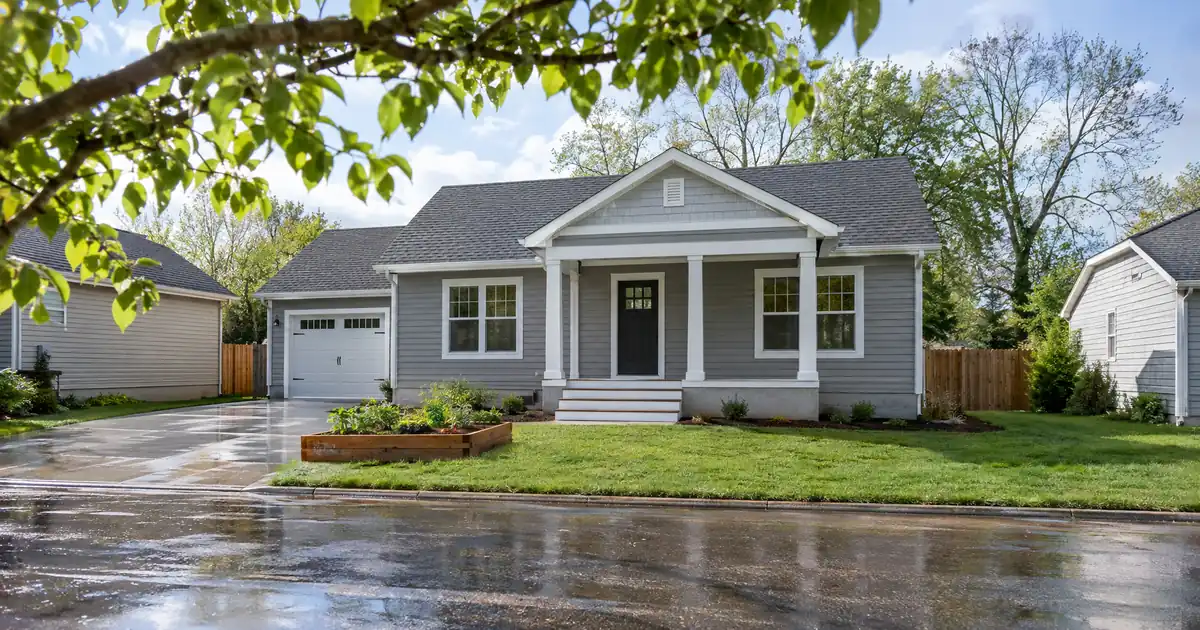
The Quick Read: A hard money lender screens the property before anything else. The loan is secured by the house and repaid when it sells or refinances, so lenders fund what they can resell. In practice that means non-owner-occupied residential buildings of one to four units, while commercial, manufactured, rural and larger buildings get excluded, rerouted or priced down.
- Property type is decided before leverage, pricing or experience enters the picture.
- The typical box is non-owner-occupied residential, one to four units. Condos and townhomes depend on the building.
- Condition is flexible. Type, location, legal square footage and building-level health are not.
- Eligibility for the flip and eligibility for the long-term exit are two separate tests.
- Every figure below varies by lender, property, and experience, and nothing here is a commitment to lend.
Why Does a Hard Money Lender Limit Property Types?
Lenders limit property types because the property is the repayment plan. If the flip stalls, the lender has to sell the collateral. A house that sells easily protects the loan, and a property with few buyers or few comparable sales puts it at risk.
What this loan actually costs to carry.
Hard money is sized against the project and priced by time. Enter the deal and see how much the program will lend, the cash required at closing, the carry while you hold it, and what is left at the exit.
Leverage tiers on the current program: 85% with fewer than 2, 90% with 2 or more, 93% with 5 or more completed projects — every tier capped at 75% of after-repair value. Loan amounts up to $5,000,000, larger by exception; terms of 6 to 18 months, interest-only, no prepayment penalty. The rehab portion funds in draws against completed work, not at closing.
Program parameters shown update from Lendmire’s centralized guideline source. Rate, points, and months are editable assumptions, not quoted terms.
Cost cap sets the loan · positive spread
Illustrative estimate only — not a quote, Loan Estimate, approval, or commitment to lend. Rate, points, and months are editable assumptions. Hard money is business-purpose financing for real estate investors, not a consumer mortgage. Leverage on the current program tops out at 93% of project cost for investors with a documented track record, capped at 75% of after-repair value, with rehab funding up to 100% of the documented budget released in draws; actual terms vary by lender, borrower experience, property, and exit. Lendmire is a mortgage broker, not a lender.
Corporate Finance Institute describes hard money as short-term, private financing collateralized by the property. When the asset is the security, the asset gets screened first.
Four risks drive nearly every exclusion:
- Resale liquidity. Lenders want a deep pool of buyers for the finished product.
- Appraisal reliability. The lender needs recent, similar sales to support the after-repair value.
- Exit certainty. The loan must be repaid by a sale or a refinance, and both need a buyer or lender who accepts the property.
- Collateral complexity. Mixed uses, shared building systems and unusual construction make the collateral harder to value and harder to sell.
This is also why hard money lenders have no single rulebook. Each sets its own eligibility box. The box below is the common pattern across the wholesale network Lendmire works with, and it is written as typical behavior, not a guarantee.
Key Terms Defined
After-repair value (ARV): the appraised or estimated value of the property once the renovation is finished.
Loan-to-cost: the loan as a share of the total project cost, meaning the purchase price plus the rehab budget.
Non-owner-occupied: a property you do not live in, held as a business asset.
Draw: a release of rehab funds after a portion of the work is completed and inspected.
Exit strategy: how the loan gets repaid, either by selling the property or by refinancing into longer-term financing.
PITIA: principal, interest, taxes, insurance and any association dues, which is the payment a DSCR lender compares rent against.
Non-warrantable condo: a condo project that fails standard project screens, such as one with heavy investor ownership or pending litigation.
How Underwriting Screens a Property, Step by Step
The screen runs in a fixed order, and a deal that fails an early step is never priced. Here is the sequence most hard money programs follow.
1. Property-type check. The default is non-owner-occupied residential of one to four units. That covers single-family homes, townhomes, planned-unit developments, and often condos and small multi-unit buildings. In the programs Lendmire places, collateral is non-owner-occupied residential of one to four units.
2. Location and market check. The appraiser labels the area urban, suburban or rural. Thin comparable sales and slow resale push lenders toward a decline or a lower loan amount.
3. Size and price check. Many lenders set minimum loan sizes, so very cheap properties get fewer options. In Lendmire’s programs, loan amounts run up to $5,000,000, with larger balances by exception and smaller balances varying by lender.
4. Condition and legality check. Distressed condition is acceptable, since that is the point of the product. Legal, permitted square footage is what the appraiser counts toward value.
5. Borrower layer. Experience, credit and the entity adjust the loan amount. Most lenders want an LLC, subject to lender program requirements. A 620 minimum score applies in these programs, with additional conditions below 660.
6. Exit check. The lender asks whether the finished property can sell, or refinance, on the stated plan.
A weak borrower file does not change the property-type rules. It does compound a niche property, because a lender already worried about the collateral has less patience for thin experience.
Which Property Types Qualify, and Which Don’t?
Single-family homes, townhomes and PUDs are the cleanest fits. Condos and two-to-four-unit buildings usually qualify with building-level or per-unit conditions. Five-plus units, mixed-use, commercial, manufactured, rural and resort-style properties are typically excluded, rerouted to another program, or priced differently.
This table describes general market behavior, with the Lendmire network’s collateral box noted where it applies.
| Property type | Typical treatment | Main concern |
|---|---|---|
| Single-family, townhome, PUD | Usually eligible | Comps and resale |
| Condo | Case by case | HOA health, investor mix |
| 2-4 unit residential | Usually eligible | Per-unit value, comps |
| 5+ units, mixed-use, commercial | Usually rerouted | Different collateral class |
| Manufactured, log, barndominium | Typically excluded | Thin resale, odd appraisals |
| Rural or very thin-comp area | Varies; lower leverage or decline | No comps, slow sale |
On the network’s program sheet, the collateral list stops at non-owner-occupied residential of one to four units, plus ground-up construction up to 10 units. Commercial, industrial, land or lots, hospitality and owner-occupied properties are not on that sheet.
Structures and Variations Inside the Box
The property box stays the same across structures. What changes is the loan amount and how it gets repaid. These are the structures that exist in the network’s hard money program, each varying by lender, property, and experience:
- Fix-and-flip. Loan-to-cost is tiered by completed projects. Investors with 5+ completed projects can reach up to 93% of project cost, investors with 2+ reach up to 90%, and everyone else up to 85%. Every tier is capped at 75% of after-repair value.
- Rehab funding. Up to 100% of the rehab budget is released in draws against completed work. That is a rehab-budget figure, not a purchase loan-to-value.
- Bridge purchase without rehab. Up to 80% of the purchase price on a non-owner-occupied property.
- Cash-out and rate/term refinance. Up to 65% of value.
- Ground-up construction. Up to 90% of cost and 75% of completed value at 3+ completed projects.
- Terms. Six to 18 months, interest-only, with no prepayment penalty.
There is no true 100% purchase program. The headline number you may see elsewhere is the combination of high purchase leverage and separately funded rehab. The top tiers are reserved for experienced investors, and first-time investors qualify at the lower tiers.
Property Limits Versus Leverage Limits
These are separate gates, and investors often blur them. A property limit asks whether the lender will fund this kind of building at all. A leverage limit asks how much it will lend against a building that passed.
Passing the property screen does not raise your loan amount. Failing it does not mean your leverage tier was too low. A fourplex with a strong 2-plus-project borrower can still be declined if the lender dislikes the area. A single-family house in a strong area can still land on the 85% tier if the borrower is new.
Where the General Rule Breaks
Every rule above has named edge cases. These are the ones that decide real deals.
Condos. The building can lower leverage or end the deal. It never raises it. Lenders look at pending HOA litigation, HOA reserves and how many units are investor-owned. Agency condo rules draw similar lines. Freddie Mac’s Seller/Servicer Guide lists investor concentration, litigation and critical repairs among the reasons a project can be ineligible for its loans. Hard money lenders are not bound by those rules, but they ask the same questions, because a troubled building is hard to sell. Condotels and resort-style units get tighter treatment than ordinary residential condos.
Non-warrantable condos. Hard money is sometimes the only financing available here, since standard lenders decline these projects. The flip may be fundable. The exit is the problem, because your buyer or refinance lender faces the same building.
Unpermitted additions. An appraiser generally cannot count unpermitted square footage. Your ARV shrinks even if the lender funds the purchase. The loan can work while the profit disappears.
Distressed or cash-only properties. These are fundable precisely because hard money underwrites the deal rather than the condition. The limit is a shell with no path to a legal, sellable finished product.
Rural plus first-timer. This is the hardest pairing. Lenders see fewer comps and slower resale, then see thin experience on top. Investors in that position usually need a more experienced partner, a conservative ARV, or a lender comfortable with the area.
Mixed-use with a residential majority. Many lenders treat any commercial component as a commercial deal and send it to a different program. A few review it case by case. Assume the answer is no until a lender says otherwise.
Four units versus five. The line at four units is sharp. A five-unit building typically moves into a commercial or multifamily program with different terms, and the program Lendmire places collateral through stops at four, except for ground-up construction up to 10 units.
Check Both Boxes: The Flip and the Exit
A property that passes the hard money screen can still fail the exit. Many investors plan to flip, but a flip that turns into a hold needs long-term financing.
Many investors refinance out of hard money into long-term DSCR investor loans once the property is stabilized, and Lendmire brokers that path. A DSCR lender compares monthly rent to PITIA. It does not care about your rehab budget the way a hard money lender does. It cares about whether the finished property fits its own eligibility box.
That box is narrower in places. DSCR financing is not offered in the network on manufactured homes (single-wide and double-wide), log homes or barndominiums. Settle property type before you contract, because a hard money loan on one of these can leave you with no refinance route. The complete DSCR loans guide explains how that second test works.
Clearing 1.00 coverage on a DSCR loan also does not mean positive cash flow. The ratio compares rent to PITIA only, so repairs, vacancy, management and utilities sit outside it.
Both loan types are business-purpose products. Hard money loans and DSCR loans are designed for non-owner-occupied investment properties. Because they are business-purpose investor loans, they are reviewed differently from a standard owner-occupied mortgage. The CFPB’s Truth in Lending guidance describes that business-purpose distinction.
Tax treatment varies; consult a qualified professional.
A 60-Second Pre-Screen Before You Apply
Run this list before you spend time on an application. It is a general screen, not a lender’s checklist.
1. Is the property non-owner-occupied residential of one to four units? 2. Is it free of commercial space, or at least mostly residential with no commercial component the lender will count? 3. Is it a standard site-built home, not manufactured, log or barndominium? 4. Is the area urban or suburban with recent comparable sales? 5. If it is a condo, is the HOA free of litigation, reasonably reserved and not dominated by investors? 6. Is all square footage permitted, and will the finished home be a legal, sellable product? 7. Does your credit clear the 620 minimum, with extra conditions below 660? 8. Can you describe the exit, a sale or a refinance, in one sentence? 9. If the exit is a hold, does the property also fit a DSCR lender’s box?
If you answer no to any of the first six, ask the lender about that issue before you contract.
If the Property Doesn’t Fit
A decline is information, not a verdict on your project. You have several practical options.
- Try a different lender. Eligibility boxes differ, and a property one lender rejects may sit inside another’s box. That is a main reason to work with a broker who sees several programs.
- Reroute to the right product. Five-plus units, mixed-use and commercial belong in a commercial program, not a residential flip loan.
- Resize the project. A lower ARV assumption, a smaller scope or a lower loan amount can bring a borderline file inside a lender’s comfort zone.
- Add experience. A more experienced partner can move you up a leverage tier or soften a location concern.
- Walk away. If the property fails both the flip and the exit, the better fix is usually a different property.
Frequently Asked Questions
Can I flip a condo with hard money?
Often, yes, but the building decides. Lenders check HOA litigation, reserves and investor concentration, and a weak project can cap the loan or end the deal. Condotels and resort-style units face tighter treatment than ordinary residential condos.
Can I use hard money on a duplex, triplex or fourplex?
Usually, yes. One-to-four-unit residential is the standard collateral box, and the network’s programs cover it on non-owner-occupied properties. Five-plus units typically move to a commercial program with different terms.
Will a hard money lender fund a rural house?
It varies by lender. Rural appraisals often produce a decline or a lower loan amount, because comparable sales are thin and resale is slow. Experienced investors with a conservative ARV have the best odds.
Does the property type change how much I can borrow?
It changes whether you borrow at all, not the tier you land on. Leverage follows your completed projects: up to 93% of project cost at 5+ projects, 90% at 2+, and 85% below that, with every tier capped at 75% of after-repair value. These figures vary by lender, property, and experience.
If I can buy it with hard money, can I refinance it into a DSCR loan?
Not necessarily. Exit eligibility is a separate test. DSCR financing is not offered in the network on manufactured homes, log homes or barndominiums, so confirm both boxes before you contract.
Next Step
If you are buying, rehabbing or refinancing an investment property on a short timeline and want to see how the numbers work, Lendmire can help you compare hard money options based on the project, the exit plan, leverage, and your goals. Lendmire is a broker that arranges financing through select lenders in its wholesale network across 41 markets, including Washington, D.C. Reach the team at 828-256-2183 to talk through a property before you put it under contract.
Property type is an easy variable to fix before a purchase and a costly one to discover afterward.
About Lendmire
Lendmire (NMLS# 2371349) is a mortgage brokerage built around DSCR investor lending, with programs available in 41 markets, including Washington, D.C. DSCR lenders commonly evaluate rental-income coverage instead of personal income paperwork — a practical fit for LLC-owned and multi-property investors. Terms vary by lender, property, leverage, and program. Scotsman Guide named Lendmire a Top Mortgage Workplace in both 2025 and 2026.
Get Started
Ready to find the right loan for you?
In about 30 seconds you can review financing options available for your investment property. No commitment required.
Informational only. Not a Loan Estimate, approval, or commitment to lend. Program availability and eligibility are subject to lender guidelines, credit approval, property review, and underwriting.
References
1. Corporate Finance Institute: Hard Money Loan
2. Freddie Mac Seller/Servicer Guide: Section 5701.3
This article is part of Lendmire’s hard money loan program — full qualification details, guidelines, and scenarios live on the program page.
Related reading: Hard Money vs Private Money for a 2-4 Unit Flip: Down Payment · Does a Hard Money Lender Cap Loan to Cost on a Flip? · Can a Business Owner Qualify for a Hard Money Fix and Flip Loan?
Brandon Miller
Founder & CEO, Mortgage Loan Originator, Lendmire LLC
- Mortgage Loan Originator · NMLS# 1129696 · Verify on NMLS Consumer Access
- North Carolina Real Estate Broker · License# 343312 · Verify on NCREC
- North Carolina Insurance Producer · License# 19053198 · Property, Casualty, Life, Health · Verify on NAIC SBS
- Lendmire LLC · Firm NMLS# 2371349 · Verify firm licensure
Legal disclosures. Lendmire (NMLS# 2371349) is a state-licensed mortgage brokerage that arranges financing through wholesale lender relationships. Lendmire is not a direct lender, depository institution, or registered financial advisor. The discussion above is general informational content about real estate financing — it is not financial, legal, or tax advice, and readers should consult licensed professionals for guidance on their individual circumstances. Loan inquiries are subject to lender underwriting; this article does not represent a commitment to lend. Loan terms, rates, and qualification standards vary by borrower, property, and state, and are subject to change at any time. Equal Housing Opportunity. NMLS Consumer Access: nmlsconsumeraccess.org.