
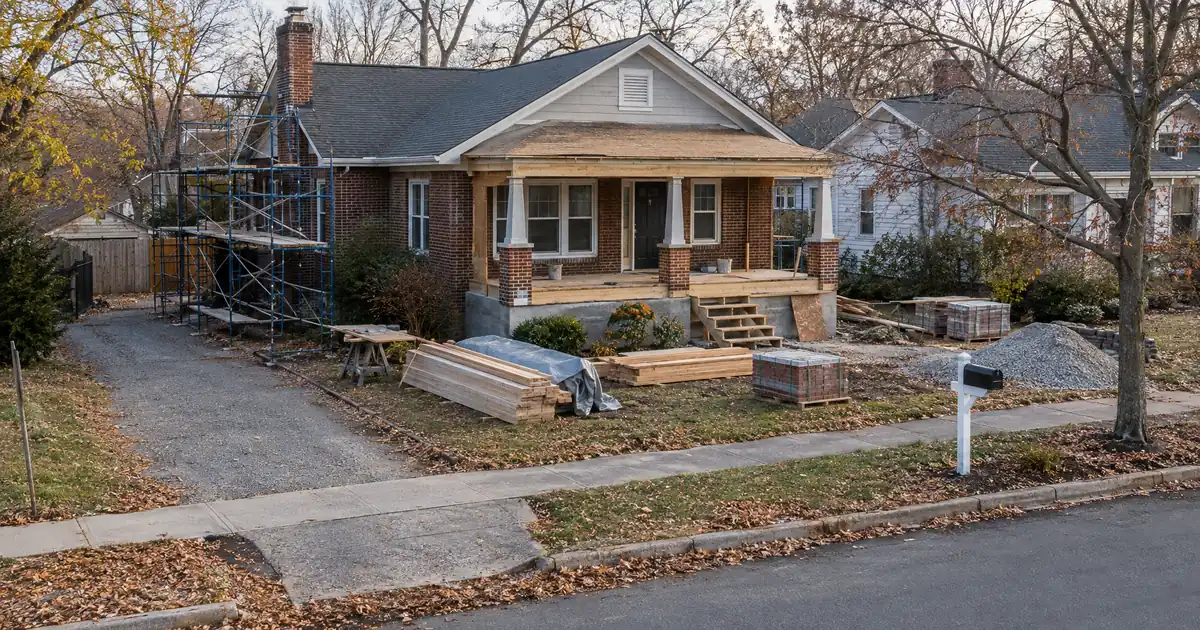
The Quick Read: The maximum term comes from adding up the realistic months needed to finish the rehab, reach the exit, and absorb delays, then capping that total at how long the lender will carry an interest-only balloon loan, which on the program Lendmire arranges typically means 6 to 18 months.
- The term is an outcome of the lender’s risk view of your timeline. It is not a formula and not a fixed number.
- Leverage is sized first. The term then has to fit inside the equity cushion that leverage leaves behind.
- Rehab scope, exit path, and borrower experience move the term most. Terms vary by lender, property, and experience.
- A median flip is shorter than the longest terms, but half of flips run longer than the median.
- The strongest plan names a second exit before the maturity date arrives.
What the Lender Is Actually Protecting
A hard money lender is protecting against one thing above all: the property sitting unfinished or unsold while the loan stays outstanding. Underwriting here is asset-based. The lender looks at the property, your plan, and your exit. Time is the variable that can break all three.
What this loan actually costs to carry.
Hard money is sized against the project and priced by time. Enter the deal and see how much the program will lend, the cash required at closing, the carry while you hold it, and what is left at the exit.
Leverage tiers on the current program: 85% with fewer than 2, 90% with 2 or more, 93% with 5 or more completed projects — every tier capped at 75% of after-repair value. Loan amounts up to $5,000,000, larger by exception; terms of 6 to 18 months, interest-only, no prepayment penalty. The rehab portion funds in draws against completed work, not at closing.
Program parameters shown update from Lendmire’s centralized guideline source. Rate, points, and months are editable assumptions, not quoted terms.
Cost cap sets the loan · positive spread
Illustrative estimate only — not a quote, Loan Estimate, approval, or commitment to lend. Rate, points, and months are editable assumptions. Hard money is business-purpose financing for real estate investors, not a consumer mortgage. Leverage on the current program tops out at 93% of project cost for investors with a documented track record, capped at 75% of after-repair value, with rehab funding up to 100% of the documented budget released in draws; actual terms vary by lender, borrower experience, property, and exit. Lendmire is a mortgage broker, not a lender.
Think about the loan’s structure. Payments are typically interest-only. Principal comes due in one balloon payment at maturity. That means the lender gets no principal paydown along the way. Every extra month is another month the lender is exposed to price changes, contractor problems, and a slow buyer pool.
So the lender asks a simple question: how long will this specific project realistically take, and how much slack is it willing to fund? The answer is the maximum term. Lendmire is a broker, so it arranges these loans through select lenders in its wholesale network across 41 markets, including Washington, D.C. Each lender sets its own ceiling. On the program we place files with, terms typically run 6 to 18 months, interest-only, with no prepayment penalty. That varies by lender, property, and experience.
There are no multi-year options on that program. Investors who need a longer runway generally plan to refinance into long-term rental financing instead.
Key Terms Defined
Maximum term: The longest period the lender will let the loan stay outstanding before the full balance is due.
Base term: The term written into the note at the start, before any extension.
Maturity: The date the full remaining balance comes due.
Balloon payment: The single large payment of principal at maturity, because monthly payments covered interest only.
Loan-to-cost: The loan amount as a share of total project cost, meaning purchase price plus rehab budget.
After-repair value (ARV): The lender’s estimate of what the property is worth once the work is finished.
Draw schedule: The process of releasing rehab funds in stages as completed work is inspected.
Exit: How you repay the loan: selling the property or refinancing into a longer-term loan.
Extension: A negotiated option to push maturity out for a fee. Not every lender offers one.
Step One: Leverage Gets Sized Before Term
Lenders size the loan amount first and the term second. The term has to fit inside whatever equity cushion the leverage leaves.
Here is how the leverage tiers typically work on the hard money program we broker. Fix-and-flip loans are tiered by documented completed projects. At five or more completed projects, leverage reaches up to 93% of project cost. At two or more, it reaches up to 90% of project cost. With fewer than two, it reaches up to 85% of project cost. Every tier is capped at 75% of after-repair value. Up to 100% of the rehab budget is funded in draws against completed work. That last figure applies to the rehab budget only, never to the purchase price.
Those figures vary by lender, property, and experience, and nothing here is a commitment to lend.
Why does this matter for term? Because a thin cushion makes time expensive. Interest accrues every month on the full drawn balance. The more leverage you use, the less room there is to absorb carrying costs before the loan eats your profit. A lender who is already at a high loan-to-cost ratio will look harder at whether your timeline is realistic. The lender on the other side of an 85% deal is not going to hand out a generous runway just because you asked for one.
Credit plays a smaller role than the property, but it still counts. Across the network a 620 score is the typical minimum, with additional conditions below 660. First-time investors generally qualify at the lower leverage tiers.
The Inputs That Set the Term
Six inputs push the term up or down. The table shows how each one works and what the lender checks.
| Input | Effect on term | What the lender checks |
|---|---|---|
| Rehab scope | Heavier work, longer term | Scope of work, budget |
| Property condition | Worse condition, more time | Inspection, photos, valuation |
| Exit path | Refinance exit can justify more time | Sale plan or take-out plan |
| Borrower experience | Track record can improve terms | Completed projects |
| Market speed | Slow resale area, more cushion | Local sales pace |
| Draw process | Inspections add lag to rehab | Draw schedule, contractor |
Two inputs deserve extra attention. The first is the exit path. A flip is expected to sell inside the term. A buy-and-hold plan that refinances into a DSCR rental loan can justify a longer bridge, because the take-out loan does not depend on a buyer showing up. (DSCR stands for debt service coverage ratio, the check of whether a rental’s income covers its full monthly housing payment.)
The second is the draw schedule. Funds released against inspected work stretch the real rehab timeline. The contractor finishes a phase, the inspection gets scheduled, and the next draw follows. Investors who plan rehab time as pure construction time usually come up short. Lenders know this, and they size the term with that lag in mind.
Where the Market Sits on Flip Duration
ATTOM, a real estate data firm, defines a flip as an arm’s-length resale within 12 months of the prior purchase, per ATTOM’s quarterly home flipping report. Its state-level flipping data shows a median of 165 days from purchase to resale. The gross return on those flips was 25.4%, according to HousingWire’s summary of the ATTOM data. Gross means before rehab, financing, and selling costs.
A median near five and a half months is why 6-to-12-month terms dominate. It is only the middle of the distribution, though. Half of flips take longer, and that is why lenders build in cushion.
Build the Timeline Like a Lender Would
A lender does not pick a term and hope. It builds a timeline in phases, adds a buffer, and compares the total to what it will carry. You should do the same math before you apply.
The table below shows three illustrative scenarios. The durations are modeled assumptions for teaching, not market data and not lender figures. They are in months.
| Phase | Cosmetic | Mid-scope | Heavy |
|---|---|---|---|
| Start-up (permits, scheduling) | 0.5 | 1 | 1.5 |
| Rehab construction | 2 | 4 | 7 |
| Draw and inspection lag | 0.5 | 1 | 1.5 |
| Listing to signed contract | 1.5 | 2 | 2 |
| Buyer’s closing | 1 | 1 | 1 |
| Buffer for delays | 1.5 | 2 | 3 |
| Total | 7 | 11 | 16 |
Read the totals against a 6-to-18-month term. The cosmetic flip sums to 7 months with its buffer. Without the buffer it is 5.5 months, which lines up with the market median. That deal sits comfortably inside a 12-month term and would be tight inside a 6-month one.
The mid-scope job lands at 11 months. A 12-month term works, but only barely. A one-month slip eats the whole margin of safety.
The heavy rehab lands at 16 months. That project only fits near the top of the range. Many lenders would want to see a detailed scope and an experienced borrower before offering that much time.
Notice what moved the totals. Rehab construction and the buffer account for most of the difference. Closing and listing barely changed. That is why scope is usually the first constraint to bind.
Sale Exit Versus Refinance Exit
The exit you choose changes what you need time for. A sale needs marketing and a buyer. A refinance needs a finished, rentable property and a take-out lender who is satisfied.
| Factor | Sale exit | Refinance exit |
|---|---|---|
| Time goes to | Listing, buyer’s closing | Lease-up, take-out review |
| Main risk | Slow resale market | Property not rent-ready |
| Buffer needed for | Price reductions | Seasoning or paperwork gaps |
| Backup exit | Switch to rental | Switch to sale |
On a refinance exit, check the take-out lender’s seasoning requirement early. Seasoning is the waiting period a lender wants between buying a property and refinancing it. It differs by lender and program, so treat it as a fixed block on your timeline and not a number to guess. Many investors refinance out of hard money into long-term DSCR financing once the property is stabilized, and Lendmire brokers that path. The complete DSCR loans guide explains how that take-out loan works.
Base Term Versus Extension
Should you take a longer base term or rely on an extension? In most cases the longer base term is the safer choice, if the lender offers one that fits your project.
An extension is a negotiated right. It lives in the note and loan agreement, and it is not guaranteed. Some lenders grant one automatically for a fee. Some require renegotiation. Some do not offer one at all. You should read the extension clause before you sign, not when the loan is three weeks from maturity.
Here is the practical logic. A longer base term costs you nothing if you finish early, because the program we broker carries no prepayment penalty. An extension costs you only if you use it, but you have to ask, and the lender can say no. A base term that already includes realistic slack removes that uncertainty.
On the other hand, a lender may simply not offer 18 months on a light cosmetic job. Lenders match the term to the scope. Asking for more time than the project justifies can raise questions about the plan itself.
This is a genuine tradeoff. The stronger play for an experienced flipper with a tight scope is often the shorter term and a firm schedule. A first-time investor on a heavier rehab is usually better served by the longest base term available.
When the Clock Runs Short
If maturity is closing in and the property is not sold, you still have options. They narrow as the date approaches, so act early.
1. Talk to the lender first. Tell them the real status before the due date. Lenders can often work with a borrower who communicates. They can do little for one who goes silent.
2. Ask about an extension in writing. Confirm whether the loan documents allow one and what it requires.
3. Reprice the sale. A price cut that produces a contract is usually cheaper than another month of carry.
4. Switch to a rental exit. If the property is finished and rentable, a refinance into long-term DSCR financing may fit, subject to lender guidelines, seasoning, and property review.
5. Line up the backup before you need it. The best time to pick a second exit is at the start of the project.
Why does the backup matter so much? Because a balloon loan has no gentle landing. When it matures, the full balance is due.
Mistakes That Shorten Your Real Runway
A few errors show up repeatedly on flip files.
- Planning to the median. A median is the middle, not a ceiling. Half of flips run longer, so a plan built on the average has no margin.
- Counting rehab as pure construction time. Draw inspections, material delays, and contractor scheduling all add months.
- Forgetting listing time. A finished house still has to find a buyer and get through a buyer’s closing.
- Assuming an extension is automatic. It is a negotiated clause, and some lenders do not offer one.
- Treating term and cost as the same lever. Delays and extra carry typically cost more than the difference between two similar terms.
- Pushing leverage and term at once. High loan-to-cost plus a long term leaves very little room for error.
One more point. A first project with a heavy rehab is where timelines slip most.
Questions to Ask Before You Sign
Ask each lender these before choosing between term sheets.
- What is the base term, and what is the maximum, including any extension?
- Is the extension automatic, negotiated, or not offered?
- How are rehab draws scheduled and inspected, and how long does that process usually add?
- Is there a minimum interest period if I sell early?
- What happens on the maturity date if the property is not yet sold?
- How do direct lenders and private lenders differ on these terms?
Hard money loans are business-purpose loans for non-owner-occupied investment property. They are reviewed differently from a standard owner-occupied mortgage. Tax treatment varies; consult a qualified professional.
Putting It to Work
Sizing the term is mostly honest arithmetic. Build the phases, add a real buffer, compare the total to the lender’s range, and name a second exit. If you are buying, rehabbing or refinancing an investment property on a short timeline and want to see how the numbers work, Lendmire can help you compare hard money options based on the project, the exit plan, leverage, and your goals.
Frequently Asked Questions
What is a typical maximum term for a flip loan?
On the program Lendmire arranges, terms typically run 6 to 18 months, interest-only. The specific term depends on the lender, the rehab scope, and your track record. Light cosmetic jobs usually get the shorter end, and heavier rehabs get more time. Every file is underwritten individually.
Can I get a multi-year hard money term for a flip?
Not on the current program. Terms stop at 18 months. Investors who need a longer runway generally plan to refinance into long-term rental financing, such as a DSCR loan, once the property is stabilized and meets the take-out lender’s guidelines.
Can I extend the loan if the flip runs late?
It depends on the loan documents. Extensions are negotiated, not guaranteed, and policies differ by lender. Some are automatic for a fee, some need renegotiation, and some do not exist. Read the extension clause before you sign, and ask early if you expect a delay.
Do I pay a penalty if I sell before the term ends?
The program we broker carries no prepayment penalty. Lenders may require a minimum interest period even if you sell early, so confirm that point on every term sheet. Maximum term and minimum interest are separate items.
Does experience change the term I can get?
Usually yes. Track record affects leverage tiers directly: more documented completed projects open higher loan-to-cost tiers. Lenders also tend to trust experienced borrowers with tighter scopes and tighter timelines. First-time investors generally qualify at the lower leverage tiers, subject to lender guidelines.
About Lendmire
Lendmire (NMLS# 2371349) is a mortgage brokerage built around DSCR investor lending, with programs available in 41 markets, including Washington, D.C. DSCR lenders commonly evaluate rental-income coverage instead of personal income paperwork — a practical fit for LLC-owned and multi-property investors. Terms vary by lender, property, leverage, and program. Scotsman Guide named Lendmire a Top Mortgage Workplace in both 2025 and 2026.
Short-term financing tends to work best when the long-term plan is decided early – see the hard money loan overview.
Get Started
Ready to find the right loan for you?
In about 30 seconds you can review financing options available for your investment property. No commitment required.
Informational only. Not a Loan Estimate, approval, or commitment to lend. Program availability and eligibility are subject to lender guidelines, credit approval, property review, and underwriting.
References
1. attomdata.com: Q1 Home Flipping Report
2. ATTOM home flipping trends by state
3. HousingWire summary of ATTOM flipping data
This article is part of Lendmire’s hard money loan program — full qualification details, guidelines, and scenarios live on the program page.
Related reading: How to Get a Hard Money Loan for a First Flip With No Track Record · Can You Estimate Monthly Holding Costs on a Hard Money Flip Loan? · Does Every Hard Money Lender Ask the Same Minimum Down on a Flip?
Brandon Miller
Founder & CEO, Mortgage Loan Originator, Lendmire LLC
- Mortgage Loan Originator · NMLS# 1129696 · Verify on NMLS Consumer Access
- North Carolina Real Estate Broker · License# 343312 · Verify on NCREC
- North Carolina Insurance Producer · License# 19053198 · Property, Casualty, Life, Health · Verify on NAIC SBS
- Lendmire LLC · Firm NMLS# 2371349 · Verify firm licensure
Legal disclosures. Lendmire (NMLS# 2371349) is a state-licensed mortgage brokerage that arranges financing through wholesale lender relationships. Lendmire is not a direct lender, depository institution, or registered financial advisor. The discussion above is general informational content about real estate financing — it is not financial, legal, or tax advice, and readers should consult licensed professionals for guidance on their individual circumstances. Loan inquiries are subject to lender underwriting; this article does not represent a commitment to lend. Loan terms, rates, and qualification standards vary by borrower, property, and state, and are subject to change at any time. Equal Housing Opportunity. NMLS Consumer Access: nmlsconsumeraccess.org.