
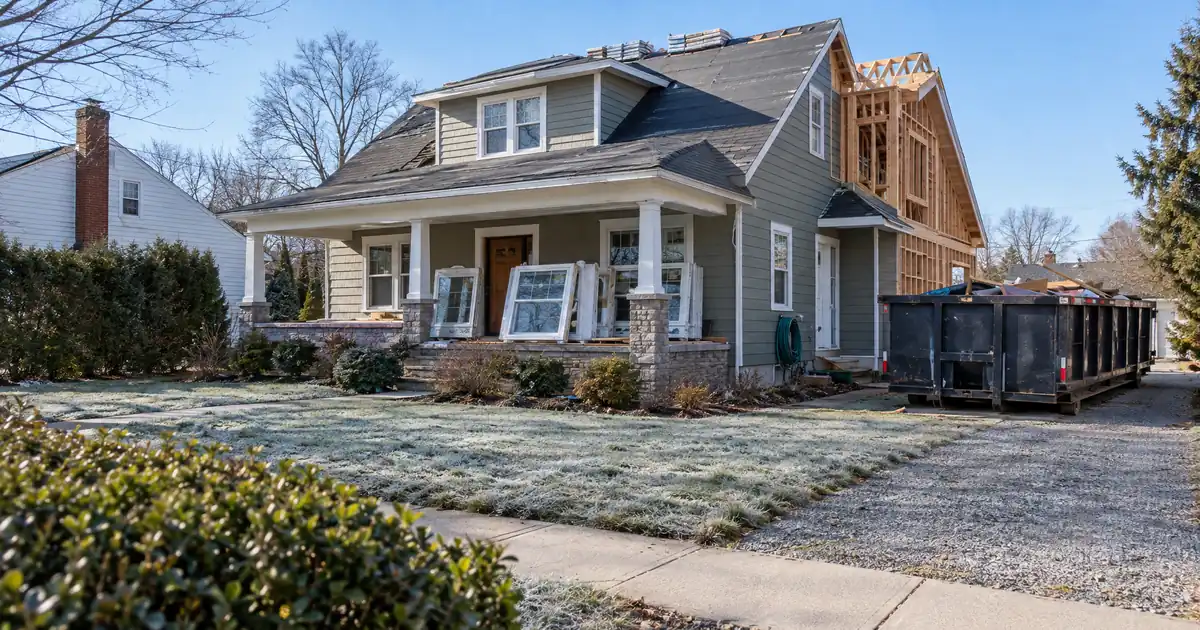
The Quick Read: A hard money lender mostly reviews the property, the rehab plan, the after-repair value and your exit, so the family lease is usually tested later, when a flipper who keeps the house applies for long-term rental financing and the underwriter checks who lives there, what rent counts and whether the payments are real. That second test is where a relative’s lease can help, hurt or block the exit.
- The bridge lender sets up the exit. The rental lender tests the lease.
- A relative living in your household is an occupancy problem, and no lease fixes it.
- A relative in a separate household may be accepted at market rent with proof, depending on the program.
- Most programs count the lower of the signed lease or the appraiser’s market rent.
- A vacant, rent-ready house can often be reviewed on market rent with no family lease in the file.
Why the Bridge Lender Rarely Tests the Lease Itself
A hard money loan is a short-term, asset-based loan. The lender cares about four things: the property, the rehab budget, the after-repair value (ARV, the estimated worth once the work is done) and how you plan to pay the loan off. The lease is not on that list, because most flips are meant to sell.
What this loan actually costs to carry.
Hard money is sized against the project and priced by time. Enter the deal and see how much the program will lend, the cash required at closing, the carry while you hold it, and what is left at the exit.
Leverage tiers on the current program: 85% with fewer than 2, 90% with 2 or more, 93% with 5 or more completed projects — every tier capped at 75% of after-repair value. Loan amounts up to $5,000,000, larger by exception; terms of 6 to 18 months, interest-only, no prepayment penalty. The rehab portion funds in draws against completed work, not at closing.
Program parameters shown update from Lendmire’s centralized guideline source. Rate, points, and months are editable assumptions, not quoted terms.
Cost cap sets the loan · positive spread
Illustrative estimate only — not a quote, Loan Estimate, approval, or commitment to lend. Rate, points, and months are editable assumptions. Hard money is business-purpose financing for real estate investors, not a consumer mortgage. Leverage on the current program tops out at 93% of project cost for investors with a documented track record, capped at 75% of after-repair value, with rehab funding up to 100% of the documented budget released in draws; actual terms vary by lender, borrower experience, property, and exit. Lendmire is a mortgage broker, not a lender.
Across the programs Lendmire places files with, first-time flippers typically fund at the lowest leverage tier. On most files that means around 85% of project cost with fewer than two completed projects, always capped at 75% of ARV. Experienced investors reach higher tiers. These figures vary by lender, property, and experience, and nothing here is a commitment to lend.
Terms usually run 6 to 18 months, interest-only, with no prepayment penalty on the current program. Credit starts at a 620 minimum, with additional conditions below 660. Underwriting stays asset-based, so the lease does not drive approval.
So why does a family lease matter at all? Because plans change. A flip that does not sell at the hoped-for price becomes a rental, and a relative may already want to rent it. The bridge lender cares that you have a credible exit. The family lease is tested by the lender at that exit.
The Two-Lender Timeline
The timeline has two lenders and four checkpoints. Knowing which one looks at the lease keeps you from planning around the wrong test.
| Stage | What the lender checks | Where a family lease shows up |
|---|---|---|
| Bridge purchase | Property, budget, ARV, exit plan | Rarely. Say if you plan to rent |
| Rehab and draws | Completed work against budget | Not tested. Loan terms may limit leasing |
| Extension or maturity | Progress and a workable payoff path | Only as part of the exit story |
| Rental refinance | Rent, coverage, occupancy, tenant | Fully tested |
Read your bridge loan documents before you sign any lease. Some loan agreements restrict leasing or occupancy while the loan is open. A lease signed mid-rehab is a covenant question for the bridge lender, so ask first and sign second.
Timing also matters for the refinance. Long-term rental lenders commonly expect a seasoning period before a cash-out. Seasoning is the waiting time between buying a property and refinancing it. Across most of Lendmire’s wholesale network, about six months is the common expectation. A bridge term that outlasts that window gives you room, and a short one does not.
How the Rental Lender Tests the Lease, Step by Step
The long-term rental lender runs a series of gates in a fixed order. A file that fails an early gate never reaches the later ones.
Step 1: The occupancy gate
You and your household cannot live in the property. A parent or child who lives with you makes the property owner-occupied in practice. These are business-purpose investor loans for non-owner-occupied property, which lenders review differently from a standard owner-occupied mortgage. No lease changes the answer.
Step 2: The related-party gate
If the relative runs a separate household, the next question is whether the program accepts related-party tenants. Across the network, programs fall into three groups:
- Strict programs exclude related-party leases outright. A lease cannot change that.
- Moderate programs allow them with market rent and proof of payment.
- Silent programs set occupancy rules but say little about separate-household tenants.
This is a pattern from brokering many lenders’ guidelines, not a single published rule. The same relative can be fine with one lender and excluded by the next, which is why you pick the exit lender before you sign the lease.
Step 3: The rent-selection gate
Most programs count the lower of the signed lease and the appraiser’s market rent. The appraiser reaches that opinion on a rent schedule form, called Form 1007 for a single-family home and Form 1025 for a 2-4 unit property. A below-market family lease pulls the counted rent down. An above-market lease earns nothing extra.
A month-to-month or expired lease is weaker evidence. Market rent usually governs in those cases.
Step 4: The coverage test
Coverage, or DSCR, is the accepted monthly rent divided by PITIA. PITIA stands for principal, interest, taxes, insurance and association dues, the full monthly obligation on the property. Select programs start at 1.00, meaning rent just covers that obligation. Stronger ratios tend to open better pricing and leverage.
A discounted family lease can drop a property that clears at market rent to under 1.00. A separate select-lender path takes coverage below 1.00, with leverage and terms adjusted. Either way, the cost of a discount shows up in leverage, pricing or required proof.
Clearing 1.00 is also not the same as positive cash flow. DSCR compares rent to PITIA only. Repairs, vacancy, management, utilities and capital expenses sit outside the calculation.
Step 5: The proof gate
For a related-party lease, the lender wants evidence that the rent is real. The next section covers that package in detail.
Step 6: The leverage and credit gates
Even a clean lease runs into the usual limits. On a standard rental, a cash-out refinance tops out around 75% LTV across most of the network. LTV is the loan amount divided by the property value. Most programs want a score around 660, a 620 floor exists in parts of the network, and 700+ opens the strongest tiers. Reserves, meaning cash you hold after closing, commonly run around six months of PITIA, though they vary by lender, leverage and loan size. Everything here is subject to lender guidelines.
Worked Example: Same Flip, Three Leases
Run the numbers on a finished flip that you decide to keep. The inputs below are modeled assumptions, not market data.
Assume the appraiser’s market rent produces coverage of roughly 1.20x. Now compare three leases on the same house:
- Market-rent lease to a relative in a separate household. Counted rent is the lease or market rent, whichever is lower, and they match. Coverage stays around 1.20x. The question becomes whether the program allows related-party tenants and whether the proof package holds up.
- Lease discounted about 20% below market. The lower-of rule counts the discounted rent. Coverage falls to roughly 0.96x, just under the 1.00 line where select programs start. Reviewing a file below 1.00 means a select-lender path with leverage and terms adjusted, which is a lender decision, not a given.
- Above-market lease, say 15% over. The lender still counts market rent. Coverage stays at 1.20x. The extra rent buys you nothing at underwriting.
There is a fourth option. If the house is vacant and rent-ready, the appraiser’s market rent stands in for a lease. The file clears at the 1.20x level with no family lease in it at all. For many first-time flippers, that is the cleanest path.
If the relative moves in after closing, the program’s occupancy and related-party rules still apply. The file may also have described the property differently than how you use it. Disclose the plan up front. Misstating occupancy or tenancy on a loan file is a serious problem.
What Goes in the Proof Package
A related-party lease needs more support than a stranger’s lease. The work is to show that the transaction looks arm’s length, meaning two independent parties dealing at market terms.
| Document | What it shows | Common failure |
|---|---|---|
| Executed fixed-term lease | Terms, names, dated signatures | Unsigned or undated |
| Payment trail | Rent from the tenant’s own funds | Parent funds the tenant’s rent |
| Security deposit record | Real deposit changed hands | No deposit, or cash only |
| Concession disclosure | Free months or credits | Hidden free rent |
| Rent schedule opinion | Rent supported by the market | Lease rent far from market |
A brand-new lease has no payment history, so the first month’s proof carries extra weight. A clean trail helps. It does not guarantee the rent counts as written.
Where the Rule Breaks
The general rule is that arm’s-length tenants at market rent clear the test. These cases are where it bends or snaps.
| Situation | Typical treatment (varies by program) | Main risk |
|---|---|---|
| Relative in your household | Treated as owner occupancy | Ineligible |
| Relative, separate household, market rent | Allowed by some programs with proof | Program exclusion |
| Relative at a discount | Lower rent counted | Coverage falls |
| Relative’s business as tenant | Must look arm’s length | Treatment varies |
| Unrelated tenant | Standard review | Weak payment history |
| Vacant and rent-ready | Market rent from appraisal | None from the lease |
A few more edge cases come up often:
- A spouse or child staying during a separation. Lenders read this as your household occupying the property.
- LLC ownership. An LLC does not turn a related tenant into an unrelated one. Some programs require no link between tenant and owner, and others bar any LLC member from living there, subject to lender program eligibility.
- Rent-by-room or boarder setups. These draw the same scrutiny, and some programs disqualify them.
- Blanket or portfolio loans. One weak tenant situation can touch the whole pool, so keep family leases off bundled files.
- A relative on a rental voucher. Government-subsidized rent is treated differently in some definitions than in a lender’s own guidelines, so ask the lender directly.
- 2-4 unit properties. Rents are counted unit by unit and a rent roll supports them. One weak unit drags the total down.
- Property types the network does not offer. DSCR on manufactured homes, log homes and barndominiums is not offered, no matter who the tenant is.
If the program excludes your tenant, you have four fallbacks. Find an unrelated tenant. Sell the property. Bring cash to pay down the bridge. Or extend the bridge if its terms allow. Each costs something, so decide before the note comes due.
Why Lenders Are Cautious About Family Leases
A family lease is a lender-guideline issue, not a legal ban. Lenders that restrict related-party tenants borrow their logic from a federal definition used for foreclosure tenants. The OCC’s Comptroller’s Handbook booklet on the Protecting Tenants at Foreclosure Act says a lease is bona fide only if the tenant is not the mortgagor or the mortgagor’s child, spouse or parent. The lease must also be arm’s length, and the rent must not be substantially below fair market rent, unless a government subsidy reduces it.
That definition governs foreclosure tenants, not your loan. The practical takeaway is that a lender sees a related-party tenant as harder to remove and a friends-and-family rent as possibly off-market. Lender definitions of related are often broader than the statute. One legal explainer on tenant rights after foreclosure notes that the statute names only a parent, spouse or child, and not siblings or in-laws, so the program’s own wording matters more than the statute.
Tax treatment follows its own test. The IRS describes a fair rental price in Publication 527, and tax treatment varies, so consult a qualified professional about any family rental.
What the Decision Looks Like in Practice
Work backward from the exit. Before you make an offer on a flip, run through this checklist:
1. Decide whether you are flipping to sell or holding as a rental if the sale stalls.
2. Ask the exit lender, before you sign anything, whether related-party tenants are accepted and under what conditions.
3. Confirm your relative would live in a separate household, not yours.
4. Price the lease at market rent. Discounts reduce counted rent. Premiums add nothing.
5. Check your bridge loan documents for any leasing or occupancy restrictions.
6. Line up the proof package: lease, deposit, and rent paid from the tenant’s own funds.
7. Compare the bridge term against the seasoning period the refinance program expects.
8. Keep an unrelated-tenant plan ready as a fallback.
Many investors refinance out of hard money into long-term DSCR financing once the property is stabilized, and Lendmire brokers that path. The complete DSCR loans guide walks through how those programs work.
One honest observation from brokering these files: the problems rarely come from the relative being family. They come from a lease signed too early, rent that does not match the market, or a tenant who cannot show the payments. Fix those and the relationship matters much less.
Key Terms Defined
After-repair value (ARV): The estimated value of a property once the planned renovation is finished.
Arm’s length: A transaction between two independent parties who each act in their own interest at market terms.
Related-party tenant: A tenant connected to the owner by family, marriage or business, which lenders review more closely.
Seasoning: The waiting period a lender wants between buying a property and refinancing it.
PITIA: Principal, interest, taxes, insurance and association dues, the full monthly cost used in the coverage test.
Lower-of rule: The common practice of counting the lesser of the signed lease rent and the appraiser’s market rent.
Frequently Asked Questions
Can a first-time flipper get hard money at all?
Yes, though usually at the lower leverage tier. Across Lendmire’s network, first-timers typically fund around 85% of project cost, capped at 75% of ARV, with a 620 minimum score and added conditions below 660. Terms vary by lender, property, and experience.
Can I rent the finished flip to my sibling or parent?
Only if the exit lender’s program accepts related-party tenants and the relative lives in a separate household. Some programs exclude them outright, and others allow them at market rent with payment proof. Confirm with the lender before you sign.
Does a higher lease rent improve my coverage?
No. A lease above market adds nothing, and a lease below market lowers your counted rent.
Do I need a lease at all?
Not always. A vacant, rent-ready house can usually be reviewed on the appraiser’s market rent. Many first-timers leave a family lease out of the file and let market rent carry the loan.
What if the program excludes my tenant?
Look at your fallbacks: place an unrelated tenant, sell, pay down the bridge with cash or extend the bridge term if available. Choosing the exit lender before the bridge closes keeps this from becoming a deadline problem.
Talk Through the Exit Before You Sign
If you are buying, rehabbing or refinancing an investment property on a short timeline and want to see how the numbers work, Lendmire can help you compare hard money options based on the project, the exit plan, leverage, and your goals. The brokerage arranges financing through select lenders in its wholesale network across 41 markets, including Washington, D.C. Bring the lease question to the conversation early, because the exit lender’s answer shapes the whole plan.
About Lendmire
As a DSCR and non-QM mortgage broker, Lendmire — NMLS# 2371349 — connects investors with wholesale lending channels across 41 markets, including Washington, D.C. The property’s rental income, not the borrower’s tax returns, is central to lender review, which works for self-employed operators and portfolios beyond four financed properties. Scotsman Guide named Lendmire a Top Mortgage Workplace in both 2025 and 2026.
Hard money often opens the deal, and a refinance typically closes the chapter – see the hard money loan overview.
Get Started
Ready to find the right loan for you?
In about 30 seconds you can review financing options available for your investment property. No commitment required.
Informational only. Not a Loan Estimate, approval, or commitment to lend. Program availability and eligibility are subject to lender guidelines, credit approval, property review, and underwriting.
References
1. OCC Comptroller’s Handbook, Protecting Tenants at Foreclosure Act
2. LegalClarity: Tenant Rights During and After Foreclosure Under the PTFA
This article is part of Lendmire’s hard money loan program — full qualification details, guidelines, and scenarios live on the program page.
Related reading: Private vs Direct Hard Money Lender Requirements for a Flip Loan · Hard Money Lender Requirements for the Seller of a Flip · Does Every Hard Money Lender Ask the Same Minimum Down on a Flip?
Brandon Miller
Founder & CEO, Mortgage Loan Originator, Lendmire LLC
- Mortgage Loan Originator · NMLS# 1129696 · Verify on NMLS Consumer Access
- North Carolina Real Estate Broker · License# 343312 · Verify on NCREC
- North Carolina Insurance Producer · License# 19053198 · Property, Casualty, Life, Health · Verify on NAIC SBS
- Lendmire LLC · Firm NMLS# 2371349 · Verify firm licensure
Compliance and disclosures. Lendmire (NMLS# 2371349) is a licensed mortgage broker and is not a direct lender, depository institution, financial advisor, or tax professional. Content in this article is general market analysis and educational information — not financial, legal, or tax advice for any specific situation. Lendmire does not guarantee loan approval; every transaction is subject to underwriting by the funding lender. Mortgage pricing and loan program guidelines are subject to change at any time without notice and vary by borrower characteristics, property type, and state regulations. Lendmire complies with Equal Housing Opportunity. Licensure verification: NMLS Consumer Access.