
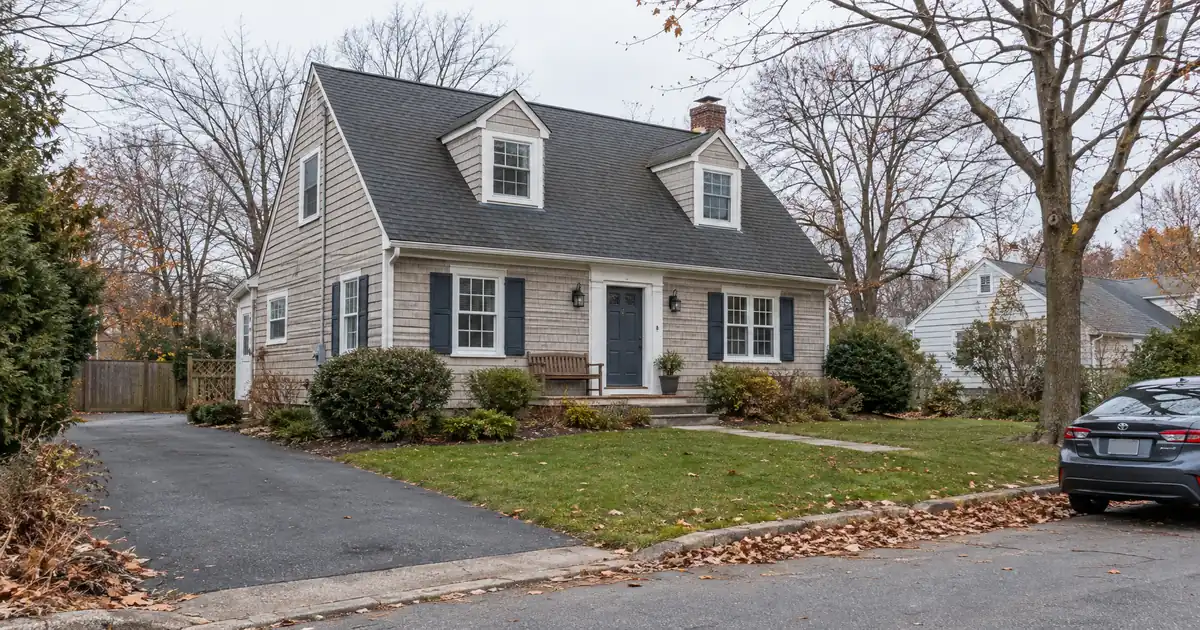
The Quick Read: A rental HELOC puts cash in your bank account, and a separate DSCR purchase loan buys each property in the package. The purchase lender decides whether that borrowed cash counts as down payment. Most of the work is sizing the line and documenting every dollar from draw to closing.
- On an investment property, the network’s line tops out at 70% combined loan-to-value (CLTV) and $500,000, with a 700 minimum credit score.
- A DSCR purchase typically asks for 20%-25% down at 75%-80% LTV. Select programs reach 85% LTV with roughly a 700+ score.
- The line is underwritten on you. The purchase loan is underwritten mostly on each new property’s rent against its own payment.
- The line’s payment generally stays out of the DSCR ratio, but it still comes out of real cash flow.
- Down payment, closing costs, and reserves are separate tests. Borrowed money may count for one and not the others.
All figures are typical ranges from select wholesale lenders, subject to lender guidelines and a full file review. They are not a commitment to lend.
How large a line the equity supports.
An equity line is sized by combined loan-to-value, occupancy, and credit — not by rental coverage. Switch the occupancy or the credit band and the ceiling moves with it.
Investment-property lines require a 700 minimum credit score; second-home lines start at a 640 minimum and primary-residence lines at 600, and the combined-LTV ceiling steps down as the credit band drops on primary-residence and second-home lines and holds on investment-property lines; the line cap steps down on primary-residence lines and holds at every tier on investment-property and second-home lines.
A debt-to-income ratio above 45% requires 680+ credit. Profiles under 640 are limited to single-family homes. At least 75% of the approved line is drawn at closing. Ceilings, floors, and caps update from Lendmire’s centralized guideline source.
Line estimate
Illustrative estimate only — not a quote, Loan Estimate, approval, or commitment to lend. The rate is an editable assumption; equity-line pricing is variable through both the draw and repayment periods and never converts to fixed. Occupancy and credit drive the ceiling together: an investment property tops out at 70% combined LTV (minimum credit 700, line cap $500,000); a second home tops out at 90% combined LTV (minimum credit 640, line cap $500,000), with the ceiling stepping down as the credit band drops (the cap holds at every tier); a primary residence tops out at 90% combined LTV (minimum credit 600), and its $750,000 maximum line is available only at 75% combined LTV or below with a 700-or-better credit profile (720 on the longer-runway program) and a full appraisal. Lines above $500,000 require a full appraisal. Credit, debt-to-income, property type, and full underwriting review all affect the final line.
What Does “Package” Mean Here?
A package is one home equity line that funds the down payments on several purchases. Each purchase usually has its own loan and its own closing. The line is the shared source of cash, not the shared mortgage.
That difference matters because “package” can describe three different structures. The table sorts them out.
| Structure | Loans | Where the cash comes from |
|---|---|---|
| Separate closings | One DSCR loan per property | One line, split across contracts |
| Staggered closings | One DSCR loan per property | One line, drawn as each deal nears |
| Blanket note | One note over many properties | Set by that lender’s own rules |
This article covers the first two. A blanket note is a different product, and its cash-to-close rules belong to the lender that offers it. Ask that lender directly.
Key Terms Defined
HELOC: A home equity line of credit, a revolving line secured by a property you already own.
CLTV: Combined loan-to-value, which adds every loan against the property and divides by its value.
Draw period: The stretch when you can borrow from the line, often paying interest only.
Repayment period: The stretch after the draw period, when the balance amortizes and the payment rises.
DSCR: Debt service coverage ratio, which is monthly rent divided by the property’s principal, interest, taxes, insurance, and HOA dues (PITIA).
Source of funds: The paper trail showing where your down payment cash came from.
Reserves: Liquid money left after closing, usually counted in months of PITIA.
DTI: Debt-to-income, the share of your income that goes to debt payments.
How Do the Two Approvals Fit Together?
The line and the purchase loan are two separate approvals with two separate underwriters. The line looks at you. The purchase loan looks at the new rental. The line only supplies cash, and the purchase lender decides what that cash is worth.
| Factor | Rental HELOC | DSCR purchase loan |
|---|---|---|
| Underwritten on | You: credit, equity, DTI | Property rent against its payment |
| Collateral | A property you already own | The property being bought |
| Job in the package | Supplies cash | Buys the property |
| Key limit | 70% CLTV on an investment line | 75%-80% LTV on a purchase |
The line is also a bit harder to find than a primary-home line. NerdWallet describes a typical investment-property HELOC with a 10-year draw period and repayment of up to about 20 years. That is a market-wide description. On Lendmire’s network, an investment line runs a 5-year interest-only draw followed by a 25-year fully amortizing repayment. Bankrate notes that rental lines are less common than primary-home lines and typically cost more.
Lendmire places these lines through select wholesale partners in 16 full-service states. That is narrower than its DSCR investor loans, which run across 41 markets including Washington, D.C. Lendmire is a broker. The lenders review the files and make the decisions.
Step by Step: How Package Down Payments Are Sourced From the Line
The sequence matters more than any single number. Run the steps in this order, and run the purchase lender’s questions first.
1. Find your equity room. Multiply the property’s value by 70%, the investment-line ceiling. Then subtract every existing lien. What remains is the most the line can be.
2. Pick the collateral. The line must sit on a property you already own. You cannot open it on the rental you are about to buy.
3. Ask the purchase lender about borrowed funds. Do this before you open the line. The checklist near the end of this article lists the questions.
4. Close the line and draw. On Lendmire’s network, at least 75% of the line is drawn at closing. After that, each additional draw has a minimum of $1,000, with one state setting it higher.
5. Park the cash. Move the draw into a dedicated account. Keep the line’s closing documents and the draw confirmation.
6. Allocate per property. Move each property’s share to escrow or the title company as that contract nears closing.
7. Close each DSCR purchase. Each loan is judged on that property’s rent coverage, not on your personal income.
8. Plan the exit. Typical exits are a DSCR cash-out refinance, a sale, or paydown from cash flow.
The paper trail is the part investors underestimate. Underwriters ask about large unexplained deposits. In a package, one draw feeds several closings, so every purchase needs its own chain from line to settlement statement.
| Link in the chain | Document | What it proves |
|---|---|---|
| Line closes | HELOC closing statement | Amount, lien position, borrower |
| Cash drawn | Draw confirmation | The money is borrowed, not hidden |
| Cash lands | Bank statement | Funds sit in your account |
| Cash allocated | Transfer or wire record | Each property’s share |
| Deal closes | Settlement statement | Cash to close came from that account |
What Will the Purchase Lender Count?
Some lenders accept documented line proceeds as down payment, and others do not. Across Lendmire’s wholesale network, lenders tend to fall into three camps. Some accept documented line proceeds. Some cap the borrowed share and want seasoned cash of your own alongside it. Some want part or all of the down payment unborrowed.
A plan that is 100% borrowed can fail on that point alone. Whether a lender asks borrowed funds to sit in your account for a set period is also lender-specific, not a universal rule.
Think of three separate pots.
| Pot | Borrowed funds often accepted? |
|---|---|
| Down payment | Often, with caps in some programs |
| Closing costs | Varies by lender |
| Reserves | Commonly excluded |
Reserves are the one people trip over. Many programs want around six months of PITIA, though that varies by lender, leverage, loan size, and transaction type. An undrawn line is permission to borrow. It is not liquid money, so it does not stand in for reserves.
Here is where the purchase side itself sits. Most DSCR purchases land at 75%-80% LTV on a purchase, which means 20%-25% down. Select high-leverage programs reach 85% LTV on a purchase, which means 15% down, typically with a score around 700 or higher. A larger down payment lowers the payment and can lift the coverage ratio. It never erases leverage caps, credit floors, or reserve rules.
On coverage, 1.00 is where many select programs start. A separate select-lender path takes coverage below 1.00 with leverage and terms adjusted. Stronger ratios open better pricing and leverage. The strongest files clear both tests: enough equity and enough rent coverage.
Sizing the Line Against the Package
Size the line to the whole package, closing costs included. Here is an illustrative example, with modeled assumptions rather than market data. Say you buy four rentals at the same price, each at 25% down. Together the down payments equal one full purchase price in cash, before closing costs. Exact terms depend on the lender’s guidelines, property type, leverage, and a full review of the borrower’s file.
Now suppose your collateral rental carries a first mortgage equal to 40% of its value. At the 70% investment-line ceiling, your room is 30% of that property’s value. If that rental is worth about the same as one of the new purchases, the line covers well under half of the cash the package needs.
Three limits make this tighter on Lendmire’s network:
- The investment line caps at $500,000, whatever your equity says.
- You are limited to three lines, with combined exposure caps that vary by program. One partner program, built for a longer interest-only runway, caps combined exposure at $750,000. Another, built for higher leverage, caps it at $2,000,000.
- A borrower with more than 15 financed properties is not eligible.
Because at least 75% of the line is drawn at closing, a line sized far above your need also puts interest on money you are not using. Size it to the package, not to the maximum.
When one line is not enough, a DSCR cash-out refinance on a rental can supply the rest. On a cash-out, most of the network tops out around 75% LTV, with about six months of seasoning as the common expectation. Every figure here varies by lender and program — guidelines, property type, leverage, and credit profile all apply.
Cash Flow After the Package
Clearing 1.00 on the DSCR ratio is not the same as positive cash flow. The ratio compares rent to PITIA only. Repairs, vacancy, management, utilities, and capital expenses sit outside it.
The line adds a second obligation. Picture four rentals that each cover their own payment at roughly 1.2x. At that coverage, rent exceeds PITIA by about one-sixth of the rent. The line’s interest on the borrowed down payments has to come out of that thin slice, and so do the costs the ratio ignores.
The line’s payment generally does not enter the DSCR ratio. It does enter the line’s own approval. Lendmire’s network caps DTI at 50% for the line, and the test is run on the interest-only payment at the maximum draw. Your personal debt load therefore matters for the line even though it does not for the purchase loans.
The payment also changes shape over time. The CFPB’s HELOC explainer describes a draw period followed by a repayment period, with pricing that usually floats. Its HELOC brochure warns that payments can change and that the repayment period can bring a large jump. On a Lendmire-network investment line, that jump arrives after the 5-year draw, when the 25-year amortization starts.
Where the General Rule Breaks
The rule so far is simple: line first, purchase loans second. These edge cases bend it.
An LLC owns the rental. The line must be held by you as an individual or by a revocable living trust. LLCs, corporations, partnerships, and irrevocable, blind, or land trusts cannot hold title on these lines. A rental already deeded to an LLC needs a vesting change, or a DSCR cash-out refinance instead.
The collateral is the wrong property type. Eligible collateral includes single-family homes, 2-4 units, PUDs, townhomes, and condos, including non-warrantable ones. Manufactured homes, co-ops, condotels, log homes, commercial, mixed-use, and agricultural-zoned properties are not offered. Barndominiums are not offered on the DSCR side either.
The collateral is listed for sale. A property listed for sale, or listed in the prior 60 days, is ineligible in several states. Take it off the table before you plan around it.
The collateral is a primary home. A line on your own home generally allows more room under the network’s tiers. It also puts your residence behind a string of rental purchases. Many investors take that trade deliberately, and it deserves a straight look at the downside.
The score is borderline. An investment line has a hard 700 floor with no tier beneath it. Both 700 and 720 reach 70% CLTV, so a higher score buys eligibility, not extra leverage. The credit report cannot be more than 90 days old at closing.
There is no appraisal. An investment line is capped at $500,000, and full appraisals begin only above that. These lines commonly close on an automated valuation, so your equity estimate rests on that number, not on an appraiser’s opinion. You can request a full appraisal in any case.
What the Decision Looks Like in Practice
For most investors the question is not whether a line can fund a down payment. It is whether the package still works with a second obligation sitting on top of every purchase. A few honest checks settle it.
First, does each property clear coverage on its own? A purchase that only works because the borrowed down payment is hidden from the math is a weak file.
Second, can the collateral property survive the strain? If a draw pulls the line’s balance and your CLTV toward the ceiling, a falling valuation can limit your options later. Borrowers who recycle the line (draw, buy, refinance or pay down, repeat) depend on that room staying open. Lendmire’s piece Can a Rental HELOC Keep Funding Down Payments as You Scale a Portfolio? covers that loop.
Third, what if a lender changes the terms? An open line is not a guaranteed source of cash. If the line is frozen or reduced between contracts, the purchases still under contract need a backup, so open the line before you make offers. That is the real sequencing rule for staggered closings.
Fourth, would a different source be cleaner? A cash-out refinance, a fixed second lien, a home equity loan, or plain savings can each replace the line. Savings also make the file easier to document, because there is no borrowing to trace.
On cost, a line on a rental is typically more expensive than one on a primary home, and the interest-only draw can hide how heavy the loan is until repayment starts.
For the full picture of how the purchase side is underwritten, the complete DSCR loans guide covers coverage ratios, leverage, and reserves.
Questions to Ask the Purchase Lender Before You Draw
Ask these before you open the line, not after. The answers shape how much you borrow and when.
- Do you accept line proceeds as down payment?
- What share of the down payment can be borrowed?
- Must some of the down payment be your own unborrowed cash?
- Do borrowed funds count toward closing costs or reserves?
- Do funds need to sit in my account for a set period before I go under contract?
- Which documents do you want for each draw and each allocation?
- If I close several purchases, do you review each one separately?
Frequently Asked Questions
Can a HELOC cover the entire down payment on a DSCR package?
It depends on the purchase lender. Some accept documented line proceeds for the full down payment, some cap the borrowed share, and some want part of it unborrowed. A fully borrowed plan can fail on that point alone, so confirm the lender’s stance before drawing.
Does the HELOC payment lower my DSCR?
Generally no. The ratio compares rent to the property’s PITIA, and the line’s payment is not part of that calculation. The payment still comes out of your real cash flow, and it counts in the line’s own DTI test.
Can I open the line on the rental I am about to buy?
No. The line must sit on a property you already own. The new rental is financed by its own purchase loan.
Can my LLC’s rental secure the line?
Not on Lendmire’s network. An LLC cannot hold title on these lines. A rental already deeded to an LLC needs a vesting change or a DSCR cash-out refinance, subject to program terms.
How do I document one draw that funds several closings?
Build a chain for each purchase. Keep the line’s closing documents and draw confirmation, the bank statement showing the cash arriving, a transfer record for each property’s share, and each settlement statement. A dedicated account for the draw keeps the trail clean.
Next Step
If you are considering a home equity line and want to see how the numbers work, Lendmire can help you compare HELOC options based on the property, the equity available, credit profile, combined leverage, and your goals.
About Lendmire
Lendmire (NMLS# 2371349) is a mortgage brokerage serving homeowners and real estate investors in its 16 full-service states. Home equity lines of credit are arranged through wholesale lending channels; Lendmire brokers the line and the lender underwrites each application under its occupancy-based guidelines. Scotsman Guide named Lendmire a Top Mortgage Workplace in both 2025 and 2026.
Get Started
Ready to find the right loan for you?
In about 30 seconds you can review financing options available for your home or investment property. No commitment required.
Informational only. Not a Loan Estimate, approval, or commitment to lend. Program availability and eligibility are subject to lender guidelines, credit approval, property review, and underwriting.
References
1. NerdWallet – Can you get a HELOC on an investment property?
2. Bankrate – HELOC on an investment property
3. CFPB – What is a home equity line of credit (HELOC)?
This article is part of Lendmire’s investment property HELOC program — full qualification details, guidelines, and scenarios live on the program page.
Related reading: Hard Money vs Bank Loan Requirements for a Rental Purchase · Can a Fix and Flip Loan on a Short-Term Rental Exit Into DSCR? · Can a Non-Bank Servicer Change Your HELOC After Buying the Line?
Brandon Miller
Founder & CEO, Mortgage Loan Originator, Lendmire LLC
- Mortgage Loan Originator · NMLS# 1129696 · Verify on NMLS Consumer Access
- North Carolina Real Estate Broker · License# 343312 · Verify on NCREC
- North Carolina Insurance Producer · License# 19053198 · Property, Casualty, Life, Health · Verify on NAIC SBS
- Lendmire LLC · Firm NMLS# 2371349 · Verify firm licensure
Disclosures. The information presented in this article is general market commentary, not financial, legal, or tax advice. Lendmire is a mortgage brokerage (NMLS# 2371349) — not a direct lender or depository institution — and loan placement is subject to lender underwriting. Nothing in this content represents a commitment to lend. Loan terms, pricing, and program availability vary based on borrower qualifications, property characteristics, and state of subject property, and are subject to change at any time. Lendmire complies with Equal Housing Opportunity requirements. Consumer access: nmlsconsumeraccess.org.